
Pellet heat is rare in Refugio County—here's when it still makes sense.
With winter lows averaging 45°F and only about 1,061 heating degree days a year, Refugio County rarely needs a dedicated heating appliance. A pellet stove can still work for ambiance, a hunting cabin, or a ranch house that wants backup heat during the occasional Gulf Coast cold front—but it's an unusual choice here, and I want to be straight with you about that before we match you with anyone.
Every Project Starts From One of These Five Situations
Refugio County's mild winters don't call for pellet heat.
Refugio County sits in climate zone 2A on the Texas Gulf Coast plain, where winter is short and mild—an average low of 45°F and roughly 1,061 heating degree days for the whole season. For comparison, a place like International Falls, MN racks up close to 10,000 heating degree days a year; Refugio County sees about a tenth of that. There's no real air quality burden here either—no winter inversion, no non-attainment status—which removes one of the usual reasons counties push homeowners toward cleaner-burning pellet appliances in the first place.
That's why pellet stoves show up occasionally in Refugio County rather than routinely. A rancher wanting supplemental heat in a detached workshop, a family with a second property up north where pellet heat makes more sense, or a homeowner who simply likes the look and low-maintenance burn of a pellet unit over an open wood fire—those are the real use cases we see. Local wood—oak, pecan, and mesquite are all common on Refugio County land—is abundant and cheap enough that most homeowners who want a fire lean wood or, more often given the climate, gas or electric. If you're still set on pellet, regional suppliers like Forest Energy and Lignetics do serve this part of the Gulf Coast, and I can match you with a dealer who installs and services these units correctly.
Three steps. No salesperson until you're ready.
Tell us about your project
Your zip code, your situation, and the fuel you're leaning toward—or let the answers point you to one.
See what's actually available
The brands dealers within 100 miles genuinely carry—real options, never a catalog mirage.
Get your dealer & Project Guide
A trusted local dealer, plus the free Project Guide & Parts List that names every component of the job.
Frequently Asked Questions
How much does a pellet stove installation cost in Refugio County?
Because pellet stoves are uncommon in Refugio County, there isn't a standard local price the way there would be in a colder market—installers here don't get asked for pellet quotes often, so pricing tends to be handled case by case rather than off a set rate card. Expect the bulk of the cost to be the unit itself plus venting (pellet stoves vent through a smaller-diameter pipe than wood stoves, which keeps labor lower), with electrical work for the hopper motor and blower as a smaller add-on. The most reliable path is getting a firm, in-home quote from a trusted local dealer—that's exactly what the free Project Guide & Parts List I put together for you includes: the specific parts, the vent kit, and a real quote from a dealer who actually installs these in this area.
Do I even need a pellet stove in Refugio County?
Probably not as primary heat. With an average winter low of 45°F and only about 1,061 heating degree days a year, most Refugio County homes get through winter fine on existing central HVAC or a space heater for the handful of genuinely cold nights. Where a pellet stove earns its keep locally is supplemental or occasional use—a workshop, a detached guest house, a ranch office, or a home that loses power during a Gulf front and wants a self-contained heat source. If your goal is everyday comfort heat, gas or electric options are a more standard fit for this climate; if you specifically want the pellet burn experience or a backup heat source, it's still available, just less common here than in colder parts of the state or country.
Where can I find a pellet stove installer near me in Refugio County?
Refugio County is a small, rural county—around 5,000 residents—so dedicated pellet-stove specialists are thin on the ground locally. Most homeowners end up working with a hearth dealer based in a larger nearby market like Corpus Christi or Victoria who covers Refugio County as part of their service area and can handle delivery, venting, and setup. That's exactly the kind of local-but-not-necessarily-in-town match we make—a dealer who's actually installed these units in this climate and knows what a Gulf Coast humidity environment does to pellet storage and stove components over time.
What's the difference between a pellet stove and a pellet insert?
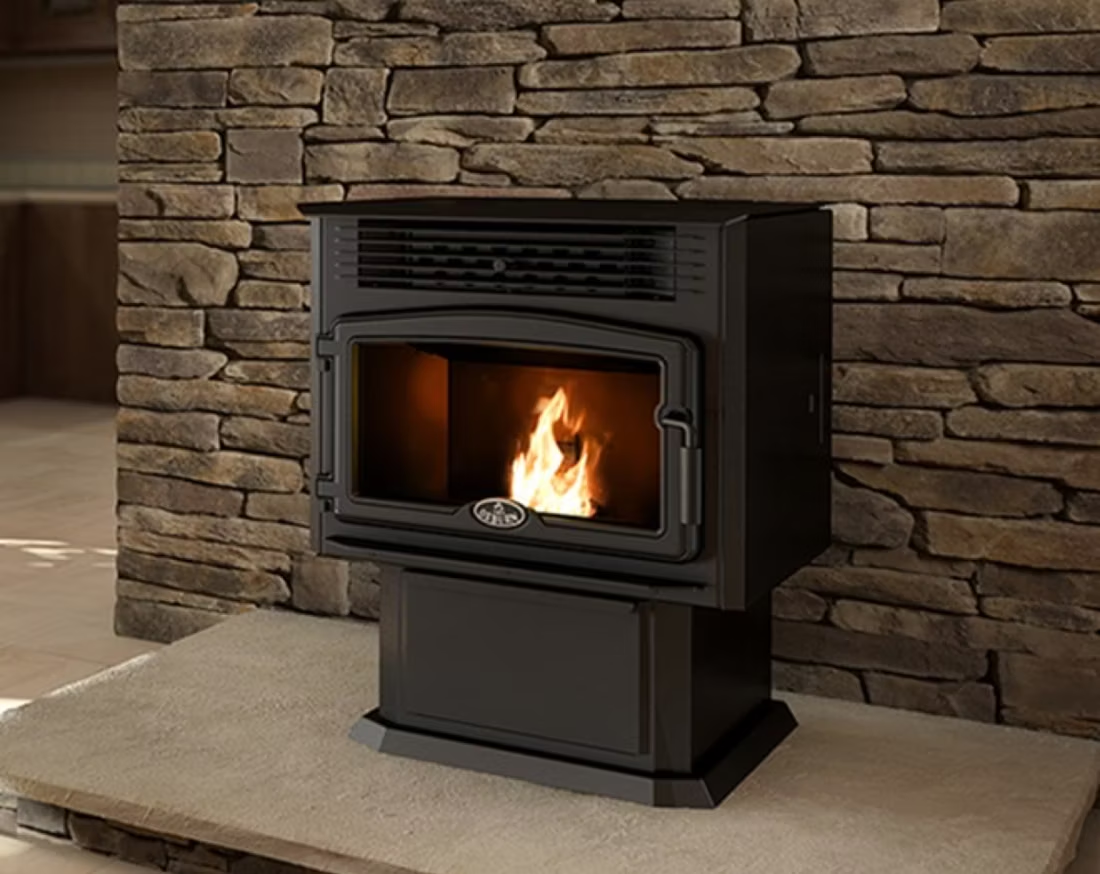
A pellet stove is a freestanding unit on its own hearth pad that vents through a wall or roof—it can go almost anywhere with the right clearances. A pellet insert fits into an existing masonry fireplace opening, using a vent kit routed through the old chimney. In Refugio County, where masonry wood fireplaces exist in some older homes but open, unlined fireboxes are less common than in colder-climate housing stock, a freestanding stove is usually the simpler retrofit. If you do have an existing fireplace you want to convert, an insert is worth discussing with your dealer—it's often less invasive than it sounds.
Do I need a permit to install a pellet stove in Refugio County?
Most likely yes—a building permit is standard for any new fuel-burning appliance installation, and electrical work for the stove's hopper motor and blower may need its own sign-off. Check with the Refugio County building department (or the relevant city office if you're inside Refugio or Woodsboro city limits) before work starts. In practice, a dealer who regularly installs pellet appliances in this part of the Gulf Coast will know exactly which permits apply and typically pulls them as part of the installation, so this isn't something you have to navigate solo.
What's the best pellet stove for a mild climate like Refugio County's?
Since you're not fighting sustained sub-freezing temperatures, you don't need a stove sized or rated for extreme cold-climate output—a smaller-capacity unit is usually plenty, and it'll be easier to run efficiently on the mild, short heating nights this county actually gets. Look for a model with a reliable auger and a hopper large enough that you're not refilling constantly, since you'll likely be running it intermittently rather than continuously through the season. Pellets from regional suppliers like Forest Energy and Lignetics are both available in this part of Texas, so fuel sourcing isn't the limiting factor—a local dealer can point you to whichever brand and BTU range fits an occasional-use setup best.
Where can I buy pellet fuel in Refugio County?
Pellet fuel isn't stocked on every corner here the way firewood is—oak, pecan, and mesquite are plentiful and cheap locally, which is part of why pellet demand stays low. Regional brands like Forest Energy and Lignetics do distribute into the Texas Gulf Coast market, but you may need to order through a hearth dealer in Corpus Christi or Victoria, or via a farm/feed supply store that carries pallets seasonally, rather than finding it at a local hardware store. It's worth asking your installing dealer to set you up with a fuel source at the same time as the installation quote, since availability can be inconsistent this far from the main pellet-heating markets.
Pellet vs. gas—which makes more sense in Refugio County?
For most Refugio County homes, gas is the more natural fit. With only about 1,061 heating degree days a year, the appeal of gas—instant on-off heat, no fuel storage, no ash cleanup—matters more here than the long, unattended burn times pellet stoves are built for in genuinely cold climates. Pellet stoves also need electricity to run the auger and blower, so they offer no advantage during a power outage, whereas some gas units can be set up to run on battery backup. Unless you specifically want the pellet-burn experience or have a fuel-sourcing reason to prefer it, gas is generally the simpler, more standard choice for this area.
Pellet vs. electric—which makes more sense in Refugio County?
Electric heat is usually the lower-hassle option for Refugio County's climate. Electric fireplaces and space heaters need no fuel storage, no venting, and minimal installation cost—a real advantage given how few heating hours the county actually needs each year. Pellet stoves offer a real flame and radiant heat that electric units can't fully replicate, but they come with hopper loading, ash disposal, and a fuel supply chain that isn't as convenient here as it would be farther north. If you want ambiance and don't mind the upkeep, pellet is still an option; if you just want reliable warmth on the occasional cold night with the least effort, electric is the more practical local fit.
Why is my open fireplace making my house colder?
Open fireplaces suck—literally. As the fire burns, it consumes air your furnace already paid to heat and pulls it out through the chimney, so the house is actually colder after the fire goes out than before you lit it. An insert fixes this: it seals the chimney, puts fixed glass across the front, and turns that hole in your house into a real heat source.
Why is a fireplace insert so efficient?
An insert does two things: it seals the chimney completely, so you stop losing air you already paid to heat, and it radiates warmth into the room through the firebox and glass. Most add a heat-exchange fan that pulls cool room air underneath, wraps it around the hot firebox, and pushes it back out warm. Your home is more efficient before you've even lit the first fire.
How much should I budget for a fireplace?
For an average home—covering the fireplace, the vent pipe, and basic installation—a budget between $3,900 and $5,500 gives you a lot of options across wood, gas, and pellet. By the time you add finish work, gas line, and electrical, the average complete installation lands between $5,000 and $12,000 all-in. In a remodel or new build, a good rule is to put about 2.5% of the total project cost toward the fireplace.
Can a fireplace actually lower my heating bill?
Yes—by creating a comfort zone. A furnace heats every square foot of the house just to warm the one room you're in; a gas fireplace on low burns roughly a sixth of the gas a typical furnace does. Set the furnace around 55–60 degrees as a baseline, then heat the rooms your family actually uses. Families who heat this way commonly save $20–$60 a month.
Stove and Fireplace Dealers in Refugio County
Listings include WhyFire partner dealers, dealers we have verified as authorized for the brands we recommend, and established local businesses that carry hearth products. Every listing shows which one it is. The ones marked Preferred run on WhyFire's software, so they can show you real pricing and book your appointment right here. No manufacturer pays for placement. How we verify dealers →
Kitchen & Bath Showplace
The Design Haus Of Victoria
Victoria Builder Supply Co Inc.
Martini Brick
C.c. Chimney
Pellet Brands Stocked Around Refugio County
Manufacturers will point you to the nearest stocking dealer.
See if a pellet stove makes sense for your Refugio County home.
Tell me a bit about your home and how you'd use a pellet stove—supplemental heat, backup power, or just ambiance—and I'll put together a free Project Guide & Parts List with the exact parts, vent kit, and a recommended local dealer who actually installs pellet units in this part of the Gulf Coast.
Find Your Fireplace →