
Fireplaces built for Refugio County's short, mild winters.
Refugio County logs about 1,061 heating degree days a year—a fraction of what a place like Fargo, ND racks up in a single cold month. Fireplaces and units cover nearly every household's ambient and occasional-cold-snap needs here. Find a trusted local dealer and get matched with the right unit for your home.
Every Project Starts From One of These Five Situations
Coastal-plain heat needs in Refugio County, Texas.
Refugio County sits on the South Texas coastal plain between Corpus Christi Bay and Victoria, cattle-ranching country crossed by the Mission River and edged by the Aransas National Wildlife Refuge. Climate zone 2A means hot, humid summers and winters mild enough that the average low sits around 45°F—a handful of nights each year dip near freezing, but nothing close to a true heating season. The oak, pecan, and mesquite common on local ranches get cut for fence posts and smoker wood far more often than firewood; there simply isn't enough cold to justify a wood-burning setup as a home's heat source.
That's why this hub is built around gas and electric—the two fuels that actually make sense for Refugio County's climate. Wood stoves and pellet stoves are essentially absent from the local hearth market; a handful of homeowners keep a wood-burning fireplace for looks or the occasional cool evening, but almost no one heats a Refugio County home with wood or pellets day to day. Pick gas or electric below to see local dealers, install costs, and the resources that match your project—whether you're in the town of Refugio, out toward Woodsboro, or along the bay near Bayside and Austwell.
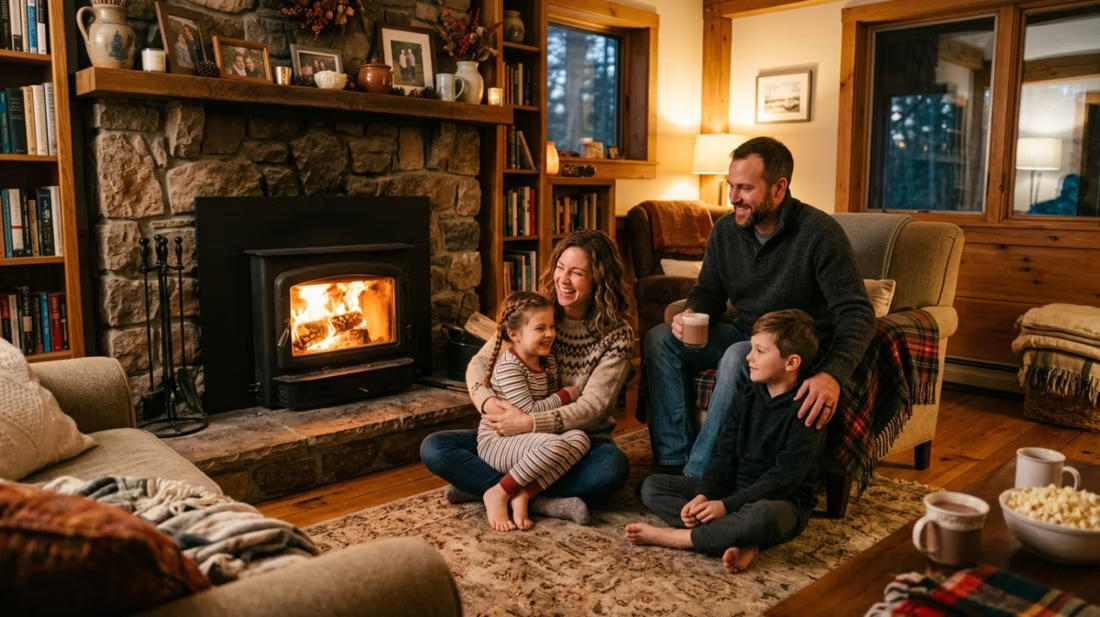
Four fuels. One honest answer for Refugio County.
Three steps. No salesperson until you're ready.
Tell us about your project
Your zip code, your situation, and the fuel you're leaning toward—or let the answers point you to one.
See what's actually available
The brands dealers within 100 miles genuinely carry—real options, never a catalog mirage.
Get your dealer & Project Guide
A trusted local dealer, plus the free Project Guide & Parts List that names every component of the job.
Frequently Asked Questions
Which fuel works best in Refugio County?
Given the climate, the choice is really between gas and electric—wood and pellet stoves aren't practical here. With only about 1,061 heating degree days a year and winter lows averaging in the mid-40s, Refugio County doesn't get the sustained cold that makes a wood-burning setup worthwhile; the oak, pecan, and mesquite on local ranches go toward smoking meat and fence posts, not home heating. Gas fireplaces (typically propane, since piped natural gas is limited this far from the coastal cities) give you real heat on the occasional cold front with the flip of a switch. Electric fireplaces are popular for ambiance in living rooms and bedrooms and cover the rest of the year just fine. Most Refugio County homeowners land on one or the other, not both.
Do I need a permit to install a fireplace in Refugio County?
It depends on the install. A gas fireplace or insert generally needs a building permit plus a separate gas line permit, and the propane connection should be run by a licensed gas-fitter—this is true whether you're inside the town of Refugio or out in unincorporated parts of the county. Electric fireplaces are usually permit-free if they're a plug-in unit, but a built-in electric fireplace that requires hardwiring and a new circuit typically needs an electrical permit. Local hearth dealers who regularly work this market generally handle the permitting as part of the installation, so you're not filing paperwork yourself.
Are there air quality restrictions on wood burning in Refugio County?
No—Refugio County has no wood smoke advisories, inversion concerns, or non-attainment designations, unlike some western counties where winter inversions trap smoke near the ground. That said, this isn't really a wood-burning market to begin with; the mild winters mean almost no one relies on a wood stove or fireplace for daily heat, so the question rarely comes up in practice.
Can one local dealer handle both gas and electric fireplaces?
Yes, and in a market this size that's typically how it works. Because Refugio County's population is small, the dealers who service the area—usually based out of Victoria or Corpus Christi—tend to carry both gas and electric lines rather than specializing in just one, so you can compare options with a single visit or consultation rather than shopping two separate companies.
How does service work in rural parts of Refugio County?
Most gas techs and electricians serving Refugio County are based in Victoria or Corpus Christi and travel out to the town of Refugio, Woodsboro, Bayside, and Austwell for both installs and annual service. Expect a modest trip fee for the more remote spots near the bay. Because the cold season here is short—really just a handful of weeks—it's worth scheduling any gas fireplace service in early fall before the first cold front rather than waiting until you actually need the heat.
What's the typical cost range for gas and electric fireplace installation in Refugio County?
Gas fireplace or insert installation typically runs $3,500–$8,000, with the range driven mostly by whether propane tank setup and gas line work are already in place. Electric fireplaces run far less—$200–$2,500 for the unit itself, plus $300–$900 in labor for anything beyond a plug-and-play install, such as a built-in unit needing a dedicated circuit. Wood and pellet stoves aren't typically quoted by local dealers here, since the climate doesn't generate enough demand to support that side of the market.
Wood, gas, pellet, or electric—how do I choose?
Match the fuel to your life, not the other way around. Wood: lowest fuel cost and total power-outage independence, but you're hauling and stacking. Gas: press a button, set a thermostat, no maintenance to speak of. Pellet: wood economics with automatic feeding, in exchange for weekly cleaning and a need for electricity. Electric: plugs in anywhere with honest supplemental heat. Nobody regrets the fuel that fits how they actually live.
What is an in-home preview and do I need one?
It's a visit where a hearth professional measures your space, confirms the model you picked actually works in your home, and walks the specs—framing, gas line, venting, finish work—before anything is ordered. Some details you just can't know until you see the house. Never make a down payment without one; it's the single most-skipped step that burns buyers.
How much should I budget for a fireplace?
For an average home—covering the fireplace, the vent pipe, and basic installation—a budget between $3,900 and $5,500 gives you a lot of options across wood, gas, and pellet. By the time you add finish work, gas line, and electrical, the average complete installation lands between $5,000 and $12,000 all-in. In a remodel or new build, a good rule is to put about 2.5% of the total project cost toward the fireplace.
Can a fireplace actually lower my heating bill?
Yes—by creating a comfort zone. A furnace heats every square foot of the house just to warm the one room you're in; a gas fireplace on low burns roughly a sixth of the gas a typical furnace does. Set the furnace around 55–60 degrees as a baseline, then heat the rooms your family actually uses. Families who heat this way commonly save $20–$60 a month.
Stove and Fireplace Dealers in Refugio County
Listings include WhyFire partner dealers, dealers we have verified as authorized for the brands we recommend, and established local businesses that carry hearth products. Every listing shows which one it is. The ones marked Preferred run on WhyFire's software, so they can show you real pricing and book your appointment right here. No manufacturer pays for placement. How we verify dealers →
Kitchen & Bath Showplace
The Design Haus Of Victoria
Victoria Builder Supply Co Inc.
Martini Brick
C.c. Chimney
Find your fireplace in Refugio County.
Tell us about your home and we'll match you with a trusted local dealer and send over a free Project Guide & Parts List—the parts, the vent kit if you need one, and the right dealer for a gas or electric fireplace project in Refugio County.
Find Your Fireplace →