
Steady heat for the handful of weeks Newton County actually needs it.
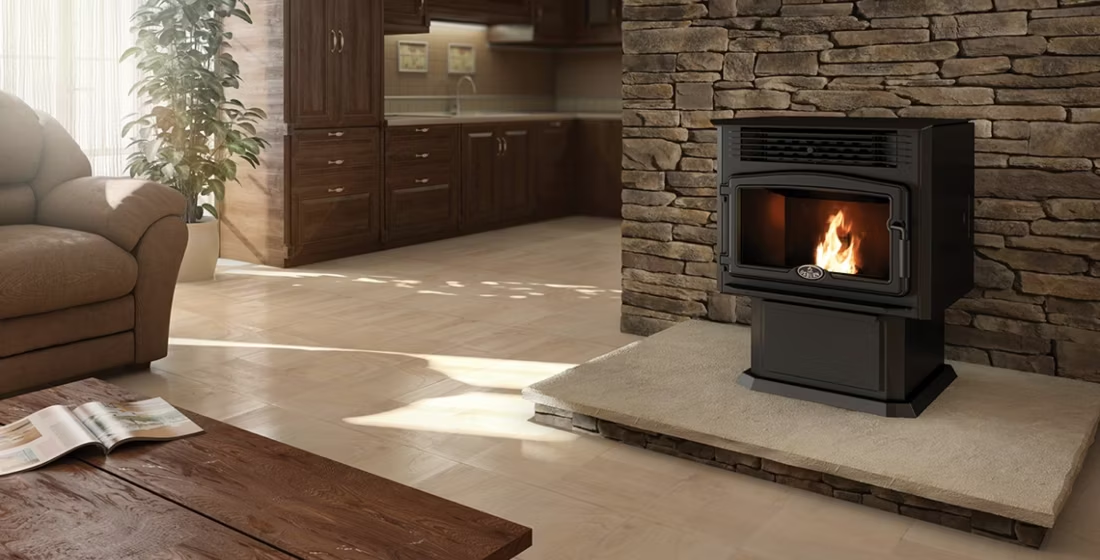
From Newton and Bon Wier to Deweyville and the Toledo Bend shoreline, a pellet stove gives Deep East Texas homes clean, thermostat-controlled heat for cold fronts—without a woodpile to maintain. Find the right unit and connect with a trusted local dealer.
Every Project Starts From One of These Five Situations
Newton County doesn't need a furnace-grade fireplace. It needs a smart one.
Newton County sits in Climate Zone 2A, deep in the piney woods along the Sabine National Forest and the Toledo Bend Reservoir shoreline. With roughly 1,793 heating degree days a year and an average winter low near 39°F, this isn't a place that needs to fight sub-zero nights the way homes in International Falls or Duluth do. Most winters bring a string of genuinely cold fronts—a week here, a few days there—bookended by long stretches of mild weather. That's exactly the pattern pellet stoves are built for.
Rather than sizing a home for the coldest night of a brutal season, most Newton County households want a stove that can knock the chill off a living room during a January cold snap, run efficiently on a thermostat, and then sit quietly the rest of the year. Pellet appliances from regional suppliers like Forest Energy and Lignetics fit that pattern well—consistent fuel, low ash, and none of the splitting, stacking, or seasoning that a full wood-burning setup demands. For weekend places around Toledo Bend and full-time homes in Newton, Bon Wier, Burkeville, and Deweyville alike, that convenience is the whole appeal.
Three steps. No salesperson until you're ready.
Tell us about your project
Your zip code, your situation, and the fuel you're leaning toward—or let the answers point you to one.
See what's actually available
The brands dealers within 100 miles genuinely carry—real options, never a catalog mirage.
Get your dealer & Project Guide
A trusted local dealer, plus the free Project Guide & Parts List that names every component of the job.
Frequently Asked Questions
How much does a pellet stove installation cost in Newton County?
Costs vary based on the stove's hopper size, whether it's a freestanding unit or an insert going into an existing masonry fireplace, and what electrical work is needed—pellet stoves require a dedicated outlet for the auger and blower motor, which is sometimes a small added expense in older Newton County homes. Because Newton County's mild winters mean most households are shopping for supplemental zone heat rather than a whole-home furnace replacement, many local installs run toward the smaller, simpler end of the spectrum compared to colder-climate counties. A local dealer can give you a firm, itemized number after seeing your home—that's exactly what's included in the free Project Guide & Parts List we put together for you.
What size pellet stove do I need for my home?
With only about 1,793 heating degree days a year, most Newton County homes don't need a stove sized to carry the whole house through winter—they need one that can comfortably heat a living area or open-concept main floor during the coldest week or two of the year. A smaller hopper (40 lb capacity or so) is usually enough for supplemental heating in a typical Newton County home; larger hoppers make more sense for homes near Toledo Bend used as weekend retreats, where you may want the stove to run unattended overnight. A local dealer can walk your specific floor plan and confirm the right size—sizing too big for this climate just means a stove that short-cycles instead of running efficiently.
Where can I find certified pellet stove installers near me?
Look for installers with NFI (National Fireplace Institute) certification, since pellet appliances involve both venting work and an electrical hookup that has to be done correctly. Given Newton County's small population, most homeowners end up working with hearth dealers based in nearby larger East Texas markets who service this area—expect to ask about travel time if you're out toward Wiergate or the Toledo Bend shoreline. A certified installer will also make sure the unit's exhaust venting (through-wall or through-roof) is placed correctly, which matters more than people expect on pellet units since the blower actively pushes exhaust rather than relying on a natural chimney draft.
What's the difference between a pellet stove and a pellet insert?
A pellet stove is a freestanding appliance that sits on its own hearth pad and vents through a wall or existing chimney chase—it works in homes with or without a fireplace already. A pellet insert is built to slide into an existing masonry fireplace opening, turning an old open hearth into a sealed, thermostat-controlled heat source using the existing chimney as part of the vent path. Many older homes around Newton and Deweyville have a traditional masonry fireplace already in place, which makes an insert the simpler retrofit—no new hearth pad, and the existing chimney does double duty.
Do I need a permit to install a pellet stove in Newton County?
Newton County doesn't maintain a countywide residential building code for unincorporated areas, so a lot of rural installs around the county proceed without a formal county permit. If you're inside city limits—Newton or Deweyville, for example—check with that city's office first, since municipal code can differ from the unincorporated county. Regardless of permit requirements, the electrical circuit feeding the stove's auger and blower should still be installed to code, and a reputable local dealer will make sure that part is handled correctly even where no inspection is required.
What's the best pellet stove for Newton County's climate?
Since Newton County only sees sustained cold for short stretches, a mid-efficiency pellet stove with a modest hopper and a simple thermostat control tends to be the practical choice—you want something that ramps up fast for a cold front and idles low the rest of the time, not a unit built to run flat-out for months. Pellets themselves are widely available through regional brands like Forest Energy and Lignetics, both distributed across East Texas, so fuel supply isn't a concern even though Newton itself is a small town. A local dealer can match hopper size and BTU output to your specific square footage and how you actually plan to use the stove—daily supplemental heat versus occasional cold-snap backup.
How often does a pellet stove need to be serviced?
Plan on a full annual cleaning and inspection before the season's first real cold front—typically clearing the burn pot, checking the auger mechanism, cleaning the glass, and inspecting the exhaust venting. During active use, the ash pan and burn pot need attention every few days to keep combustion efficient, though this is far less frequent than the daily upkeep a wood stove demands. Because Newton County's burn season is short and intermittent, many owners only need to do this cleaning once a year rather than mid-season—but skipping it entirely is still the most common cause of poor performance and service calls.
Where can I buy pellets locally in Newton County?
Given the county's small population, dedicated pellet retailers directly in Newton or Bon Wier are limited—most residents pick up bags from farm and feed stores, hardware suppliers, or distributors in larger nearby East Texas towns. Forest Energy and Lignetics are the two regional brands most commonly stocked in this part of the state, and both are widely available through East Texas hearth and feed suppliers. Buying a season's supply early, before the first cold front of the year drives demand up, is a common local strategy.
Pellet stove vs. wood stove—which is right for my Newton County home?
Wood is genuinely abundant here—oak, pecan, and mesquite are all common locally, and a wood stove works without electricity, which matters given that ice storms occasionally knock out power across rural East Texas electric cooperative lines. Pellet stoves need electricity to run the auger and blower, so they won't function as backup heat during an outage without a generator—worth weighing seriously in this region. What pellet stoves offer in return is convenience: no splitting or stacking, consistent heat output, and easy operation for a household that only needs heat for a handful of weeks a year. For a primary residence where storm-driven outages are a real concern, wood has an edge; for a low-maintenance supplemental setup or a Toledo Bend weekend property, pellet is often the simpler fit.
Why is my open fireplace making my house colder?
Open fireplaces suck—literally. As the fire burns, it consumes air your furnace already paid to heat and pulls it out through the chimney, so the house is actually colder after the fire goes out than before you lit it. An insert fixes this: it seals the chimney, puts fixed glass across the front, and turns that hole in your house into a real heat source.
Why is a fireplace insert so efficient?
An insert does two things: it seals the chimney completely, so you stop losing air you already paid to heat, and it radiates warmth into the room through the firebox and glass. Most add a heat-exchange fan that pulls cool room air underneath, wraps it around the hot firebox, and pushes it back out warm. Your home is more efficient before you've even lit the first fire.
Can I install a fireplace myself?
If you're putting a fire in your house on purpose, it's best to work with an expert. Unless you're genuinely experienced in framing, gas line, vent pipe, and the national code on clearances to combustibles, have a professional do it—and ideally the same company that sells you the fireplace, so warranty, service, and liability all live under one roof.
Does a fireplace add value to my home?
On average, a fireplace adds back to the home about the same amount you spent installing it. Add the monthly savings from heating the rooms you actually use instead of the whole house—often hundreds of dollars a year—and the value case is strong before you even count what a fire does for how your family uses the room.
Stove and Fireplace Dealers in Newton County
Listings include WhyFire partner dealers, dealers we have verified as authorized for the brands we recommend, and established local businesses that carry hearth products. Every listing shows which one it is. The ones marked Preferred run on WhyFire's software, so they can show you real pricing and book your appointment right here. No manufacturer pays for placement. How we verify dealers →
Below The Mantle
O'Neal Gas Inc.
Tri-Supply - Beaumont
Herman Brown Brick Co.
Balboa Company - Beaumont
Pico Propane And Fuels
Pellet Brands Stocked Around Newton County
Manufacturers will point you to the nearest stocking dealer.
Find your pellet stove in Newton County.
Tell us a bit about your home and we'll match you with the right pellet stove or insert, plus a free Project Guide & Parts List—the exact parts, vent kit, and a trusted local dealer for your Newton County project.
Find Your Fireplace →