
Find the Right Fireplace for Newton County, Texas.
Wood, propane, pellet, and electric fireplace resources for every community in Newton County—from the county seat to the Sabine River towns of Deweyville and Bon Wier. Find the right unit for a mild-winter county that still sees the occasional ice storm, and connect with a trusted local hearth retailer.
Every Project Starts From One of These Five Situations
Deep East Texas warmth, with occasional winter surprises.
Newton County sits in the Piney Woods of Deep East Texas, bordered by the Sabine River and Toledo Bend Reservoir along the Louisiana line. With just over 3,100 residents spread across nearly 940 square miles, it's a rural, forested county where oak, pecan, and mesquite cut from private timberland are the traditional firewood species. Climate zone 2A means hot, humid summers and genuinely mild winters—an average low of 39°F and just 1,793 annual heating degree days, a fraction of what a place like Duluth, Minnesota logs in a single winter. But mild doesn't mean risk-free: when a Gulf moisture system collides with an arctic front, ice accumulates fast on power lines through the Sabine River bottomlands, and that's when a wood stove or propane insert stops being a nice-to-have and becomes the thing keeping a household warm during a multi-day outage.
What you'll find on this hub: hearth retailers, service technicians, and fuel suppliers serving every community in the county—Newton, Deweyville, Bon Wier, Call, Burkeville, and Wiergate. Piped natural gas is limited out here, so most gas appliances run on propane delivered by local suppliers rather than a municipal line. Pick your fuel below to drill into local dealers, installation costs, and the resources that fit your project, whether you're heating a farmhouse off FM 1414 or a cabin near Toledo Bend.
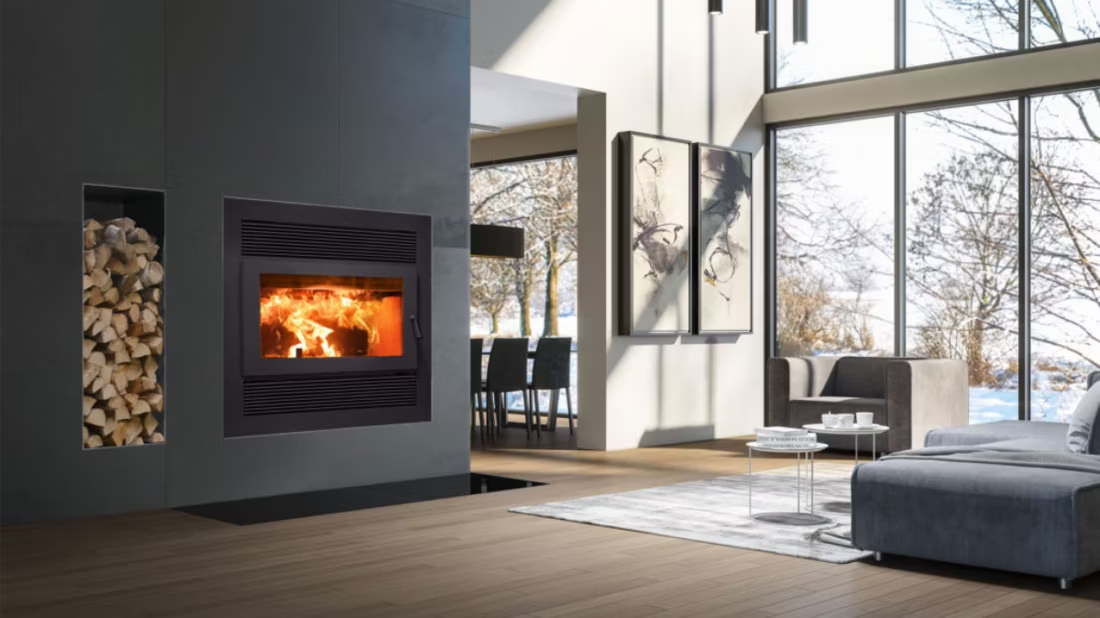
Four fuels. One honest answer for Newton County.
Three steps. No salesperson until you're ready.
Tell us about your project
Your zip code, your situation, and the fuel you're leaning toward—or let the answers point you to one.
See what's actually available
The brands dealers within 100 miles genuinely carry—real options, never a catalog mirage.
Get your dealer & Project Guide
A trusted local dealer, plus the free Project Guide & Parts List that names every component of the job.
Frequently Asked Questions
Which fuel works best in Newton County?
It depends on the home and how you use it. Wood remains popular here because oak, pecan, and mesquite are plentiful on private timberland and cost little to nothing to cut and season—a wood stove or fireplace insert also keeps working through the ice-related power outages that hit the Sabine River bottomlands most winters. Propane is the practical choice for a gas fireplace or insert, since piped natural gas is limited across rural Newton County; propane delivery is well established and gives you instant heat without hauling wood. Pellet stoves are a solid middle ground—Forest Energy and Lignetics pellets are both available regionally, and pellet appliances need less daily tending than wood. Electric fireplaces are more about ambiance and supplemental warmth than primary heat, which fits a 2A climate where the average winter low is only 39°F and the heating season is short. Most homes here run central HVAC as the everyday system and lean on wood or propane as backup during cold snaps and outages.
Do I need a permit to install a fireplace in Newton County?
Newton County doesn't have the kind of centralized, well-publicized permitting office you'd find in a large metro county, so permit requirements for wood stoves, propane inserts, and pellet stoves are best confirmed directly with the Newton County Courthouse or your city (Newton, Deweyville, or Bon Wier) before work begins. Any propane line work should still be done by a licensed propane technician regardless of whether a formal permit is pulled, and most local retailers who serve the county will coordinate that piece for you as part of installation. Electric fireplaces generally don't require a permit unless a built-in unit needs new wiring or a dedicated circuit.
Are there air quality restrictions on wood burning in Newton County?
No. Newton County has no designated air quality non-attainment status and no wood-burning curtailment program—there's no yellow-day or red-day burn advisory system the way you'd see in a smoke-prone basin out West. That said, any new wood stove you buy will already meet EPA 2020 NSPS emissions standards, since that's now the baseline for stoves sold nationwide, so you get the efficiency and emissions benefits regardless of local restrictions.
Can one local hearth retailer handle all four fuel types in Newton County?
With just over 3,100 residents spread across nearly 940 square miles, Newton County itself doesn't support a large number of standalone hearth showrooms. Many residents end up working with dealers based in nearby Orange, Jasper, or Beaumont who travel into the county for consultations, permit coordination, and installation. When you're cross-shopping fuel types—say, comparing a wood insert against a propane unit—a multi-fuel dealer that services this stretch of Deep East Texas can usually show you working displays of each and talk through what actually fits your chimney, your propane tank setup, or your electrical panel.
How does fireplace service work in rural parts of Newton County?
Most chimney sweeps and propane service techs covering Newton County are based out of the Beaumont or Orange area and drive out to the Sabine River communities—Deweyville, Bon Wier, Call, Burkeville, and Wiergate—as needed. Expect a modest travel charge for the more remote addresses, and expect scheduling to tighten up right before winter, since that's when everyone remembers their wood stove needs sweeping or their propane insert needs a look before the first hard freeze. Booking service in early fall, ahead of any ice event, is the difference between a routine appointment and a scramble during an outage.
What's the typical cost range for fireplace installation across all fuel types in Newton County?
Ranges vary by fuel and by how much existing infrastructure you have. Wood stove or insert installation: roughly $4,000–$8,500 for a typical install, more if new chimney chase work is needed. Propane fireplace, insert, or stove: roughly $4,000–$9,000, with cost driven mainly by whether a propane line already runs to the install location. Pellet stove or insert: roughly $4,000–$7,000 for a standard install. Electric fireplace: $200–$3,000 for the unit itself, plus $400–$1,200 in labor for anything beyond a simple plug-and-play placement. Because Newton County has fewer local dealers than a metro county, travel time from Orange, Jasper, or Beaumont can be a factor in the final quote—worth asking about upfront.
Can I install a fireplace myself?
If you're putting a fire in your house on purpose, it's best to work with an expert. Unless you're genuinely experienced in framing, gas line, vent pipe, and the national code on clearances to combustibles, have a professional do it—and ideally the same company that sells you the fireplace, so warranty, service, and liability all live under one roof.
What is an in-home preview and do I need one?
It's a visit where a hearth professional measures your space, confirms the model you picked actually works in your home, and walks the specs—framing, gas line, venting, finish work—before anything is ordered. Some details you just can't know until you see the house. Never make a down payment without one; it's the single most-skipped step that burns buyers.
How much should I budget for a fireplace?
For an average home—covering the fireplace, the vent pipe, and basic installation—a budget between $3,900 and $5,500 gives you a lot of options across wood, gas, and pellet. By the time you add finish work, gas line, and electrical, the average complete installation lands between $5,000 and $12,000 all-in. In a remodel or new build, a good rule is to put about 2.5% of the total project cost toward the fireplace.
Can a fireplace actually lower my heating bill?
Yes—by creating a comfort zone. A furnace heats every square foot of the house just to warm the one room you're in; a gas fireplace on low burns roughly a sixth of the gas a typical furnace does. Set the furnace around 55–60 degrees as a baseline, then heat the rooms your family actually uses. Families who heat this way commonly save $20–$60 a month.
Stove and Fireplace Dealers in Newton County
Listings include WhyFire partner dealers, dealers we have verified as authorized for the brands we recommend, and established local businesses that carry hearth products. Every listing shows which one it is. The ones marked Preferred run on WhyFire's software, so they can show you real pricing and book your appointment right here. No manufacturer pays for placement. How we verify dealers →
Below The Mantle
O'Neal Gas Inc.
Tri-Supply - Beaumont
Herman Brown Brick Co.
Balboa Company - Beaumont
Pico Propane And Fuels
Find your fireplace in Newton County.
Tell us about your home and we'll match you with a trusted local dealer and send you a free Project Guide & Parts List—a plan for your fireplace project in Newton County with the exact parts, including the vent kit, and the dealer we recommend for your fuel.
Find Your Fireplace →