
Cozy nights without splitting a single log in Navarro County.
Navarro County winters rarely demand real heat, but they do get cold enough—and dark enough—to want a fire. Find the right gas fireplace, insert, or stove and connect with a trusted local dealer.
Every Project Starts From One of These Five Situations
Ambiance and reliable heat for mild Texas winters.
Navarro County sits in climate zone 3A, with an average winter low around 35°F and a mild winter heating season that's just a fraction of what a place like Duluth, MN sees in a single hard month. Most winters in Corsicana, Kerens, Blooming Grove, and the rural stretches along I-45 pass without a hard freeze most weeks. But Texas winters aren't always predictable—the February 2021 freeze that knocked out power across the state is still fresh in a lot of local minds, and it's part of why homeowners here want a fireplace that works whether or not the grid does.
Natural gas service through Atmos Energy covers much of Corsicana and the immediate area, while propane is the standard fuel in the smaller towns and rural county—Dawson, Frost, Angus, Rice, and the farmland in between. Either way, a gas fireplace gives Navarro County homeowners something a wood-burning setup rarely gets used for locally: instant, no-mess heat for the handful of genuinely cold nights, plus year-round ambiance the rest of the season. Local oak and pecan still get burned around here—mostly in the smoker, not the fireplace—which tells you something about how the county actually uses fire.
Three steps. No salesperson until you're ready.
Tell us about your project
Your zip code, your situation, and the fuel you're leaning toward—or let the answers point you to one.
See what's actually available
The brands dealers within 100 miles genuinely carry—real options, never a catalog mirage.
Get your dealer & Project Guide
A trusted local dealer, plus the free Project Guide & Parts List that names every component of the job.
Frequently Asked Questions
How much does a gas fireplace installation cost in Navarro County?
Most gas fireplace installations in Navarro County run in the $3,500 to $8,500 range, depending on the unit, whether you're converting an existing masonry fireplace or starting fresh, and whether new gas line work is needed. A direct-vent insert going into a fireplace that already has a gas line nearby tends to land on the lower end. New construction, a propane tank installation, or a longer gas line run out to a detached room pushes toward the higher end. A local dealer will give you a firm number after seeing the space.
Can I convert my existing wood fireplace to gas?
Yes, and it's a common project in Navarro County's older homes around Corsicana, many of which were built with a wood-burning masonry fireplace decades ago and rarely use it as anything more than a place to set the mantel. A gas insert typically drops into that existing opening and uses the same chimney, lined for gas venting. Given how little the wood-burning version likely gets used given the mild climate here, converting to gas is often the more practical upgrade—instant heat and flame with none of the ash or the oak and mesquite splitting that firewood requires.
Do I need natural gas, or can I use propane?
Either works, and which one you use mostly comes down to where you live in the county. Atmos Energy provides natural gas service through much of Corsicana, so homes already on that line can add a fireplace without much trouble. Outside the city—Kerens, Blooming Grove, Frost, Dawson, and the rural county generally—propane is the standard, either from an existing tank or a new one set by a local propane supplier. Most gas fireplace models can be configured for either fuel; your installer sets the correct orifice and regulator for whichever you have.
Will my gas fireplace work during a power outage?
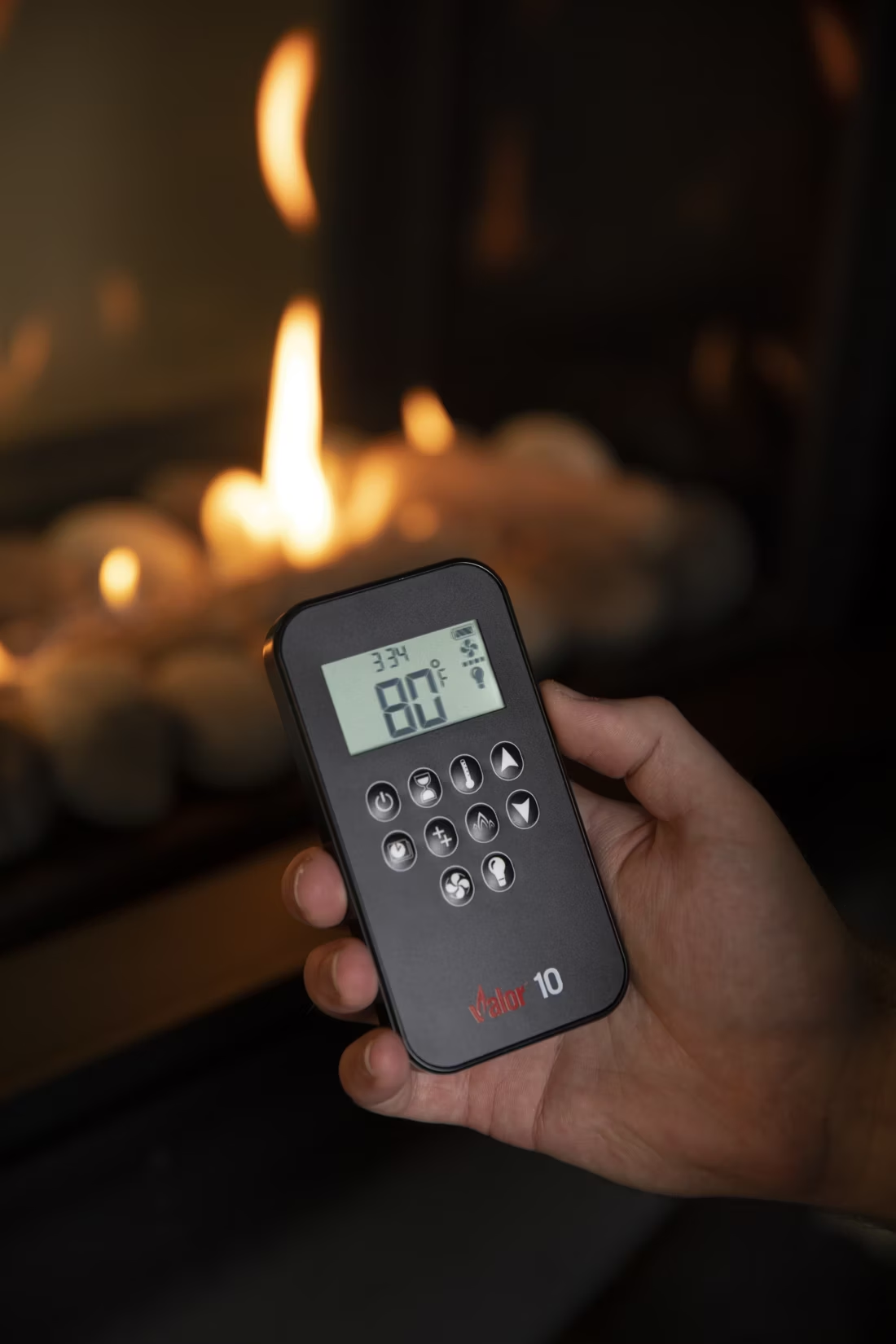
Most modern gas fireplaces will, which matters more in Navarro County than the mild average winter suggests—the February 2021 statewide freeze left plenty of local homes without power for days in genuinely cold conditions. Units with IPI (intermittent pilot ignition) run on battery backup, so they'll light and operate even with the grid down, as long as the batteries are fresh. Some brands, like Valor, go a step further and generate their own electricity off the pilot's thermocouple, so there's no battery to remember at all. Worth asking about directly when you're comparing units.
What's the difference between a gas fireplace, gas insert, and gas stove?
A gas fireplace is a fully built-in unit framed into a wall—the right choice for new construction or a room without an existing fireplace. A gas insert fits inside an existing masonry opening, which describes a lot of the older homes around Corsicana that were originally built for wood. A gas stove is a freestanding cabinet-style unit that can go almost anywhere with the right clearances and venting, which makes it a flexible option for smaller homes or rooms that were never built around a hearth at all.
Do I need a permit to install a gas fireplace in Navarro County?
Yes—within Corsicana, permits for gas fireplace installation and the associated gas line work go through the City of Corsicana's building inspections office; in unincorporated Navarro County, the county handles it. The gas line portion specifically needs a licensed gas-fitter, which is one reason it's worth using an established local hearth dealer rather than a general handyman—they coordinate the gas work, the venting, and the inspection as one job instead of leaving you to manage separate trades.
What's the difference between vented and vent-free gas fireplaces?
Vented (direct-vent) units draw combustion air from outside and exhaust it back outside through sealed venting—they're the cleanest and most universally code-compliant option. Vent-free units burn gas directly into the room with no external venting, which makes them easier to install in an interior wall or a room without existing venting access, but they release some combustion byproducts into the living space and come with strict room-sizing and ventilation rules. Vent-free is legal in Texas, and it shows up in some Navarro County installs where running venting to the outside isn't practical. Direct-vent remains the more commonly recommended option for a primary living space; a local dealer can walk through both for your specific room.
How often should my gas fireplace be serviced?
Once a year is the standard recommendation, even for units that only get lit occasionally through a mild Navarro County winter. A technician checks the burner, pilot assembly, venting, and gas connections, and cleans the glass and interior—this typically runs $150 to $250 and takes less than an hour. It's a smaller job than chimney sweeping for a wood system, but skipping it is still the main way small gas leaks or ignition issues go unnoticed.
Gas vs. wood—which makes sense for a Navarro County home?
Wood is genuinely uncommon here for heating purposes—with such a mild winter heating season, most Navarro County homes simply don't need a serious primary heat source, and local oak, pecan, and mesquite tend to end up in the smoker rather than a fireplace. Wood-burning setups still exist, mostly in older homes with a masonry fireplace built decades ago, and they get used a handful of times a winter for atmosphere more than warmth. Gas is the more practical fit for most of the county: instant on-off operation, no ash or wood handling, and—with the right ignition system—heat that still works if the power goes out during one of Texas's occasional hard freezes.
Why is a fireplace insert so efficient?
An insert does two things: it seals the chimney completely, so you stop losing air you already paid to heat, and it radiates warmth into the room through the firebox and glass. Most add a heat-exchange fan that pulls cool room air underneath, wraps it around the hot firebox, and pushes it back out warm. Your home is more efficient before you've even lit the first fire.
What's the difference between an insert and a zero-clearance fireplace?
An insert is a fireplace that slides into a pre-existing wood-burning fireplace—if you don't have one, there's nothing to insert it into. A zero-clearance fireplace is built into a framed wall, which makes it the answer for remodels and new construction. Simple test: existing masonry fireplace means insert; blank or framed wall means zero-clearance.
How much should I budget for a fireplace?
For an average home—covering the fireplace, the vent pipe, and basic installation—a budget between $3,900 and $5,500 gives you a lot of options across wood, gas, and pellet. By the time you add finish work, gas line, and electrical, the average complete installation lands between $5,000 and $12,000 all-in. In a remodel or new build, a good rule is to put about 2.5% of the total project cost toward the fireplace.
Can a fireplace actually lower my heating bill?
Yes—by creating a comfort zone. A furnace heats every square foot of the house just to warm the one room you're in; a gas fireplace on low burns roughly a sixth of the gas a typical furnace does. Set the furnace around 55–60 degrees as a baseline, then heat the rooms your family actually uses. Families who heat this way commonly save $20–$60 a month.
Stove and Fireplace Dealers in Navarro County
Listings include WhyFire partner dealers, dealers we have verified as authorized for the brands we recommend, and established local businesses that carry hearth products. Every listing shows which one it is. The ones marked Preferred run on WhyFire's software, so they can show you real pricing and book your appointment right here. No manufacturer pays for placement. How we verify dealers →
The Chimney Guy -Seven Points
Clay Structures Inc
Fieldstone & Fireplaces
Find your gas fireplace in Navarro County.
Tell us a bit about your home and we'll put together a free Project Guide & Parts List—the right gas fireplace or insert, the vent kit it needs, and a trusted local Navarro County dealer to install it.
Find Your Fireplace →