
Find the right electric fireplace for your Navarro County home.
Mild winters, no chimney, no gas line—just clean ambient heat and real flame-look style for homes across Corsicana, Kerens, and the rest of the county. I'll match you with a trusted local dealer.
Every Project Starts From One of These Five Situations
Zone heat that matches a Zone 3A winter.
Navarro County sits in climate zone 3A with an average winter low around 35°F and a short, mild heating season overall—a fraction of what a place like Bismarck ND or Duluth MN experiences. Winters here are short and mild by comparison, which means most homeowners in Corsicana, Kerens, Blooming Grove, and the surrounding county don't need a heavy-duty primary heat source. They want supplemental warmth in a specific room, a fireplace that looks good year-round, and something that doesn't require a chimney, gas line, or venting of any kind.
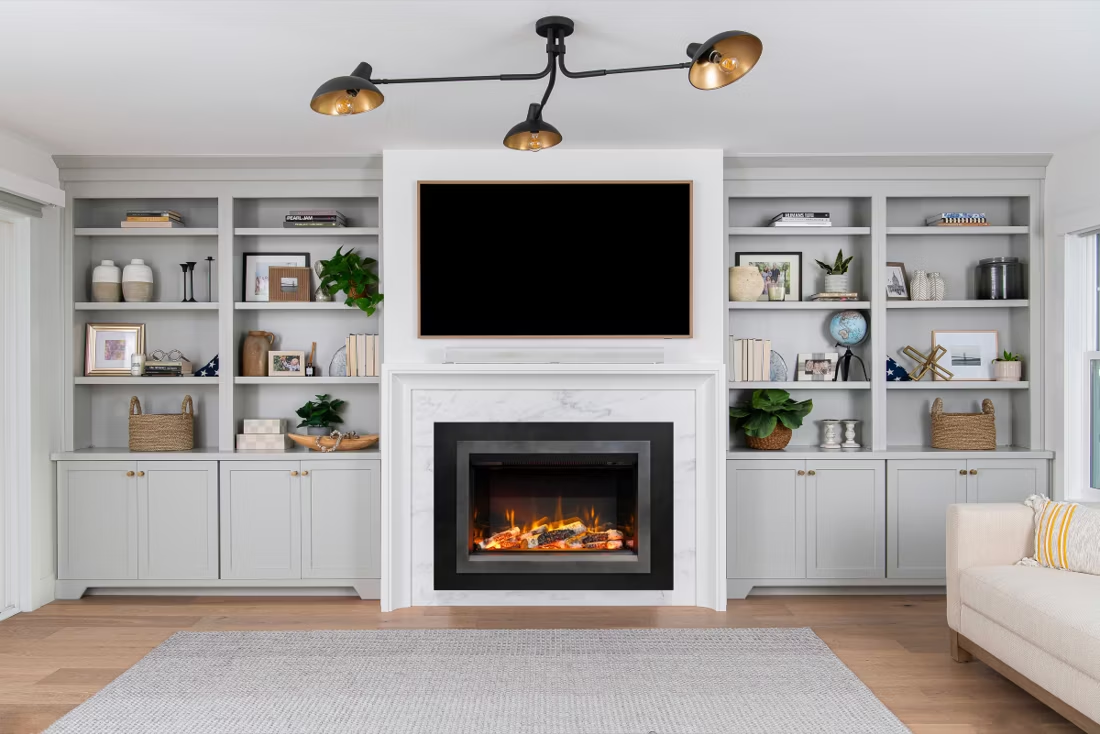
That's exactly where electric fireplaces and inserts fit in. There's no permit hassle, no combustion byproducts, and no dependence on a local gas utility footprint that may not reach your part of the county. A well-chosen electric unit heats a living room or bedroom on a cool January night, runs on flame-effect only the rest of the year, and installs into an existing masonry fireplace opening or a new stud wall without touching your roofline. For a county where oak, pecan, and mesquite firewood is more of a backyard cookout tradition than a heating necessity, electric is a straightforward, low-maintenance way to add warmth and ambiance.
Three steps. No salesperson until you're ready.
Tell us about your project
Your zip code, your situation, and the fuel you're leaning toward—or let the answers point you to one.
See what's actually available
The brands dealers within 100 miles genuinely carry—real options, never a catalog mirage.
Get your dealer & Project Guide
A trusted local dealer, plus the free Project Guide & Parts List that names every component of the job.
Frequently Asked Questions
How much does an electric fireplace installation cost in Navarro County?
Most electric fireplace and insert installs in Navarro County run $400 to $1,200. A plug-in insert that drops into an existing masonry firebox on the low end simply needs the right outlet nearby. A built-in electric fireplace set into new framing, or one that needs a dedicated 120V or 240V circuit run by an electrician, lands toward the higher end. Because there's no venting, chimney, or gas line to deal with, electric installs in Corsicana and the surrounding county are typically the fastest and least invasive of any fireplace project—often a single afternoon.
Do I need a permit to install an electric fireplace in Navarro County?
In most cases, no separate fireplace permit is required for a plug-in electric insert or a freestanding unit—it's treated like any other appliance. If your installer needs to add a new dedicated circuit or outlet, that electrical work may require a permit through the local building jurisdiction, and it should always be done by a licensed electrician. A trusted local dealer will tell you upfront whether your specific installation crosses into permit territory.
Is an electric fireplace enough heat for a Navarro County home?
For most rooms, yes. With average winter lows around 35°F and only a short, mild heating season overall, Navarro County doesn't demand the kind of all-night, sub-zero heat output that a stove in Fargo ND or International Falls MN would need to produce. Most electric fireplaces put out 4,000-5,000 BTUs, which is plenty to take the chill off a living room, bedroom, or converted garage on a cold front night. Homeowners here typically use electric as supplemental zone heat alongside central HVAC rather than as their only heat source—and that pairing works well given the mild local winters.
What's the difference between an electric insert and a built-in electric fireplace?
An electric insert is sized to slide into an existing fireplace opening—a common upgrade for older Corsicana and Kerens homes with a masonry firebox that's rarely used for wood anymore. A built-in electric fireplace is designed to be framed into a wall during new construction or a remodel, giving you more flexibility on size and placement since there's no existing opening to match. Both plug into a standard outlet in most cases, and neither requires venting.
Can I put a wood-burning fireplace insert into electric instead?
Yes—this is one of the more common projects local dealers handle in Navarro County. If you've got an old masonry fireplace that's rarely used, or one that's been closed off for safety reasons, an electric insert converts it into a clean, low-maintenance heat source without touching the chimney structure. It's a popular option for older homes around Corsicana where the original wood fireplace is more decorative than functional at this point.
Are wood stoves or pellet stoves an option in Navarro County?
They're technically possible but genuinely uncommon here. With winter lows averaging 35°F and no significant winter heating load, there's little practical need for a wood or pellet appliance as a primary heat source—most local demand for wood-fired heat has moved toward outdoor cooking with oak, pecan, and mesquite rather than indoor heating. A small number of homeowners still install wood stoves for ambiance or off-grid backup, and pellet brands like Forest Energy and Lignetics are available regionally if someone wants that route, but for the vast majority of Navarro County homes, electric or gas is the more practical and more commonly installed choice.
Will my electric fireplace work during a power outage?
No—electric fireplaces require power to run the heater and flame-effect display, so they won't operate during an outage. This is worth factoring in if backup heat during storms is a priority for your household. If that's a real concern for your property, a gas fireplace or insert is the better backup-capable option, since many gas units include battery-backed ignition that keeps working when the grid doesn't. Electric remains the simpler, lower-cost choice for everyday supplemental heat and ambiance when outage resilience isn't the top priority.
Electric vs. gas fireplace—which is right for my Navarro County home?
Gas delivers real heat output and can be configured to run during a power outage, which matters more for homes further from town or in areas prone to ice-storm outages. Electric costs less to install, needs no gas line or venting, and gives you flame-look ambiance with zero combustion byproducts—a good fit for a bedroom, home office, or secondary living space where you want style and light warmth without construction. Plenty of Corsicana-area homeowners run gas in the main living room and electric in a bedroom or den. A local dealer can walk through both options against your specific room and budget.
Do electric fireplaces need any maintenance?
Very little compared to wood or gas. There's no chimney to sweep, no gas line to inspect, and no combustion byproducts to worry about. Occasional dusting of the heating vents and an occasional check that the unit's fan isn't clogged with pet hair or dust is typically all that's needed. Most units are rated for years of regular use before any component (usually the LED flame bulbs, on older models) needs replacing—your local dealer can advise on the specific model's expected service life.
Can I put a TV above my fireplace?
Yes—with an asterisk. Fireplaces are hot and TVs don't like heat. Either put a mantel between them to deflect rising warmth, or choose a fireplace with heat-management technology that creates a cool zone on the wall above—the wall stays around 125 degrees, barely warm, while the room still gets full heat. If you like clean lines and don't want a mantel, heat management is the answer.
Does an electric fireplace need a vent or chimney?
No—that's its superpower. An electric fireplace needs a wall and an outlet, period. No vent pipe, no gas line, no clearances to design around, which is why it works in bedrooms, offices, apartments, and walls where venting a gas or wood unit would be impractical or impossible. Installation is typically the simplest and least expensive of any fireplace type.
What is an in-home preview and do I need one?
It's a visit where a hearth professional measures your space, confirms the model you picked actually works in your home, and walks the specs—framing, gas line, venting, finish work—before anything is ordered. Some details you just can't know until you see the house. Never make a down payment without one; it's the single most-skipped step that burns buyers.
Does a fireplace add value to my home?
On average, a fireplace adds back to the home about the same amount you spent installing it. Add the monthly savings from heating the rooms you actually use instead of the whole house—often hundreds of dollars a year—and the value case is strong before you even count what a fire does for how your family uses the room.
Stove and Fireplace Dealers in Navarro County
Listings include WhyFire partner dealers, dealers we have verified as authorized for the brands we recommend, and established local businesses that carry hearth products. Every listing shows which one it is. The ones marked Preferred run on WhyFire's software, so they can show you real pricing and book your appointment right here. No manufacturer pays for placement. How we verify dealers →
The Chimney Guy -Seven Points
Clay Structures Inc
Fieldstone & Fireplaces
Get your Navarro County electric fireplace Project Guide & Parts List.
Tell me a bit about your home and I'll match you with a trusted local dealer and send a free Project Guide & Parts List—the exact parts your electric fireplace project needs and who locally can install it.
Find Your Fireplace →