
Real Local Options for Navarro County's Mild Winters.
Gas and electric fireplace resources for every city in Navarro County, from Corsicana to Kerens to Blooming Grove—plus honest guidance on wood and pellet units for the rare homeowner who wants them. Connect with a trusted local hearth retailer near you.
Every Project Starts From One of These Five Situations
Mild-winter heating across Navarro County, Texas.
Navarro County sits in climate zone 3A, with winter lows averaging around 35°F and just 2,319 heating degree days a year—a fraction of what a place like Duluth, Minnesota logs in a single season. Heating here is a matter of a few genuinely cold weeks each winter, not a months-long campaign against subzero nights. Oak, pecan, and mesquite grow throughout the county and show up constantly in Corsicana smokehouses and backyard pits, but that's a cooking tradition, not a home-heating one—full-time wood stoves and pellet appliances are genuinely rare here, and we say so plainly rather than pretend otherwise.
What you'll find on this hub: gas and electric fireplace retailers, service technicians, and fuel suppliers serving every community in the county—Corsicana, Kerens, Blooming Grove, Rice, Frost, Dawson, and the smaller towns around Richland-Chambers Reservoir and Navarro Mills Lake. Pick your fuel below for local dealers, installation costs, and recommended units. If you're one of the homeowners who still wants a wood-burning or pellet unit for ambiance or backup heat, we'll tell you honestly what's available and who installs it.
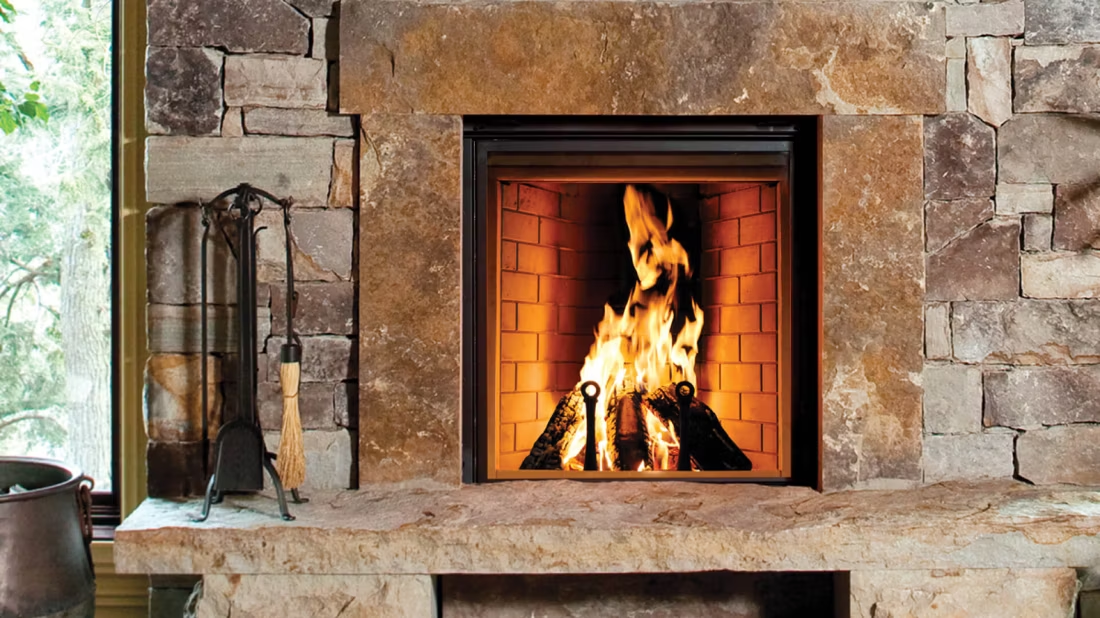
Four fuels. One honest answer for Navarro County.
Three steps. No salesperson until you're ready.
Tell us about your project
Your zip code, your situation, and the fuel you're leaning toward—or let the answers point you to one.
See what's actually available
The brands dealers within 100 miles genuinely carry—real options, never a catalog mirage.
Get your dealer & Project Guide
A trusted local dealer, plus the free Project Guide & Parts List that names every component of the job.
Frequently Asked Questions
Which fuel works best in Navarro County?
For most homes here, it's gas or electric. Navarro County's mild winters—average lows around 35°F and only about 2,300 heating degree days a year—mean a fireplace is mostly a comfort feature and occasional cold-snap backup, not a primary heat source. A gas fireplace or insert gives you instant heat with no maintenance, and works whether you're on natural gas in Corsicana city limits or propane out in Kerens or Blooming Grove. Electric fireplaces are popular for ambiance in bedrooms, dens, and homes that don't want any venting at all. Wood stoves and pellet stoves exist here—oak, pecan, and mesquite are easy to source locally—but they're a niche choice for homeowners who specifically want a wood-burning experience, not a heating necessity the way they would be in a place with a real winter.
Do I need a permit to install a fireplace in Navarro County?
In most cases, yes, for anything beyond a plug-in electric unit. Gas fireplace, insert, and stove installations typically require a building permit plus a separate gas line permit, and the gas connection itself should be done by a licensed gas-fitter. Within Corsicana city limits, permits are issued through the city; in unincorporated parts of the county, they go through the Navarro County building department. Electric fireplaces usually don't need a permit unless you're doing a built-in installation with new wiring. If you do end up installing a wood or pellet stove, it'll need to meet current EPA emissions standards regardless of how rarely it gets used. Most local retailers handle the permitting as part of the installation, so you're generally not filing paperwork yourself.
Are there air quality restrictions on wood burning in Navarro County?
No—Navarro County has no wood-burning restrictions or non-attainment designations, and there's no local burn-ban tradition tied to air quality the way you'd see in a basin or valley community prone to winter inversions. That said, if you do install a wood-burning appliance, it still needs to meet EPA 2020 NSPS emissions standards to be sold and installed new. Given how rarely wood units get used here, most owners run them a handful of nights a winter for atmosphere rather than daily heat—which is part of why air quality has never been a local concern.
Oak, pecan, and mesquite are everywhere here—so why isn't wood heat more common?
It's a climate math problem, not a wood-supply problem. Navarro County has plenty of oak, pecan, and mesquite—the same wood that fuels Corsicana's smokehouses and backyard pits year-round—but at 2,319 heating degree days and winter lows around 35°F, there simply aren't enough genuinely cold days to justify running a wood stove as a primary heat source. Compare that to a wood-heavy market like Duluth, Minnesota, where subzero stretches make a catalytic stove burn around the clock for months. Here, a wood-burning fireplace is more likely to get lit for a handful of December and January evenings than to carry real heating load—which is exactly why we list it as a niche option rather than a standard one.
Do local dealers actually carry wood and pellet units, or is it mostly gas and electric?
It's mostly gas and electric, and we'd rather tell you that upfront than send you chasing inventory that doesn't exist. Most Corsicana-area hearth retailers stock gas fireplaces, gas inserts, and electric units as their core business, with wood-burning fireplaces available by special order or through a smaller subset of dealers. Pellet stoves are harder to find locally—regional brands like Forest Energy and Lignetics supply pellet fuel to the broader Texas market, but dedicated pellet stove dealers in Navarro County are limited. If you specifically want wood or pellet, ask up front which dealers actually stock and install those units—it'll save you a wasted showroom visit.
What's the typical cost range for fireplace installation across fuel types in Navarro County?
Gas fireplace, insert, or stove: roughly $3,500–$9,000 depending on whether it's a straightforward gas-line hookup or new venting through an exterior wall. Electric fireplace: $200–$3,000 for the unit itself, plus $300–$1,000 in labor for anything beyond a plug-and-play install, such as a built-in or wall-mount unit. Wood stove or fireplace insert: $4,000–$8,500 for the rare full installation, including chimney or venting work. Pellet stove: similar to wood, generally $4,000–$7,000, though installers are harder to find locally. For details tied to specific local retailer pricing, see the county + fuel pages above.
Can a fireplace actually lower my heating bill?
Yes—by creating a comfort zone. A furnace heats every square foot of the house just to warm the one room you're in; a gas fireplace on low burns roughly a sixth of the gas a typical furnace does. Set the furnace around 55–60 degrees as a baseline, then heat the rooms your family actually uses. Families who heat this way commonly save $20–$60 a month.
Can I install a fireplace myself?
If you're putting a fire in your house on purpose, it's best to work with an expert. Unless you're genuinely experienced in framing, gas line, vent pipe, and the national code on clearances to combustibles, have a professional do it—and ideally the same company that sells you the fireplace, so warranty, service, and liability all live under one roof.
What is an in-home preview and do I need one?
It's a visit where a hearth professional measures your space, confirms the model you picked actually works in your home, and walks the specs—framing, gas line, venting, finish work—before anything is ordered. Some details you just can't know until you see the house. Never make a down payment without one; it's the single most-skipped step that burns buyers.
Should the dealer who sells my fireplace also install it?
Ideally, yes. A fireplace project involves vent pipe, gas line, electrical, and often tile or stone. Hire three or four separate trades and you own the liability and the game of telephone between them. One company selling and installing means one accountable party, start to finish—ask about factory training, on-time completion records, and what happens if an inspection fails.
Stove and Fireplace Dealers in Navarro County
Listings include WhyFire partner dealers, dealers we have verified as authorized for the brands we recommend, and established local businesses that carry hearth products. Every listing shows which one it is. The ones marked Preferred run on WhyFire's software, so they can show you real pricing and book your appointment right here. No manufacturer pays for placement. How we verify dealers →
The Chimney Guy -Seven Points
Clay Structures Inc
Fieldstone & Fireplaces
Find your fireplace in Navarro County.
Tell us your fuel and your town, and we'll match you with a trusted local dealer and send a free Project Guide & Parts List—the exact parts, including the vent kit, and the dealer we recommend for your Navarro County home.
Find Your Fireplace →