
Reliable heat for Hill Country winters.
From the granite hills around Enchanted Rock to the shorelines of Lake LBJ and Lake Buchanan, Llano County winters are short but can turn sharp fast. Find the right pellet stove or insert and get matched with a trusted local dealer.
Every Project Starts From One of These Five Situations
Clean, low-maintenance warmth for a mild but unpredictable winter.
Llano County sits in climate zone 3A, with an average winter low around 34°F and a light winter heating load—just a fraction of what a place like Duluth, MN sees in a single winter. Most years, the Hill Country's cold weather amounts to a handful of frosty nights and the occasional multi-day cold snap that catches lake houses and ranch homes off guard. That's exactly the kind of climate where a pellet stove earns its keep: enough heat when you need it, without the bulk of a full wood-burning setup sized for a much colder region.
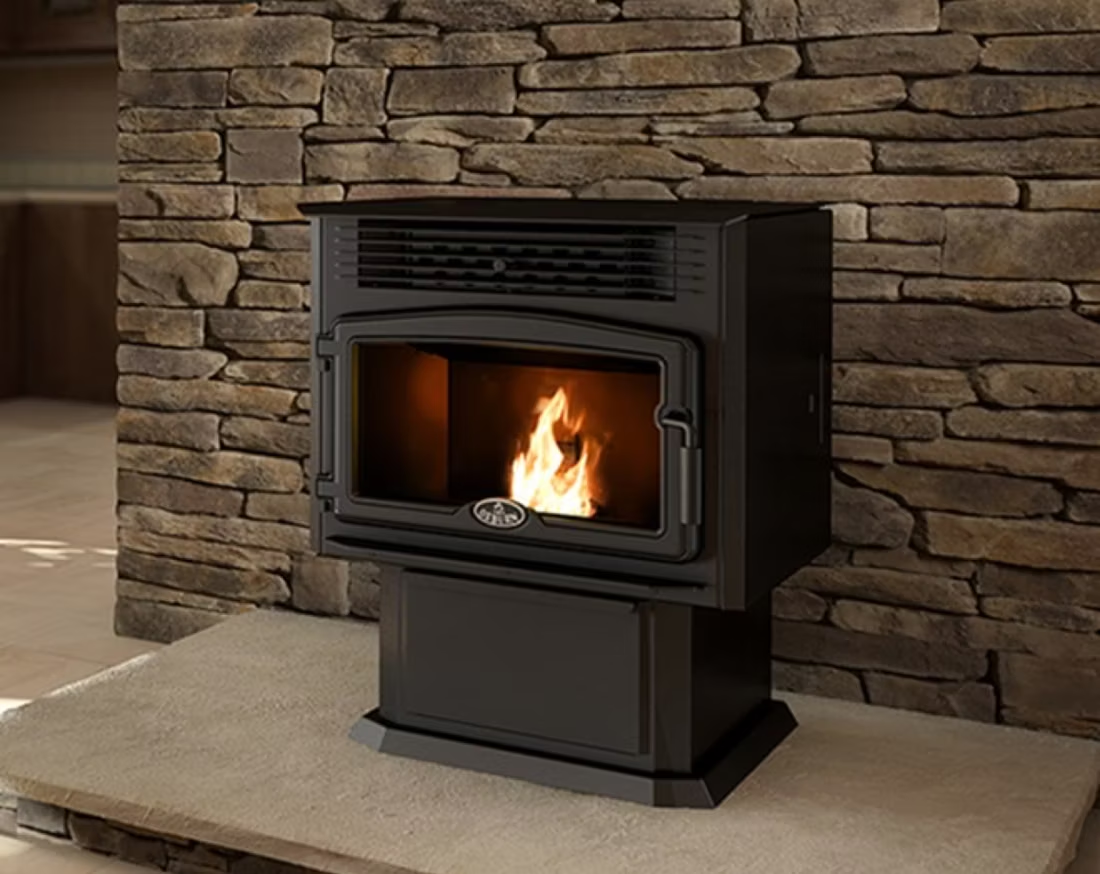
Pellet stoves are popular here as supplemental heat for the county's many ranch-style homes, lake cabins around Buchanan Dam and Kingsland, and older houses without existing chimneys—a pellet stove vents through a simple wall-mounted pipe rather than requiring masonry work. Regional brands like Forest Energy and Lignetics are widely stocked at farm and hardware stores across the Hill Country, so fuel supply isn't a concern. The tradeoff worth knowing: pellet stoves rely on electricity to run the auger and blower, which matters during the ice storms that occasionally knock out power across the county for days at a time.
Three steps. No salesperson until you're ready.
Tell us about your project
Your zip code, your situation, and the fuel you're leaning toward—or let the answers point you to one.
See what's actually available
The brands dealers within 100 miles genuinely carry—real options, never a catalog mirage.
Get your dealer & Project Guide
A trusted local dealer, plus the free Project Guide & Parts List that names every component of the job.
Frequently Asked Questions
How much does a pellet stove installation cost in Llano County?
Most pellet stove or insert installations in Llano County land in the $3,000 to $6,500 range, depending on the unit, whether it's a freestanding stove or an insert going into an existing fireplace, and how far the vent pipe has to run through an exterior wall. Ranch homes without an existing masonry fireplace typically fall on the lower end since there's no chimney work involved—just the appliance, a short PL vent run, and an electrical outlet nearby. Lake homes around Kingsland and Buchanan Dam sometimes run slightly higher if the unit needs to be relocated from a builder's original fireplace footprint. A local dealer can give you a firm number after seeing the space.
Do I need a permit to install a pellet stove in Llano County?
Yes—new pellet stove and insert installations generally require a building permit, whether you're inside Llano city limits or in unincorporated parts of the county. The exact process depends on your jurisdiction, but most homeowners never deal with it directly: the local dealer or installer who handles your stove typically pulls the permit and schedules any required inspection as part of the install. It's worth confirming this is included in your quote before work starts.
How is a pellet stove vented, and does my home need a chimney?
No existing chimney is required. Pellet stoves vent through a small-diameter PL (pellet vent) pipe that typically runs a short distance through an exterior wall, which is one reason they're popular in Llano County's ranch homes and lake houses that were never built with a masonry fireplace. If you do have an existing wood fireplace and want to convert it, a pellet insert can use that opening directly, though it still needs a proper vent kit run rather than relying on the old chimney flue alone. Either way, venting is far simpler and less expensive than a full masonry chimney installation.
What size pellet stove do I need for my home?
Because Llano County's winters are mild—with a light winter heating load, a fraction of a harsher climate like Bozeman, MT—most homes here only need a small to mid-size pellet stove rated for supplemental heat rather than a large unit sized to carry a whole house through a brutal winter. A stove rated for 1,000 to 1,800 square feet is enough for most main living areas in the county's ranch homes and lake cabins. If you're heating a larger open floor plan or an older home with poor insulation, size up and let a local dealer walk through the space before you buy—an oversized stove in a mild climate like this will just run in short, inefficient cycles.
Where can I buy pellets in Llano County, and what's a reasonable price?
Forest Energy and Lignetics are the two regional pellet brands most commonly stocked at farm supply and hardware stores across the Hill Country, and both hold up well in Central Texas humidity when stored properly. A ton of hardwood pellets typically lasts a full mild winter for supplemental use in this climate—far less than what a home in a colder region would burn through. Buy pellets in bulk before the first cold snap in November or December; local supply can tighten up fast once temperatures drop and demand spikes.
How much maintenance does a pellet stove actually need?
Pellet stoves need more frequent light maintenance than wood stoves but far less deep cleaning. Plan on emptying the ash pan every few days to weekly depending on use, wiping the glass, and vacuuming the burn pot regularly to keep the auger feeding properly. An annual professional inspection—checking the auger motor, exhaust blower, and venting—is recommended before burning season starts each fall. Given Llano County's short heating season, most homeowners here get away with lighter annual service than a stove running daily through a long northern winter would need.
Will my pellet stove work if the power goes out?
Not without a backup power source. Pellet stoves depend on electricity to run the auger that feeds fuel and the blower that distributes heat, so a power outage shuts the stove down even with a full hopper. This matters in Llano County specifically because Hill Country ice storms—the kind that hit Central Texas hard in February 2021—can knock out power for days. If backup heat during outages is a priority, either pair a pellet stove with a small battery backup/inverter setup, or consider a wood-burning stove instead, which will run on nothing but the fire itself. A local dealer can talk through both options.
What pellet stove brands are available through local dealers?
Local hearth dealers serving Llano County typically carry established pellet appliance manufacturers such as Harman, Quadra-Fire, and Englander, alongside regional pellet fuel brands like Forest Energy and Lignetics for ongoing supply. Availability varies by dealer, so it's worth asking specifically what's in stock and installable rather than assuming every model is on the floor—a trusted local dealer will tell you honestly what fits your home and what will take a special order.
Pellet stove vs. wood stove—which makes more sense in Llano County?
Wood is deeply practical here: oak, pecan, and mesquite are all common on local ranches, self-supply is easy if you have land or know someone who does, and a wood stove keeps burning through a power outage with zero dependence on electricity. Pellet stoves trade that off for convenience—load the hopper, set the thermostat, and walk away, with a cleaner burn and less hands-on tending. For a mild climate like Llano County's, where heating season is short and many homeowners want supplemental warmth without the work of cutting and stacking wood, pellet often wins on ease of use. For lake houses and rural properties where storm-driven outages are a real concern, wood remains the more resilient backup.
How often does a pellet stove need cleaning?
A clean pellet stove is a happy pellet stove. Plan on cleaning the burn pot about once a week when you're burning regularly—ash and clinkers gum up the air holes just like a pellet barbecue. Most pellet stove problems trace back to skipped cleaning that nobody explained up front. Some designs make it easy with a trapdoor burn pot: pull a lever and the gunk drops into the ash pan.
Why is a fireplace insert so efficient?
An insert does two things: it seals the chimney completely, so you stop losing air you already paid to heat, and it radiates warmth into the room through the firebox and glass. Most add a heat-exchange fan that pulls cool room air underneath, wraps it around the hot firebox, and pushes it back out warm. Your home is more efficient before you've even lit the first fire.
Can a fireplace actually lower my heating bill?
Yes—by creating a comfort zone. A furnace heats every square foot of the house just to warm the one room you're in; a gas fireplace on low burns roughly a sixth of the gas a typical furnace does. Set the furnace around 55–60 degrees as a baseline, then heat the rooms your family actually uses. Families who heat this way commonly save $20–$60 a month.
Does a fireplace add value to my home?
On average, a fireplace adds back to the home about the same amount you spent installing it. Add the monthly savings from heating the rooms you actually use instead of the whole house—often hundreds of dollars a year—and the value case is strong before you even count what a fire does for how your family uses the room.
Stove and Fireplace Dealers in Llano County
Listings include WhyFire partner dealers, dealers we have verified as authorized for the brands we recommend, and established local businesses that carry hearth products. Every listing shows which one it is. The ones marked Preferred run on WhyFire's software, so they can show you real pricing and book your appointment right here. No manufacturer pays for placement. How we verify dealers →
Hoover True Value Hardware
Quality Fire
Fredericksburg Overhead Door
Pellet Brands Stocked Around Llano County
Manufacturers will point you to the nearest stocking dealer.
Find your pellet stove in Llano County.
Tell us a bit about your home and we'll match you with the right pellet stove or insert—plus a free Project Guide & Parts List with the exact parts, vent kit, and a trusted local dealer to install it.d
Find Your Fireplace →