
Find the right electric fireplace for your Llano County home.
Mild Hill Country winters make electric heat a practical, no-fuss option from Llano to Kingsland to Buchanan Dam. Get matched with a trusted local dealer who can size and install it right.
Every Project Starts From One of These Five Situations
Low heating demand, high everyday value.
Llano County sits in climate zone 3A with an average winter low around 34 degrees and only about 2,014 heating degree days a year—a fraction of what a place like Bismarck, ND or Duluth, MN sees in a single hard winter. That mild profile means most homes here don't need a serious primary heat source for months at a time. What they do need is supplemental, ambient warmth for the handful of genuinely cold nights, and a fireplace that doesn't require a chimney, gas line, or Forest Service permit to enjoy.
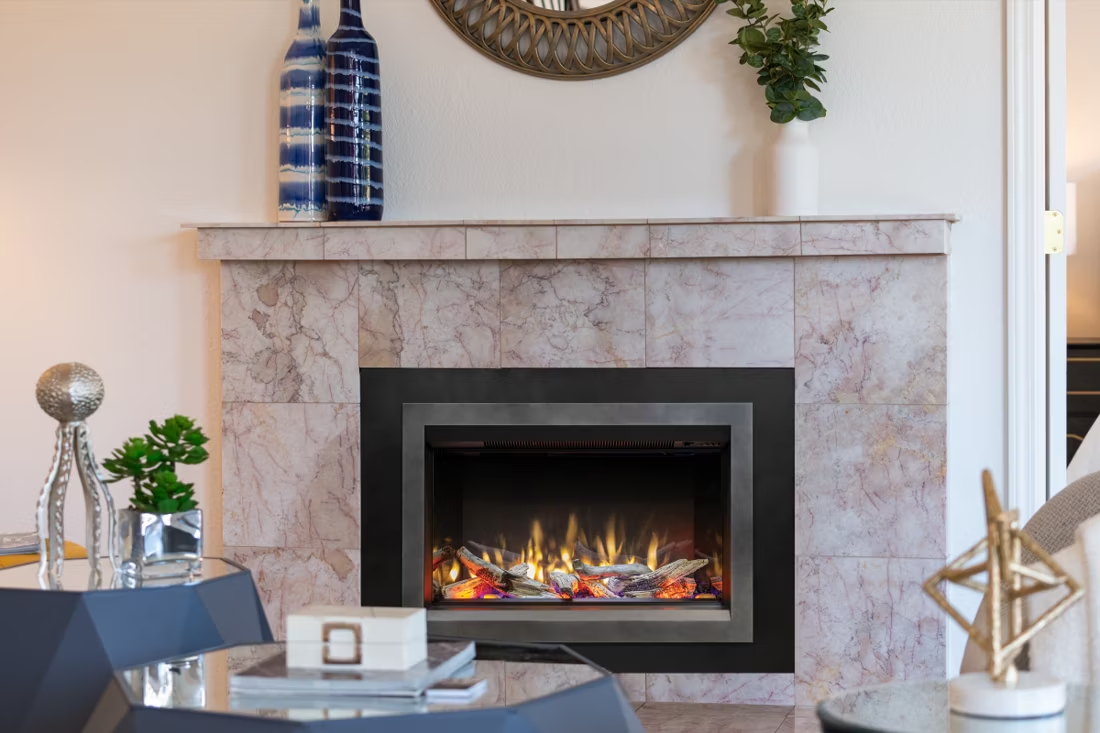
Electric fireplaces fit that need well across the Highland Lakes area—in lake houses around Buchanan Dam and Sunrise Beach, ranch homes outside Llano proper, and newer construction in Kingsland where a zero-clearance masonry hearth isn't part of the plan. There's no venting to install, no wood to source (even though local oak, pecan, and mesquite are plentiful for those who want a real fire elsewhere on the property), and no combustion byproducts to worry about. It's a straightforward plug-in or hardwired unit that adds ambiance and a real heat boost on the county's cooler evenings.
Three steps. No salesperson until you're ready.
Tell us about your project
Your zip code, your situation, and the fuel you're leaning toward—or let the answers point you to one.
See what's actually available
The brands dealers within 100 miles genuinely carry—real options, never a catalog mirage.
Get your dealer & Project Guide
A trusted local dealer, plus the free Project Guide & Parts List that names every component of the job.
Frequently Asked Questions
How much does an electric fireplace installation cost in Llano County?
Electric fireplace installs are the most affordable hearth option available, typically running $400 to $1,200 in Llano County. A plug-in insert or wall-mounted unit on the low end just needs an outlet nearby. A built-in electric fireplace with a mantel surround, or a unit that requires a dedicated 120V or 240V circuit run by an electrician, sits toward the higher end. Because there's no venting, chimney, or gas line involved, labor costs stay modest compared to wood or gas installs—most jobs are done in a day.
Do I need a permit to install an electric fireplace in Llano County?
In most cases, no separate burn or venting permit is required since there's no combustion involved. If the installation requires new electrical wiring or a dedicated circuit, a standard electrical permit may apply depending on whether you're inside Llano city limits or in unincorporated Llano County—your electrician or installer can confirm what's needed for your specific address. Simple plug-in units generally require no permitting at all.
Is an electric fireplace enough heat for a Llano County winter?
For most homes here, yes. With average winter lows around 34 degrees and heating degree days under 2,100 a year, Llano County winters are mild compared to most of the country—this isn't a climate that demands a wood stove holding a 20-hour overnight burn. Electric units in the 1,500-watt range can meaningfully warm a single room (roughly 400-1,000 square feet depending on insulation) on a cold snap night, and most local homes pair one with existing central heat rather than relying on it as sole heat. For lake houses around Buchanan Dam or Sunrise Beach that sit empty part of the season, an electric unit is also a low-maintenance way to have heat on demand without worrying about a chimney or gas line sitting unused for months.
What's the difference between a plug-in electric fireplace and a built-in one?
A plug-in electric fireplace is a self-contained unit—a wall-mount, a stand-alone mantel package, or an insert that slides into an existing masonry fireplace opening—that runs off a standard household outlet and can be installed in an afternoon. A built-in unit is recessed into a wall or custom cabinetry, sometimes wired to a dedicated circuit, for a more seamless, permanent look. For Llano County homeowners converting an old wood-burning fireplace that's no longer in use, a plug-in insert is usually the simplest path since it can use the existing opening without any structural work.
Can I put an electric fireplace into my existing wood-burning fireplace?
Yes, this is a common project in Llano County, especially for older homes with a masonry fireplace that's rarely used or the homeowner would rather not maintain for wood burning. An electric insert slides into the existing firebox opening, plugs into a nearby outlet (or a new dedicated circuit if the unit calls for it), and gives you flame effect and heat without any chimney maintenance, ash cleanup, or cutting permits. It's a popular option for lake properties around the Highland Lakes where owners want the look of a fireplace without year-round upkeep.
How much does it cost to run an electric fireplace in Llano County?
Running costs depend on your electric utility rate and how many hours a day you use the heater function versus flame-only mode. A typical 1,500-watt unit run on heat setting for several hours a night during the county's coldest stretches adds a modest amount to a monthly bill—far less than running central HVAC to heat the same single room. Most owners in Llano County use the heat function selectively on the handful of genuinely cold nights and run flame-only ambiance the rest of the year, which keeps operating costs low.
What size electric fireplace do I need for my home?
Sizing is based on the room you're heating, not the whole house, since electric units are best suited to zone heating rather than whole-home coverage in most Llano County homes. A 750-1,500 watt unit typically handles a single living room or bedroom in the 300-600 square foot range. Larger open-concept spaces, common in newer Kingsland construction, may need a higher-wattage unit or supplemental central heat on the coldest nights. A local dealer can size this correctly based on your room dimensions and insulation during a quick consultation.
Is an electric fireplace a good option for a lake house or vacation property?
Yes—this is one of the most common uses in the Buchanan Dam and Sunrise Beach areas around the Highland Lakes. Electric units don't require the seasonal maintenance a wood-burning fireplace does (no chimney sweep, no creosote buildup risk from months of disuse), don't need a fuel supply stocked ahead of visits, and can be turned on remotely or with a simple wall switch the moment you arrive. For a property that sits empty for stretches of the year, that low-maintenance profile matters more than raw heat output.
Electric vs. gas or wood—which is right for my Llano County home?
With winter lows averaging around 34 degrees and heating degree days well under the national average, Llano County doesn't demand the heat output of a wood stove or gas fireplace the way a colder climate would. Wood and gas still make sense for homeowners who want a stronger heat source, the ambiance of a real fire, or backup heat during a power outage—electric units won't run without power. But for homeowners prioritizing low installation cost, no venting or fuel storage, and simple operation, electric is often the most practical fit, particularly for secondary rooms, converted fireplaces, or lake properties used seasonally. A local dealer can walk through the tradeoffs based on your specific home.
Does an electric fireplace need a vent or chimney?
No—that's its superpower. An electric fireplace needs a wall and an outlet, period. No vent pipe, no gas line, no clearances to design around, which is why it works in bedrooms, offices, apartments, and walls where venting a gas or wood unit would be impractical or impossible. Installation is typically the simplest and least expensive of any fireplace type.
How much does an electric fireplace cost to run?
With the heater on, a typical unit draws about 1,500 watts—at average electric rates that's roughly 20 cents an hour. Run the flame effect alone and it costs pennies; the flames are LED-driven and use about as much power as a light bulb. There's no pilot light, no fuel delivery, and essentially no maintenance.
What is an in-home preview and do I need one?
It's a visit where a hearth professional measures your space, confirms the model you picked actually works in your home, and walks the specs—framing, gas line, venting, finish work—before anything is ordered. Some details you just can't know until you see the house. Never make a down payment without one; it's the single most-skipped step that burns buyers.
How much should I budget for a fireplace?
For an average home—covering the fireplace, the vent pipe, and basic installation—a budget between $3,900 and $5,500 gives you a lot of options across wood, gas, and pellet. By the time you add finish work, gas line, and electrical, the average complete installation lands between $5,000 and $12,000 all-in. In a remodel or new build, a good rule is to put about 2.5% of the total project cost toward the fireplace.
Stove and Fireplace Dealers in Llano County
Listings include WhyFire partner dealers, dealers we have verified as authorized for the brands we recommend, and established local businesses that carry hearth products. Every listing shows which one it is. The ones marked Preferred run on WhyFire's software, so they can show you real pricing and book your appointment right here. No manufacturer pays for placement. How we verify dealers →
Hoover True Value Hardware
Quality Fire
Fredericksburg Overhead Door
Find your electric fireplace in Llano County.
Tell us a bit about your home and we'll match you with the right electric fireplace or insert, plus a free Project Guide & Parts List and a trusted local dealer to handle the install.
Find Your Fireplace →