
Keep Your Family Warm and Safe—No Matter What
With winter lows averaging 43°F, Live Oak County doesn't need wood heat to survive January—but plenty of ranch homes from George West to Three Rivers still want the real thing for ambiance and the occasional cold front. We'll help you find it done right.
Every Project Starts From One of These Five Situations
A mild climate makes wood heat the exception, not the rule.
Live Oak County sits in climate zone 2A, with an average winter low of 43°F and just 1,275 heating degree days a year. For comparison, a place like Duluth, Minnesota racks up close to 10,000 HDD—meaning a typical Live Oak County winter asks about an eighth as much of a heating system. Most homes here run on a central gas furnace or heat pump that barely gets exercised outside of the occasional January cold front. That's the honest starting point for anyone searching "wood fireplace" in a county of about 4,400 people spread across ranch land between San Antonio and Corpus Christi: wood is not a heating necessity here, and it never really has been.
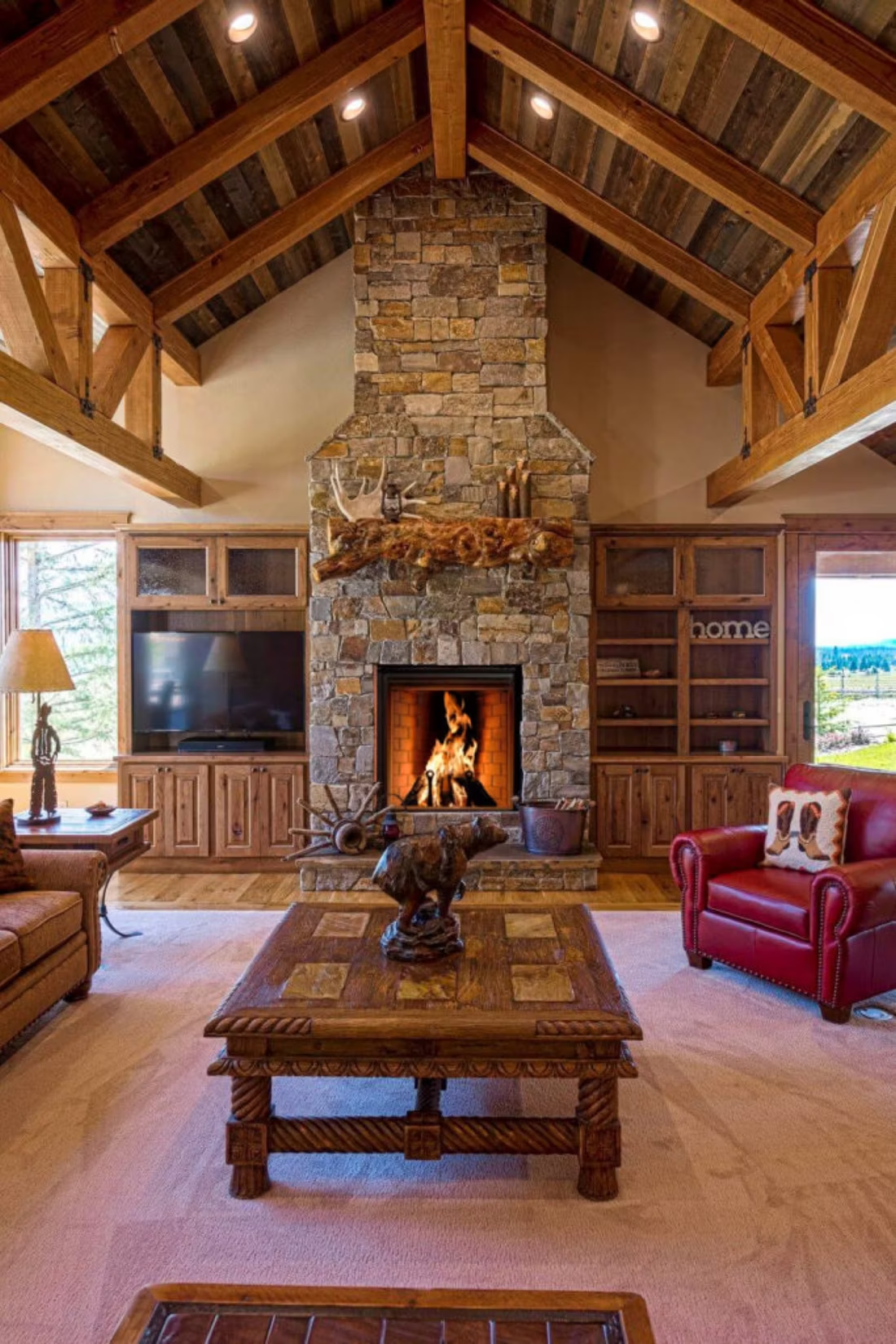
That said, wood-burning fireplaces and stoves aren't absent from the county—they're just installed for different reasons than they would be in a colder state. Ranch homes around George West and Three Rivers sometimes add a freestanding stove or masonry fireplace for the look and feel of a real fire on the handful of nights that dip into the 20s, or simply because oak, pecan, and mesquite are already stacked in the barn for the smoker. If you're one of the homeowners who wants a genuine wood-burning unit rather than a gas log set, we'll still match you with a local dealer who installs it correctly—sized for occasional use, not for a Minnesota winter that never arrives here.
Three steps. No salesperson until you're ready.
Tell us about your project
Your zip code, your situation, and the fuel you're leaning toward—or let the answers point you to one.
See what's actually available
The brands dealers within 100 miles genuinely carry—real options, never a catalog mirage.
Get your dealer & Project Guide
A trusted local dealer, plus the free Project Guide & Parts List that names every component of the job.
Frequently Asked Questions
How much does a wood stove or fireplace installation cost in Live Oak County?
Because wood-burning installs are a niche request in Live Oak County—most dealers here focus on gas and propane, which is the standard fuel for the area—expect to work with an installer based in San Antonio or Corpus Christi who travels into the county. A basic freestanding wood stove with a hearth pad and Class A chimney typically runs in the $4,000-$8,000 range depending on the model and whether you're building a chase from scratch; a full masonry fireplace on new construction can run higher. Get a firm quote from a local installer rather than relying on national averages, since travel distance affects the estimate here more than it would in a denser market.
Does a wood-burning fireplace actually make sense in Live Oak County's climate?
For most homes, no—not as a primary or even meaningful supplemental heat source. With an average winter low of 43°F and only 1,275 heating degree days a year, a wood stove will sit unused for the vast majority of the year and see real use only during the occasional hard freeze or cold front that drops overnight lows into the 20s. Homeowners who install one anyway are almost always after the ambiance of a real fire, the ranch-house aesthetic, or a backup heat source for the rare ice storm that knocks out power. If you're chasing lower heating bills, a gas or propane unit—standard and widely available across the county—will do more for less.
What size wood stove do I need for occasional use?
Given how rarely a stove will actually run here, oversizing is the biggest mistake. A small stove rated for 800-1,200 square feet is plenty for most Live Oak County living rooms, since you're heating one room for a handful of nights rather than running the unit around the clock through a Fargo- or Bismarck-style winter. A stove sized for whole-home heating in a genuinely cold climate will smolder and creosote badly if it's only lit a dozen times a year at mild outdoor temperatures. Talk to your installer about how often you actually plan to burn before choosing a model.
Do I need a permit to install a wood-burning fireplace in Live Oak County?
New wood-burning installations—whether a freestanding stove or a masonry fireplace—typically require a building permit through the county's permitting process, and your installer should pull it as part of the job. There are no air quality restrictions or burn curtailment periods in Live Oak County, unlike wood-heavy inversion-prone regions out west, so once the unit is installed and inspected, you're free to burn without seasonal limits.
Wood stove vs. wood-burning fireplace insert—which is right for a ranch home here?
A freestanding wood stove sits on a hearth pad and can go almost anywhere with the right clearances—a common choice for a den or a great room in a newer ranch home. A wood-burning insert fits into an existing masonry fireplace opening and is the better option if your home already has an open hearth you want to make more efficient and less drafty. Given how infrequently either will run in this climate, many Live Oak County homeowners lean toward whichever option fits the existing structure of the home rather than chasing maximum heat output.
What's the best wood stove for occasional, mild-climate use?
Skip the catalytic, 20-hour-burn cold-climate stoves built for holding a fire overnight at sub-zero temperatures—that engineering is wasted here. A straightforward EPA-certified non-catalytic stove from a mainstream brand like Pacific Energy or Lopi lights easily, burns clean on the local oak and mesquite that's typically on hand, and doesn't require the fussy air-control routine that long-burn catalytic units need. Simplicity and ease of lighting matter more than sustained burn time when you're only using it a handful of nights a winter.
How often should my chimney be inspected if I only burn a few times a year?
Annually, even with light use. The CSIA recommends a yearly inspection for any wood-burning appliance, and infrequent burning doesn't eliminate creosote buildup—in some cases it makes it worse, since cooler, shorter fires common in mild climates burn less completely than a long, hot sustained fire. Schedule the sweep before your first burn of the season, typically in the fall, so any issues from the off-season are caught before you light up during the next cold front.
Where can I get firewood in Live Oak County?
Oak, pecan, and mesquite are the dominant species on the ranch land throughout the county, and a lot of it is already being cut and split locally for barbecue smoking rather than home heating—which means seasoned wood is often easier to find through a local rancher or smoker-wood supplier than through a dedicated firewood delivery service. Mesquite in particular burns hot and dense, which is well suited to the short, occasional fires most homeowners here actually build. If you don't have a rancher connection, check with feed stores and smokehouse suppliers around George West and Three Rivers before assuming you need to order from a national firewood delivery service.
Wood vs. gas—which makes more sense for a Live Oak County home?
Gas is the standard choice here, and for good reason: with only 1,275 heating degree days a year, a gas or propane fireplace gives you instant, reliable heat on the rare cold night without the upkeep of a chimney, firewood storage, or ash cleanup for a unit that would otherwise sit cold most of the year. Wood still has a place for homeowners who want the authentic look and feel of a real fire, or who already have oak and mesquite on hand from ranch work—but if convenience and low maintenance are the priority, gas is the more practical fit for this climate. Pellet stoves, despite regional availability of brands like Forest Energy and Lignetics, see little demand here for the same reason wood does not: there simply isn't enough cold weather to justify the fuel.
What's the difference between an insert and a zero-clearance fireplace?
An insert is a fireplace that slides into a pre-existing wood-burning fireplace—if you don't have one, there's nothing to insert it into. A zero-clearance fireplace is built into a framed wall, which makes it the answer for remodels and new construction. Simple test: existing masonry fireplace means insert; blank or framed wall means zero-clearance.
Why is my open fireplace making my house colder?
Open fireplaces suck—literally. As the fire burns, it consumes air your furnace already paid to heat and pulls it out through the chimney, so the house is actually colder after the fire goes out than before you lit it. An insert fixes this: it seals the chimney, puts fixed glass across the front, and turns that hole in your house into a real heat source.
What is an in-home preview and do I need one?
It's a visit where a hearth professional measures your space, confirms the model you picked actually works in your home, and walks the specs—framing, gas line, venting, finish work—before anything is ordered. Some details you just can't know until you see the house. Never make a down payment without one; it's the single most-skipped step that burns buyers.
Can a fireplace actually lower my heating bill?
Yes—by creating a comfort zone. A furnace heats every square foot of the house just to warm the one room you're in; a gas fireplace on low burns roughly a sixth of the gas a typical furnace does. Set the furnace around 55–60 degrees as a baseline, then heat the rooms your family actually uses. Families who heat this way commonly save $20–$60 a month.
Stove and Fireplace Dealers in Live Oak County
Listings include WhyFire partner dealers, dealers we have verified as authorized for the brands we recommend, and established local businesses that carry hearth products. Every listing shows which one it is. The ones marked Preferred run on WhyFire's software, so they can show you real pricing and book your appointment right here. No manufacturer pays for placement. How we verify dealers →
Martini Brick
C.c. Chimney
Area – San Antonio, Tx
Installed Building Products, LLC
Kitchen & Bath Showplace
Orange County Bldg Materl
The Design Haus Of Victoria
Victoria Builder Supply Co Inc.
Home & Patio
Bbq Outfitters
Find your wood fireplace in Live Oak County.
Tell us about your home and how you plan to use a wood-burning stove or fireplace, and we'll send a free Project Guide & Parts List—sized for your space and matched with a trusted local dealer who installs it correctly, even in a county where wood heat is the exception rather than the rule.
Find Your Fireplace →