
Find your electric fireplace in Live Oak County.
With winter lows averaging in the low 40s and only a light winter heating load overall, most Live Oak County homes need ambiance and occasional supplemental warmth—not a furnace substitute. Find the right electric unit and connect with a trusted local dealer.
Every Project Starts From One of These Five Situations
Warmth by choice, not by necessity.
Live Oak County sits in South Texas brush country—George West as the county seat, with Three Rivers and Oakville rounding out a population of roughly 4,400 spread across ranchland and river bottom. Climate zone 2A means hot, humid summers and short, mild winters; with a winter heating load only a fraction of what places like Duluth or Bismarck see, this county barely needs to heat at all. Oak, pecan, and mesquite grow throughout the county, but they're prized here for smoking brisket and grilling, not for keeping a house warm—which is exactly why wood-burning fireplaces are essentially absent from local new construction and remodels.
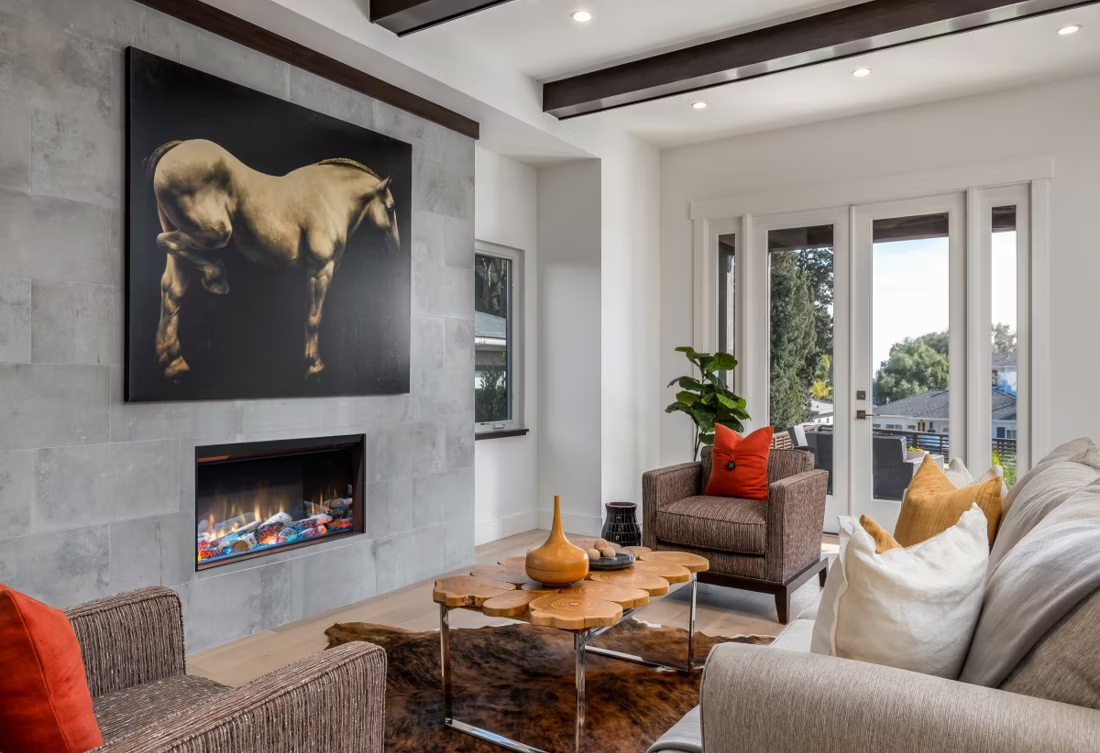
Because there's rarely a real heating need, electric is the fireplace category that makes the most sense for most Live Oak County homeowners: no chimney, no combustion byproducts, no venting through a metal roof or brick exterior, and no fuel storage on a ranch property. Plug-in units handle a mantel refresh or a den in a manufactured home; 240-volt built-ins add real supplemental heat for the handful of nights each winter when temperatures dip into the 30s. The tradeoff worth knowing up front: an electric fireplace runs on grid power from AEP Texas, so it isn't a backup heat source during an outage—a fact plenty of South Texas homeowners learned the hard way during the February 2021 freeze.
Three steps. No salesperson until you're ready.
Tell us about your project
Your zip code, your situation, and the fuel you're leaning toward—or let the answers point you to one.
See what's actually available
The brands dealers within 100 miles genuinely carry—real options, never a catalog mirage.
Get your dealer & Project Guide
A trusted local dealer, plus the free Project Guide & Parts List that names every component of the job.
Frequently Asked Questions
How much does an electric fireplace installation cost in Live Oak County?
Plug-in electric fireplaces (freestanding stoves, mantel packages, or wall-mount units on a standard 120V outlet) typically run $300 to $1,200 installed, and often require no more than moving furniture and hanging a bracket. Built-in electric fireplaces or inserts wired on a dedicated 240V circuit run higher—usually $1,000 to $2,500—once an electrician runs new wiring and a local dealer frames or trims out the unit. Because Live Oak County is largely rural with older housing stock in George West, Three Rivers, and Oakville, older homes sometimes need a panel upgrade or new circuit run, which adds to the electrical portion of the job.
Will an electric fireplace actually heat my home in Live Oak County?
For most of the county, yes—because most homes don't need much heat to begin with. With winter lows averaging 43°F and only a light winter heating load overall, a mid-size electric insert or built-in unit (typically 4,600 to 5,200 BTU) can comfortably supplement a den, bedroom, or main living area on the coldest nights of the year. It won't replace central heat for a full ranch house, but few homeowners here are asking it to—the appeal is zone heat for the occasional 30-degree morning plus year-round ambiance the rest of the season.
Do I need a permit to install an electric fireplace in Live Oak County?
A simple plug-in unit on an existing outlet generally doesn't require a permit. A built-in electric fireplace or insert wired on a new dedicated circuit does require an electrical permit, since it involves new wiring back to the panel—this goes through the Live Oak County building office for unincorporated areas, or the applicable city permit desk if you're inside George West or Three Rivers city limits. Most local dealers coordinate directly with a licensed electrician and handle the permit paperwork as part of the installation.
Will my electric fireplace work during a power outage?
No—and this matters more in Live Oak County than the mild climate suggests. AEP Texas serves most of the county's grid, and the February 2021 winter storm proved that even South Texas can see multi-day outages during a hard freeze, right when a supplemental heat source would matter most. If backup heat during an outage is a real concern for your household, talk to your local dealer about a vented propane or gas unit as a secondary option, or plan for a generator to keep an electric fireplace running through a storm.
What's the difference between an electric insert, built-in, and freestanding stove?
An electric insert drops into an existing masonry or wood fireplace opening, giving an old, unused fireplace a second life without any venting work. A built-in electric fireplace is framed into a wall like new construction, often with a mantel and surround, and typically needs a dedicated 240V circuit for full heat output. A freestanding electric stove or mantel-style unit simply plugs into a standard outlet and can be repositioned. For ranch-style homes across Live Oak County without an existing chimney, freestanding or built-in units are the most common choice; homes with an old wood fireplace already in place often go with an insert.
What's the best electric fireplace for Live Oak County's climate?
Given how mild the winters run here, most homeowners get the best value from a 120V plug-in unit or a 240V built-in sized for supplemental heat rather than a high-output whole-room heater—you simply don't need the BTU capacity that a Bozeman or Fargo home would require. Look for models with a realistic-flame LED effect if ambiance is the priority, and confirm the heater has a thermostat and multiple heat settings so you can run it flame-only during the long stretches of the year when heat isn't needed at all.
Why don't more homes in Live Oak County have wood-burning fireplaces?
Wood heat just isn't necessary here. With such a light winter heating load and winter lows averaging in the low 40s, a wood stove or fireplace would sit unused most of the year, and the region's abundant oak, pecan, and mesquite is put to far better local use in smokers and grills than in a home heating appliance. A handful of ranch properties still keep a wood-burning fireplace for atmosphere or outdoor entertaining, but it's the exception rather than the norm—electric and gas cover the vast majority of new installs in the county.
Gas vs. electric—which is right for my Live Oak County home?
Propane is the standard gas option for most of rural Live Oak County, since natural gas mains don't reach every property outside George West and Three Rivers. A propane fireplace delivers more heat output and can run during a power outage with the right ignition system, which matters given the county's exposure to hard freezes and grid strain. Electric wins on upfront and installation cost, requires no fuel tank or gas line, and is simpler to add to an existing room—but it depends entirely on AEP Texas staying up. Many homeowners choose electric for a secondary room or mantel refresh and reserve propane for a primary living space where real backup heat matters.
What about pellet stoves—are they an option in Live Oak County?
Not really, for the same reason wood doesn't make much sense here: there's little year-round heating demand to justify a pellet appliance, and pellet stoves need regular hopper loading and electricity to run the auger, so they don't offer the low-maintenance ambiance most Live Oak County homeowners want. The pellet brands you'll find on shelves regionally, like Forest Energy and Lignetics, are stocked mainly for grills and smokers rather than home heating fuel. If you want a wood-look flame with minimal upkeep, an electric unit gets you there without the hopper, the ash, or the vent.
Does an electric fireplace need a vent or chimney?
No—that's its superpower. An electric fireplace needs a wall and an outlet, period. No vent pipe, no gas line, no clearances to design around, which is why it works in bedrooms, offices, apartments, and walls where venting a gas or wood unit would be impractical or impossible. Installation is typically the simplest and least expensive of any fireplace type.
Can I put a TV above my fireplace?
Yes—with an asterisk. Fireplaces are hot and TVs don't like heat. Either put a mantel between them to deflect rising warmth, or choose a fireplace with heat-management technology that creates a cool zone on the wall above—the wall stays around 125 degrees, barely warm, while the room still gets full heat. If you like clean lines and don't want a mantel, heat management is the answer.
Can a fireplace actually lower my heating bill?
Yes—by creating a comfort zone. A furnace heats every square foot of the house just to warm the one room you're in; a gas fireplace on low burns roughly a sixth of the gas a typical furnace does. Set the furnace around 55–60 degrees as a baseline, then heat the rooms your family actually uses. Families who heat this way commonly save $20–$60 a month.
How much should I budget for a fireplace?
For an average home—covering the fireplace, the vent pipe, and basic installation—a budget between $3,900 and $5,500 gives you a lot of options across wood, gas, and pellet. By the time you add finish work, gas line, and electrical, the average complete installation lands between $5,000 and $12,000 all-in. In a remodel or new build, a good rule is to put about 2.5% of the total project cost toward the fireplace.
Stove and Fireplace Dealers in Live Oak County
Listings include WhyFire partner dealers, dealers we have verified as authorized for the brands we recommend, and established local businesses that carry hearth products. Every listing shows which one it is. The ones marked Preferred run on WhyFire's software, so they can show you real pricing and book your appointment right here. No manufacturer pays for placement. How we verify dealers →
Martini Brick
C.c. Chimney
Area – San Antonio, Tx
Installed Building Products, LLC
Kitchen & Bath Showplace
Orange County Bldg Materl
The Design Haus Of Victoria
Victoria Builder Supply Co Inc.
Home & Patio
Bbq Outfitters
Find your electric fireplace in Live Oak County.
Tell us a bit about your home in George West, Three Rivers, or anywhere else in the county, and we'll match you with a trusted local dealer and send over a free Project Guide & Parts List—the exact parts and recommended installer for your electric fireplace project.
Find Your Fireplace →