
Keep Your Family Warm and Safe—No Matter What
Liberty County only sees a light overall heating season and winter lows that average in the low 40s—but Gulf hurricanes and ice events still knock the grid out for days at a time. Find a wood stove or insert sized right for that reality, and connect with a trusted local dealer.
Every Project Starts From One of These Five Situations
Ambiance most days, backup heat when it counts.
Liberty County sits in the Piney Woods and coastal plain east of Houston, along the Trinity River, with towns like Liberty, Dayton, Cleveland, Hardin, and Ames spread across a mostly rural landscape. Climate zone 2A means hot, humid summers and short, mild winters—a light heating season overall, a fraction of what a place like Duluth or Fargo sees. Most homes here don't need a wood stove to survive winter. That's a different story than a lot of the country, and it's worth saying plainly rather than pretending otherwise.
What keeps wood heat genuinely popular in Liberty County isn't cold—it's reliability. Gulf hurricanes and the occasional deep freeze (Winter Storm Uri hit East Texas hard in February 2021) can take rural power lines down for days, and a wood stove keeps working when the grid doesn't. Add in a rural culture built around land clearing, hunting leases, and abundant oak, pecan, and mesquite, and you get a lot of households running a stove or insert for ambiance on cool evenings and real backup heat when a storm rolls through. With no air quality non-attainment issues in the county, there's no burn-ban bureaucracy standing between you and a fire.
Three steps. No salesperson until you're ready.
Tell us about your project
Your zip code, your situation, and the fuel you're leaning toward—or let the answers point you to one.
See what's actually available
The brands dealers within 100 miles genuinely carry—real options, never a catalog mirage.
Get your dealer & Project Guide
A trusted local dealer, plus the free Project Guide & Parts List that names every component of the job.
Frequently Asked Questions
How much does a wood stove installation cost in Liberty County?
Most wood stove and insert installations in Liberty County run in the range of $3,000 to $7,500, depending on the unit, whether an existing masonry fireplace and chimney are already in place, and how much venting work is needed. Because most homes here are single-story with straightforward roof lines and no elevation or extreme-cold complications to design around, installs tend toward the simpler and less expensive end of what you'd see in a colder-climate county. Adding a new chimney chase to a home that never had a fireplace—common in newer construction around Dayton and Cleveland—pushes costs toward the higher end.
What size wood stove do I need for my home in Liberty County?
Given the mild climate here—an average winter low around 41 degrees and a light overall heating season—most Liberty County homes are well served by a small to medium stove used for supplemental heat and backup power-outage warmth rather than a large unit meant to carry a whole house through a hard winter. A local dealer can size a stove to your square footage and room layout, but oversizing is a bigger risk here than undersizing: a stove built for single-digit overnight lows will run smoldery and inefficient in a climate that rarely sees anything close to that.
Where can I find certified wood stove installers near me?
Look for installers with NFI (National Fireplace Institute) or CSIA (Chimney Safety Institute of America) credentials, which indicate real training in venting clearances and code compliance rather than a general contractor's best guess. Certified installers serving Liberty County typically cover Liberty, Dayton, Cleveland, and the surrounding unincorporated areas out toward Hardin and Ames, sometimes with a small travel charge for the more rural addresses. Having the same company that sells the stove also handle the install simplifies warranty coverage if anything needs adjustment later.
What's the difference between a wood stove and a wood insert?
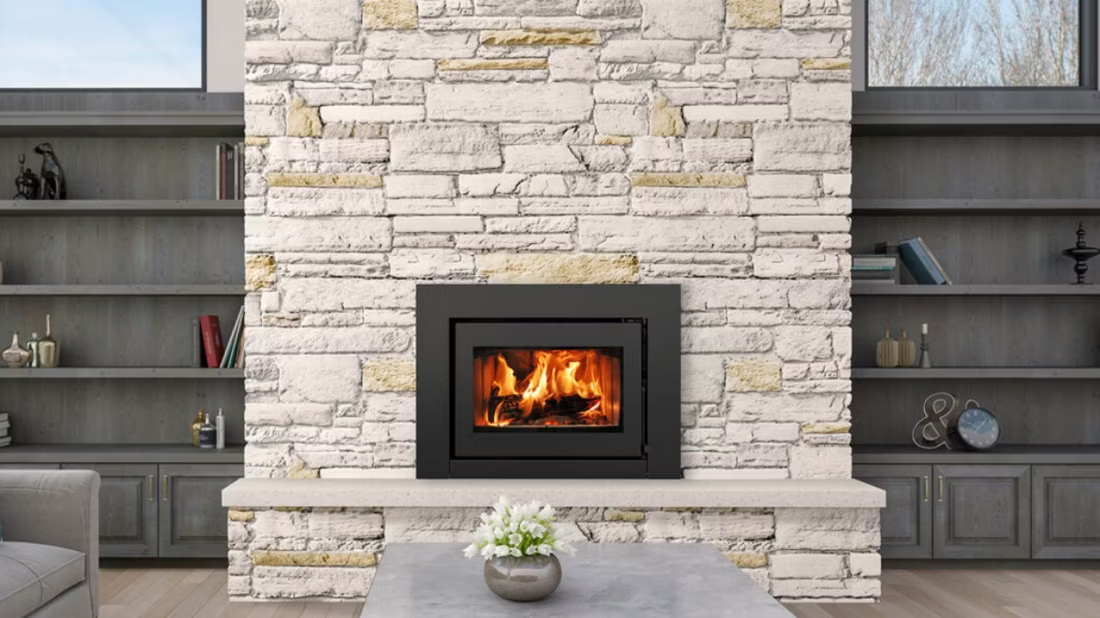
A wood stove is a freestanding unit on its own hearth pad, vented through a chimney, and can go into a home that never had a fireplace to begin with. A wood insert is built to slide into an existing masonry fireplace opening, turning a decorative or drafty open hearth—common in older ranch-style homes around Liberty and Dayton—into a sealed, efficient heat source that uses the chimney already in place. For homes with an existing fireplace that mostly gets used for looks, an insert is usually the more cost-effective upgrade.
Do I need a permit to install a wood stove in Liberty County?
Yes—a building permit is required for a new wood stove or insert installation, whether through the city (in Liberty, Dayton, or Cleveland) or through the Liberty County Building Department for unincorporated areas. Most local installers pull the permit as part of the job, so it's not something you have to manage yourself. Because Liberty County has no air quality non-attainment designation, there's no separate burn-ban or curtailment paperwork to worry about—burning here is a matter of the building code, not the air district.
What's the best wood stove for Liberty County's climate?
You don't need a 20-hour catalytic monster built for sub-zero overnights—that's overkill for a county averaging winter lows in the low 40s. A mid-size non-catalytic stove from a brand like Pacific Energy or Lopi handles the occasional cold snap and looks and burns well the rest of the time. What matters more here is reliability during outages: a simple, easy-to-light stove that doesn't depend on electronics is worth more during a hurricane-season power outage than a few extra hours of catalytic burn time you'll rarely need.
How often should my chimney be inspected and cleaned?
An annual inspection is the standard recommendation from the CSIA, even for stoves that see light, occasional use rather than daily winter burning. Because Liberty County's humid Gulf climate can encourage moisture and creosote buildup even with fewer total burn hours per year, an annual sweep before the cooler months (roughly November through February here) is worth keeping on the calendar rather than skipping in a mild year.
Where can I get firewood in Liberty County?
Liberty County doesn't have significant national forest land inside its borders, so most firewood here comes from private land clearing, local tree services, and small firewood dealers rather than Forest Service cutting permits. Oak, pecan, and mesquite are the three most common species available locally—all dense hardwoods that burn hot and long once properly seasoned, which typically takes six to twelve months in this humid climate. Expect to pay somewhere in the $250 to $350 per cord range from a local seller, with mesquite sometimes priced at a premium for smoking and grilling use as well as heating.
Wood stove vs. pellet stove—which is right for me?
Wood stoves burn cordwood, work with zero electricity, and are the better choice if your main goal is backup heat during a hurricane-season power outage—a real consideration in Liberty County. Pellet stoves, using pellets from regional brands like Forest Energy or Lignetics, are more convenient day to day and burn cleaner, but they need electricity to run the auger and blower, which takes them out of contention as storm backup unless you're also running a generator. For a lot of Liberty County households, wood wins specifically because it keeps working when the lines go down.
What's the difference between an insert and a zero-clearance fireplace?
An insert is a fireplace that slides into a pre-existing wood-burning fireplace—if you don't have one, there's nothing to insert it into. A zero-clearance fireplace is built into a framed wall, which makes it the answer for remodels and new construction. Simple test: existing masonry fireplace means insert; blank or framed wall means zero-clearance.
Why is my open fireplace making my house colder?
Open fireplaces suck—literally. As the fire burns, it consumes air your furnace already paid to heat and pulls it out through the chimney, so the house is actually colder after the fire goes out than before you lit it. An insert fixes this: it seals the chimney, puts fixed glass across the front, and turns that hole in your house into a real heat source.
Can I install a fireplace myself?
If you're putting a fire in your house on purpose, it's best to work with an expert. Unless you're genuinely experienced in framing, gas line, vent pipe, and the national code on clearances to combustibles, have a professional do it—and ideally the same company that sells you the fireplace, so warranty, service, and liability all live under one roof.
Does a fireplace add value to my home?
On average, a fireplace adds back to the home about the same amount you spent installing it. Add the monthly savings from heating the rooms you actually use instead of the whole house—often hundreds of dollars a year—and the value case is strong before you even count what a fire does for how your family uses the room.
Stove and Fireplace Dealers in Liberty County
Listings include WhyFire partner dealers, dealers we have verified as authorized for the brands we recommend, and established local businesses that carry hearth products. Every listing shows which one it is. The ones marked Preferred run on WhyFire's software, so they can show you real pricing and book your appointment right here. No manufacturer pays for placement. How we verify dealers →
The Fire Box Inc.
Creekstone Outdoors
Creekstone Custom
Cunningham Gas Products
Fireplace & Patio Shop
South Texas Brick
All Fired Up Fireplace & Outdoor
Tri-Supply - Conroe
Tru Lite Gas Products
USA Supreme Services, LLC
EarthCore Industries
Find your wood stove in Liberty County.
Tell us a bit about your home and we'll match you with a trusted local dealer and a free Project Guide & Parts List—the exact parts, vent kit included, for your wood stove or insert project in Liberty County.
Find Your Fireplace →