
Find the right fireplace for a mild Liberty County winter.
Wood, gas, pellet, and electric fireplace resources for every city and rural community in Liberty County—from Liberty and Dayton to Cleveland and Hardin. Find the right unit and connect with a trusted local hearth retailer.
Every Project Starts From One of These Five Situations
Short, mild heating seasons across Liberty County, Texas.
Liberty County sits in the Piney Woods east of Houston, in climate zone 2A with an average winter low of 41°F and only about 1,434 heating degree days a year—a fraction of what a place like Duluth, MN sees in a single hard winter. That doesn't mean fireplaces are an afterthought here. Cold fronts still roll through, occasionally dropping temperatures into the 20s for a few nights, and plenty of homeowners want a real hearth for cool evenings, power-outage backup, or simply the look and feel of a fire. Local oak, pecan, and mesquite are the wood species people actually burn, often sourced from their own land or a neighbor's.
What you'll find on this hub: hearth retailers, service technicians, and fuel suppliers serving every community in the county—from Liberty and Dayton along US-90 to Cleveland up near the Sam Houston National Forest and smaller communities like Ames, Hardin, and Devers. Pick your fuel below to drill into specifics—local dealers, installation costs, recommended units, and the resources that match your project. Whether you're outfitting a new build outside Cleveland or adding a fireplace to an older home in downtown Liberty, this is the starting point.
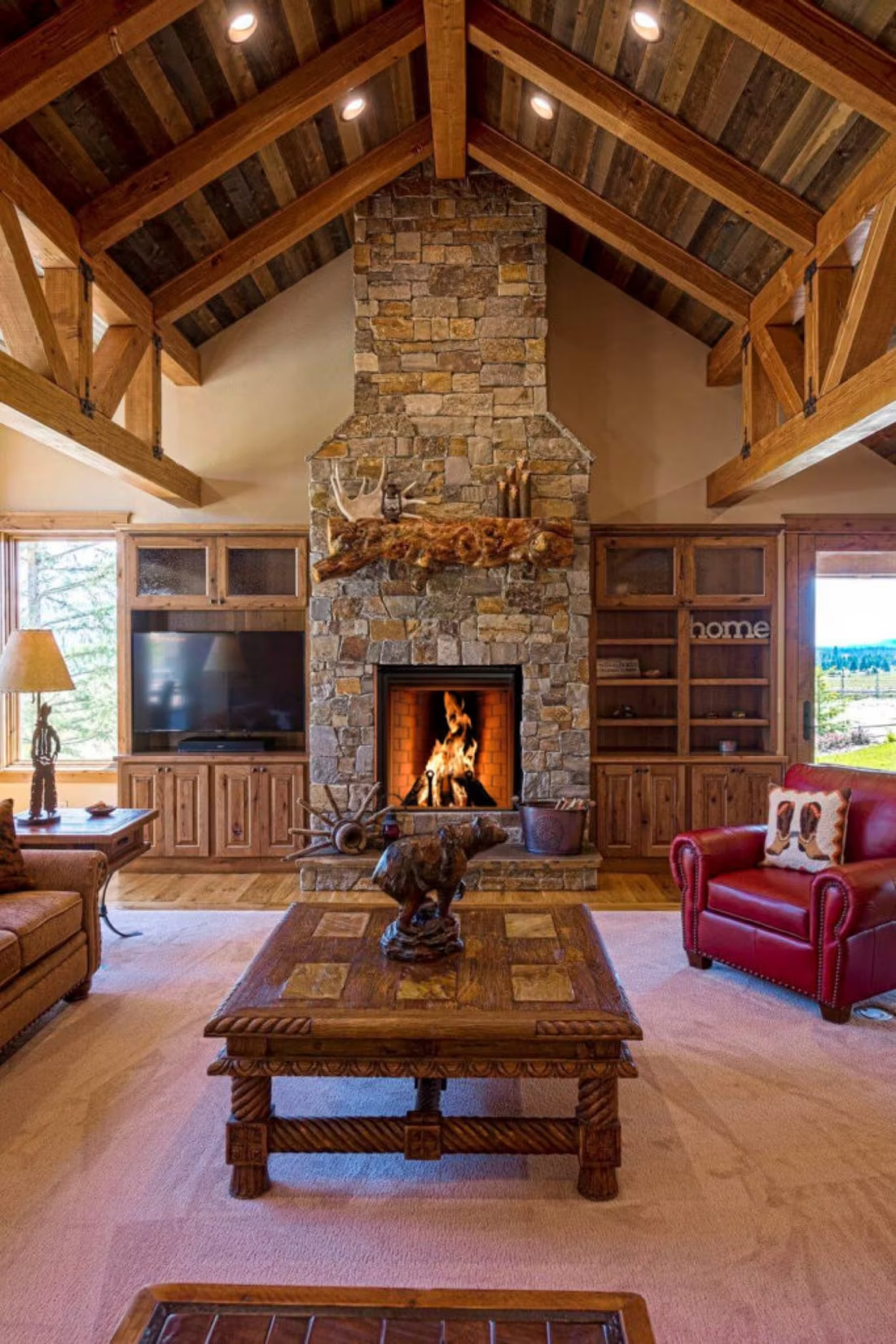
Four fuels. One honest answer for Liberty County.
Three steps. No salesperson until you're ready.
Tell us about your project
Your zip code, your situation, and the fuel you're leaning toward—or let the answers point you to one.
See what's actually available
The brands dealers within 100 miles genuinely carry—real options, never a catalog mirage.
Get your dealer & Project Guide
A trusted local dealer, plus the free Project Guide & Parts List that names every component of the job.
Frequently Asked Questions
Which fuel works best in Liberty County?
With only about 1,434 heating degree days a year and winter lows averaging 41°F, no fuel here is carrying a home through months of hard cold—the question is more about how you want to use a fireplace than how you'll survive winter. Gas is the most popular choice for Liberty County homeowners who want instant on-off convenience for occasional cool evenings, with propane common outside city limits and natural gas available in parts of Liberty and Dayton. Wood remains popular for its ambiance and because local oak, pecan, and mesquite are easy to source, plus it works fine as backup heat during outages after storms. Pellet stoves are a smaller niche here—they suit homeowners who want a wood-look fire without stacking a woodpile, and Forest Energy and Lignetics pellets are both available regionally. Electric fireplaces are common in secondary rooms, additions, and rentals where venting isn't practical. Most Liberty County installs are about atmosphere and occasional use rather than whole-home heating.
Do I need a permit to install a fireplace in Liberty County?
Generally yes for anything involving new venting, gas lines, or structural changes. Within city limits—Liberty, Dayton, Cleveland—permits are issued through each city's building department; in unincorporated Liberty County, permits run through the county. Gas fireplace and insert installations typically require a gas line permit and licensed gas-fitter for the connection work. Wood-burning inserts and stoves need a permit tied to chimney or venting work. Plug-in electric fireplaces usually don't need a permit, but built-in units with new wiring or a dedicated circuit do. Most local hearth retailers pull permits as part of the installation, so it's rarely something the homeowner has to manage directly.
Are there air quality restrictions on wood burning in Liberty County?
No—Liberty County has no listed air quality non-attainment issues or wood-burning curtailment programs, unlike wildfire-prone or inversion-prone counties out West. That said, common sense still applies: burn seasoned oak, pecan, or mesquite rather than green wood to cut down on smoke, and be mindful of close neighbors in town. There's no formal county or city burn-ban system tied to wood stoves here, though outdoor burning restrictions can apply during drought conditions—those are separate from indoor fireplace use.
Can one local hearth retailer handle all four fuel types?
Many hearth retailers serving Liberty County carry three or four fuel types, since the county's mild climate means customers are often choosing based on look and convenience rather than heating performance. Dealers based in Liberty and Dayton typically stock gas and electric units as their bread-and-butter, with wood-burning options and pellet stoves available by order or through a showroom partner. If you're deciding between fuels—say, a gas insert versus an electric unit for a room addition—a multi-fuel dealer can put both in front of you and talk through installation differences, venting needs, and running costs specific to your home.
How does service work in rural areas of Liberty County?
Most chimney sweeps and gas technicians serving Liberty County are based around Liberty, Dayton, or the greater Houston area and travel out to more rural parts of the county—Hardin, Ames, Devers, and the areas around the Sam Houston National Forest near Cleveland. Expect a modest trip fee for calls well outside the main corridor, and note that scheduling tends to be easiest in fall before the first cold fronts arrive, rather than waiting for a surprise cold snap in January. Given how short the heating season is here, an annual fall service call for whichever fuel you use is usually enough to keep things running through the winter.
What's the typical cost range for fireplace installation across all fuel types in Liberty County?
Costs vary by fuel and by how much venting or gas line work is involved. Wood stove or insert installation: roughly $4,000–$8,500 for typical installs, more if new chimney construction is required. Gas fireplace, insert, or stove: roughly $4,000–$10,000 depending on whether gas service already reaches the install point. Pellet stove or insert: roughly $4,000–$7,000 for typical installs. Electric fireplace: $200–$3,000 for the unit itself, plus $400–$1,200 in labor for anything beyond a plug-and-play setup. For more detail tied to local retailer pricing, see the county + fuel pages above.
What is an in-home preview and do I need one?
It's a visit where a hearth professional measures your space, confirms the model you picked actually works in your home, and walks the specs—framing, gas line, venting, finish work—before anything is ordered. Some details you just can't know until you see the house. Never make a down payment without one; it's the single most-skipped step that burns buyers.
I know I want a fireplace—where do I actually start?
Do two things today: snap a photo of the wall or fireplace you want to transform, and take a tape measure to the space—width, height, depth. Those two artifacts answer most of a hearth professional's first questions. Then settle fuel (wood, gas, pellet, or electric) and set a realistic budget: $3,900–$5,500 covers fireplace, vent, and basic install for most homes.
Can I install a fireplace myself?
If you're putting a fire in your house on purpose, it's best to work with an expert. Unless you're genuinely experienced in framing, gas line, vent pipe, and the national code on clearances to combustibles, have a professional do it—and ideally the same company that sells you the fireplace, so warranty, service, and liability all live under one roof.
Can a fireplace actually lower my heating bill?
Yes—by creating a comfort zone. A furnace heats every square foot of the house just to warm the one room you're in; a gas fireplace on low burns roughly a sixth of the gas a typical furnace does. Set the furnace around 55–60 degrees as a baseline, then heat the rooms your family actually uses. Families who heat this way commonly save $20–$60 a month.
Stove and Fireplace Dealers in Liberty County
Listings include WhyFire partner dealers, dealers we have verified as authorized for the brands we recommend, and established local businesses that carry hearth products. Every listing shows which one it is. The ones marked Preferred run on WhyFire's software, so they can show you real pricing and book your appointment right here. No manufacturer pays for placement. How we verify dealers →
The Fire Box Inc.
Creekstone Outdoors
Creekstone Custom
Cunningham Gas Products
Fireplace & Patio Shop
South Texas Brick
All Fired Up Fireplace & Outdoor
Tri-Supply - Conroe
Tru Lite Gas Products
USA Supreme Services, LLC
EarthCore Industries
Find your fireplace in Liberty County.
Pick your fuel below and I'll match you with a trusted local dealer who can walk your project through permitting and installation—plus a free Project Guide & Parts List with the exact parts, including the vent kit, for your Liberty County home.
Find Your Fireplace →