
Pellet Stoves Are Rare in Lake Jackson—But Not Unheard Of.
With one of the lightest winter heating loads around and winter lows averaging 45°F, Lake Jackson doesn't need dedicated heat most years. For the handful of homeowners who still want a pellet stove—for ambiance, a cold-snap backup, or a workshop—we'll connect you with a dealer who can size it honestly.
Every Project Starts From One of These Five Situations
Lake Jackson's mild Gulf Coast winters rarely call for dedicated heat.
Lake Jackson sits at 17 feet of elevation on the Texas Gulf Coast in climate zone 2A, where the heating season is short and shallow. With an average winter low around 45°F and a mild winter heating load—one of the lightest in the state—most Brazoria County homes rely entirely on central air-source heat pumps or electric resistance heat for the handful of genuinely cold nights each winter. Wood and pellet appliances are correspondingly uncommon here—this isn't a market built around solid-fuel heating the way parts of the Panhandle or East Texas are, and there's no local air quality program pushing homeowners toward EPA-certified stoves the way there is in wood-smoke-sensitive regions.
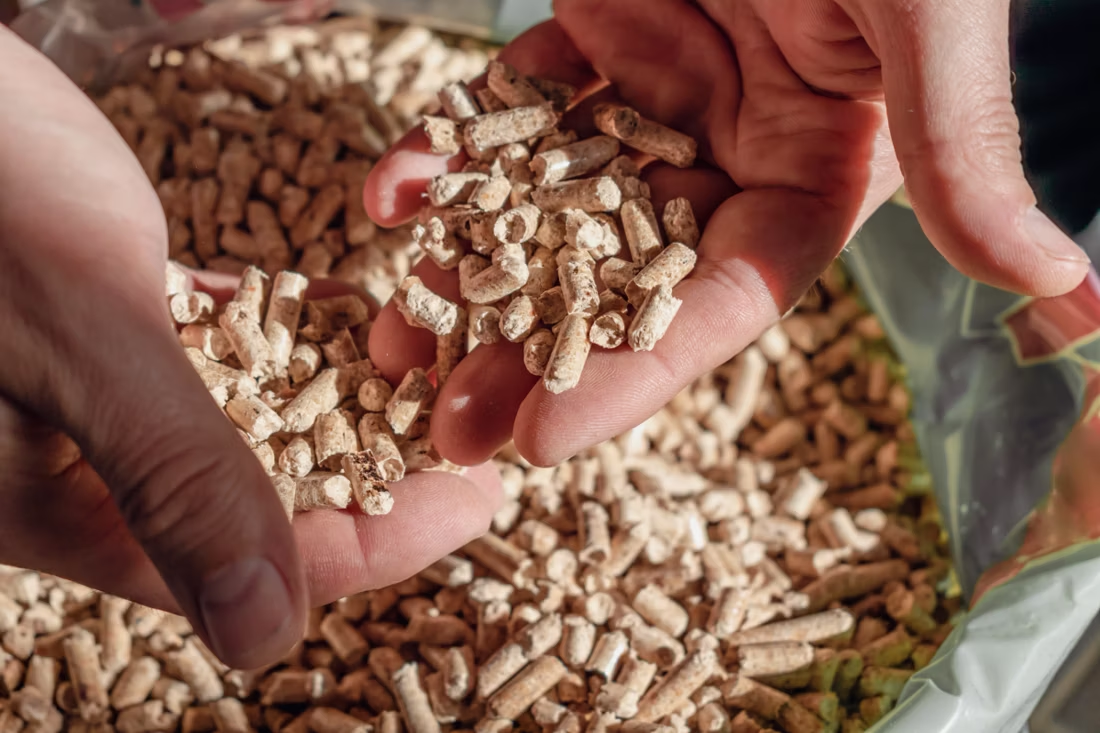
That said, a pellet stove still shows up in a real, if narrow, set of Lake Jackson homes: a sunroom or garage workshop that needs occasional supplemental warmth, a homeowner who likes the look of a real flame without the mess of cordwood, or a second property up in the Hill Country or further north where pellet makes more year-round sense. Regional pellet brands like Forest Energy and Lignetics do reach the Houston metro, so fuel is available even if there isn't a dedicated hearth shop in Lake Jackson proper—most buyers here end up working with a Houston-area dealer for both the unit and the pellets. We're upfront about this: pellet is a specialty purchase in this climate, not a mainstream one, and a good local dealer will tell you the same thing before selling you anything.
Three steps. No salesperson until you're ready.
Tell us about your project
Your zip code, your situation, and the fuel you're leaning toward—or let the answers point you to one.
See what's actually available
The brands dealers within 100 miles genuinely carry—real options, never a catalog mirage.
Get your dealer & Project Guide
A trusted local dealer, plus the free Project Guide & Parts List that names every component of the job.
Frequently Asked Questions
Does a pellet stove actually make sense in Lake Jackson's climate?
For most Brazoria County homes, no—not as primary or even regular supplemental heat. With one of the mildest winter heating loads in the state and winter lows averaging 45°F, the heating season here is measured in weeks, not months. Where a pellet stove does make sense is narrower: a sunroom, a garage workshop, a detached space that a central heat pump doesn't reach well, or simply a homeowner who wants the look and feel of a real fire on the dozen or so genuinely cold nights Lake Jackson gets each winter. If you're trying to lower a winter electric bill, a pellet stove isn't the tool for that here—your heat pump is already efficient for this climate.
What does a pellet stove installation cost near Lake Jackson?
Nationally, a pellet stove installation typically runs $3,000 to $6,500 depending on the unit, hearth pad requirements, and whether new through-wall venting is needed. In Lake Jackson specifically, expect quotes to land toward the middle-to-upper end of that range, since there isn't a dedicated hearth retailer in town—most installers serving Brazoria County are based in the greater Houston area and factor in travel and lower installation volume. Getting two or three quotes matters more here than in markets with several competing local dealers.
Will a pellet stove keep my home warm during a hurricane power outage?
This is the question we get most in Gulf Coast towns like Lake Jackson, and the honest answer is no—not reliably. Pellet stoves depend on an electric auger to feed fuel and a blower to circulate heat, so when CenterPoint Energy or Texas-New Mexico Power Co lines go down after a storm, the stove goes down with them unless you're running a generator. If backup heat during hurricane season is your main goal, a battery-free vented gas appliance or a generator-fed setup is a more dependable choice than pellet. Pellet is best thought of here as a convenience or ambiance appliance, not a storm-resilience one.
Where can I buy pellets in or near Lake Jackson?
Because dedicated hearth demand is low this close to the coast, you won't find a specialty pellet shop in Lake Jackson itself. Forest Energy and Lignetics are the two regional brands most likely to show up at Houston-area farm supply stores, big-box retailers, and feed stores that some Brazoria County residents already drive to. If you go this route, plan to buy pellets a pallet at a time when you're already making a trip north, since restocking a bag or two at a time isn't realistic without a local supplier.
Pellet vs. gas—which makes more sense for a Lake Jackson home?
For nearly every Lake Jackson homeowner considering supplemental heat, gas is the more practical choice. Natural gas and propane service are both well established in Brazoria County, gas fireplaces need no fuel storage or hopper refilling, and many models can run during a power outage with battery-backup ignition—something a pellet stove can't do. Pellet still wins on ambiance for people who specifically want the look of a real, visible flame with glowing embers rather than a gas flame pattern, and it avoids a propane tank or gas line if you don't already have service nearby. If convenience and hurricane resilience matter more than authenticity, gas is the better fit here.
Do I need a permit to install a pellet stove in Lake Jackson?
Most likely yes, if the installation involves cutting a new through-wall vent or altering an existing hearth. The City of Lake Jackson Building Permits Department (or Brazoria County directly, if you're outside city limits) handles these reviews, and a reputable installer will pull the permit as part of the job rather than leave it to you. Given how few pellet installations happen in this area, it's worth confirming with your installer up front that they've handled the local permitting process before, since it's not a routine request the way it would be in a wood-heat market.
How do I store pellets in Lake Jackson's humidity without ruining them?
Gulf Coast humidity is the real enemy of wood pellets, more so than in drier climates. Pellets absorb moisture readily, and once they do, they swell, crumble, and stop feeding properly through the auger—or worse, jam it. Store bags off the concrete floor of a garage or shed, keep them sealed until use, and avoid stacking them against an exterior wall where condensation can form. Given Lake Jackson's coastal moisture levels, buying in smaller quantities more often is usually safer than stockpiling a season's worth of pellets in an uninsulated space.
What size pellet stove do I need for a Lake Jackson home?
Given how mild the heating season is here, most Lake Jackson installations are on the smaller end—a stove rated for 500 to 1,200 square feet is plenty for a sunroom, workshop, or supplemental role in a larger home, since you're not asking it to carry the whole house through winter the way a homeowner in a colder climate would. Oversizing is an easy mistake in a market like this: a unit sized for genuine primary heat will run far more than you need on Lake Jackson's handful of cold nights. A local dealer can size it correctly once they know the specific room or space you're heating.
Pellet stove or electric space heater for the occasional Lake Jackson cold snap?
For most homes, a good electric space heater or the existing heat pump handles Lake Jackson's brief cold snaps just fine, and at a residential rate around $0.1342 per kWh through CenterPoint Energy or Texas-New Mexico Power Co, running one for a handful of nights a year costs very little. A pellet stove makes more sense than a space heater only if you specifically want a real flame, plan to use the space regularly enough to justify the install cost, or are heating an area—like a detached garage—that your central system doesn't reach at all. If it's purely about warmth on the coldest nights, electric is the simpler and cheaper answer here.
Why is a fireplace insert so efficient?
An insert does two things: it seals the chimney completely, so you stop losing air you already paid to heat, and it radiates warmth into the room through the firebox and glass. Most add a heat-exchange fan that pulls cool room air underneath, wraps it around the hot firebox, and pushes it back out warm. Your home is more efficient before you've even lit the first fire.
How often does a pellet stove need cleaning?
A clean pellet stove is a happy pellet stove. Plan on cleaning the burn pot about once a week when you're burning regularly—ash and clinkers gum up the air holes just like a pellet barbecue. Most pellet stove problems trace back to skipped cleaning that nobody explained up front. Some designs make it easy with a trapdoor burn pot: pull a lever and the gunk drops into the ash pan.
Does a fireplace add value to my home?
On average, a fireplace adds back to the home about the same amount you spent installing it. Add the monthly savings from heating the rooms you actually use instead of the whole house—often hundreds of dollars a year—and the value case is strong before you even count what a fire does for how your family uses the room.
What is an in-home preview and do I need one?
It's a visit where a hearth professional measures your space, confirms the model you picked actually works in your home, and walks the specs—framing, gas line, venting, finish work—before anything is ordered. Some details you just can't know until you see the house. Never make a down payment without one; it's the single most-skipped step that burns buyers.
Nearby Dealers
Hearth shops serving Lake Jackson and the surrounding area.
Pellet Brands Stocked Around Lake Jackson
Manufacturers will point you to the nearest stocking dealer.
Find your pellet stove in Lake Jackson.
Tell us about your space and how you'd actually use it, and we'll match you with a trusted local dealer and send over a free Project Guide & Parts List—an honest plan for your pellet project in Lake Jackson, including the vent kit and parts you'll need.
Find Your Fireplace →