
A Pellet Stove Is Rare in Kyle, But Not Impossible.
Kyle's mild Hill Country winters mean pellet stoves are a niche choice here, not the norm. If one still fits your property, we'll connect you with a dealer who actually installs and services them in Hays County.
Every Project Starts From One of These Five Situations
In Hays County, Wood and Gas Dominate the Fireplace Market.
Kyle sits in Hays County at about 764 feet elevation in the Texas Hill Country, a region built for triple-digit summers rather than long winters. The city falls in ASHRAE climate zone 2A, with roughly 1,620 heating degree days a year—a fraction of what a stove-heavy market like Bozeman, Montana logs (over 7,000 HDD). Average winter lows here hover around 39°F, meaning most nights call for a jacket, not a wood-fired furnace running around the clock. That climate reality is a big part of why pellet stoves—appliances built to run for weeks straight feeding a hopper through a real winter—never took hold in Kyle the way they have in the Upper Midwest or Mountain West.
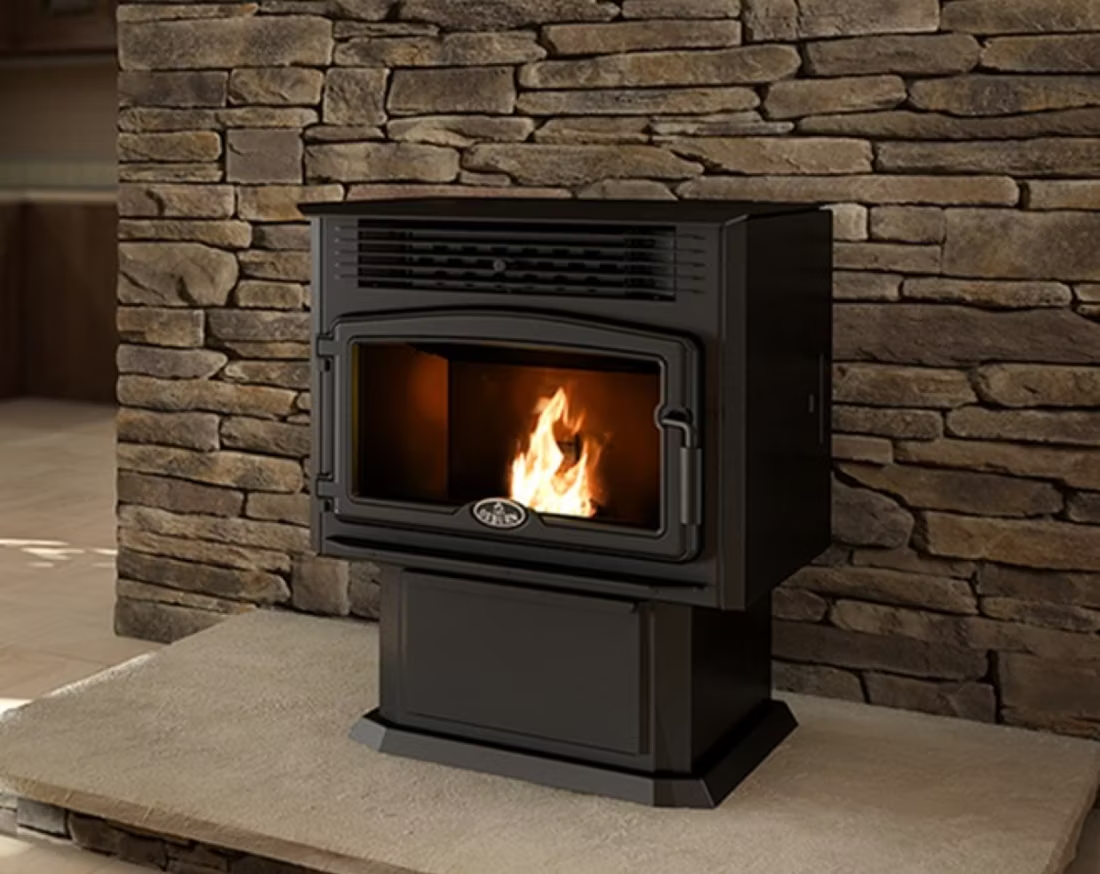
That doesn't mean nobody in Hays County wants one. A handful of homeowners with rural acreage, hunting cabins, or barndominiums outside city limits ask about pellet stoves for supplemental warmth on the occasional January cold snap, or for the thermostat-like control pellet units offer over an open wood fire. Forest Energy and Lignetics are the regional pellet brands most likely to show up at Central Texas farm and feed retailers, though you may need to special-order a pallet ahead of the season rather than grabbing a few bags on a cold Tuesday. One honest caveat: pellet stoves rely on an electric auger and blower to operate, so during a grid failure like Winter Storm Uri in February 2021—when much of Hays County lost power for days in freezing temperatures—a pellet stove without a generator is just an inert box. Homeowners chasing outage-proof backup heat in Kyle typically look at wood or propane instead.
Three steps. No salesperson until you're ready.
Tell us about your project
Your zip code, your situation, and the fuel you're leaning toward—or let the answers point you to one.
See what's actually available
The brands dealers within 100 miles genuinely carry—real options, never a catalog mirage.
Get your dealer & Project Guide
A trusted local dealer, plus the free Project Guide & Parts List that names every component of the job.
Frequently Asked Questions
How much does a pellet stove cost to install in Kyle?
Because pellet stoves are uncommon in Hays County, there isn't a deep bench of local installers competing on price the way there is for gas fireplaces or inserts. Nationally, a pellet stove plus installation typically runs $3,500 to $6,500, and that range holds up reasonably well here too—venting is simpler than a masonry wood chimney since most units vent horizontally through an exterior wall with 3- or 4-inch PL vent pipe. Expect to land toward the higher end if your installer has to travel in from Austin or San Marcos, since dedicated pellet technicians are thin on the ground in Kyle itself.
Does a pellet stove even make sense in a climate as mild as Kyle's?
For most Kyle homes, not as a primary heat source. With around 1,620 heating degree days a year and average winter lows near 39°F, the heating season here is short and mild compared to a place like Duluth, Minnesota, where pellet stoves run daily from October through April. A pellet stove sized for Hays County's climate would sit idle most of the year, and the ongoing cost of bagged pellets rarely pencils out against a heat pump or gas insert you'd already have for the handful of genuinely cold nights. Where pellet does make sense is a workshop, garage, or detached cabin that needs occasional, controllable heat without running new gas or electric lines.
What about backup heat during a winter storm like Uri?
This is the question we hear most from Hays County homeowners considering pellet, and it's worth being direct about: pellet stoves need electricity to run the auger that feeds the hopper and the blower that pushes heat into the room. During Winter Storm Uri in February 2021, when much of Kyle and the surrounding grid went dark for days in freezing weather, a pellet stove without a generator would have been useless at the exact moment it was needed most. If outage-proof emergency heat is the real goal, a vented gas fireplace with a standing pilot, or a wood-burning option where feasible, is a more reliable fit for this area than pellet.
Where can I buy pellet fuel near Kyle?
Pellet fuel isn't stocked widely in Hays County the way it is in colder states, since so few local homes burn it. Forest Energy and Lignetics are the two regional brands most likely to turn up at Central Texas farm-and-feed retailers or big-box stores in Austin and San Marcos, but supply can be inconsistent outside of a cold snap when everyone suddenly remembers they own a stove. Most pellet-stove owners in this area order a season's worth—a ton or more—in the fall rather than buying bag by bag in January.
What's the real difference between a pellet stove and a gas fireplace for a Kyle home?
Gas is the far more common choice here, and for good reason: with gas service available across much of Hays County, a gas insert or fireplace gives you instant on-off heat and ambiance without hauling fuel bags or feeding a hopper. A pellet stove burns compressed wood fuel, requires periodic hopper refills and ash removal, and needs electricity to operate—three ongoing chores a gas unit doesn't have. For the small number of Kyle homeowners who specifically want the look and radiant feel of a real solid-fuel flame, pellet remains an option, but most homeowners in this climate end up happier with gas.
Do I need a permit to install a pellet stove in Kyle?
Most likely yes—a new solid-fuel appliance installation, including a pellet stove, typically requires a building permit through the City of Kyle's permitting office, or Hays County directly if you're outside city limits, along with inspection of the vent termination and clearances to combustibles. Because pellet installs are infrequent here, it's worth calling ahead rather than assuming the front-counter staff sees these applications often—a certified hearth dealer who has pulled a Kyle permit before can save you a round trip.
What size pellet stove do I need for a Kyle property?
Sizing in Kyle usually skews smaller than sizing guides written for colder states, since you're heating for occasional cold snaps rather than a five-month winter. A small unit rated for 500 to 1,000 square feet is plenty for supplemental heat in a living room, workshop, or cabin here—most Kyle installs don't need the large, whole-home-rated stoves that make sense in a place like Fargo, North Dakota. A local dealer can size it properly based on your specific space and insulation.
Pellet stove vs. electric fireplace—which fits Kyle better?
For most Kyle homes, electric wins on simplicity: no fuel to store, no venting required, and power comes from Bluebonnet Electric Cooperative or Pedernales Electric Cooperative at roughly 11 to 12 cents per kWh—reasonable rates that make an electric insert cheap to run on the handful of genuinely cold nights each winter. A pellet stove offers real radiant heat and the look of an actual fire, which electric units only simulate, but it comes with fuel storage, hopper maintenance, and its own dependence on electricity to run the auger and blower. If ambiance and genuine heat output matter more than convenience, pellet is worth a look; if you just want a cozy glow on a 39-degree evening, electric is the lower-hassle choice.
Are there local dealers in Kyle who install and service pellet stoves?
There are far fewer dedicated pellet-stove dealers in Hays County than there are gas fireplace retailers, simply because demand is low in a 2A climate zone. Most of the installers who do handle pellet units in the Kyle area work out of San Marcos or the greater Austin market and serve Hays County as part of a wider territory. We can match you with one of these trusted dealers directly rather than leaving you to cold-call hearth shops that may not stock pellet equipment at all.
Why is my open fireplace making my house colder?
Open fireplaces suck—literally. As the fire burns, it consumes air your furnace already paid to heat and pulls it out through the chimney, so the house is actually colder after the fire goes out than before you lit it. An insert fixes this: it seals the chimney, puts fixed glass across the front, and turns that hole in your house into a real heat source.
Are pellet stoves loud?
They make some noise—there are two fans running plus an auger motor that turns as it feeds pellets. But there's a real range: premium models are engineered quiet, and the best offer a whisper-quiet mode you can comfortably watch TV next to. If noise matters in your room, ask to hear a stove running before you buy—it's a five-minute test that saves years of annoyance.
How much should I budget for a fireplace?
For an average home—covering the fireplace, the vent pipe, and basic installation—a budget between $3,900 and $5,500 gives you a lot of options across wood, gas, and pellet. By the time you add finish work, gas line, and electrical, the average complete installation lands between $5,000 and $12,000 all-in. In a remodel or new build, a good rule is to put about 2.5% of the total project cost toward the fireplace.
Does a fireplace add value to my home?
On average, a fireplace adds back to the home about the same amount you spent installing it. Add the monthly savings from heating the rooms you actually use instead of the whole house—often hundreds of dollars a year—and the value case is strong before you even count what a fire does for how your family uses the room.
Pellet Brands Stocked Around Kyle
Manufacturers will point you to the nearest stocking dealer.
Find your pellet stove option near Kyle.
Tell us about your project and we'll match you with a trusted local dealer who actually installs pellet equipment in Hays County, plus a free Project Guide & Parts List with the exact parts—including the vent kit—for your space.
Find Your Fireplace →