
Gas Fireplace Heat, Built for Kyle's Mild Winters.
Kyle doesn't need a furnace-grade heater—it needs a fireplace that looks good year-round and steps up on the handful of nights that actually get cold. Find the right gas unit and connect with a trusted local dealer.
Every Project Starts From One of These Five Situations
A fireplace for ambiance, plus real heat when a cold snap hits.
Kyle sits in climate zone 2A with an average winter low around 39°F and roughly 1,620 heating degree days a year—a fraction of what a place like Fargo, ND or Duluth, MN sees. Most winters here mean short cold spells, not months of sustained freeze, which is exactly why wood-burning heat never really took hold in Hays County. Local oak, pecan, and mesquite show up on backyard smokers far more often than in a firebox. But Kyle isn't immune to real cold—the February 2021 freeze that knocked out ERCOT-connected power across Central Texas is still fresh in a lot of homeowners' minds, and it's a big reason gas fireplaces are in demand here: heat that doesn't depend on the electric grid.
Kyle has grown fast as an Austin-area suburb, and a lot of that growth shows up as new construction with gas fireplaces built in from the start—either on natural gas where mains reach the subdivision, or on propane in parts of unincorporated Hays County that aren't on a gas main. Bluebonnet Electric Cooperative and Pedernales Electric Cooperative both serve homes in the Kyle area, and for many households a gas fireplace is the backup heat plan for exactly the kind of grid strain Central Texas saw in 2021. Whether you're finishing a new build in a Plum Creek-style development or adding warmth to an older home near downtown Kyle, the right gas unit gives you instant, reliable heat without waiting on the power company.
Three steps. No salesperson until you're ready.
Tell us about your project
Your zip code, your situation, and the fuel you're leaning toward—or let the answers point you to one.
See what's actually available
The brands dealers within 100 miles genuinely carry—real options, never a catalog mirage.
Get your dealer & Project Guide
A trusted local dealer, plus the free Project Guide & Parts List that names every component of the job.
Frequently Asked Questions
How much does a gas fireplace installation cost in Kyle?
For Central Texas homes, a direct-vent gas fireplace or insert installation typically runs somewhere in the $3,500–$9,000 range, with the low end covering a straightforward insert into an existing masonry firebox with a gas line already nearby, and the higher end covering new construction or remodel work that requires framing, venting, and a fresh gas or propane line run. Homes in newer Kyle subdivisions already plumbed for gas tend to land on the lower end; homes on propane, or homes needing a longer gas line run from the meter, run higher. A local dealer will give you a firm number after seeing your home.
Can I convert my existing wood-burning fireplace to gas?
Yes, and it's a common project in Kyle's older homes near downtown and in earlier subdivisions that were built with a traditional masonry firebox. A gas insert or a vented gas log set can typically use your existing chimney with a liner, converting a fireplace that was rarely used (Kyle's mild winters don't give wood much of a workout) into one that gets lit regularly. Since wood heat was never really practical here given the low heating degree day count, most homeowners doing this conversion are after convenience and reliable warmth, not replacing a primary heat source.
Do I need natural gas, or should I plan on propane?
It depends on where in the Kyle area you are. Newer developments closer to the city core are more likely to have natural gas mains, while homes further out in unincorporated Hays County—or in developments built before gas lines were extended—often rely on propane, either from an existing tank or a new tank set up by a local propane supplier. Most gas fireplace models can run on either fuel with the correct orifice and regulator, so the fuel type shouldn't limit which unit you choose. Your local dealer will confirm what's actually available at your address before recommending a specific model.
Will my gas fireplace work if the power goes out?
Most modern gas fireplaces will, which is a big part of why they're popular in Kyle after the February 2021 freeze left large parts of the ERCOT grid without power for days. Units with an IPI (intermittent pilot ignition) system run on standard AA batteries that kick in automatically when utility power drops, so the fireplace still lights on demand. Valor fireplaces take it a step further—their pilot generates its own electricity through the thermocouple, so there's no battery to remember or replace. If grid reliability during winter storms is a priority for your household, ask your local dealer specifically about the ignition system on any unit you're considering.
What's the difference between a gas fireplace, gas insert, and gas stove?
A gas fireplace is a fully built-in unit installed into a wall or framed enclosure, common in Kyle's new-construction homes. A gas insert drops into an existing masonry firebox—the right call for older homes near downtown Kyle that already have a wood-burning fireplace going unused. A gas stove is a freestanding unit that sits out in the room like a traditional wood stove but runs on gas or propane, which works well in a home addition or a room without any existing fireplace. Most Kyle homeowners upgrading an existing fireplace go with an insert; those building new or adding a fireplace where none existed usually go with a built-in unit.
Do I need a permit to install a gas fireplace in Kyle?
Generally yes—gas fireplace installations inside Kyle city limits go through the City of Kyle's building and development services process, and any new gas line work requires a licensed gas-fitter regardless of jurisdiction. If your property is in unincorporated Hays County, permitting runs through the county rather than the city. In both cases, the local hearth dealers we match you with typically handle the permit paperwork and inspection scheduling as part of the installation, so you're not coordinating separate trades yourself.
Vented vs. vent-free gas fireplaces—which is allowed in Kyle?
Both are legal in Texas. Vented (direct-vent) units draw combustion air from outside and exhaust it back outside through a sealed vent, which makes them the safer, more universally recommended choice and what most Kyle installers default to. Vent-free units burn gas directly into the room and are permitted here, but they come with strict room-size and ventilation requirements, and some homeowners prefer to avoid the added humidity and combustion byproducts they release indoors—a real consideration in Central Texas's already humid climate. A local dealer can walk you through both if you're weighing the tradeoff.
How often does a gas fireplace need to be serviced?
Plan on an annual inspection, ideally before the fall cool-down starts. A technician checks the burner, pilot assembly, gas connections, and venting, and cleans the glass and interior—a much quicker job than chimney sweeping for a wood stove, but still important given how infrequently some Kyle units get used between cold snaps. Expect to pay somewhere in the neighborhood of $150–$250 for a standard annual service call from a local hearth or HVAC provider.
Gas vs. electric fireplace—which makes more sense in Kyle?
Gas gives you real flame, higher heat output, and—with a battery-backup or self-powered ignition system—heat that keeps working during a grid outage like the one Central Texas saw in February 2021. Electric fireplaces are simpler to install (often just a standard outlet, sometimes a 240V circuit for larger units), cost less upfront, and are easy to add to a room with no existing gas or venting. Bluebonnet Electric Cooperative and Pedernales Electric Cooperative both serve the Kyle area at residential rates around 11–12 cents per kWh, which keeps electric fireplace running costs modest for occasional use. For a primary fireplace with real ambiance and outage resilience, gas tends to win in Kyle; for a secondary room, a rental, or a simple ambiance upgrade, electric is often the more practical pick.
Can I put a TV above my fireplace?
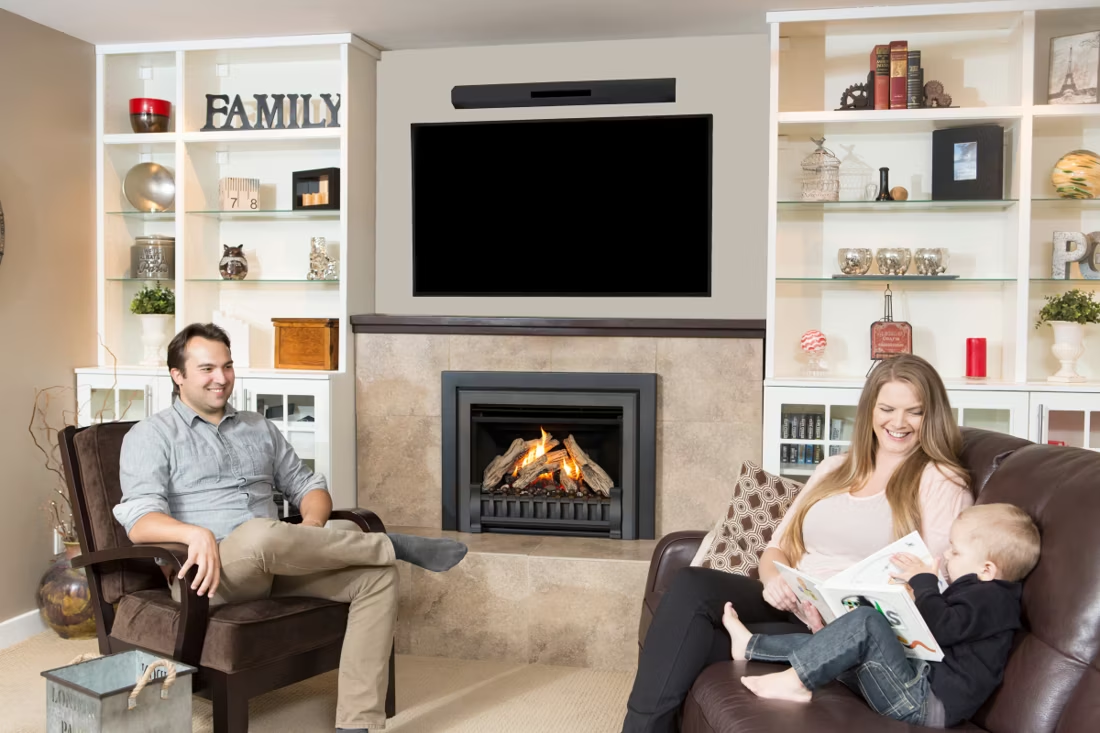
Yes—with an asterisk. Fireplaces are hot and TVs don't like heat. Either put a mantel between them to deflect rising warmth, or choose a fireplace with heat-management technology that creates a cool zone on the wall above—the wall stays around 125 degrees, barely warm, while the room still gets full heat. If you like clean lines and don't want a mantel, heat management is the answer.
Why is my open fireplace making my house colder?
Open fireplaces suck—literally. As the fire burns, it consumes air your furnace already paid to heat and pulls it out through the chimney, so the house is actually colder after the fire goes out than before you lit it. An insert fixes this: it seals the chimney, puts fixed glass across the front, and turns that hole in your house into a real heat source.
What is an in-home preview and do I need one?
It's a visit where a hearth professional measures your space, confirms the model you picked actually works in your home, and walks the specs—framing, gas line, venting, finish work—before anything is ordered. Some details you just can't know until you see the house. Never make a down payment without one; it's the single most-skipped step that burns buyers.
Can a fireplace actually lower my heating bill?
Yes—by creating a comfort zone. A furnace heats every square foot of the house just to warm the one room you're in; a gas fireplace on low burns roughly a sixth of the gas a typical furnace does. Set the furnace around 55–60 degrees as a baseline, then heat the rooms your family actually uses. Families who heat this way commonly save $20–$60 a month.
Find your gas fireplace in Kyle.
Tell us a bit about your home and we'll put together a free Project Guide & Parts List for your Kyle gas fireplace project—the right unit, the vent kit, and a trusted local dealer to install it.
Find Your Fireplace →