
Keep Your Family Warm and Safe—No Matter What
Kingsville's mild Gulf Coast winters rarely call for wood heat, but a real wood-burning fireplace still has a place on King Ranch country porches and great rooms. We'll help you figure out if it's right for your home.
Every Project Starts From One of These Five Situations
The climate doesn't demand it—but the fire still has a place.
Kingsville sits in climate zone 2A near the Gulf Coast, with an average winter low around 47°F and a very light winter heating load—just a fraction of what a place like Bismarck, ND or Duluth, MN racks up in a single month. Most homes here are built around cooling loads, not heating ones, and central air-source heat pumps or electric resistance heat handle the handful of genuinely cold nights each winter without difficulty.
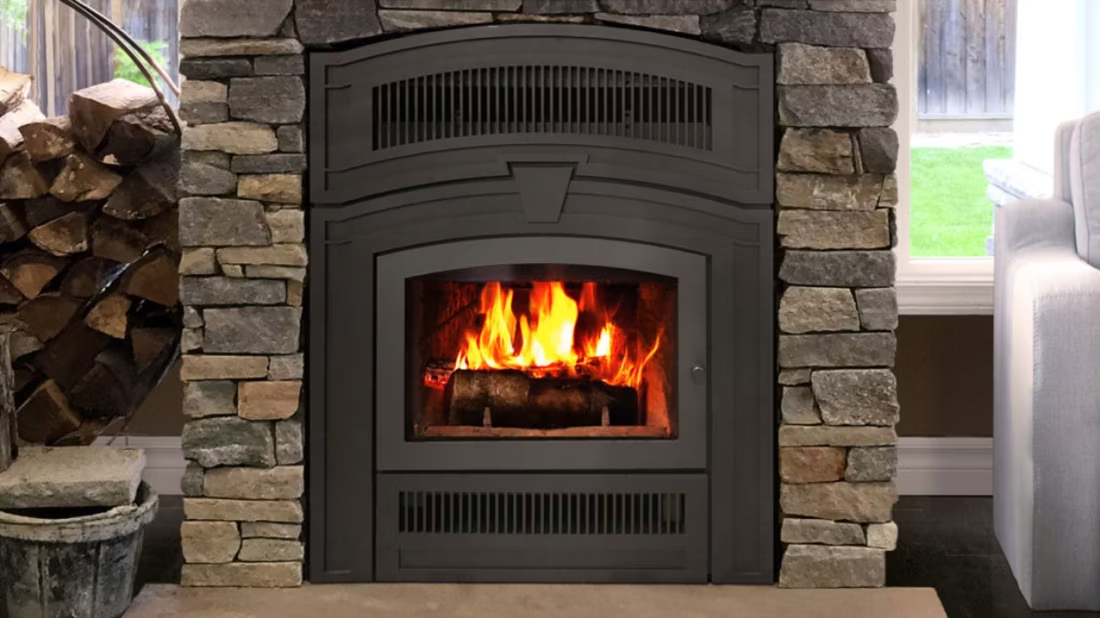
That said, wood isn't foreign to this part of Kleberg County—it's just used differently. Mesquite, oak, and pecan are all common locally, but they show up far more often in the smoker than the fireplace, a nod to the region's ranching heritage and King Ranch roots. Some Kingsville homeowners still install a wood-burning fireplace or stove for the ambiance of a live fire in a great room, for backup heat during the occasional hard freeze, or simply because a masonry hearth suits a ranch-style build. It's a lifestyle choice here more than a heating necessity, and it's worth going in with clear eyes about that.
Three steps. No salesperson until you're ready.
Tell us about your project
Your zip code, your situation, and the fuel you're leaning toward—or let the answers point you to one.
See what's actually available
The brands dealers within 100 miles genuinely carry—real options, never a catalog mirage.
Get your dealer & Project Guide
A trusted local dealer, plus the free Project Guide & Parts List that names every component of the job.
Frequently Asked Questions
Does a wood-burning fireplace make sense for heating a home in Kingsville?
Not really as a primary heat source. With only a very light winter heating load and winter lows averaging 47°F, Kingsville's heating needs are closer to Houston or Corpus Christi than to any cold-climate market. Most homes rely on central electric heat pumps through utilities like AEP Texas Central or Nueces Electric Cooperative, and a wood fireplace here functions as an occasional-use, ambiance-driven feature rather than something you'd run nightly to keep the house warm.
If it barely gets cold, why do people in Kingsville still want a wood fireplace?
Mostly for the experience, not the BTUs. Kingsville is King Ranch country, and a lot of the custom and ranch-style homes in the area are built with a great room centered on a masonry or wood-burning fireplace as a design and gathering feature. Others want a real backup heat source for the rare hard freeze, or simply prefer the look and feel of an actual wood fire over a gas insert. It's a smaller slice of the market here than in a cold-winter city, but it's a real one.
What wood species are actually available to burn locally?
Oak, pecan, and mesquite are the three you'll find most often around Kingsville. Mesquite is the local favorite—mostly for its aroma and its role in South Texas barbecue—but it burns hot and fast, so it's often mixed with oak or pecan for a longer, steadier burn if you're using a fireplace for more than an evening's ambiance. Pecan splits cleanly and burns well too, and both oak and pecan are more forgiving in a fireplace insert than mesquite alone, which tends to pop and spark.
Does Kingsville ever get cold enough to actually need a fireplace running?
Occasionally, yes. Winter Storm Uri in February 2021 pushed South Texas, including Kingsville, into the teens and 20s for several days and knocked out power across the region—the kind of event that makes a wood-burning fireplace genuinely useful rather than purely decorative, since it doesn't depend on the electric grid. Outside of events like that, Kingsville's cold snaps are short and mild enough that most homes never need supplemental heat beyond the thermostat.
What does a wood fireplace installation cost in Kingsville?
Because wood-burning installs are a niche request in this market, pricing varies more than it would in a cold-climate city with several dedicated hearth shops. A basic factory-built, zero-clearance wood fireplace or small stove with proper Class A chimney venting typically lands in the $3,500–$7,000 range depending on the unit and whether the home already has a suitable hearth and chase. Full masonry fireplace construction runs considerably higher. Many Kingsville homeowners end up working with installers based out of Corpus Christi who travel to the area, so it's worth asking about travel and scheduling upfront.
Do I need a permit to install a wood-burning fireplace in Kingsville?
Yes—any new fireplace or chimney installation is a structural and code matter, so it goes through the City of Kingsville building permitting process (or Kleberg County if you're outside city limits). A licensed installer will typically pull the permit as part of the job and make sure clearances, hearth extension, and venting meet current code. Given how few wood installs happen locally compared to a place like Klamath Falls, OR, it's worth confirming your installer has actually done one before, not just gas or electric units.
Are there any air quality restrictions on wood burning in Kingsville?
No—Kingsville has no listed air quality non-attainment status, winter inversion issues, or wildfire smoke concerns, unlike parts of the Pacific Northwest or interior West where burn bans and curtailment periods are common in winter. There's no local ordinance restricting when you can or can't burn. That said, courtesy toward neighbors and basic chimney maintenance still matter, especially with resinous woods like mesquite that can produce more visible smoke if burned green.
Wood vs. gas—which actually fits a Kingsville home better?
For most homes here, gas is the more practical everyday choice. Kingsville has standard natural gas and propane availability, and a gas fireplace or insert gives you instant, clean heat with none of the wood storage, ash cleanup, or occasional-use maintenance headaches—a better match for a climate that only needs supplemental heat a handful of nights a year. Wood still wins if what you actually want is a real fire, backup heat that works without power, or a masonry hearth as a centerpiece for a ranch-style great room. Plenty of local homeowners choose gas for daily convenience and reserve wood for a dedicated feature fireplace.
Where can I find someone who actually installs wood fireplaces near Kingsville?
That's exactly the gap Find My Fireplace is built to close. Because wood-burning demand is lower here than in colder markets, the installers who do this work well aren't always the first name that comes up in a local search—some are based in Corpus Christi and serve Kleberg County on request. Tell us about your home and we'll match you with a trusted local dealer who genuinely stocks and installs wood-burning units in this area, rather than pointing you to a big-box option that doesn't specialize in it.
Why is a fireplace insert so efficient?
An insert does two things: it seals the chimney completely, so you stop losing air you already paid to heat, and it radiates warmth into the room through the firebox and glass. Most add a heat-exchange fan that pulls cool room air underneath, wraps it around the hot firebox, and pushes it back out warm. Your home is more efficient before you've even lit the first fire.
Why is my open fireplace making my house colder?
Open fireplaces suck—literally. As the fire burns, it consumes air your furnace already paid to heat and pulls it out through the chimney, so the house is actually colder after the fire goes out than before you lit it. An insert fixes this: it seals the chimney, puts fixed glass across the front, and turns that hole in your house into a real heat source.
Can a fireplace actually lower my heating bill?
Yes—by creating a comfort zone. A furnace heats every square foot of the house just to warm the one room you're in; a gas fireplace on low burns roughly a sixth of the gas a typical furnace does. Set the furnace around 55–60 degrees as a baseline, then heat the rooms your family actually uses. Families who heat this way commonly save $20–$60 a month.
What is an in-home preview and do I need one?
It's a visit where a hearth professional measures your space, confirms the model you picked actually works in your home, and walks the specs—framing, gas line, venting, finish work—before anything is ordered. Some details you just can't know until you see the house. Never make a down payment without one; it's the single most-skipped step that burns buyers.
Find your wood fireplace in Kingsville.
Tell us about your home and whether you're after backup heat, a feature fireplace, or both—we'll match you with a trusted local dealer and send over a free Project Guide & Parts List with the exact parts, including the vent kit, for your Kingsville project.
Find Your Fireplace →