
Pellet Heat Is Rare in Kingsville's Mild Gulf Coast Climate.
With just 834 heating degree days and winter lows averaging 47°F, most Kingsville homes never need a pellet stove—but for ranch outbuildings, hunting camps, and the occasional cold snap, it can still fit. We'll help you figure out if it's the right call.
Every Project Starts From One of These Five Situations
A climate that rarely calls for supplemental heat.
Kingsville sits at just 61 feet of elevation on the South Texas coastal plain, home to Texas A&M-Kingsville and the King Ranch headquarters. Winters here are short and mild—the average winter low hovers around 47°F, and the area logs roughly 834 heating degree days a year. Compare that to a place like International Falls, Minnesota, where heating degree days top 10,000 annually, and it's clear why pellet stoves never became part of the local building landscape the way they have in colder parts of the country.
That doesn't mean pellet heat has zero place in Kleberg County. A handful of homeowners install a small pellet stove for the visual warmth of a real flame, for a detached workshop or hunting camp where central HVAC isn't run, or as backup for rare hard freezes like the February 2021 Winter Storm Uri event that left much of Texas without power for days. But it's worth being upfront: pellet stoves need electricity to run the auger and combustion blower, which limits their usefulness as true emergency heat here. For most Kingsville homes, gas and electric heating options—both well supported locally through AEP Texas Central and Nueces Electric Cooperative—are simply a better match for the climate.
Three steps. No salesperson until you're ready.
Tell us about your project
Your zip code, your situation, and the fuel you're leaning toward—or let the answers point you to one.
See what's actually available
The brands dealers within 100 miles genuinely carry—real options, never a catalog mirage.
Get your dealer & Project Guide
A trusted local dealer, plus the free Project Guide & Parts List that names every component of the job.
Frequently Asked Questions
Does a pellet stove actually make sense for a home in Kingsville?
For most Kingsville homes, no—not as a primary or even meaningful supplemental heat source. With only about 834 heating degree days a year and winter lows that rarely dip much below the mid-40s, the payback math and daily usefulness of a pellet stove just don't pencil out the way they do in colder states. Where it does make sense: a detached ranch building or hunting camp without central HVAC, a room where you want the ambiance of a real fire on the handful of genuinely cold nights each winter, or a vacation property elsewhere in the family. If that's your situation, we can still match you with a dealer who handles them.
What does a pellet stove installation cost if I still want one in Kingsville?
Because pellet stoves are uncommon here, there's no well-established local pricing pattern the way there is for gas inserts or mini-split heat pumps in the Coastal Bend. Nationally, a pellet stove installation with pellet venting (PL vent, not a full masonry chimney) typically runs $3,000 to $6,000 installed. In Kingsville, expect to land toward the lower end of that range, since most installs are single-room, straight-through-wall vent jobs rather than the more involved chimney retrofits common in colder climates. Get a firm quote from whichever dealer a local retailer connects you with—pricing varies by unit and hopper capacity.
Where would I even buy a pellet stove near Kingsville?
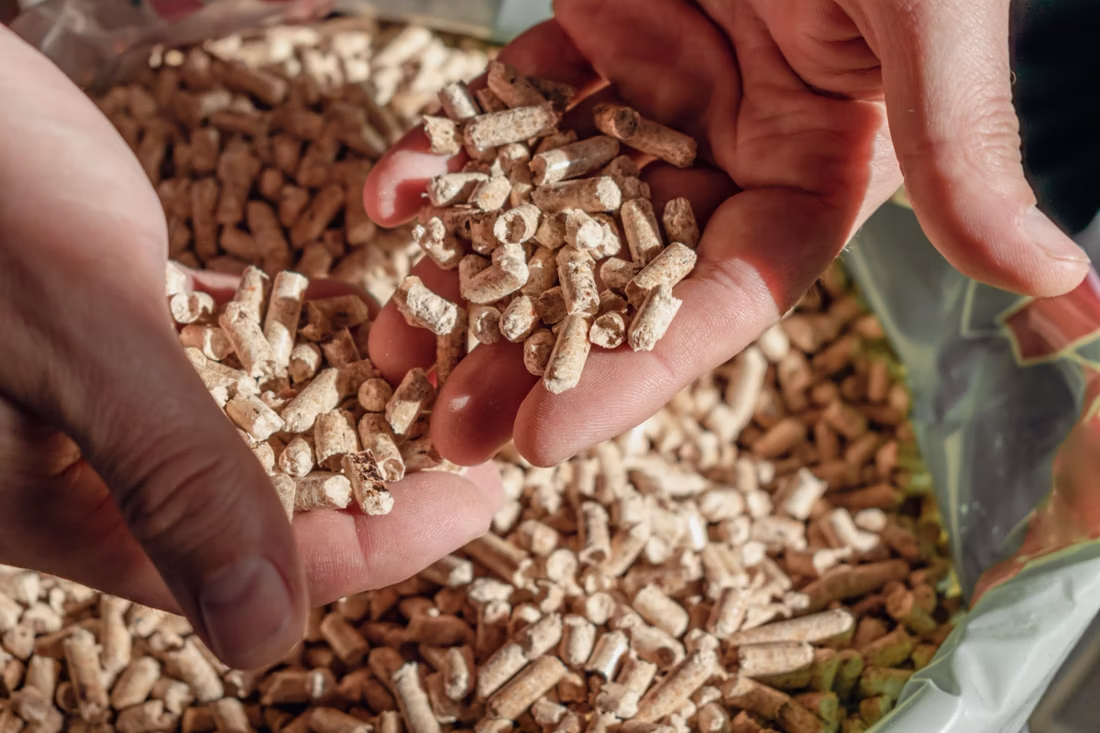
There isn't a hearth shop in Kingsville itself that specializes in pellet appliances—demand simply isn't there. Most homeowners in Kleberg County end up working with a broader hearth or fireplace dealer based in Corpus Christi, about 40 minutes north, who can special-order a unit and handle installation. Pellets themselves, when available locally, tend to show up seasonally at feed stores or farm supply retailers rather than dedicated hearth shops. Regional bagged pellet brands like Forest Energy and Lignetics are more reliably found through online ordering or bulk delivery than off a shelf in town.
Do I need a permit to install a pellet stove in Kingsville or Kleberg County?
Yes. Any solid-fuel appliance installation, including a pellet stove, requires a building permit through the City of Kingsville or Kleberg County building department depending on where the property sits. The good news is that pellet venting is simpler than a full masonry chimney—it's a smaller-diameter PL vent pipe that can typically run horizontally through an exterior wall—which keeps the inspection straightforward. Whoever installs the unit should pull the permit and schedule the inspection as part of the job; that's standard practice even for a low-volume installer working outside their usual territory.
How do pellet stoves hold up during Kingsville's rare cold snaps and power outages?
This is the honest tradeoff worth knowing before you buy: pellet stoves need electricity to run the hopper auger and combustion blower, so a standard pellet stove goes cold the moment the grid does. That matters in South Texas after Winter Storm Uri in February 2021, when ERCOT outages during a hard freeze left homes without heat for days at the exact moment they needed it most. A battery backup or small generator can keep a pellet stove running through an outage, but without one, a wood stove or a gas fireplace with battery-backed ignition is a more dependable choice for true emergency heat in this climate.
Where do I source and store pellets if they're not commonly sold in Kingsville?
Plan on ordering ahead rather than picking up bags as needed. Forest Energy and Lignetics are the two regional brands most likely to be available through farm supply stores or bulk delivery serving the Coastal Bend, but Kingsville doesn't have a retailer that keeps pellets in stock year-round the way you'd see in a heavier-heating-demand region. Given how few cold nights actually call for burning, most owners buy a pallet (about 50 forty-pound bags) once in the fall, and store it somewhere dry—a garage or covered shed works fine given the low humidity swings here—rather than relying on local restocking mid-winter.
What size pellet stove would I need for occasional Kingsville use?
Small. With so few heating degree days, almost nobody in Kingsville needs a stove sized to carry a whole house—you're heating one room, a workshop, or a camp for a limited number of nights each winter. A compact unit in the 1,000 to 1,500 square foot rated range is oversized for most single-room applications here and will run on its lowest burn setting most of the time it's used. Talk to whichever dealer you're matched with about your specific space; undersizing isn't really the risk in this climate the way it is up north.
Are there rebates or tax credits for installing a pellet stove in Texas?
Texas doesn't offer state-level incentives for biomass heating the way some colder states do with efficiency rebate programs. What's still available is the federal 25C tax credit, which covers 30% of the cost of a qualifying wood or pellet stove rated at 75% efficiency or higher, up to $2,000, through 2032. Keep your receipts and the manufacturer's efficiency documentation for your tax filing—your installer should be able to confirm whether the specific model you choose qualifies.
Pellet vs. gas vs. electric—what actually makes sense for a Kingsville home?
For the vast majority of homes here, gas or electric wins outright. Natural gas and propane fireplaces give you instant, thermostat-controlled heat with no fuel storage or hopper refilling, and electric options work seamlessly with the existing service from AEP Texas Central or Nueces Electric Cooperative—both practical fits for a climate with only 834 heating degree days a year. Pellet stoves make sense in narrower cases: a detached building without gas or reliable HVAC, or a homeowner who specifically wants the look and feel of a real fire and is willing to manage fuel storage for a handful of cold nights. If that's you, we'll still find you a dealer who can make it work.
How often does a pellet stove need cleaning?
A clean pellet stove is a happy pellet stove. Plan on cleaning the burn pot about once a week when you're burning regularly—ash and clinkers gum up the air holes just like a pellet barbecue. Most pellet stove problems trace back to skipped cleaning that nobody explained up front. Some designs make it easy with a trapdoor burn pot: pull a lever and the gunk drops into the ash pan.
What's the difference between an insert and a zero-clearance fireplace?
An insert is a fireplace that slides into a pre-existing wood-burning fireplace—if you don't have one, there's nothing to insert it into. A zero-clearance fireplace is built into a framed wall, which makes it the answer for remodels and new construction. Simple test: existing masonry fireplace means insert; blank or framed wall means zero-clearance.
Does a fireplace add value to my home?
On average, a fireplace adds back to the home about the same amount you spent installing it. Add the monthly savings from heating the rooms you actually use instead of the whole house—often hundreds of dollars a year—and the value case is strong before you even count what a fire does for how your family uses the room.
Can a fireplace actually lower my heating bill?
Yes—by creating a comfort zone. A furnace heats every square foot of the house just to warm the one room you're in; a gas fireplace on low burns roughly a sixth of the gas a typical furnace does. Set the furnace around 55–60 degrees as a baseline, then heat the rooms your family actually uses. Families who heat this way commonly save $20–$60 a month.
Pellet Brands Stocked Around Kingsville
Manufacturers will point you to the nearest stocking dealer.
Find your pellet fireplace in Kingsville.
Whether you're outfitting a ranch outbuilding, a hunting camp, or just want the ambiance of a real fire, we'll match you with a dealer who can source the right pellet stove—and send you a free Project Guide & Parts List built for your space.
Find Your Fireplace →