
Find your electric fireplace in the Davis Mountains.
Simple, plug-and-play heat for Fort Davis, Valentine, and the ranch country of Jeff Davis County—no gas line, no venting, no masonry work. Find the right unit and connect with a trusted local dealer.
Every Project Starts From One of These Five Situations
Simple heat for Texas's highest county.
Jeff Davis County sits in the Davis Mountains of the Chihuahuan Desert, spread across nearly 2,265 square miles with a population just over 1,000. Fort Davis, the county seat, sits at roughly 5,050 feet—the highest town in Texas—and nearby Mount Locke at the McDonald Observatory tops 6,700 feet. The county falls in climate zone 3B: mild and dry overall, but elevation drives sharp swings between warm afternoons and freezing overnight lows, especially in Fort Davis and out toward Valentine. It's not a brutal winter climate by national standards, but it's colder at night than most people expect from West Texas.
There's no natural gas infrastructure in Jeff Davis County, and propane delivery to the county's scattered ranches can mean a long drive for a service truck. Electric fireplaces fill a real niche here: no combustion, no chimney, no gas line—just a dedicated circuit and a finished opening. That makes them a practical fit for guest cottages, bunkhouses, and outbuildings on area ranches, and for homes tied to the Fort Davis National Historic Site district where altering existing masonry or adding venting isn't an option. Power comes through Rio Grande Electric Cooperative across most of the county, and in this mild climate, an electric unit works best as supplemental zone heat and ambiance rather than a home's primary heat source.
Three steps. No salesperson until you're ready.
Tell us about your project
Your zip code, your situation, and the fuel you're leaning toward—or let the answers point you to one.
See what's actually available
The brands dealers within 100 miles genuinely carry—real options, never a catalog mirage.
Get your dealer & Project Guide
A trusted local dealer, plus the free Project Guide & Parts List that names every component of the job.
Frequently Asked Questions
How much does an electric fireplace installation cost in Jeff Davis County?
Most electric fireplace projects in Jeff Davis County run $350 to $1,800. A plug-in insert dropped into an existing fireplace opening sits at the low end—often just the unit cost plus a quick electrician check. A built-in wall unit or linear model that requires a dedicated 120V or 240V circuit run from the panel costs more, particularly on older ranch properties or historic Fort Davis homes where wiring runs are longer or walls are adobe or stone. Because there's no venting or gas line involved, electric installs are consistently the fastest and least invasive option in the county.
Is an electric fireplace enough to heat my whole house?
Generally no, and that's true even in Jeff Davis County's relatively mild climate zone 3B. Electric fireplaces are built for zone heating—warming the room they're in—not for carrying a whole house through a cold night at elevation. Most local homes pair an electric unit with central HVAC, a propane furnace, or a wood stove for the coldest stretches, and use the electric fireplace for everyday ambiance and to take the edge off a chilly evening in Fort Davis or out on a Valentine-area ranch without firing up the main heat source.
Do I need a permit to install an electric fireplace in Jeff Davis County?
Jeff Davis County doesn't enforce a general residential building code outside city limits, so most standalone ranch and rural installs don't require a county building permit. What does matter is the electrical work: if your unit needs a new dedicated circuit, that wiring should be done or inspected by a licensed electrician regardless of whether a permit is pulled, since insurance and safety both hinge on it being done correctly. If your property sits within Fort Davis town limits or near the Fort Davis National Historic Site, check with the town before altering wiring or exterior walls—historic district rules can apply even to work that wouldn't otherwise need a permit.
What's the difference between an electric fireplace, insert, and stove?
An electric fireplace is typically a built-in or wall-mounted unit designed for a fixed spot—common in new construction or remodels. An electric insert is sized to drop into an existing wood or gas fireplace opening, which is a popular option for older Fort Davis homes with a masonry firebox that's no longer used. An electric stove is a freestanding cabinet-style unit that can go almost anywhere there's an outlet, which makes it a good fit for guest cottages, bunkhouses, or outbuildings on area ranches that don't have an existing hearth at all.
Will my electric fireplace work during a power outage?
No—electric fireplaces run entirely on household power, so they shut off when the power does. For a county served by Rio Grande Electric Cooperative across long rural distribution lines, outages during storms or high winds through the Davis Mountains do happen. If backup heat during an outage matters to you, especially for a primary residence, pair the electric fireplace with a wood stove, propane heater, or a generator sized to carry essential circuits—many ranch properties in the county already run a generator for well pumps and can extend that to a fireplace circuit.
What's the best electric fireplace for a Jeff Davis County home?
Look for a unit with a strong standalone heater rating (most run 4,600–5,000 BTU per zone) if you want real supplemental warmth on cold nights at elevation, not just the flame effect. Brands like Dimplex and Napoleon offer models with realistic LED flame technology and remote thermostat control, which suits the wide day-to-night temperature swings common in Fort Davis and Valentine. For historic-district homes, a slim insert that fits an existing firebox without altering the masonry opening is usually the cleanest solution. A local dealer can match wattage and circuit requirements to your specific home.
Can I put an electric insert in a historic Fort Davis home?
Often, yes—this is one of the more common requests in the county given the number of historic properties tied to the Fort Davis National Historic Site and the town's older adobe and stone construction. Because electric inserts don't require venting, a chimney, or structural changes to the firebox, they're generally the least disruptive way to bring working heat back to an old, decommissioned fireplace without touching protected masonry. Confirm with the town of Fort Davis if your property falls within a designated historic overlay before any exterior or structural work, even minor electrical runs.
Does my electric fireplace need a dedicated circuit?
Most full-size electric fireplaces draw close to 1,500 watts on the heater setting, which is enough to warrant a dedicated 15- or 20-amp circuit rather than sharing an existing outlet with other loads. Smaller plug-in inserts sometimes run fine on a standard household circuit, but a licensed electrician should confirm the panel capacity and existing circuit load before you install, particularly in older ranch homes in Jeff Davis County where panels haven't always kept pace with added appliances over the years.
Electric vs. propane fireplace—which is right for my home?
Propane offers higher heat output and can serve as genuine primary or backup heat during a power outage—a real consideration on Rio Grande Electric Cooperative's rural lines. But propane means a tank, delivery scheduling, and venting work. Electric skips all of that: no tank, no delivery, no venting, and a much simpler install, which is why it's the go-to choice for guest houses, bunkhouses, and ambiance-focused installs in town. For a primary residence relying on the fireplace for real winter heat, propane is usually the safer bet; for supplemental warmth and easy installation, electric is hard to beat.
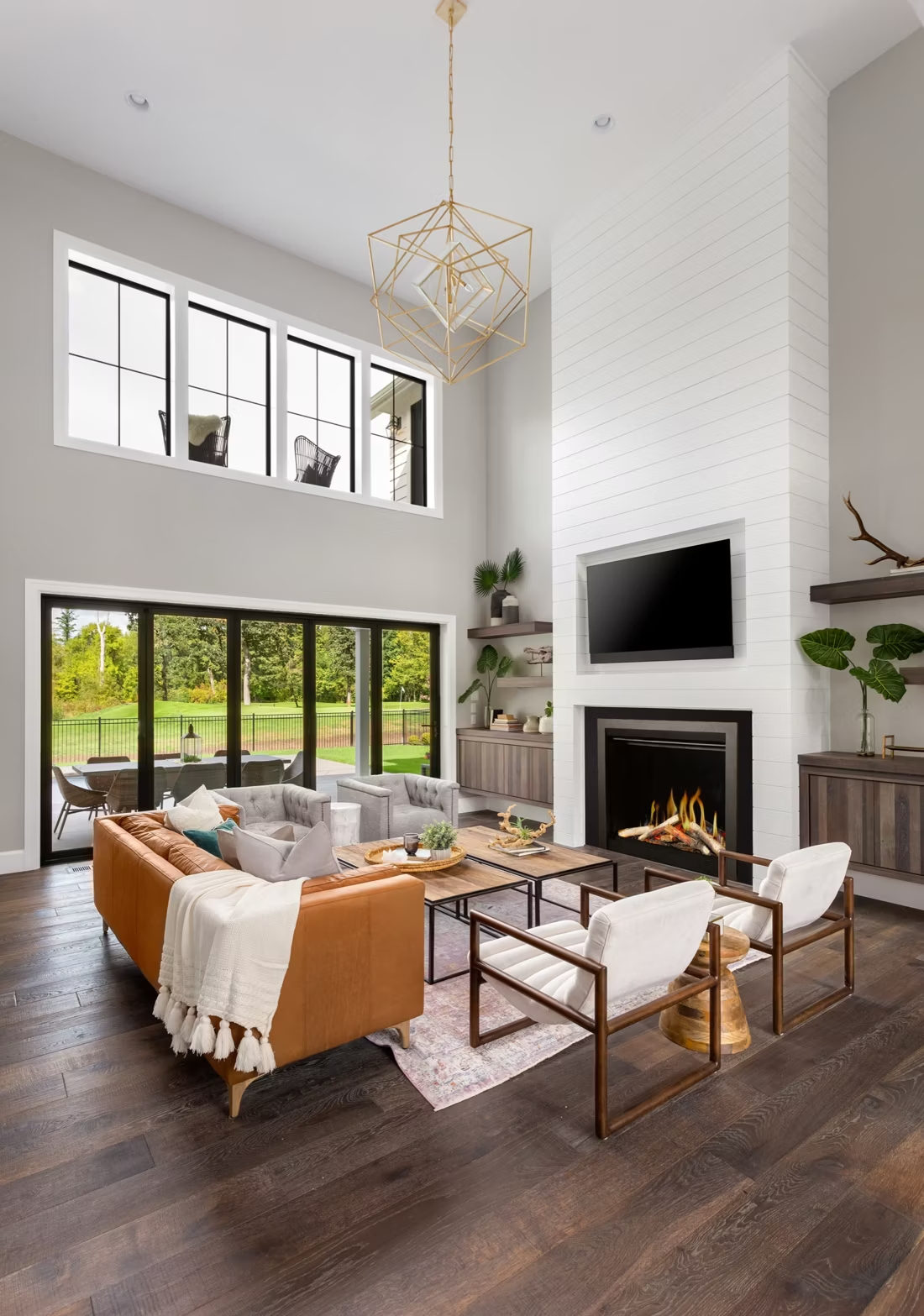
Can I put a TV above my fireplace?
Yes—with an asterisk. Fireplaces are hot and TVs don't like heat. Either put a mantel between them to deflect rising warmth, or choose a fireplace with heat-management technology that creates a cool zone on the wall above—the wall stays around 125 degrees, barely warm, while the room still gets full heat. If you like clean lines and don't want a mantel, heat management is the answer.
How much does an electric fireplace cost to run?
With the heater on, a typical unit draws about 1,500 watts—at average electric rates that's roughly 20 cents an hour. Run the flame effect alone and it costs pennies; the flames are LED-driven and use about as much power as a light bulb. There's no pilot light, no fuel delivery, and essentially no maintenance.
Can I install a fireplace myself?
If you're putting a fire in your house on purpose, it's best to work with an expert. Unless you're genuinely experienced in framing, gas line, vent pipe, and the national code on clearances to combustibles, have a professional do it—and ideally the same company that sells you the fireplace, so warranty, service, and liability all live under one roof.
Can a fireplace actually lower my heating bill?
Yes—by creating a comfort zone. A furnace heats every square foot of the house just to warm the one room you're in; a gas fireplace on low burns roughly a sixth of the gas a typical furnace does. Set the furnace around 55–60 degrees as a baseline, then heat the rooms your family actually uses. Families who heat this way commonly save $20–$60 a month.
Find your electric fireplace in Jeff Davis County.
Tell us a bit about your home and we'll match you with a trusted local dealer and send over a free Project Guide & Parts List—the exact parts and wiring plan for your electric fireplace project in Jeff Davis County.
Find Your Fireplace →