
Find the right hearth for high-desert winters in Jeff Davis County.
Wood, gas, pellet, and electric fireplace resources for Fort Davis, Valentine, and the ranch country in between. This hub connects you with the handful of hearth businesses that actually cover this stretch of the Trans-Pecos.
Every Project Starts From One of These Five Situations
Cold, clear nights above 5,000 feet in the Davis Mountains.
Jeff Davis County sits in the Trans-Pecos, where Fort Davis—one of the highest towns in Texas at just over 5,000 feet—anchors a county of roughly 1,000 residents spread across more than 2,000 square miles of ranchland. The climate is mixed-dry (zone 3B): hot, sunny days even in winter, but nights that drop hard once the sun goes down, especially up in the Davis Mountains near McDonald Observatory. Wood heat here draws on what actually grows on the land—oak, pecan, and mesquite are all common on local ranches, and mesquite in particular is a Trans-Pecos staple for both cook fires and stoves. Because the county sits in open, wind-exposed high desert rather than a basin or valley, there's none of the winter inversion trouble that causes smoke-management rules in mountain-locked places—no burn curtailment periods here, though ranchers do watch for red-flag fire danger during dry stretches.
What you'll find on this hub: hearth retailers, service technicians, and fuel suppliers that actually reach this part of the Trans-Pecos, whether you're in Fort Davis proper, out toward Valentine, or on a ranch down a county road with no address number. With a population this small, most hearth businesses are based outside the county—commonly in Alpine or Fort Stockton—and drive in for installs and service calls. Pick your fuel below for local dealer recommendations, install costs, and the resources that fit a remote, high-elevation property.
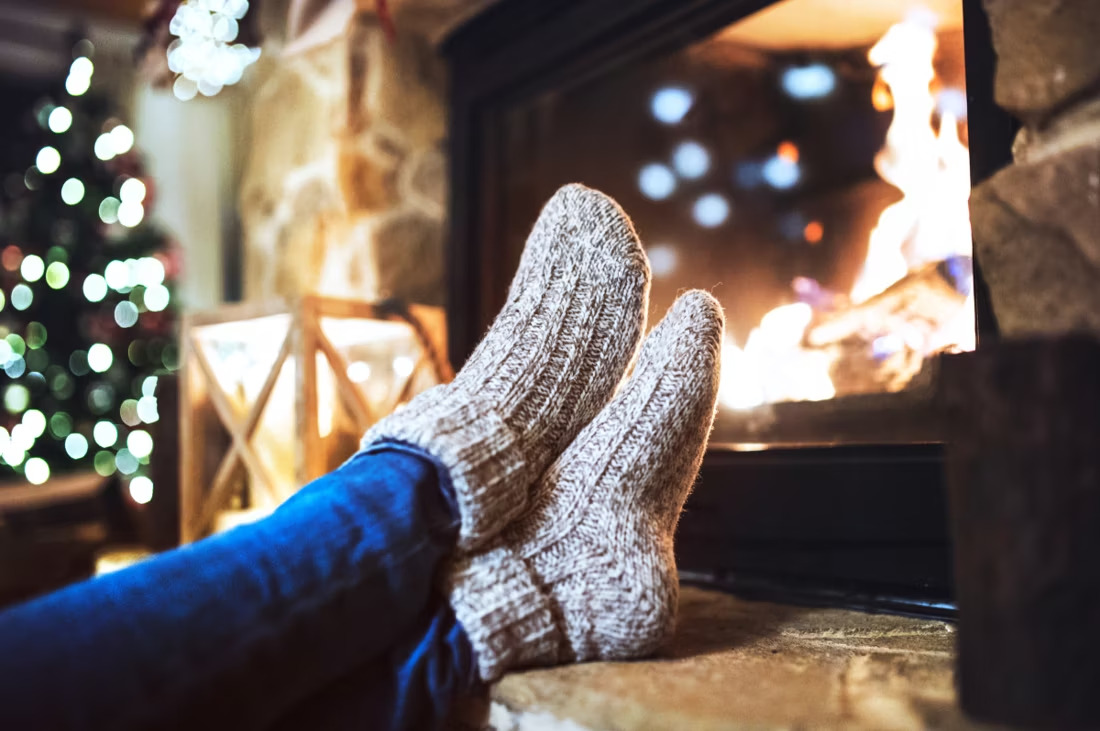
Four fuels. One honest answer for Jeff Davis County.
Wood
See what's available near Jeff Davis County.
Find your wood stove →Gas
See what's available near Jeff Davis County.
Find your gas fireplace →Pellet
See what's available near Jeff Davis County.
Find your pellet stove →Electric
See what's available near Jeff Davis County.
Find your electric fireplace →Three steps. No salesperson until you're ready.
Tell us about your project
Your zip code, your situation, and the fuel you're leaning toward—or let the answers point you to one.
See what's actually available
The brands dealers within 100 miles genuinely carry—real options, never a catalog mirage.
Get your dealer & Project Guide
A trusted local dealer, plus the free Project Guide & Parts List that names every component of the job.
Frequently Asked Questions
Which fuel works best in Jeff Davis County?
It depends on where you're located and what's already run to your property. Wood is the traditional choice on Jeff Davis County ranches—oak, pecan, and especially mesquite are locally available, and a lot of homeowners here are already cutting or trading firewood rather than buying it. Propane is the practical stand-in for natural gas in most of the county, since piped gas infrastructure doesn't reach far outside the larger towns in this part of the Trans-Pecos—propane fireplaces and inserts give you instant heat without depending on a woodpile. Pellet stoves work fine mechanically, but supply is the real question: Forest Energy and Lignetics pellets are the regional brands you'll find, typically through hardware or feed stores in Alpine or Fort Stockton rather than in Fort Davis itself, so stocking up before winter matters more here than in a city with year-round retail. Electric fireplaces are a reasonable supplemental option, especially for adobe-style homes with mild heating needs or as backup given that rural electric co-op service can be less reliable during storms than in-town power. Most Jeff Davis County homes lean on wood or propane as primary heat, with electric filling in for ambiance or a single room.
Do I need a permit to install a fireplace in Jeff Davis County?
Generally yes for wood, gas, and pellet appliances—building permits for these installations go through the Jeff Davis County offices in Fort Davis, since the county doesn't have the layered city-versus-county permitting split you'd see in a larger jurisdiction. Propane installations also require the gas line work to be done or signed off by a licensed gas-fitter. Electric fireplaces are usually exempt unless you're doing a built-in installation that requires new wiring or a dedicated circuit. Given how spread out the county is, a lot of ranch installs happen with the retailer or installer handling the permit paperwork directly with the county, since the closest hearth business may be an hour or more away.
Are there air quality restrictions on wood burning in Jeff Davis County?
No—Jeff Davis County has no wood-burning air quality restrictions, and that's a genuine feature of the geography, not an oversight. Unlike basin towns where cold air gets trapped and smoke builds up during winter inversions, Fort Davis and the surrounding Davis Mountains sit exposed to near-constant wind, so smoke disperses rather than pooling. The bigger local concern isn't smoke, it's fire risk: during dry spells the county fire marshal may issue burn bans on outdoor burning, and ranchers keep an eye on red-flag warning days. Indoor wood stove and fireplace use isn't affected by these bans—it's outdoor brush and debris burning that gets restricted.
Can one local hearth retailer handle all four fuel types in Jeff Davis County?
Within the county itself, there isn't a standalone multi-fuel hearth showroom—the population base doesn't support one. Most Fort Davis and Valentine homeowners end up working with retailers based in Alpine, about 25 miles south, or occasionally Fort Stockton to the north, both of which serve the wider Trans-Pecos region and typically carry wood, gas/propane, and pellet units, with electric fireplaces as a smaller add-on line. If you want to compare fuel types side by side, plan on a drive to see working displays rather than expecting that option inside the county.
How does service work in such a rural, low-population county?
Service technicians covering Jeff Davis County are based outside it and drive in—expect a travel fee, often $75–$150 depending on how far off the highway your property is, since some ranch addresses add 15-20 minutes of gravel road beyond the last paved turn. Pre-season scheduling (late summer into early fall) is far easier than trying to book a mid-winter emergency visit, since a single technician may be covering Jeff Davis, Presidio, and Brewster counties on the same route. If you're on a working ranch with limited road access, it's worth mentioning that up front when you book—it affects both the fee and how the appointment gets scheduled.
What's the typical cost range for fireplace installation across all fuel types in Jeff Davis County?
Costs here run close to regional Trans-Pecos norms, with travel factored in. Wood stove or insert installation: roughly $4,000–$8,500, depending on chimney work and whether the retailer is driving in from Alpine or Fort Stockton. Propane fireplace, insert, or stove: roughly $4,000–$10,000, with the top end tied to running new gas line where none exists—common on older ranch houses. Pellet stove or insert: roughly $4,500–$7,000, plus the practical cost of keeping pellets on hand given delivery distances. Electric fireplace: $200–$2,500 for the unit itself, with labor of $400–$1,000 for anything beyond a plug-and-play install. Because so few installers cover this county, get a firm quote that includes any travel or trip charge up front.
How much should I budget for a fireplace?
For an average home—covering the fireplace, the vent pipe, and basic installation—a budget between $3,900 and $5,500 gives you a lot of options across wood, gas, and pellet. By the time you add finish work, gas line, and electrical, the average complete installation lands between $5,000 and $12,000 all-in. In a remodel or new build, a good rule is to put about 2.5% of the total project cost toward the fireplace.
What is an in-home preview and do I need one?
It's a visit where a hearth professional measures your space, confirms the model you picked actually works in your home, and walks the specs—framing, gas line, venting, finish work—before anything is ordered. Some details you just can't know until you see the house. Never make a down payment without one; it's the single most-skipped step that burns buyers.
Can a fireplace actually lower my heating bill?
Yes—by creating a comfort zone. A furnace heats every square foot of the house just to warm the one room you're in; a gas fireplace on low burns roughly a sixth of the gas a typical furnace does. Set the furnace around 55–60 degrees as a baseline, then heat the rooms your family actually uses. Families who heat this way commonly save $20–$60 a month.
Can I install a fireplace myself?
If you're putting a fire in your house on purpose, it's best to work with an expert. Unless you're genuinely experienced in framing, gas line, vent pipe, and the national code on clearances to combustibles, have a professional do it—and ideally the same company that sells you the fireplace, so warranty, service, and liability all live under one roof.
Find your fireplace dealer for Jeff Davis County.
Tell us your fuel and your property, and we'll match you with a trusted local dealer and send a free Project Guide & Parts List—the exact parts, including the vent kit, and the dealer we recommend for your Jeff Davis County install.
Find Your Fireplace →