
Steady, low-maintenance pellet heat for Hopkins County's mild winters.
With winter lows averaging around 34°F and just over 2,500 heating degree days a year, Hopkins County doesn't need a wood-burning marathon—it needs a stove that lights on demand and holds a steady room temperature through a Sulphur Springs cold front. Find the right unit and connect with a trusted local dealer.
Every Project Starts From One of These Five Situations
Clean-burning convenience for East Texas homes.
Hopkins County sits in climate zone 3A, and its winters are mild by national standards—an average low near 34°F and roughly 2,514 heating degree days a season, a fraction of what a place like Fargo, ND racks up before Thanksgiving. That means most Sulphur Springs, Cumby, and Como homeowners aren't trying to keep a house alive through weeks of subzero nights; they're looking for dependable zone heat for the living room during the handful of genuinely cold stretches each winter, plus a fireplace that looks good and starts with the push of a button the rest of the year.
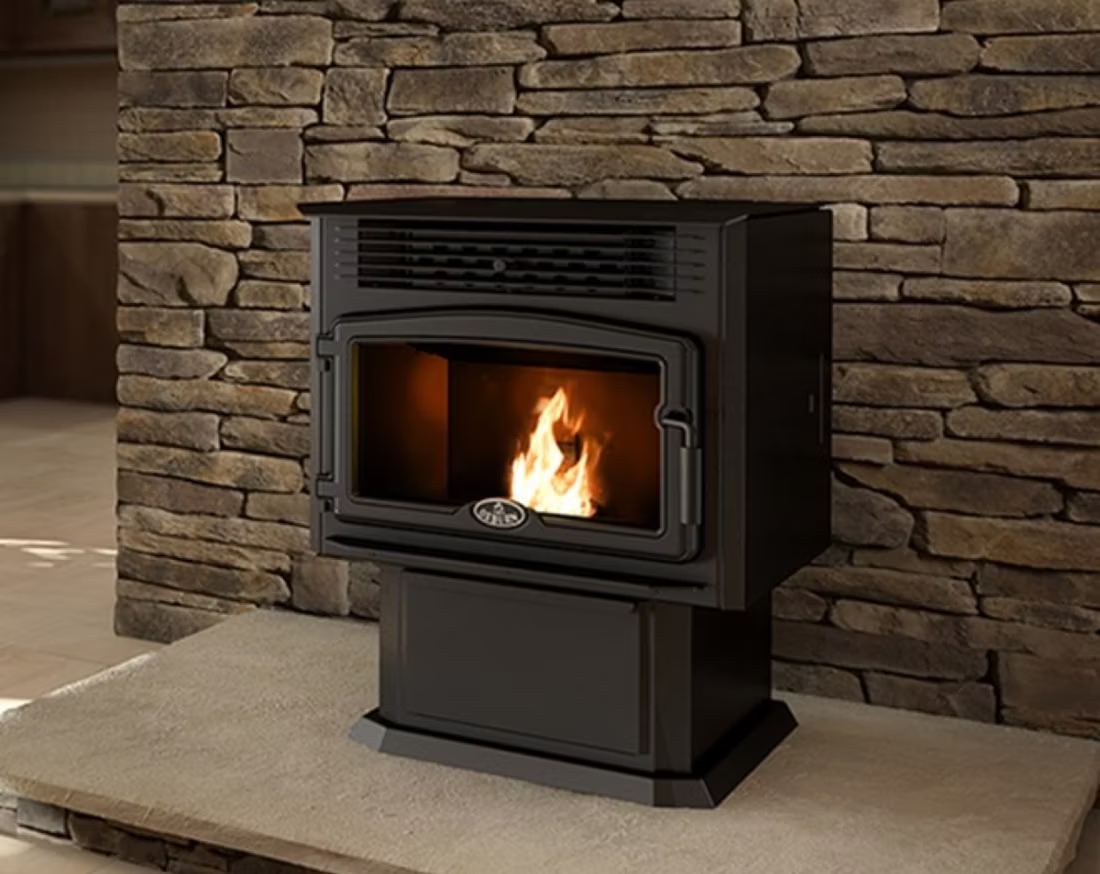
A pellet stove fits that need well. There's no air quality non-attainment designation or burn-ban patchwork to navigate here, so day-to-day operation is straightforward—load the hopper, set the thermostat, and let it run. Pellets from Forest Energy and Lignetics are the regional standards, typically stocked at farm and feed retailers and hardware stores around the county rather than specialty fuel yards. For a county where oak, pecan, and mesquite firewood is easy to come by for the traditional fireplace crowd, pellet stoves offer the alternative: consistent heat output, minimal daily tending, and none of the splitting, stacking, or creosote maintenance that cordwood requires.
Three steps. No salesperson until you're ready.
Tell us about your project
Your zip code, your situation, and the fuel you're leaning toward—or let the answers point you to one.
See what's actually available
The brands dealers within 100 miles genuinely carry—real options, never a catalog mirage.
Get your dealer & Project Guide
A trusted local dealer, plus the free Project Guide & Parts List that names every component of the job.
Frequently Asked Questions
How much does a pellet stove installation cost in Hopkins County?
Most pellet stove and insert installations in Hopkins County run in the $3,000 to $6,500 range, depending on the unit, whether you're installing into an existing masonry fireplace opening, and how far the vent run needs to travel through an exterior wall. Freestanding stoves in a room with no existing fireplace tend to land toward the middle of that range once venting and a hearth pad are factored in. Inserts going into an existing fireplace opening are often less involved since the masonry surround and floor protection are already in place. A local dealer will give you a firm number after seeing your room and chimney or wall setup.
What size pellet stove do I need for my home?
Because Hopkins County's winters are mild—average lows around 34°F and roughly 2,500 heating degree days—most homes here are running a pellet stove as zone heat for a main living area rather than trying to heat an entire farmhouse through a Duluth-style winter. A smaller unit rated for 1,000 to 1,500 square feet is usually plenty for a living room or open-concept space in a Sulphur Springs or Cumby home. Larger, open-plan homes or drafty older farmhouses out toward Como or Tira may want a mid-size unit with a bigger hopper for longer unattended runtime. A local dealer can size the room correctly during an in-home visit rather than guessing off square footage alone.
Where can I find a certified pellet stove dealer near me?
Look for a dealer who actually installs and services what they sell rather than a big-box store that ships a unit and leaves the venting and hearth work to you. In a county the size of Hopkins, that usually means a hearth specialist based in or near Sulphur Springs who covers the surrounding communities—Cumby, Como, Tira, and the Cooper Lake area. A qualified installer will handle the vent kit sizing, clearance requirements, and any county permitting, and stands behind the work with warranty support if something needs adjustment after the first burning season.
What's the difference between a pellet stove and a pellet insert?
A pellet stove is a freestanding unit that sits on a hearth pad and vents through a wall or existing chimney—it can go almost anywhere in a room with the right clearances. A pellet insert is built to slide into an existing masonry fireplace opening, which is common in older homes around Sulphur Springs with a traditional wood-burning fireplace that's rarely used. If you already have a fireplace opening, an insert is usually the simpler and less expensive path since the surround and hearth are already there. If you're adding pellet heat to a room with no existing fireplace, a freestanding stove is the way to go.
Where do I buy pellets in Hopkins County?
Forest Energy and Lignetics are the two regional pellet brands most commonly stocked around Hopkins County, typically found at farm and feed stores and hardware retailers rather than dedicated fuel depots—this isn't a heavily forested pellet-market region the way parts of the Pacific Northwest are. Given the county's mild winters, most homeowners aren't burning through the volume a colder climate would require, so a season's supply is often just a handful of pallets picked up over a couple of trips rather than a bulk delivery. Your local dealer can point you toward the nearest reliable stock when you set up your stove.
What's the best pellet stove for Hopkins County's climate?
Since Hopkins County winters rarely demand sustained high-output heat—winter lows average around 34°F, not the single digits a Minneapolis or Bismarck homeowner deals with—the priority here is efficient low-and-medium burn settings rather than maximum BTU output. Units with a wide turn-down range (the ability to run efficiently on a low setting) tend to suit this climate better than a stove built to blast heat at max output for weeks straight. Look for a model with a reasonably sized hopper for convenience and a thermostat mode that can hold a steady, moderate temperature through a typical East Texas cold snap without constant adjustment. A local dealer can match a specific model to your room size and usage pattern.
Do I need a permit to install a pellet stove in Hopkins County?
Yes, in most cases—a building permit is typically required for a new pellet stove or insert installation involving new venting through a wall or roof, and this is handled through the Hopkins County Building Department for unincorporated areas or the City of Sulphur Springs if you're within city limits. Most local dealers include the permit application as part of the installation, so you're not the one filing paperwork. There's no burn-ban or air-quality curtailment concern here the way there is in some Western non-attainment counties, so operation itself is unrestricted once the unit is installed and inspected.
Will my pellet stove work during a power outage?
Not without a backup power source—pellet stoves rely on an electric auger to feed fuel and a blower to distribute heat, so they shut down when the power does. This is worth planning for in Hopkins County, where ice storms occasionally knock out power for stretches during the coldest weeks of winter. Some homeowners pair a pellet stove with a small battery backup or generator sized to run the auger and blower during an outage. If uninterrupted heat during power loss is a priority for your household, a wood-burning stove or a gas unit with battery-backup ignition is worth discussing with your dealer as a complement or alternative.
Pellet stove vs. wood stove—which is right for my Hopkins County home?
Wood is the traditional choice here, and it's an easy one given how much oak, pecan, and mesquite firewood circulates around the county from local land clearing and hunting properties—wood also keeps working during a power outage, which pellet stoves can't. Pellet stoves trade that off for convenience: no splitting or stacking, a cleaner burn, and a thermostat that holds a steady room temperature without you tending a fire. Given how mild Hopkins County winters run, plenty of homeowners lean pellet simply because they don't want the daily commitment of a wood stove for a heating season that's genuinely cold only a few weeks a year. Homes with an existing fireplace and access to cheap or free firewood often stick with wood; homes prioritizing hands-off convenience tend to land on pellet.
How often does a pellet stove need cleaning?
A clean pellet stove is a happy pellet stove. Plan on cleaning the burn pot about once a week when you're burning regularly—ash and clinkers gum up the air holes just like a pellet barbecue. Most pellet stove problems trace back to skipped cleaning that nobody explained up front. Some designs make it easy with a trapdoor burn pot: pull a lever and the gunk drops into the ash pan.
Why is my open fireplace making my house colder?
Open fireplaces suck—literally. As the fire burns, it consumes air your furnace already paid to heat and pulls it out through the chimney, so the house is actually colder after the fire goes out than before you lit it. An insert fixes this: it seals the chimney, puts fixed glass across the front, and turns that hole in your house into a real heat source.
How much should I budget for a fireplace?
For an average home—covering the fireplace, the vent pipe, and basic installation—a budget between $3,900 and $5,500 gives you a lot of options across wood, gas, and pellet. By the time you add finish work, gas line, and electrical, the average complete installation lands between $5,000 and $12,000 all-in. In a remodel or new build, a good rule is to put about 2.5% of the total project cost toward the fireplace.
Does a fireplace add value to my home?
On average, a fireplace adds back to the home about the same amount you spent installing it. Add the monthly savings from heating the rooms you actually use instead of the whole house—often hundreds of dollars a year—and the value case is strong before you even count what a fire does for how your family uses the room.
Stove and Fireplace Dealers in Hopkins County
Listings include WhyFire partner dealers, dealers we have verified as authorized for the brands we recommend, and established local businesses that carry hearth products. Every listing shows which one it is. The ones marked Preferred run on WhyFire's software, so they can show you real pricing and book your appointment right here. No manufacturer pays for placement. How we verify dealers →
Youngs Brothers Buck Stove
Fireside Corner
Pellet Brands Stocked Around Hopkins County
Manufacturers will point you to the nearest stocking dealer.
Find your pellet stove in Hopkins County.
Tell us a bit about your home and we'll match you with the right pellet stove or insert, plus a free Project Guide & Parts List—the exact parts, vent kit, and recommended local Hopkins County dealer for your project.
Find Your Fireplace →