
Automated Heat That Keeps Up With North Texas Cold Snaps.
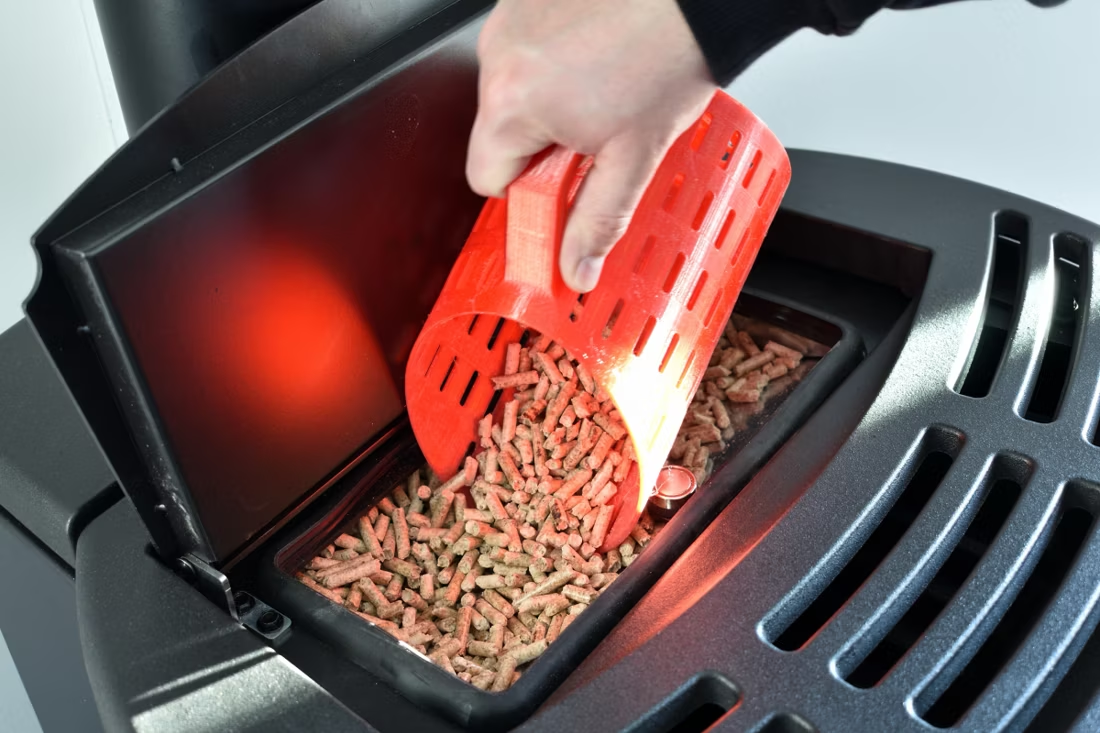
Haltom City winters are mild most of the season, but when an arctic front rolls through Tarrant County, a hopper-fed pellet stove holds a steady, thermostat-controlled temperature without you tending a fire. Find the right unit and connect with a trusted local dealer.
Every Project Starts From One of These Five Situations
Mild winters, real cold snaps—pellet heat fits both.
At 595 feet in Tarrant County, Haltom City sits in climate zone 3A with an average winter low near 36°F and about 2,414 heating degree days a year—a fraction of what a place like Fargo, North Dakota logs in a single season. Most winters here call for a jacket, not a woodpile. But North Texas is also where an Arctic front can drop temperatures 40 degrees in an afternoon, and the February 2021 grid event showed how fast a mild-climate assumption can turn into a real heating emergency.
That's the case for pellet heat in a metro like this: it's not a primary furnace replacement, it's a clean, low-mess way to add real, automated warmth to a den or living room during the handful of weeks a year Haltom City actually needs it. Hardwood-blend pellets from Forest Energy and Lignetics are stocked at feed stores and hearth shops around the DFW Metroplex, and a modern pellet insert lights itself, holds a set temperature, and doesn't leave the ash and smoke smell that oak, pecan, or mesquite firewood does in a smaller suburban lot. The one honest trade-off: pellet stoves run on electricity for the auger and combustion blower, so during an Oncor or grid-wide outage they go dark just like your furnace—worth knowing if backup heat during ERCOT-style events is part of why you're buying one.
Three steps. No salesperson until you're ready.
Tell us about your project
Your zip code, your situation, and the fuel you're leaning toward—or let the answers point you to one.
See what's actually available
The brands dealers within 100 miles genuinely carry—real options, never a catalog mirage.
Get your dealer & Project Guide
A trusted local dealer, plus the free Project Guide & Parts List that names every component of the job.
Frequently Asked Questions
How much does a pellet stove or insert cost to install in Haltom City?
Most pellet stove and insert installations in the Haltom City area run $2,800 to $5,500, depending on the unit, whether it's a freestanding stove or an insert going into an existing fireplace, and how much wall or roof venting is required. A pellet insert dropped into an existing masonry firebox with a short horizontal vent run through the wall sits at the lower end; a freestanding stove in a room without an existing chimney, requiring new framing and a longer vent path, runs higher. Because Haltom City's mild climate means most buyers are adding supplemental heat rather than replacing a furnace, a mid-size unit is usually enough—your local dealer will confirm sizing and give a firm quote after seeing the space.
Does a pellet stove make sense in a climate as mild as Haltom City's?
Yes, though the use case here is different than in a colder climate. With roughly 2,400 heating degree days and an average winter low around 36°F, Haltom City doesn't need a wood or pellet stove running around the clock the way a home in Fargo or Duluth would. What a pellet stove does well here is give you push-button, thermostatically controlled heat for the handful of genuinely cold weeks each winter, plus a clean-burning alternative to tending an oak or mesquite fire on a random 40-degree evening. It's a supplemental-heat and ambiance purchase for most local buyers, not a furnace replacement.
What size pellet stove do I need for a North Texas home?
Because Haltom City's climate is mild, most homes here do fine with a small to mid-size pellet stove rated for 1,000 to 1,800 square feet, even in a larger house—you're typically heating one main living zone rather than the whole home. A unit sized for a much colder climate will often run on its lowest setting most of the winter, which isn't efficient or good for the burn pot. A local dealer can size the room correctly during an in-home visit rather than going off national heating charts that assume a much colder climate than Tarrant County actually sees.
Will my pellet stove work if the power goes out?
No—this is the one thing every Haltom City buyer should know going in. Pellet stoves rely on an electric auger to feed fuel and a blower to distribute heat and exhaust combustion air, so they shut down the moment power from Oncor, United Electric Cooperative, or Denton County Electric Cooperative goes out, just like your central furnace. If you're buying a pellet stove partly with an ERCOT-style outage in mind—as many Tarrant County homeowners have been since February 2021—you'll want to pair it with a small battery backup or generator, or look at a wood-burning or vent-free gas option instead, since those can operate without grid power.
Where can I buy wood pellets in Haltom City?
Hardwood-blend pellets from regional brands like Forest Energy and Lignetics are the most common options carried by feed stores, hearth shops, and farm-supply retailers around the Fort Worth and Dallas metro area. Expect to pay roughly $6 to $8 per 40-pound bag, or somewhat less per ton if you buy by the pallet (roughly 50 bags) ahead of the winter season—buying early in fall, before the first cold snap, is the easiest way to avoid the local run on pellets that happens every time a hard freeze is forecast.
Do I need a permit to install a pellet stove in Haltom City?
In most cases, yes. A new pellet stove or insert typically requires a building permit through the City of Haltom City Building Inspections Division, since it involves wall penetration for venting and, in some cases, new electrical work for the unit's controls. If your home falls in an unincorporated part of Tarrant County, the county's permitting office handles it instead. Reputable local dealers pull this permit as part of the installation, so it's worth confirming that's included in your quote before you sign off on a job.
How is a pellet stove vented, and how much maintenance does it need?
Unlike a wood stove, a pellet stove doesn't need a full masonry chimney—it vents through a small-diameter PL pipe run horizontally through an exterior wall, which is one reason installation costs less than a comparable wood-burning setup. Maintenance is different too: instead of an annual chimney sweep, you're cleaning the burn pot and ash pan every few days of regular use and doing a full deep clean of the exhaust vent, hopper, and blower once a year, usually before the first cold snap of the season. Several hearth shops in the DFW area offer this annual service for pellet units.
Are there any burn restrictions on pellet stoves in Haltom City?
No—Haltom City and Tarrant County don't currently carry the kind of non-attainment or winter-inversion air quality restrictions that limit wood burning in some parts of the country. Pellet stoves burn especially clean regardless, since compressed pellets combust more completely and produce far less particulate than cordwood. That said, DFW does see periodic summer ozone action day advisories tied to vehicle traffic and heat, which have no bearing on winter pellet stove use.
Pellet stove vs. gas fireplace—which is right for my home?
Gas fireplaces are common throughout the DFW Metroplex and offer instant on-off heat without any fuel storage, which appeals to a lot of Haltom City buyers who want simplicity. Pellet stoves trade that instant-on convenience for a real visible flame, a wood-heat feel, and no dependence on a gas line—useful if your home isn't already plumbed for gas or if you like the idea of stacking a season's worth of fuel in the garage instead of relying on a utility line. Given how mild winters are here, either is really a supplemental-heat and ambiance decision rather than a necessity, so it often comes down to whether you want the ritual of loading a hopper or the simplicity of flipping a switch.
What's the difference between an insert and a zero-clearance fireplace?
An insert is a fireplace that slides into a pre-existing wood-burning fireplace—if you don't have one, there's nothing to insert it into. A zero-clearance fireplace is built into a framed wall, which makes it the answer for remodels and new construction. Simple test: existing masonry fireplace means insert; blank or framed wall means zero-clearance.
Can a pellet stove heat a whole house?
It genuinely can. I burned a pellet stove as my only heat source for years after a furnace died, and it kept the entire house warm. Pellets feed automatically from a hopper, so you get wood-heat economics with thermostat-style control. Two honest caveats: it needs weekly cleaning during the season, and most models need electricity to run—ask about battery backup if outages are a concern.
Can I install a fireplace myself?
If you're putting a fire in your house on purpose, it's best to work with an expert. Unless you're genuinely experienced in framing, gas line, vent pipe, and the national code on clearances to combustibles, have a professional do it—and ideally the same company that sells you the fireplace, so warranty, service, and liability all live under one roof.
Can a fireplace actually lower my heating bill?
Yes—by creating a comfort zone. A furnace heats every square foot of the house just to warm the one room you're in; a gas fireplace on low burns roughly a sixth of the gas a typical furnace does. Set the furnace around 55–60 degrees as a baseline, then heat the rooms your family actually uses. Families who heat this way commonly save $20–$60 a month.
Nearby Dealers
Hearth shops serving Haltom City and the surrounding area.
Pellet Brands Stocked Around Haltom City
Manufacturers will point you to the nearest stocking dealer.
Get matched with your Haltom City pellet stove dealer.
Tell us about your home and how you plan to use pellet heat, and we'll put together a free Project Guide & Parts List—the exact parts, including the vent kit, and a trusted local dealer to install it right.
Find Your Fireplace →