
Keep Your Family Warm and Safe—No Matter What
Greenville winters rarely demand wood heat, but a well-chosen stove or fireplace still earns its keep—for ambiance, for backup, for the nights the grid doesn't hold. Find the right fit and a trusted local dealer.
Every Project Starts From One of These Five Situations
A fire for atmosphere, not survival.
Greenville sits in climate zone 3A with an average winter low around 33°F and just 2,365 heating degree days a year—a fraction of what a place like Fargo, ND or Duluth, MN sees. Those cities depend on wood heat to get through months of subzero nights; Hunt County homes almost never need to. That's the honest starting point: a wood stove here is rarely anyone's primary heat source, and it doesn't need to be.
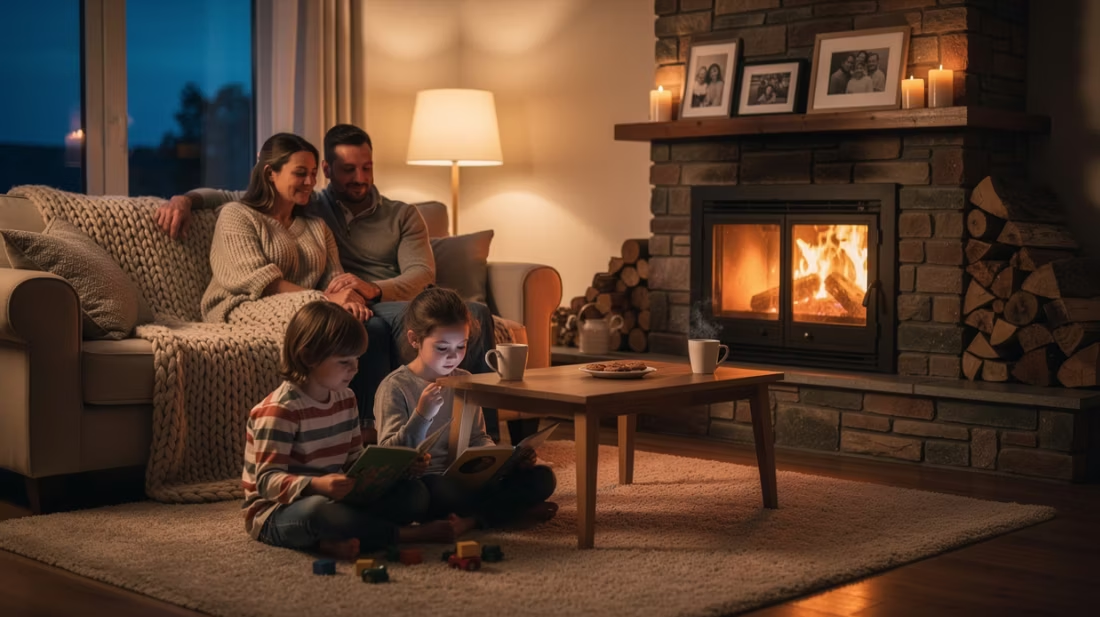
That said, wood has a real place in Northeast Texas life. Oak, pecan, and mesquite are all common locally—the same species that fuel backyard smokers across Hunt County—and plenty of homeowners keep a stack on hand. Some install a wood-burning fireplace or small stove purely for the atmosphere on a cold snap evening. Others remember Winter Storm Uri in February 2021, when ERCOT-managed outages left parts of North Texas without power (and without heat) for days, and want a fuel source that doesn't depend on Oncor, TNMP, or Trinity Valley Electric Cooperative staying up. Either reason is legitimate—just don't expect wood to be your everyday furnace replacement in a climate this mild.
Three steps. No salesperson until you're ready.
Tell us about your project
Your zip code, your situation, and the fuel you're leaning toward—or let the answers point you to one.
See what's actually available
The brands dealers within 100 miles genuinely carry—real options, never a catalog mirage.
Get your dealer & Project Guide
A trusted local dealer, plus the free Project Guide & Parts List that names every component of the job.
Frequently Asked Questions
Is wood heat actually common in Greenville, TX?
Not really, and it's worth saying plainly. With an average winter low near 33°F and around 2,365 heating degree days a year, Greenville's climate doesn't demand a wood-burning primary heat source the way a cold-climate city like Duluth, MN or Bismarck, ND does. Most Hunt County homes heat with a gas furnace or heat pump. Wood stoves and fireplaces here are typically a secondary or occasional-use choice—for ambiance on a cold evening or as backup heat—rather than a daily necessity.
What does a wood stove or fireplace installation cost in Greenville?
Because wood heat is a niche choice in this climate, there are fewer dedicated hearth installers in Hunt County than you'd find in a cold-climate market, and pricing can vary more from one company to the next. As a general range, a freestanding wood stove with venting typically runs $3,000 to $8,000 installed, with the low end covering a small stove into an existing masonry chimney and the high end covering new Class A chimney pipe through an exterior wall or roof. Get two or three quotes locally—with fewer installers doing this work regularly, prices aren't as standardized as they are for gas or electric projects.
Would a wood stove actually help during a power outage?
Yes—this is one of the more practical reasons Greenville homeowners install one. Unlike a gas furnace (which needs electricity to run the blower and ignition) or an electric heat pump, a properly installed wood stove burns and radiates heat with zero dependence on Oncor, TNMP, or Trinity Valley Electric Cooperative. After Winter Storm Uri in 2021 left parts of North Texas without power for days during freezing weather, a number of homeowners in this region added a wood stove specifically as a grid-independent backup, not as a full heating replacement.
What firewood works best in a Greenville stove or fireplace?
Oak and pecan are the two best all-around choices—both are dense, widely available locally (often from the same suppliers who sell smoker wood for barbecue), and burn long and hot with manageable smoke. Mesquite is also common in this part of Texas and burns very hot, but its strong aroma and higher spark output make it better suited to shorter fires or outdoor use than an all-evening indoor burn. Whatever species you choose, make sure it's seasoned at least six months to a year—green oak in particular smokes heavily and builds creosote fast.
Do I need a permit to install a wood stove in Greenville?
Most new wood-burning installations require a building permit, whether through the City of Greenville Building Department for in-city addresses or Hunt County for unincorporated areas outside the city limits. The stove itself should carry EPA certification, which is now standard on virtually every new wood stove sold. A local installer will typically pull the permit as part of the job, so this isn't something you need to navigate solo—but it's worth confirming before work starts, especially since permitting isn't something most Hunt County contractors handle daily the way they would in a wood-heavy market.
Should I get a wood stove or just stick with gas?
For most Greenville homes, gas is the more practical everyday choice—natural gas and propane are both well established locally, gas fireplaces heat instantly with no wood handling, and given the mild climate here, you're not fighting subzero nights that demand wood's higher heat output. Wood makes the most sense as a second appliance: something for ambiance, for the occasional real cold snap, or as a power-independent backup. Few Hunt County homeowners are choosing between the two as competing primary heat sources—they're usually choosing whether wood is worth adding on top of gas.
Does an occasional-use wood fireplace still need an annual chimney inspection?
Yes, and this is easy to overlook when a stove only gets lit a handful of times a winter. Creosote can build up even from light use, and inspections catch cracked flue liners, animal nests, or blocked chimney caps—issues that are more common in a stove sitting unused most of the year. The Chimney Safety Institute of America recommends an annual inspection regardless of usage. For a Greenville household burning only a few cords or less per season, a single fall inspection before the first cold snap is usually all that's needed.
What size or type of wood stove makes sense for occasional use?
Since few Greenville homes need a wood stove to carry the whole heating load, a smaller freestanding stove or a wood insert into an existing fireplace usually fits better than a large, whole-house-rated unit. Small stoves (rated for roughly 1,000 square feet or less) are easier to live with when you're only running a fire occasionally—they heat up fast, don't require a massive wood supply, and don't overwhelm a single room. If you already have a masonry fireplace, a wood insert is often the simplest upgrade: it uses the chimney you have and turns an inefficient open hearth into a real heat source when you want one.
Where can I find a wood stove dealer or installer near Greenville?
Because wood heat is a smaller niche in this part of Texas, some Hunt County homeowners end up looking toward the greater Dallas–Rockwall metro area, about 50 miles southwest, for a wider selection of hearth dealers and certified installers. That said, working with someone who understands North Texas conditions—mild winters, occasional-use patterns, and the local building permit process—matters more than proximity alone. A trusted local dealer will size the unit correctly for occasional use and make sure the venting and clearances are done right the first time.
Why won't my new wood stove get going like my old one?
New wood stoves are 70%+ efficient, so far less heat goes up the flue—which also means less draft to get a fire established. The rule: build a genuinely hot fire for about 45 minutes before you choke it down. Skip that and you get smoke in the room, creosote in the chimney, and a fire that never takes off. Most performance complaints trace straight back to this.
Do I have to leave the stove door cracked open to start a fire?
On many stoves, yes—a new fire needs extra air, and cracking the door a couple inches is how most stoves get it. But some modern stoves offer an automatic startup air system: engage it when you light, and timed air jets feed the fire for the first 20 minutes with the door fully shut, then close automatically. It's mechanical—like an egg timer, no electricity—and it means you can load it, light it, and walk away.
How much should I budget for a fireplace?
For an average home—covering the fireplace, the vent pipe, and basic installation—a budget between $3,900 and $5,500 gives you a lot of options across wood, gas, and pellet. By the time you add finish work, gas line, and electrical, the average complete installation lands between $5,000 and $12,000 all-in. In a remodel or new build, a good rule is to put about 2.5% of the total project cost toward the fireplace.
Can a fireplace actually lower my heating bill?
Yes—by creating a comfort zone. A furnace heats every square foot of the house just to warm the one room you're in; a gas fireplace on low burns roughly a sixth of the gas a typical furnace does. Set the furnace around 55–60 degrees as a baseline, then heat the rooms your family actually uses. Families who heat this way commonly save $20–$60 a month.
Find your wood fireplace in Greenville.
Tell us a bit about your home and how you plan to use it—ambiance, backup heat, or both—and we'll send a free Project Guide & Parts List with the right stove or insert, the exact venting parts needed, and a trusted local dealer to install it.
Find Your Fireplace →