
A niche fit for Greenville's mild winters.
With winter lows averaging 33°F and just a short, light winter heating season, most Hunt County homes never need a standalone pellet heat source. For the lake house near Tawakoni, the detached workshop, or the backup-heat scenario, I'll match you with a vetted local dealer who can source one correctly.
Every Project Starts From One of These Five Situations
Pellet stoves are the exception, not the rule.
Greenville sits in climate zone 3A at 563 feet elevation, with winter lows averaging a mild 33°F and a short, light winter heating season—a fraction of what a place like Duluth, Minnesota or Bismarck, North Dakota logs each winter. That's a climate built around central air conditioning and a gas furnace or heat pump, not a hopper-fed pellet stove running through a long cold season. Most Hunt County homes never need a standalone heating appliance beyond their HVAC system, which is why pellet fuel relevance here is genuinely low rather than simply underserved.
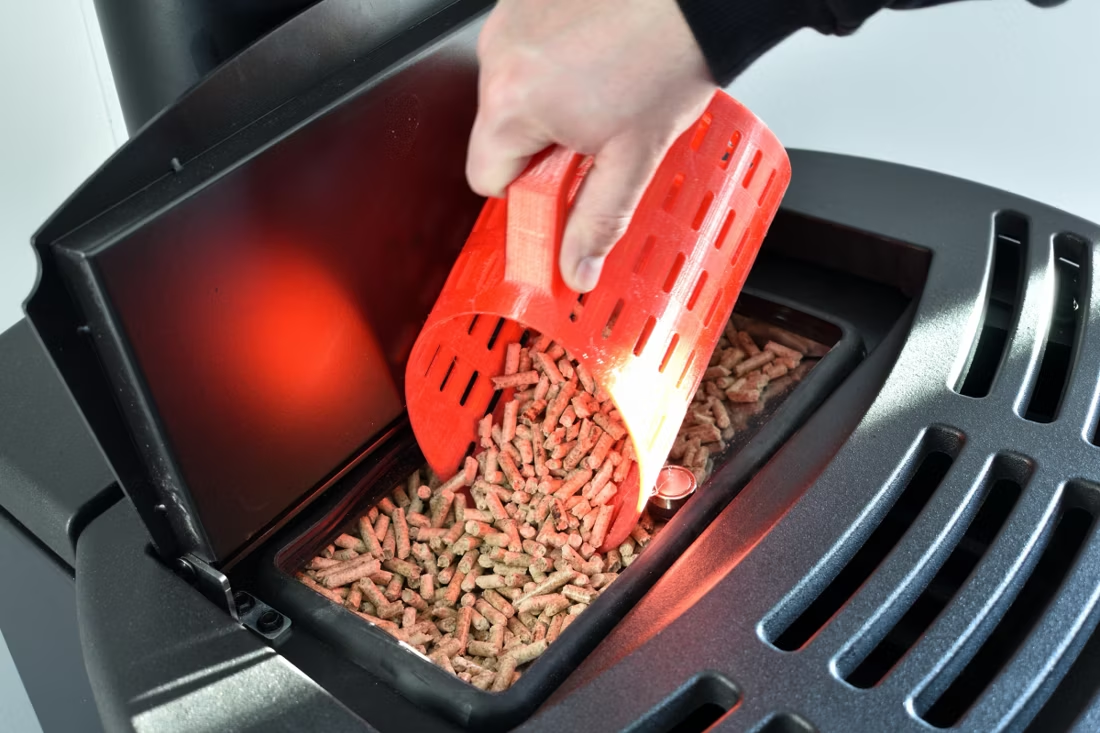
That doesn't mean nobody wants one. A handful of Greenville homeowners install pellet stoves for the ambiance and thermostatic, hands-off heat they offer—for a lake cabin out toward Tawakoni that doesn't run on the same HVAC schedule as the primary house, a garage workshop without ductwork, or backup warmth during the ice storms that periodically strain the Oncor, TNMP, and Trinity Valley Electric Coop service territories. Regional pellet brands like Forest Energy and Lignetics are still available through a small number of North Texas dealers, even though demand here is nowhere near what you'd see farther north. Worth noting: a pellet stove's auger and blower need electricity to run, so during the kind of grid outage that actually motivates people to buy one, it needs a battery backup or generator to keep functioning.
Three steps. No salesperson until you're ready.
Tell us about your project
Your zip code, your situation, and the fuel you're leaning toward—or let the answers point you to one.
See what's actually available
The brands dealers within 100 miles genuinely carry—real options, never a catalog mirage.
Get your dealer & Project Guide
A trusted local dealer, plus the free Project Guide & Parts List that names every component of the job.
Frequently Asked Questions
How much does a pellet stove cost to install in Greenville?
Because pellet stoves are uncommon in Hunt County, you won't find the same volume pricing or in-stock inventory you would in the upper Midwest, but installed costs generally track the national range of roughly $3,500 to $6,500 for the stove, hearth pad, and venting kit. Most Greenville homes don't have an existing masonry chimney chase built for pellet venting, so the install typically requires fresh through-wall PL venting rather than dropping into an existing flue, which pushes the number toward the higher end. A local dealer matched through Find My Fireplace will give you a firm number after seeing your space.
Does a pellet stove even make sense in a climate as mild as Greenville's?
For most Hunt County homes, no—with winter lows averaging 33°F and only a short, light winter heating season, standard HVAC or a gas furnace handles the season without trouble, which is why pellet fuel relevance here is genuinely low rather than simply overlooked. Where it does make sense is narrower: a lake house near Tawakoni that sits empty on weekdays and needs quick, controllable heat when you arrive, a detached workshop or garage apartment without ducted HVAC, or a backup source for the occasional ice storm that knocks out power across the region.
Will a pellet stove keep working if the power goes out?
Not on its own—the auger that feeds pellets and the blower that pushes heat into the room both run on standard household electricity, so a pellet stove goes cold in an outage just like your furnace does. That matters in this part of Texas: ERCOT grid strain and ice-storm outages across the Oncor, TNMP, and Trinity Valley Electric Coop service territories have hit North Texas hard in recent winters. If backup heat during an outage is your main reason for wanting a pellet stove, plan on pairing it with a small battery backup or generator, or consider a vented gas unit instead, since gas fireplaces are far more common and better suited to Greenville's climate.
Where do I buy pellets in the Greenville area?
Regional brands like Forest Energy and Lignetics are the ones most North Texas dealers who carry pellet stoves also stock fuel for, but because demand is thin this far south, don't expect the same big-box pallet stacks you'd see in a place with a real pellet-heating market. Most owners either special-order through their installing dealer or make an occasional supply run toward the Dallas-Fort Worth hearth retailers that stock it more consistently. It's worth asking your local dealer to set up a standing order before your first winter with the stove.
I have oak and pecan on my property—why doesn't a wood stove make more sense than pellet for me in Greenville?
Oak, pecan, and mesquite are the woods you'll find around Hunt County, but almost entirely for smoking and grilling rather than home heating—with a mild climate this far south, a dedicated wood-burning heat source is about as rare as a pellet stove, and both are classified not-applicable for this market for the same reason: the heating load just isn't there most winters. If you already have a woodpile and want occasional ambiance, a wood-burning option can work, but a pellet stove gives you thermostatic, hands-off heat without splitting or seasoning logs, which is the bigger draw for the small number of local buyers who choose it.
Do I need a permit to install a pellet stove in Greenville?
Yes—a new venting penetration through an exterior wall or roof typically requires a building permit from your local jurisdiction, whether that's the City of Greenville or Hunt County depending on your address. Since pellet installs are infrequent here, it's worth confirming with your building department before work starts rather than assuming your contractor's standard process covers it; most reputable installers pull the permit as part of the job regardless.
What size pellet stove do I need for a Greenville home?
Given the mild climate—a short, light winter heating season is a fraction of what a stove would need to handle in a place like Fargo or Duluth—most Greenville buyers are better served by a small to mid-size unit in the 40,000 to 50,000 BTU range used for supplemental or zone heat rather than a large whole-house model. Oversizing is the more common mistake here: a stove built for northern winters will short-cycle and run inefficiently in a climate this mild, so a local dealer should size it to the specific room or zone you're heating, not the whole house.
How much maintenance does a pellet stove need in a climate like this?
Less than in a place burning it daily for six months, simply because most Greenville units run occasionally—weekend lake trips, cold snaps, or backup heat—rather than constantly through a long winter. Even so, plan on an annual cleaning of the burn pot, exhaust vent, and hopper before the season's first cold snap, along with periodic ash removal and inspecting the auger motor. Because it sees lighter use here, a well-maintained unit can go several seasons on a professional inspection schedule of every one to two years.
Pellet stove or electric fireplace—which makes more sense in Greenville?
For most Hunt County homes, electric wins on simplicity: Oncor, TNMP, and Trinity Valley Electric Coop all serve reasonably priced power at roughly 11 cents a kWh, and an electric fireplace or heater needs no venting, no fuel storage, and no permit in most cases. A pellet stove makes more sense if you specifically want real flame and radiant heat output for a cabin, workshop, or backup scenario, and you're willing to manage fuel bags and venting for a benefit electric heat can't fully replicate. Given how rare pellet demand is this far south, most local dealers will walk you through both options honestly rather than push whichever they happen to stock.
How often does a pellet stove need cleaning?
A clean pellet stove is a happy pellet stove. Plan on cleaning the burn pot about once a week when you're burning regularly—ash and clinkers gum up the air holes just like a pellet barbecue. Most pellet stove problems trace back to skipped cleaning that nobody explained up front. Some designs make it easy with a trapdoor burn pot: pull a lever and the gunk drops into the ash pan.
Are pellet stoves loud?
They make some noise—there are two fans running plus an auger motor that turns as it feeds pellets. But there's a real range: premium models are engineered quiet, and the best offer a whisper-quiet mode you can comfortably watch TV next to. If noise matters in your room, ask to hear a stove running before you buy—it's a five-minute test that saves years of annoyance.
What is an in-home preview and do I need one?
It's a visit where a hearth professional measures your space, confirms the model you picked actually works in your home, and walks the specs—framing, gas line, venting, finish work—before anything is ordered. Some details you just can't know until you see the house. Never make a down payment without one; it's the single most-skipped step that burns buyers.
Can a fireplace actually lower my heating bill?
Yes—by creating a comfort zone. A furnace heats every square foot of the house just to warm the one room you're in; a gas fireplace on low burns roughly a sixth of the gas a typical furnace does. Set the furnace around 55–60 degrees as a baseline, then heat the rooms your family actually uses. Families who heat this way commonly save $20–$60 a month.
Pellet Brands Stocked Around Greenville
Manufacturers will point you to the nearest stocking dealer.
Get your free Project Guide & Parts List for a pellet stove in Greenville.
Tell me about your space—cabin, workshop, or backup heat—and I'll match you with a trusted local dealer who can source Forest Energy or Lignetics pellets and send a free Project Guide & Parts List with the exact vent kit and parts your project needs.
Find Your Fireplace →