
Is a Pellet Stove Right for Your Farmers Branch Home?
With a short, light heating season and winter lows averaging 38°F, Farmers Branch doesn't need pellet heat the way Duluth or Fargo do. But for backup power outages and workshop heat, it can still make sense. We'll help you find out—and connect you with a vetted local dealer if it does.
Every Project Starts From One of These Five Situations
Pellet stoves are the exception here, not the rule.
Farmers Branch sits in climate zone 3A at roughly 508 feet elevation, with winter lows averaging a mild 38°F and only a short, light heating season each year—a fraction of what a pellet-heavy market like Duluth or Bismarck sees. The oak, pecan, and mesquite that grow throughout the Dallas area are prized locally for grilling and smoking, not for stove fuel, and most homes here run on central HVAC year-round. For most of the year, and most winters, a pellet stove would simply be overkill.
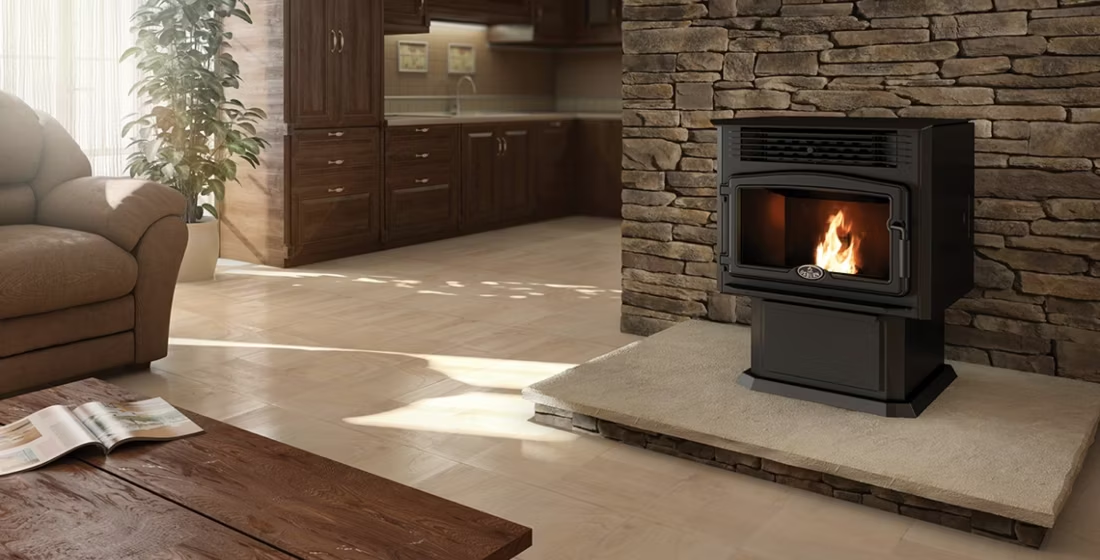
That said, a small number of Farmers Branch homeowners still install one—usually as backup heat for grid disruptions like the February 2021 freeze, or to heat a detached garage, workshop, or converted outbuilding that isn't on the main HVAC zone. Regional pellet brands like Forest Energy and Lignetics are available through Dallas-Fort Worth hearth dealers, though most of those dealers stock gas and electric units as their bread and butter and may need to special-order pellet appliances and fuel. If that's your situation, we can still match you with a dealer who carries what you need.
Three steps. No salesperson until you're ready.
Tell us about your project
Your zip code, your situation, and the fuel you're leaning toward—or let the answers point you to one.
See what's actually available
The brands dealers within 100 miles genuinely carry—real options, never a catalog mirage.
Get your dealer & Project Guide
A trusted local dealer, plus the free Project Guide & Parts List that names every component of the job.
Frequently Asked Questions
How much does a pellet stove installation cost in Farmers Branch?
A freestanding pellet stove installation typically runs $3,000 to $6,000 in the Dallas-Fort Worth area, including the unit, venting, and electrical work for the auger and blower. Because pellet stoves are a niche product locally, expect the unit itself to be special-ordered by your dealer rather than sitting on a showroom floor—that can add a few weeks to the timeline compared to a gas fireplace install. Venting through an exterior wall is usually straightforward on a single-story ranch or garage conversion, which keeps costs on the lower end of that range.
Is pellet heat actually common in Farmers Branch, or is this a niche choice?
It's a niche choice, and we'll say that plainly. With winter lows averaging 38°F and a heating season that's short and light, most Farmers Branch homes rely on central gas or electric HVAC and don't need supplemental wood-pellet heat. The homeowners who do install one are usually looking for backup heat during grid outages—like the widespread failures during Winter Storm Uri in February 2021—or a standalone heat source for a garage, workshop, or she-shed that isn't tied into the main house system.
Where can I buy a pellet stove or pellets locally?
Pellet stoves and bagged pellets aren't stocked in volume by big-box stores in the Metroplex the way they are in colder states. Regional brands like Forest Energy and Lignetics are available through hearth dealers serving North Texas, but many of those dealers focus primarily on gas fireplaces and may need to order pellet units and fuel bags specifically for you. Buying a season's worth of pellets (40-lb bags, roughly 50 per ton) ahead of a Texas cold snap is worth doing, since local supply isn't built for sudden demand spikes.
Do I need a permit to install a pellet stove in Farmers Branch?
Yes—a building permit is required for any new fuel-burning appliance installation, including pellet stoves, through the City of Farmers Branch Building Inspection Division. The permit process covers the venting path, electrical connection for the stove's auger and blower motor, and clearance-to-combustible requirements. Most hearth dealers who install pellet units in this area will pull the permit for you as part of the job, since it's not a routine request they handle every week.
When does a pellet stove actually make sense in a place like Farmers Branch?
The strongest case is backup heat: pellet stoves run independently of the central HVAC system, so if a hard freeze knocks out grid power (as happened across North Texas in February 2021), a pellet stove with a battery backup for the auger can keep one room livable. The second common case is a detached garage, workshop, or outbuilding that isn't served by the house's ductwork. Outside of those two scenarios, most homeowners here are better served by a gas or electric option, which is why pellet is genuinely a specialty request in this market.
Pellet stove vs. gas fireplace—which fits a Farmers Branch home better?
For most homes here, gas wins on convenience: natural gas service is common throughout the Dallas-Fort Worth metro, a gas fireplace or insert lights instantly, and it doesn't require electricity to run an auger or blower—some models even work during power outages with battery-backup ignition. Pellet stoves need electricity to feed fuel and push heat, so they're not a true backup option unless paired with a battery system or generator. Where pellet stoves pull ahead is fuel cost per BTU and the ability to burn without a gas line at all, which matters for a garage or workshop that was never plumbed for gas.
How does pellet heat compare to electric heat on running cost?
At the local residential electric rate of roughly $0.1491 per kWh across Oncor, TNMP, or Hilco Electric Cooperative territory, an electric space heater or zone heater costs more per BTU delivered than a pellet stove burning pellets at typical national pricing. But given how few heating hours Farmers Branch actually needs each winter—a short, light heating season—the total dollar difference over a season is small either way. For most homes, the appliance cost and installation complexity matter more than the fuel-cost comparison.
What size pellet stove do I need if I go this route?
Given the mild climate, oversizing is the more common mistake locally—a stove sized for a 2,000-square-foot whole-home heating load in Minneapolis is unnecessary for a Farmers Branch garage or single-zone backup application. A small pellet stove or insert (rated for 500-1,200 square feet) is usually plenty for supplemental or backup use in this area. A dealer carrying Forest Energy or Lignetics-compatible units can size it correctly for your actual use case rather than a whole-house heating load you'll rarely need.
Are there rebates or efficiency incentives for pellet stoves in Texas?
Texas doesn't offer the kind of statewide wood-and-pellet-heat rebate programs you'd find in Oregon or the Northeast, and Farmers Branch doesn't have a local incentive program for pellet appliances. The federal biomass stove tax credit (25D) has applied to qualifying high-efficiency pellet stoves in past years, so it's worth asking your dealer whether a specific model still qualifies before you buy. Given the niche demand locally, most of the cost calculus here comes down to the appliance and installation price rather than available rebates.
Why is a fireplace insert so efficient?
An insert does two things: it seals the chimney completely, so you stop losing air you already paid to heat, and it radiates warmth into the room through the firebox and glass. Most add a heat-exchange fan that pulls cool room air underneath, wraps it around the hot firebox, and pushes it back out warm. Your home is more efficient before you've even lit the first fire.
Why is my open fireplace making my house colder?
Open fireplaces suck—literally. As the fire burns, it consumes air your furnace already paid to heat and pulls it out through the chimney, so the house is actually colder after the fire goes out than before you lit it. An insert fixes this: it seals the chimney, puts fixed glass across the front, and turns that hole in your house into a real heat source.
Can a fireplace actually lower my heating bill?
Yes—by creating a comfort zone. A furnace heats every square foot of the house just to warm the one room you're in; a gas fireplace on low burns roughly a sixth of the gas a typical furnace does. Set the furnace around 55–60 degrees as a baseline, then heat the rooms your family actually uses. Families who heat this way commonly save $20–$60 a month.
What is an in-home preview and do I need one?
It's a visit where a hearth professional measures your space, confirms the model you picked actually works in your home, and walks the specs—framing, gas line, venting, finish work—before anything is ordered. Some details you just can't know until you see the house. Never make a down payment without one; it's the single most-skipped step that burns buyers.
Nearby Dealers
Hearth shops serving Farmers Branch and the surrounding area.
Gas Equipment Company - Carrollton
Grillers Choice
Solara Custom Doors & Lighting
Pellet Brands Stocked Around Farmers Branch
Manufacturers will point you to the nearest stocking dealer.
Find your pellet stove in Farmers Branch.
Tell us about your home and how you'd use it—backup heat, a workshop, or something else—and we'll send you a free Project Guide & Parts List with the exact parts, including the vent kit, and match you with a local dealer who actually carries pellet units in North Texas.
Find Your Fireplace →