
Keep Your Family Warm and Safe—No Matter What
From Marlin to Rosebud to Lott, Falls County families have long kept a wood stove or fireplace going—for chilly January nights, for ice-storm backup when the ERCOT grid falters, and for the simple pull of a real fire. Find the right stove or insert, and connect with a trusted local dealer.
Every Project Starts From One of These Five Situations
A supplemental fire for a mild Blackland Prairie winter.
Falls County sits in the Blackland Prairie of Central Texas, roughly 30 miles northeast of Waco, with a population just over 9,000 spread across farmland, cattle country, and small towns like Marlin, Rosebud, Lott, and Chilton. Climate zone 2A means winters here are short and mild—the average winter low sits around 34°F, and the county logs only about 2,295 heating degree days a year, a fraction of what a place like Fargo, ND or Duluth, MN sees in a single season. Nobody in Falls County is heating a whole house on wood alone through a five-month freeze. What they are doing is using a stove or fireplace to take the edge off cold fronts, warm a den or living room without running central heat all day, and—increasingly—keep the house livable when winter storms knock out power for days at a time, as happened across much of Texas in February 2021.
Falls County's rural character means most homes with any acreage have their own stands of oak, pecan, or mesquite, and a lot of wood burned here comes off the property rather than a delivery truck. There's no non-attainment designation and no listed air-quality restrictions in the county, so there's no burn-ban curtailment schedule to plan around like homeowners face in parts of the West. That combination—abundant local hardwood, a mild-but-not-mild-enough climate, and a grid that's shown it can fail in a hard freeze—is why wood stoves and inserts remain a practical, not just decorative, choice for a lot of Falls County houses.
Three steps. No salesperson until you're ready.
Tell us about your project
Your zip code, your situation, and the fuel you're leaning toward—or let the answers point you to one.
See what's actually available
The brands dealers within 100 miles genuinely carry—real options, never a catalog mirage.
Get your dealer & Project Guide
A trusted local dealer, plus the free Project Guide & Parts List that names every component of the job.
Frequently Asked Questions
How much does a wood stove installation cost in Falls County?
Most straightforward wood stove installs in a rural Falls County home—a freestanding stove on a new hearth pad with Class A chimney pipe through an exterior wall or roof—run somewhere in the $3,000 to $7,000 range, depending on the stove model and how much chimney work is involved. Converting an existing masonry fireplace to a wood-burning insert is often less expensive since the chimney is already in place. Homes on larger rural tracts outside Marlin, Rosebud, or Lott may see a bit more added for travel time, since most certified hearth dealers serving Falls County are based out of the Waco area. A local dealer will give you a firm number after seeing your home.
What size wood stove do I need for a Falls County home?
Because Falls County's winters are mild—average lows around 34°F and only about 2,295 heating degree days a year—most homeowners here are sizing for supplemental heat in a single room or living area, not whole-house primary heat. A small to mid-size stove (rated for 1,000 to 1,500 square feet) is usually plenty for a den, living room, or open-concept main floor. If you're aiming to cover the whole house during a hard freeze or grid outage, size up and talk through your square footage and insulation with a local dealer—older farmhouses common throughout the county tend to lose heat faster than newer construction.
Where can I find certified wood stove installers near Falls County?
Look for NFI (National Fireplace Institute) or CSIA (Chimney Safety Institute of America) certification—both indicate real training in wood-burning appliance installation and clearances, not just general contracting experience. Because Falls County is largely rural, most certified hearth dealers who install here are based in Waco, about 30 minutes southwest of Marlin, and will travel out to Rosebud, Lott, Chilton, and the surrounding countryside. Expect a modest trip charge for more remote properties. Sticking with a certified installer rather than a general handyman matters most here because improper clearances and venting are the leading cause of chimney fires, regardless of climate.
What's the difference between a wood stove and a wood insert?
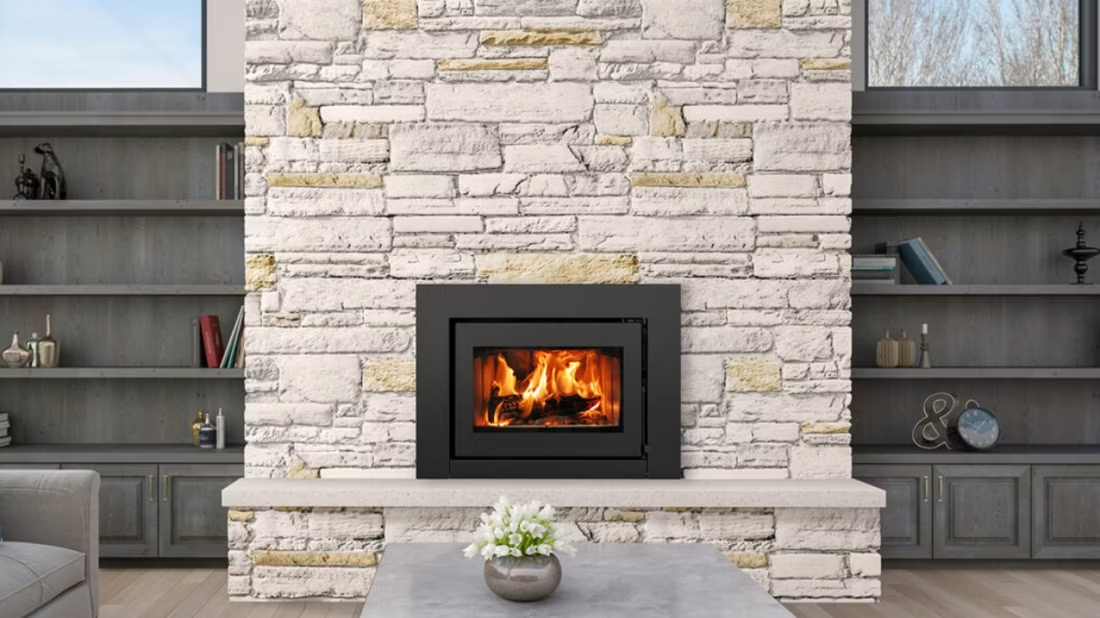
A wood stove is a freestanding unit on its own hearth pad, vented through Class A chimney pipe—it can go almost anywhere in the house with the right clearances. A wood insert slides into an existing masonry fireplace opening and uses that chimney (usually with a stainless liner) to vent. Falls County has plenty of older farmhouses and brick homes with existing masonry fireplaces that were built for looks more than heat output—for those, an insert is usually the better upgrade, since it uses the chimney you already have and turns a drafty, inefficient fireplace into a real heat source. Homes without an existing fireplace are better suited to a freestanding stove.
Do I need a permit to install a wood stove in Falls County?
Yes, a building permit is generally required for new wood-burning appliance installations, and the stove needs to meet current EPA emissions standards. In Marlin and other incorporated towns, that permit goes through the city; in unincorporated parts of the county it runs through Falls County's building office. Most local dealers handle the permitting as part of the installation. Unlike parts of the West and Pacific Northwest, Falls County has no air-quality non-attainment designation and no listed burn curtailment periods, so there's no seasonal restriction on when you can run your stove.
What's the best wood stove for Falls County's climate?
Since most Falls County homes are using a stove for supplemental heat rather than round-the-clock winter heating, a mid-size non-catalytic stove from a brand like Lopi or Pacific Energy usually covers the need without over-firing the room on a 40-degree evening. That said, February 2021's extended freeze and multi-day grid outage was a reminder that a wood stove can be the only reliable heat source in the county when the power's out and temperatures fall well below the seasonal average. If backup heat during a hard freeze is part of your reason for buying, ask your local dealer about a stove sized to actually heat the room you'd be living in during an outage, not just take the chill off.
How often should my chimney be inspected and cleaned?
The CSIA recommends an annual inspection for any wood-burning appliance, even one used only occasionally, which describes a lot of stoves in Falls County given the mild winters. Creosote builds up based on burn habits, not just total hours used, so a stove that only runs on cold fronts still needs a yearly check before the season starts, typically in October or November ahead of the first real cold front. A sweep serving the Marlin-Waco corridor can handle both the inspection and cleaning in a single visit.
Where does firewood come from in Falls County?
A large share of the wood burned in Falls County never gets bought at all—it comes off the property, from land clearing, storm-downed limbs, or routine tree management on farms and ranches around Marlin, Rosebud, and Chilton. Oak and pecan are the most common hardwoods burned locally, both dense and long-burning; mesquite is also widely available and burns hot with a distinct aroma, though it burns faster and is often mixed with oak. For anyone without their own trees, local sellers and land-clearing operations around the county typically sell by the cord, with prices varying by species and season.
Wood stove vs. pellet stove—which is right for me?
Wood stoves run on cordwood—often free or cheap in a county where oak, pecan, and mesquite are already growing on the property—and they keep working with the power off, which matters in a region that's seen ERCOT grid failures during hard freezes. Pellet stoves, using bagged pellets from brands like Forest Energy or Lignetics available through regional dealers, are more convenient to load and burn cleaner, but they depend on an electric auger and blower to run, so they shut down in an outage unless paired with a battery backup. For Falls County's mild-but-occasionally-brutal winters, that off-grid reliability is often the deciding factor in favor of wood, especially for homes further out from town.
Why is my open fireplace making my house colder?
Open fireplaces suck—literally. As the fire burns, it consumes air your furnace already paid to heat and pulls it out through the chimney, so the house is actually colder after the fire goes out than before you lit it. An insert fixes this: it seals the chimney, puts fixed glass across the front, and turns that hole in your house into a real heat source.
Why won't my new wood stove get going like my old one?
New wood stoves are 70%+ efficient, so far less heat goes up the flue—which also means less draft to get a fire established. The rule: build a genuinely hot fire for about 45 minutes before you choke it down. Skip that and you get smoke in the room, creosote in the chimney, and a fire that never takes off. Most performance complaints trace straight back to this.
How much should I budget for a fireplace?
For an average home—covering the fireplace, the vent pipe, and basic installation—a budget between $3,900 and $5,500 gives you a lot of options across wood, gas, and pellet. By the time you add finish work, gas line, and electrical, the average complete installation lands between $5,000 and $12,000 all-in. In a remodel or new build, a good rule is to put about 2.5% of the total project cost toward the fireplace.
Can a fireplace actually lower my heating bill?
Yes—by creating a comfort zone. A furnace heats every square foot of the house just to warm the one room you're in; a gas fireplace on low burns roughly a sixth of the gas a typical furnace does. Set the furnace around 55–60 degrees as a baseline, then heat the rooms your family actually uses. Families who heat this way commonly save $20–$60 a month.
Stove and Fireplace Dealers in Falls County
Listings include WhyFire partner dealers, dealers we have verified as authorized for the brands we recommend, and established local businesses that carry hearth products. Every listing shows which one it is. The ones marked Preferred run on WhyFire's software, so they can show you real pricing and book your appointment right here. No manufacturer pays for placement. How we verify dealers →
Darden Building Materials
Backyard And Patio Store - Waco
Find your wood fireplace in Falls County.
Tell us a bit about your home and we'll put together a free Project Guide & Parts List—the right stove or insert, the exact parts including the vent kit, and a trusted local Falls County-area dealer to install it.
Find Your Fireplace →