
Find the right electric fireplace for your Falls County home.
Mild winters and no gas line to fuss with—electric fireplaces give Falls County homes ambiance and supplemental warmth without venting, permits, or chimney work. Find the right unit and connect with a trusted local dealer.
Every Project Starts From One of These Five Situations
Warmth and ambiance, without the venting hassle.
Falls County sits in the Blackland Prairie of central Texas, where winters are short and mild—an average low of 34 degrees and only a light overall winter heating load each year. That's a fraction of what a place like Fargo, ND or Bismarck, ND racks up in a single cold spell. Most Falls County homes don't need—and don't want—a heating system built for sustained sub-zero nights. What homeowners here are usually after is a fireplace that looks good, adds a focal point to a living room, and provides a little supplemental heat on the occasional cold front that blows through Marlin, Rosebud, or Chilton.
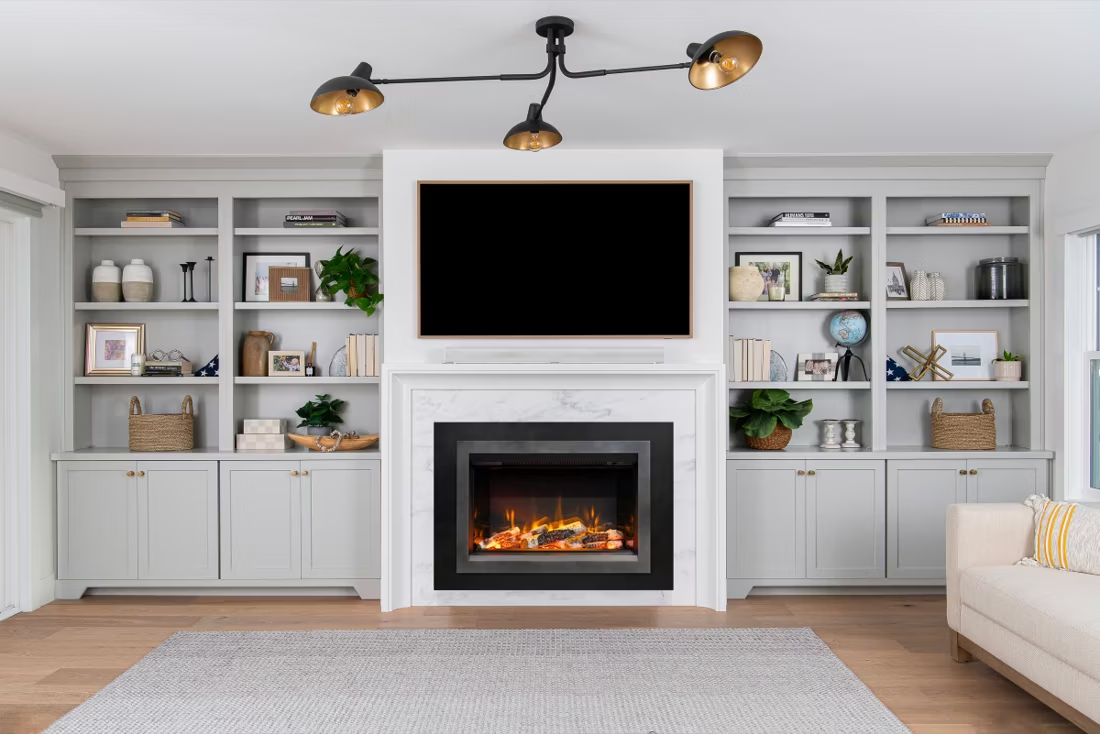
Electric fireplaces fit that need well. There's no gas line to run, no chimney to sweep, no wood to season, and no permit process to navigate through the Falls County building department for most installations—many units simply plug into a standard outlet. For older homes in Marlin without an existing fireplace, or newer builds in the surrounding county where a mantel and firebox are wanted purely for looks and mild-weather comfort, electric is often the simplest and most affordable path to a working fireplace.
Three steps. No salesperson until you're ready.
Tell us about your project
Your zip code, your situation, and the fuel you're leaning toward—or let the answers point you to one.
See what's actually available
The brands dealers within 100 miles genuinely carry—real options, never a catalog mirage.
Get your dealer & Project Guide
A trusted local dealer, plus the free Project Guide & Parts List that names every component of the job.
Frequently Asked Questions
How much does an electric fireplace installation cost in Falls County?
Electric fireplace installation in Falls County typically runs $400 to $1,200, which is dramatically less than wood, gas, or pellet options. A plug-in insert or wall-mounted unit that uses an existing outlet is on the low end—sometimes just the cost of the unit itself plus mounting hardware. Built-in units that require a dedicated 120V or 240V circuit run higher, since you'll need an electrician to add that circuit. Because there's no venting, chimney, or gas line involved, electric is consistently the most budget-friendly fireplace option for Falls County homeowners.
Do I need a permit to install an electric fireplace in Falls County?
In most cases, no. A plug-in electric fireplace or insert that uses an existing standard outlet typically doesn't require a permit, since there's no gas line, venting, or structural chimney work involved. If your installation requires a new dedicated electrical circuit—common for larger built-in units—an electrical permit is usually needed, and a licensed electrician should pull it. Local dealers can tell you upfront whether your chosen unit needs new wiring or can run off an existing outlet.
Will an electric fireplace actually heat my room, or is it just for looks?
Most electric fireplaces include a built-in heater—typically 4,500 to 5,000 BTU—that can genuinely take the edge off a room during Falls County's cooler months, roughly November through February. It won't replace your central HVAC system on a hard freeze, but for a living room or bedroom on a 40-degree evening in Marlin or Rosebud, it does real work. Some homeowners run the flame effect year-round without the heater for ambiance, then switch on the heat function during cold fronts. Ask your local dealer about heater wattage and coverage area if supplemental heat matters to you.
What's the difference between an electric fireplace, insert, and stove?
An electric fireplace is typically a built-in or wall-mounted unit designed to look like a traditional fireplace, often with a mantel surround. An electric insert is sized to slide into an existing masonry or wood-burning fireplace opening, giving an old, unused fireplace in an older Marlin home new life without touching the chimney. An electric stove is a freestanding unit styled like a wood stove, useful where you want a stove aesthetic without an actual chimney. All three plug into standard household power in most configurations, and all three skip venting entirely—the main decision is which look fits your space.
Can I put an electric fireplace anywhere in my house?
Pretty much, yes—that's the main advantage over wood or gas. Since there's no venting or combustion involved, electric units can go on an interior wall, in a bedroom, or in a room without any existing chimney or gas line, which is common in Falls County's older farmhouse-style homes. The main constraint is electrical: make sure the outlet or circuit can handle the unit's draw, especially for larger built-ins that call for a dedicated 240V circuit. A local dealer can advise on placement and circuit requirements before you buy.
Is electric a good fit for Falls County's climate, or should I consider gas or wood?
Falls County's mild winters—average lows around 34 degrees and a fairly light winter heating load overall—mean most homes don't need a heavy-duty primary heat source. Electric fireplaces are a strong fit here precisely because they're built for ambiance and light supplemental warmth rather than sustained cold-climate heating. That said, wood remains a practical and traditional choice given the abundance of oak, pecan, and mesquite in the region, and gas appeals to homeowners who want instant flame with more heat output. Electric wins on simplicity, low upfront cost, and zero maintenance—a good match if you're not trying to heat through hard freezes.
How much does it cost to run an electric fireplace?
Running costs are modest. Most electric fireplace heaters draw around 1,500 watts on the heat setting, which at typical Texas electricity rates works out to roughly 15 to 20 cents per hour of heater use. Running just the flame effect without heat costs only a few cents an hour. For a Falls County household using the heater occasionally during cold fronts rather than as a primary heat source, monthly cost impact is minimal compared to running central heat longer or supplementing with a space heater of similar wattage.
Do electric fireplaces need any maintenance?
Very little. There's no chimney to sweep, no ash to clean, no gas line to inspect. Basic upkeep is limited to dusting the unit, occasionally cleaning the glass front, and replacing the LED lights in the rare case they eventually dim (many are rated for tens of thousands of hours). This low-maintenance profile is one of the biggest draws for Falls County homeowners who want fireplace ambiance without the annual sweep-and-inspect routine that wood and gas units require.
Electric vs. gas—which is right for my Falls County home?
Gas offers real, substantial heat output and an authentic flame appearance, but it requires a gas line or propane tank, venting in most configurations, and an annual inspection. Electric skips all of that—it's simpler to install, cheaper upfront, and flexible on placement, but its heat output is modest and best suited to supplemental warmth rather than primary heating. For Falls County's mild climate, where extended sub-freezing stretches are the exception rather than the rule, electric often makes sense for homeowners prioritizing simplicity and looks. If you want a fireplace that can meaningfully warm a room on the occasional harder freeze, gas is worth a look too—a local dealer can walk you through both.
Can I put a TV above my fireplace?
Yes—with an asterisk. Fireplaces are hot and TVs don't like heat. Either put a mantel between them to deflect rising warmth, or choose a fireplace with heat-management technology that creates a cool zone on the wall above—the wall stays around 125 degrees, barely warm, while the room still gets full heat. If you like clean lines and don't want a mantel, heat management is the answer.
Do electric fireplaces actually produce heat?
Yes—most put out around 4,800–5,000 BTUs from a standard outlet, which comfortably warms a bedroom, office, or den as a comfort-zone heater. What they won't do is carry a whole house the way wood, gas, or pellet can. Think of electric as ambiance-first with honest supplemental heat: flames on with no heat in July, flames plus warmth in January.
Can a fireplace actually lower my heating bill?
Yes—by creating a comfort zone. A furnace heats every square foot of the house just to warm the one room you're in; a gas fireplace on low burns roughly a sixth of the gas a typical furnace does. Set the furnace around 55–60 degrees as a baseline, then heat the rooms your family actually uses. Families who heat this way commonly save $20–$60 a month.
What is an in-home preview and do I need one?
It's a visit where a hearth professional measures your space, confirms the model you picked actually works in your home, and walks the specs—framing, gas line, venting, finish work—before anything is ordered. Some details you just can't know until you see the house. Never make a down payment without one; it's the single most-skipped step that burns buyers.
Stove and Fireplace Dealers in Falls County
Listings include WhyFire partner dealers, dealers we have verified as authorized for the brands we recommend, and established local businesses that carry hearth products. Every listing shows which one it is. The ones marked Preferred run on WhyFire's software, so they can show you real pricing and book your appointment right here. No manufacturer pays for placement. How we verify dealers →
Darden Building Materials
Backyard And Patio Store - Waco
Get matched with a Falls County electric fireplace dealer.
Tell us a bit about your home and we'll send over a free Project Guide & Parts List for your electric fireplace project—the exact parts you need and a trusted local dealer to install it.
Find Your Fireplace →