
Pellet stoves in Ector County: a niche fit for warm West Texas winters.
With such a light winter heating load and winter lows that average 32°F, Ector County doesn't have the sustained cold that makes pellet heat a primary-heat workhorse elsewhere. A few homeowners still want one—for backup, ambiance, or a rural property outside town limits—and we can connect you with a dealer who handles them honestly.
Every Project Starts From One of These Five Situations
Odessa's climate doesn't ask much of a heating appliance.
Ector County sits in climate zone 3B, in the heart of the Permian Basin. Winter lows average 32°F, and the county has a light winter heating load—compare that to a place like Bismarck, ND, which has nearly four times the winter heating load. Most Odessa and Ector County homes run a central gas furnace or a heat pump for the handful of genuinely cold nights each winter, and that's it. Pellet stoves earn their keep in climates where a household is feeding one for four or five months straight; in a county where hard freezes are the exception rather than the rule, the economics and daily habit of running one just don't line up the way they do farther north.
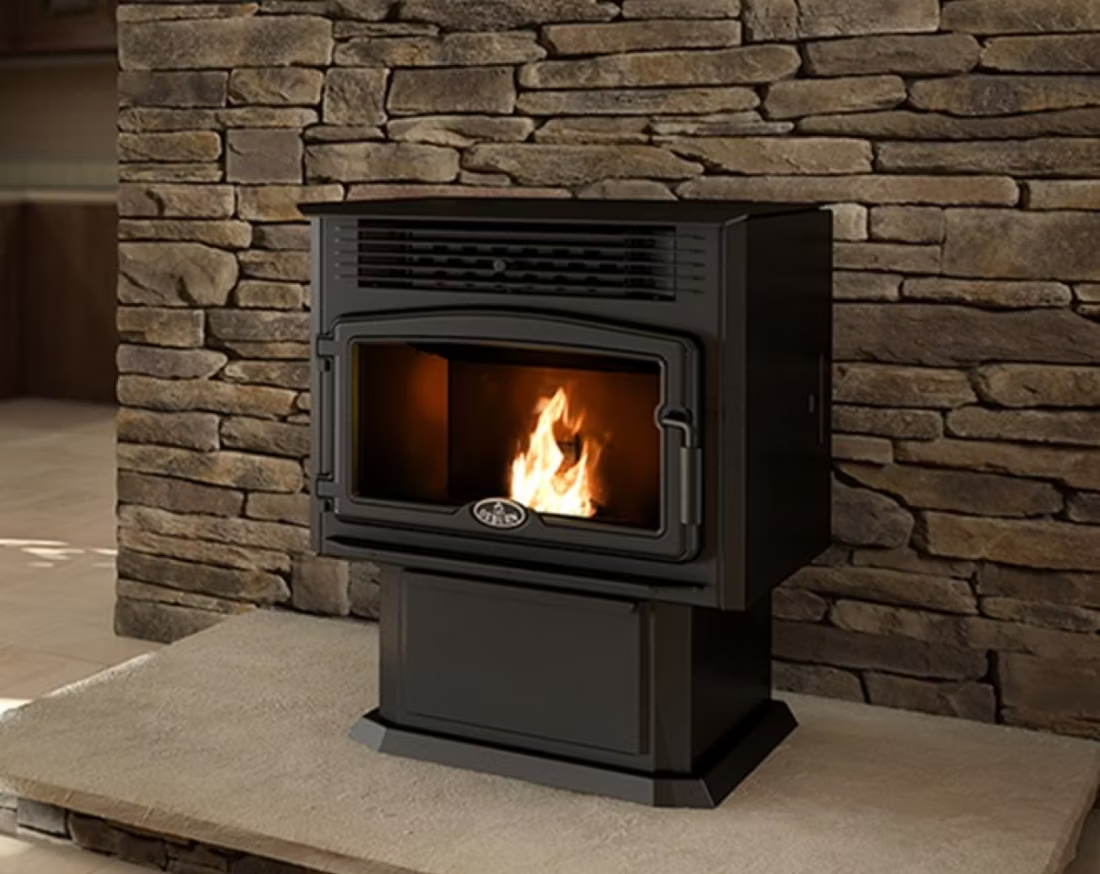
That said, a small number of Ector County homeowners still want a pellet stove—for a rural property outside city gas lines, a garage or workshop that needs occasional supplemental heat, or simply the look and low-maintenance convenience of a hopper-fed fire without cordwood. Regional pellet brands like Forest Energy and Lignetics are available through farm and feed suppliers in the area, though fuel isn't stocked at the volume you'd find in colder states, so planning ahead for pellet delivery or bulk purchase matters more here than it would in a heavier-burning climate. For most households, though, a direct-vent gas fireplace or an electric unit ends up being the more practical fit for this climate—we'll walk through both below.
Three steps. No salesperson until you're ready.
Tell us about your project
Your zip code, your situation, and the fuel you're leaning toward—or let the answers point you to one.
See what's actually available
The brands dealers within 100 miles genuinely carry—real options, never a catalog mirage.
Get your dealer & Project Guide
A trusted local dealer, plus the free Project Guide & Parts List that names every component of the job.
Frequently Asked Questions
Are pellet stoves actually common in Ector County?
Not really, and we'd rather tell you that upfront than sell you on something that doesn't fit. With a light winter heating load and winter lows averaging 32°F, most Ector County homes never need a sustained heat source running for months at a stretch—a central gas furnace or heat pump handles the occasional cold snap fine. Pellet stoves make the most sense in climates with long, hard winters. In Ector County, they're mostly chosen for backup heat, ambiance, a rural property without natural gas access, or a workshop/garage that needs occasional supplemental warmth. If that's your situation, a pellet stove can still be the right call—just know you're in the minority locally, which also means fewer dealers stock and service them here than in colder parts of the country.
How much does a pellet stove installation cost in Ector County?
Nationally, a typical pellet stove or insert installation runs $3,000 to $6,500 depending on the unit, venting path, and whether an existing masonry fireplace is being converted. Because pellet installs are uncommon in Ector County, expect fewer dealers to quote them compared to gas—get two or three quotes and ask specifically about their pellet-stove experience versus general hearth work. Freestanding units in a garage, shop, or room without an existing chimney will typically need new through-wall or through-roof venting, which adds to the cost. A local dealer can give you a firm number after seeing your space.
Will a pellet stove work as backup heat during a Texas grid failure?
This is worth being honest about: pellet stoves need electricity to run the auger that feeds fuel and the fan that circulates heat. During a widespread power outage—like the February 2021 winter storm that knocked out ERCOT generation across West Texas—a pellet stove without a generator or battery backup won't run any better than your furnace will. If your goal is heat that survives a grid failure, a gas fireplace with a battery-backed intermittent pilot ignition, or a Valor unit that generates its own electricity through the pilot, is the more resilient choice for Ector County. Pellet makes more sense here as convenience or ambiance heat, not storm-outage insurance.
Where can I buy pellet fuel in Ector County?
Regional pellet brands like Forest Energy and Lignetics are the ones most likely to show up at farm and feed suppliers serving the Odessa area, though stock levels are lower than what you'd find in a state where pellet heat is the norm. Because Ector County sits far from the pine-forest regions where most pellet mills operate, expect to plan purchases ahead of a cold snap rather than run to a local store the day you need fuel—buying a season's supply at once when it's available is the more reliable approach here.
What size pellet stove do I need for my home in Ector County?
Given how mild the county's winters run, most homeowners here are sizing for supplemental or occasional heat rather than whole-home primary heat—a small to mid-size unit (rated for 1,000–1,500 sq ft) is usually plenty even for a larger home, since it's only carrying the load on the coldest nights of the year. If you're heating a detached garage, workshop, or a rural property with no other heat source, size to the specific room rather than the whole house. A local dealer can size this properly during a walkthrough—oversizing is a common mistake with low-demand climates like this one.
Do I need a permit to install a pellet stove in Ector County?
Most solid-fuel appliance installations require a building permit, and specifics depend on whether your property is inside Odessa city limits or in unincorporated Ector County. Check with the City of Odessa's building permit office or the Ector County building department before installation. Most hearth dealers who install pellet appliances handle the permitting as part of the job, which is one more reason to work with an experienced local installer rather than a DIY install, even on a straightforward freestanding unit.
Should I get a pellet stove or a gas fireplace instead?
For most Ector County homes, gas is the more practical choice. Natural gas service is available through much of Odessa, and a direct-vent gas fireplace or insert gives you instant, thermostat-controlled heat with none of the fuel storage or hopper-loading that comes with pellet. Given how few cold days the county actually sees, most homeowners here value the flip-a-switch convenience of gas over the hands-on ritual of a pellet stove. Pellet still wins if you specifically want the visual of a real flame fed by fuel, don't have gas service at your property, or you're heating a detached space where running a gas line isn't practical.
Should I get a pellet stove or an electric fireplace instead?
Electric is worth a serious look for Ector County's climate. An electric fireplace or insert needs no venting, no fuel storage, and no ash cleanup—you plug it in and it runs, which suits a climate where you might only want supplemental heat a few weeks a year. Electric units also install for a fraction of what a pellet stove costs, since there's no venting or hopper system involved. The tradeoff is that electric heat output is capped and it still depends on grid power, same as pellet. If you want real combustion heat with the visual of a fire, pellet still has the edge—but for most Ector County living rooms, electric covers the actual heating need with far less installation complexity.
Who actually chooses a pellet stove in a climate like Ector County's?
In our experience, it's usually one of a few situations: a rural property outside Odessa's gas lines that wants a real combustion heat source without running propane, a detached garage or workshop that needs occasional heat, a homeowner who specifically wants the ambiance and fuel-loading ritual of pellet over the flip-a-switch feel of gas, or someone moving here from a colder climate who already owns and prefers the format. None of those are wrong reasons—they're just less common here than in places with a real winter. If one of them describes you, we'll match you with a local dealer who installs pellet stoves and knows how to size and vent one properly for a mild-climate home rather than treating it as an afterthought to their gas business.
Why is my open fireplace making my house colder?
Open fireplaces suck—literally. As the fire burns, it consumes air your furnace already paid to heat and pulls it out through the chimney, so the house is actually colder after the fire goes out than before you lit it. An insert fixes this: it seals the chimney, puts fixed glass across the front, and turns that hole in your house into a real heat source.
Why is a fireplace insert so efficient?
An insert does two things: it seals the chimney completely, so you stop losing air you already paid to heat, and it radiates warmth into the room through the firebox and glass. Most add a heat-exchange fan that pulls cool room air underneath, wraps it around the hot firebox, and pushes it back out warm. Your home is more efficient before you've even lit the first fire.
Does a fireplace add value to my home?
On average, a fireplace adds back to the home about the same amount you spent installing it. Add the monthly savings from heating the rooms you actually use instead of the whole house—often hundreds of dollars a year—and the value case is strong before you even count what a fire does for how your family uses the room.
How much should I budget for a fireplace?
For an average home—covering the fireplace, the vent pipe, and basic installation—a budget between $3,900 and $5,500 gives you a lot of options across wood, gas, and pellet. By the time you add finish work, gas line, and electrical, the average complete installation lands between $5,000 and $12,000 all-in. In a remodel or new build, a good rule is to put about 2.5% of the total project cost toward the fireplace.
Stove and Fireplace Dealers in Ector County
Listings include WhyFire partner dealers, dealers we have verified as authorized for the brands we recommend, and established local businesses that carry hearth products. Every listing shows which one it is. The ones marked Preferred run on WhyFire's software, so they can show you real pricing and book your appointment right here. No manufacturer pays for placement. How we verify dealers →
Seal’s Energy Depot
Bill Placer's Chimney Sweep
Pellet Brands Stocked Around Ector County
Manufacturers will point you to the nearest stocking dealer.
Find your pellet stove in Ector County.
Tell us about your home and how you'd use it, and we'll match you with a local dealer experienced in pellet installs—plus a free Project Guide & Parts List covering the exact parts, venting, and recommended installer for your property.
Find Your Fireplace →