
Real ambiance for Ector County's mild winters, without a chimney.
With winter lows averaging around 32°F and just a mild, short heating season each year, Odessa and the rest of Ector County rarely need a whole-home heat source—they need a fireplace that looks great and plugs in. Find the right unit and connect with a trusted local dealer.
Every Project Starts From One of These Five Situations
The heat Ector County actually needs.
Ector County sits in climate zone 3B—hot, dry, and mild in winter compared to almost anywhere else that heats a home. Winter lows average around 32°F, and the county logs a mild, short heating season each year, a fraction of what a place like Bismarck, ND or Duluth, MN racks up in a single cold snap. That's the practical case for electric fireplaces here: Odessa homeowners aren't fighting sub-zero nights, they're looking for the look and feel of a fire in a den, primary bedroom, or apartment without adding a flue, a gas line, or a woodpile to a house that doesn't need the BTUs.
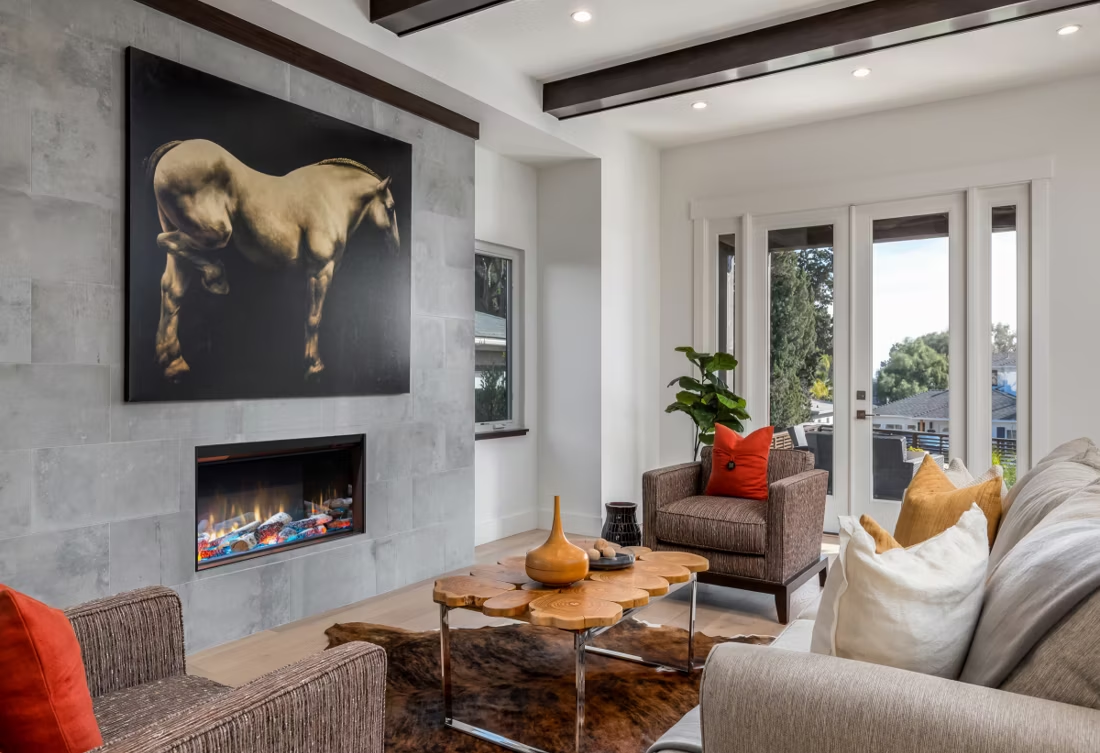
Wood heat and pellet stoves are essentially absent from Ector County's housing stock, and that's not an oversight—it's climate math. The oak, pecan, and mesquite that show up constantly around here go into backyard smokers for West Texas barbecue, not into a firebox for home heat. Gas fireplaces are common in newer Permian Basin builds where a gas line is already run to the house, but electric units have become the default for renters, apartment dwellers, and homeowners who want a fireplace feature wall installed in an afternoon rather than a multi-day venting project.
Three steps. No salesperson until you're ready.
Tell us about your project
Your zip code, your situation, and the fuel you're leaning toward—or let the answers point you to one.
See what's actually available
The brands dealers within 100 miles genuinely carry—real options, never a catalog mirage.
Get your dealer & Project Guide
A trusted local dealer, plus the free Project Guide & Parts List that names every component of the job.
Frequently Asked Questions
How much does an electric fireplace installation cost in Ector County?
Plug-in electric fireplace inserts that drop into an existing frame or media console run on the low end—often a few hundred dollars for the unit itself with no wiring work required. Built-in wall units and recessed models that require a dedicated 120V or 240V circuit run higher, typically $1,500 to $4,000 installed once an electrician frames the opening and runs power to it. Custom surrounds, stone or tile facing, and mantel work add to that. Because Ector County's climate doesn't demand a high-output heater, most local buyers are paying for the flame effect and the built-in look rather than serious BTU output—which keeps electric projects considerably cheaper than a gas line install or a wood chimney retrofit.
Do electric fireplaces actually produce meaningful heat in Odessa?
Most electric fireplaces are rated for supplemental heat in a single room—typically 400 to 1,500 square feet depending on the model—which lines up well with how Ector County homeowners actually use them. With winter lows averaging around 32°F and only a mild, short heating season each year, few homes here need a fireplace to carry whole-house heating load the way a stove would in a harsher climate. Homeowners typically run the heater function on the coldest handful of nights and rely on the flame effect the rest of the winter. If you're trying to heat a large open great room as a primary source, a local dealer can point you toward higher-output models, but most Ector County installs are about ambiance first, warmth second.
Do I need a permit to install an electric fireplace in Ector County?
A simple plug-in insert that uses an existing outlet typically doesn't require a permit. Built-in units that need a new dedicated circuit or any relocation of wiring do require an electrical permit, since that work has to meet code regardless of what appliance it's feeding. Inside city limits, that permit runs through the City of Odessa's Building Inspections Department; for homes in unincorporated Ector County, it goes through the county. Most licensed electricians handling a built-in fireplace install will pull the permit as part of the job, so it's worth confirming that's included in your quote.
What's the difference between an electric insert, a built-in wall unit, and a mantel package?
An electric insert is a self-contained unit designed to slot into an existing fireplace opening, a media console, or a framed cavity—it's the fastest and cheapest way to add electric flame to a room. A built-in wall unit is designed to be framed into a wall during a remodel or new construction, often flush-mounted with a custom surround, and generally requires new electrical work. A mantel package pairs an insert with a manufactured mantel and surround as a complete furniture-style unit, popular in Odessa homes and apartments where a full remodel isn't in the plan. For most rental properties and quick upgrades in Ector County, an insert or mantel package is the practical choice; new builds and major remodels lean toward built-in units.
Will an electric fireplace work during a power outage?
No—and this is the one real tradeoff worth knowing before you buy. Unlike a wood stove or a gas fireplace with battery-backup ignition, an electric fireplace does nothing without power. West Texas summer heat gets the headlines for ERCOT grid strain, but winter storms have caused outages here too, and an all-electric fireplace offers zero backup heat in that scenario. If backup heat during an outage matters to you, ask a local dealer about pairing an electric unit for daily ambiance with a small propane or gas appliance as a true emergency backup—many Ector County homes run both.
Why don't more Ector County homes use wood-burning fireplaces?
It comes down to climate, not preference. With a mild, short heating season each year and winter lows averaging in the low 30s, Ector County simply doesn't get cold enough, often enough, to justify the wood-handling, chimney maintenance, and clearance requirements of a real wood-burning appliance. The oak, pecan, and mesquite common in this part of West Texas are burned constantly here—just in backyard barbecue smokers rather than home fireplaces. Air quality isn't a restricting factor either; there's no non-attainment designation locally. It's purely that a wood stove built for single-digit nights is overkill for a place where the coldest mornings rarely stay below freezing for long.
Electric vs. gas fireplace—which is right for my Ector County home?
Gas fireplaces offer real heat output, run during power outages on models with battery-backup ignition, and are common in newer Permian Basin construction where a gas line already reaches the house. Electric fireplaces install faster, cost less upfront, need no venting or gas line, and can go virtually anywhere there's an outlet or a dedicated circuit—including apartments and rentals where gas work isn't an option. For a primary living space in a house already plumbed for gas, a gas insert often makes sense. For a bedroom, home office, apartment, or a quick feature-wall upgrade, electric is usually the simpler and cheaper answer given how mild Ector County winters actually run.
How do I size an electric fireplace for my room?
Sizing an electric fireplace is more about width and wall proportion than heating capacity, since most units are supplemental heaters rather than whole-room solutions. As a rough guide: 30–40 inch units suit bedrooms and smaller dens, 50–60 inch units work for standard living rooms, and 70-inch-plus units are typically chosen for great rooms or as a focal wall feature regardless of heat need. If you do want the heater function to matter on Ector County's occasional 20-degree mornings, check the unit's square-footage rating and stay on the higher end for larger, open floor plans common in newer Odessa subdivisions.
Where can I see electric fireplaces in person before buying?
A local hearth or furniture retailer that carries electric fireplace lines will let you compare flame realism, frame finishes, and remote/app control features side by side—something that's hard to judge from an online listing. Local dealers in the Odessa area also know which built-in models pair well with the electrical panel capacity typical of older Ector County housing stock versus newer Permian Basin construction, and can flag when a dedicated circuit is worth the extra electrician cost. That in-person, locally-informed comparison is exactly what a trusted local dealer match is for.
Do electric fireplaces actually produce heat?
Yes—most put out around 4,800–5,000 BTUs from a standard outlet, which comfortably warms a bedroom, office, or den as a comfort-zone heater. What they won't do is carry a whole house the way wood, gas, or pellet can. Think of electric as ambiance-first with honest supplemental heat: flames on with no heat in July, flames plus warmth in January.
Can I put a TV above my fireplace?
Yes—with an asterisk. Fireplaces are hot and TVs don't like heat. Either put a mantel between them to deflect rising warmth, or choose a fireplace with heat-management technology that creates a cool zone on the wall above—the wall stays around 125 degrees, barely warm, while the room still gets full heat. If you like clean lines and don't want a mantel, heat management is the answer.
Does a fireplace add value to my home?
On average, a fireplace adds back to the home about the same amount you spent installing it. Add the monthly savings from heating the rooms you actually use instead of the whole house—often hundreds of dollars a year—and the value case is strong before you even count what a fire does for how your family uses the room.
Can a fireplace actually lower my heating bill?
Yes—by creating a comfort zone. A furnace heats every square foot of the house just to warm the one room you're in; a gas fireplace on low burns roughly a sixth of the gas a typical furnace does. Set the furnace around 55–60 degrees as a baseline, then heat the rooms your family actually uses. Families who heat this way commonly save $20–$60 a month.
Stove and Fireplace Dealers in Ector County
Listings include WhyFire partner dealers, dealers we have verified as authorized for the brands we recommend, and established local businesses that carry hearth products. Every listing shows which one it is. The ones marked Preferred run on WhyFire's software, so they can show you real pricing and book your appointment right here. No manufacturer pays for placement. How we verify dealers →
Seal’s Energy Depot
Bill Placer's Chimney Sweep
Find your electric fireplace in Ector County.
Tell us a bit about your home and we'll match you with the right electric fireplace or insert, plus a free Project Guide & Parts List with your recommended local dealer in Ector County.
Find Your Fireplace →