
Pellet Stoves in Duncanville Are Rare—But Not Impossible.
With average winter lows near 38°F and a short, mild heating season, Duncanville doesn't need supplemental heat the way places like Duluth, MN do. But a handful of local homeowners still want a pellet stove—and we can help you find one done right.
Every Project Starts From One of These Five Situations
Dallas County winters rarely call for a second heat source.
Duncanville sits at 714 feet in climate zone 3A, part of the Dallas–Fort Worth metro where winter lows average 38°F and the heating season is short and mild, just a fraction of what a place like Duluth, Minnesota sees in a single hard month. Central HVAC and heat pumps handle the vast majority of heating load here, and when Duncanville homeowners add a fireplace, it's almost always a gas log set or a decorative unit chosen for ambiance rather than a wood pellet appliance chosen for warmth.
That said, pellet stoves aren't unheard of in Duncanville. A small number of homeowners install one anyway—often in a converted garage, workshop, or secondary living space, or because they want backup heat after events like Winter Storm Uri in February 2021, when ERCOT grid failures left much of North Texas without power for days. It's worth knowing upfront that a pellet stove's auger and blower run on electricity, so it isn't a true off-grid solution the way a wood stove is. If backup heat during a grid outage is your main goal, we'll walk you through what actually delivers that versus what just looks like it does.
Three steps. No salesperson until you're ready.
Tell us about your project
Your zip code, your situation, and the fuel you're leaning toward—or let the answers point you to one.
See what's actually available
The brands dealers within 100 miles genuinely carry—real options, never a catalog mirage.
Get your dealer & Project Guide
A trusted local dealer, plus the free Project Guide & Parts List that names every component of the job.
Frequently Asked Questions
How much does a pellet stove installation cost in Duncanville?
Because pellet stoves are a niche request in the Dallas–Fort Worth area, there isn't a deep local pricing history the way there is for gas fireplace conversions. Nationally, a freestanding pellet stove with venting typically runs $3,500 to $6,500 installed, and a pellet insert into an existing masonry fireplace often lands in a similar range once a liner and hearth work are factored in. Because so few Duncanville dealers stock pellet units regularly, expect a wider quote spread than you'd see for gas—get two or three in-home estimates before committing.
Does a pellet stove even make sense for Duncanville's climate?
For most homes, no—not as a primary or even reliable secondary heat source. With winter lows averaging 38°F and a short, mild heating season, Duncanville's climate is much gentler than a true cold-climate market. Where a pellet stove does make sense here is niche: heating a detached garage or workshop that isn't on the main HVAC zone, adding ambiance to a room with a fireplace but no gas line, or as a secondary appliance for a household that specifically wants the pellet-stove experience. If your goal is simply reliable winter heat, gas is almost always the better-suited option in this climate.
Will a pellet stove keep my house warm if the power goes out?
Not on its own. A pellet stove's hopper, auger, and combustion blower all run on electricity, so a standard unit stops feeding fuel the moment the power drops—the same limitation that caught a lot of North Texas homeowners off guard during Winter Storm Uri in 2021. Some pellet stove models offer battery-backup kits that can keep the auger running for a period, but they're not universal and need to be sized to the stove. If grid resilience during an ERCOT emergency is your real priority, a gas fireplace with a battery-backup ignition system, or a wood-burning unit, will get you closer to true outage-proof heat than a standard pellet stove will.
Where can I buy pellets in the Duncanville area?
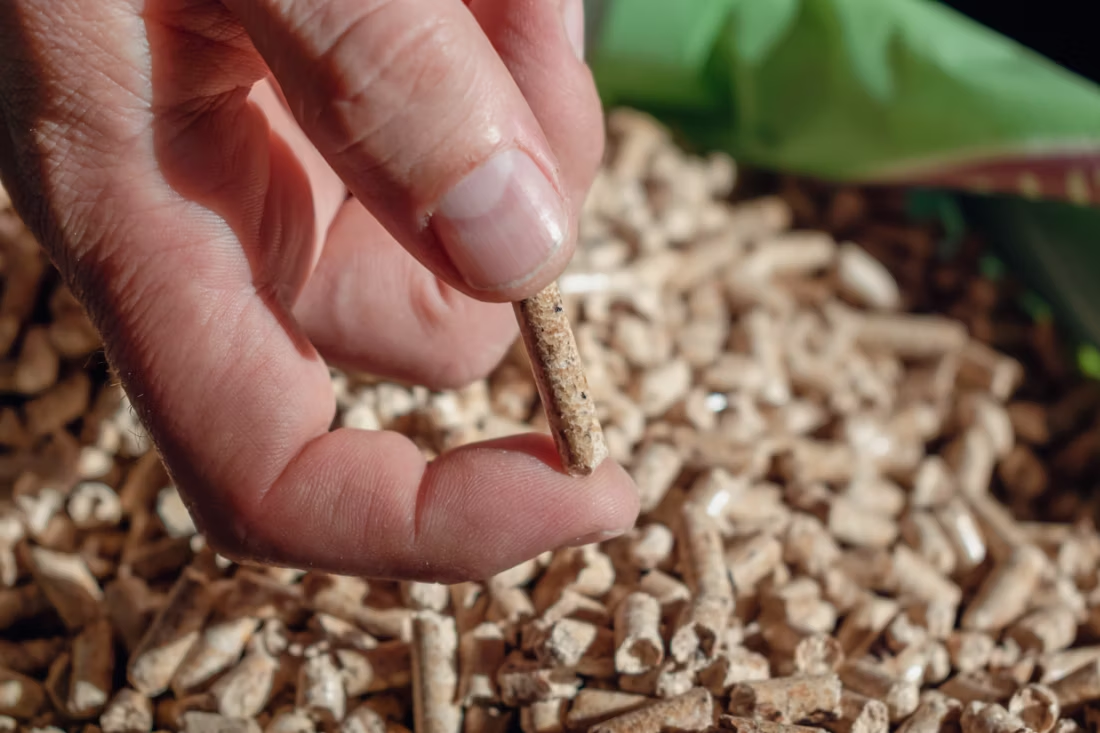
Pellet fuel isn't heavily stocked locally the way it would be in a cold-climate market, but bags from regional producers like Forest Energy and Lignetics are available through farm-supply and hardware retailers across the greater Dallas–Fort Worth area, and most dealers who sell you a pellet stove can point you to a reliable supplier or set up seasonal delivery. Because demand is lower here, it's worth confirming a retailer keeps pellets in stock year-round rather than assuming you can walk in and buy a ton on short notice.
Do I need a permit to install a pellet stove in Duncanville?
Yes—any permanent, vented appliance like a pellet stove or insert requires a building permit through the City of Duncanville's Building Inspection Division, and the venting has to meet the manufacturer's listed clearances. Because Duncanville has no air quality non-attainment restrictions or wood-burning curtailment rules like you'd find in parts of the West, the permitting process here is mostly about structural and venting code compliance rather than emissions. A local installer who regularly pulls permits with the city will keep this simple.
What will it cost to run a pellet stove with local electric rates?
Duncanville is served by Oncor Electric Delivery, Texas-New Mexico Power, and Hilco Electric Cooperative depending on your exact address, with residential rates running around 14.9 cents per kWh. A pellet stove's auger and blower typically draw 100–400 watts, which adds up to a modest amount on your electric bill—usually a few dollars a month with regular use—but it's worth noting alongside the cost of the pellets themselves, since electricity is a secondary but real input cost that wood-burning stoves don't have.
Should I get a pellet stove or a gas fireplace instead?
For most Duncanville homes, gas is the more natural fit. Natural gas service is well established across the Dallas–Fort Worth metro, gas fireplaces and inserts install faster, need no fuel storage or hopper refilling, and deliver instant heat at the flip of a switch—all things that matter more in a mild climate where you're using the fireplace occasionally rather than running it all winter. Pellet stoves make more sense when you specifically want the visual and radiant qualities of a real flame with more automation than wood, or when a gas line genuinely isn't accessible to the room you're heating. A local dealer can walk you through both and tell you honestly which one fits your house.
What size pellet stove would I need for a Duncanville home?
Most Duncanville houses are single-story suburban homes in the 1,500–2,800 square foot range, and because pellet heat here is almost always supplemental rather than whole-home, a small to mid-size unit rated for 1,000–1,800 sq ft is more than enough for the room or zone you're actually trying to heat—a den, converted garage, or workshop. Oversizing a pellet stove for a mild climate like this just means you'll run it at low, inefficient settings most of the time; a dealer sizing your specific space will usually recommend smaller than you'd expect.
Pellet stove or electric fireplace—which makes more sense here?
For a lot of Duncanville homeowners weighing supplemental heat with minimal hassle, an electric fireplace or insert is the simpler answer. Electric units need no venting, no fuel storage, and no permit for a plug-in model, and with Oncor and TNMP rates around 14.9 cents per kWh, running one occasionally costs very little. A pellet stove offers real flame and radiant heat that electric can't fully replicate, along with the ability to genuinely warm a room rather than just add ambiance—but it comes with hopper maintenance, venting, and periodic pellet purchases. If real fire and stronger heat output matter to you, pellet wins; if simplicity is the priority, electric is usually the easier fit in this climate.
Why is my open fireplace making my house colder?
Open fireplaces suck—literally. As the fire burns, it consumes air your furnace already paid to heat and pulls it out through the chimney, so the house is actually colder after the fire goes out than before you lit it. An insert fixes this: it seals the chimney, puts fixed glass across the front, and turns that hole in your house into a real heat source.
Why is a fireplace insert so efficient?
An insert does two things: it seals the chimney completely, so you stop losing air you already paid to heat, and it radiates warmth into the room through the firebox and glass. Most add a heat-exchange fan that pulls cool room air underneath, wraps it around the hot firebox, and pushes it back out warm. Your home is more efficient before you've even lit the first fire.
Can I install a fireplace myself?
If you're putting a fire in your house on purpose, it's best to work with an expert. Unless you're genuinely experienced in framing, gas line, vent pipe, and the national code on clearances to combustibles, have a professional do it—and ideally the same company that sells you the fireplace, so warranty, service, and liability all live under one roof.
Can a fireplace actually lower my heating bill?
Yes—by creating a comfort zone. A furnace heats every square foot of the house just to warm the one room you're in; a gas fireplace on low burns roughly a sixth of the gas a typical furnace does. Set the furnace around 55–60 degrees as a baseline, then heat the rooms your family actually uses. Families who heat this way commonly save $20–$60 a month.
Nearby Dealers
Hearth shops serving Duncanville and the surrounding area.
Gas Equipment Company - Carrollton
Grillers Choice
Solara Custom Doors & Lighting
Pellet Brands Stocked Around Duncanville
Manufacturers will point you to the nearest stocking dealer.
See what's actually available for pellet heat near Duncanville.
Tell us about your home and your goals, and we'll match you with a trusted local dealer and send over a free Project Guide & Parts List—a clear plan for your pellet project in Duncanville, with the exact parts, venting, and a dealer who can install it right.
Find Your Fireplace →