
Dumas runs on natural gas. Your fireplace should too.
Moore County sits on top of one of the largest natural gas fields in North America—which is exactly why gas fireplaces make sense here. Find the right unit and get matched with a trusted local dealer.
Every Project Starts From One of These Five Situations
Built on top of one of the largest gas fields in the country.
Dumas sits at 3,649 feet on the Texas high plains, where winter lows average 22°F and the wind rarely stops blowing across open farmland. The winter heating season here runs fairly long, adding up to real winter—but nowhere near the brutal cold of places like Bismarck or Fargo. What makes Dumas different is what's underneath it: Moore County is part of the Panhandle-Hugoton field, one of the largest natural gas reserves ever discovered in North America. Gas isn't an import here. It's the local resource.
That geology shapes how homes get heated. Nearly every house in Dumas is already piped for natural gas—for the furnace, the water heater, the range—so adding a gas fireplace or insert is usually a matter of tapping an existing line rather than running new service. Wood heat, by contrast, is genuinely uncommon here: the high plains around Dumas aren't forested, and the oak, pecan, and mesquite that do get burned locally are more likely to end up in a smoker than a wood stove. Air quality here isn't a limiting factor either—Moore County has no non-attainment issues or burn restrictions—so homeowners have real flexibility in venting choices when they go with gas.
Three steps. No salesperson until you're ready.
Tell us about your project
Your zip code, your situation, and the fuel you're leaning toward—or let the answers point you to one.
See what's actually available
The brands dealers within 100 miles genuinely carry—real options, never a catalog mirage.
Get your dealer & Project Guide
A trusted local dealer, plus the free Project Guide & Parts List that names every component of the job.
Frequently Asked Questions
How much does a gas fireplace installation cost in Dumas?
Most gas fireplace and insert installations in Dumas run $3,500 to $9,000, and many land toward the lower end of that range because the home is already plumbed for natural gas. A direct-vent insert going into an existing fireplace with a gas line nearby is the simplest and cheapest version of this project. Homes needing new gas line runs, a propane tank setup for rural properties outside city limits, or a full built-in unit with new framing and venting will run higher. A local dealer can walk your specific layout and give you a firm number.
Can I convert an existing wood-burning fireplace to gas?
Yes, and it's a common project among Dumas's older homes near downtown that still have a masonry fireplace from decades past. A gas insert slides into the existing firebox, using a stainless liner run up the current chimney for venting. Since wood heat was never the primary heat source for most homes on the high plains—there's simply no local timber tradition to speak of—many of these fireplaces were used sparingly to begin with, which makes the switch to a clean, instant-on gas insert an easy upgrade. Typical cost runs $3,500 to $7,500 depending on the insert and whether new gas line work is needed.
Do I need to worry about natural gas availability, or is propane more common in Dumas?
Within Dumas city limits, natural gas service is the default—this part of the Panhandle sits directly on top of the gas field, and distribution lines run through nearly every established neighborhood. Propane becomes the more likely option for properties outside city limits or on larger rural tracts in Moore County that aren't on the gas main. Either fuel works in most fireplace models; your installer configures the burner orifice and regulator for whichever one serves your address. For electric backup or supplemental heat, Southwestern Public Service and Rita Blanca Electric Cooperative both serve parts of the area, with residential rates that can vary meaningfully between the two.
Will my gas fireplace still work if the power goes out?
Most modern gas fireplaces will, which matters in a place like Dumas where high winds and occasional ice storms on the exposed high plains can knock out power for hours. Units with intermittent pilot ignition (IPI) run on a battery backup that kicks in automatically, so the fireplace lights and operates normally even with the grid down—you just need to keep fresh batteries in the unit. Valor fireplaces take a different approach: the pilot's thermocouple generates its own electricity, so there's no battery to maintain at all. Either way, ask your local dealer which ignition system is in the unit you're considering.
What's the difference between a gas fireplace, gas insert, and gas stove?
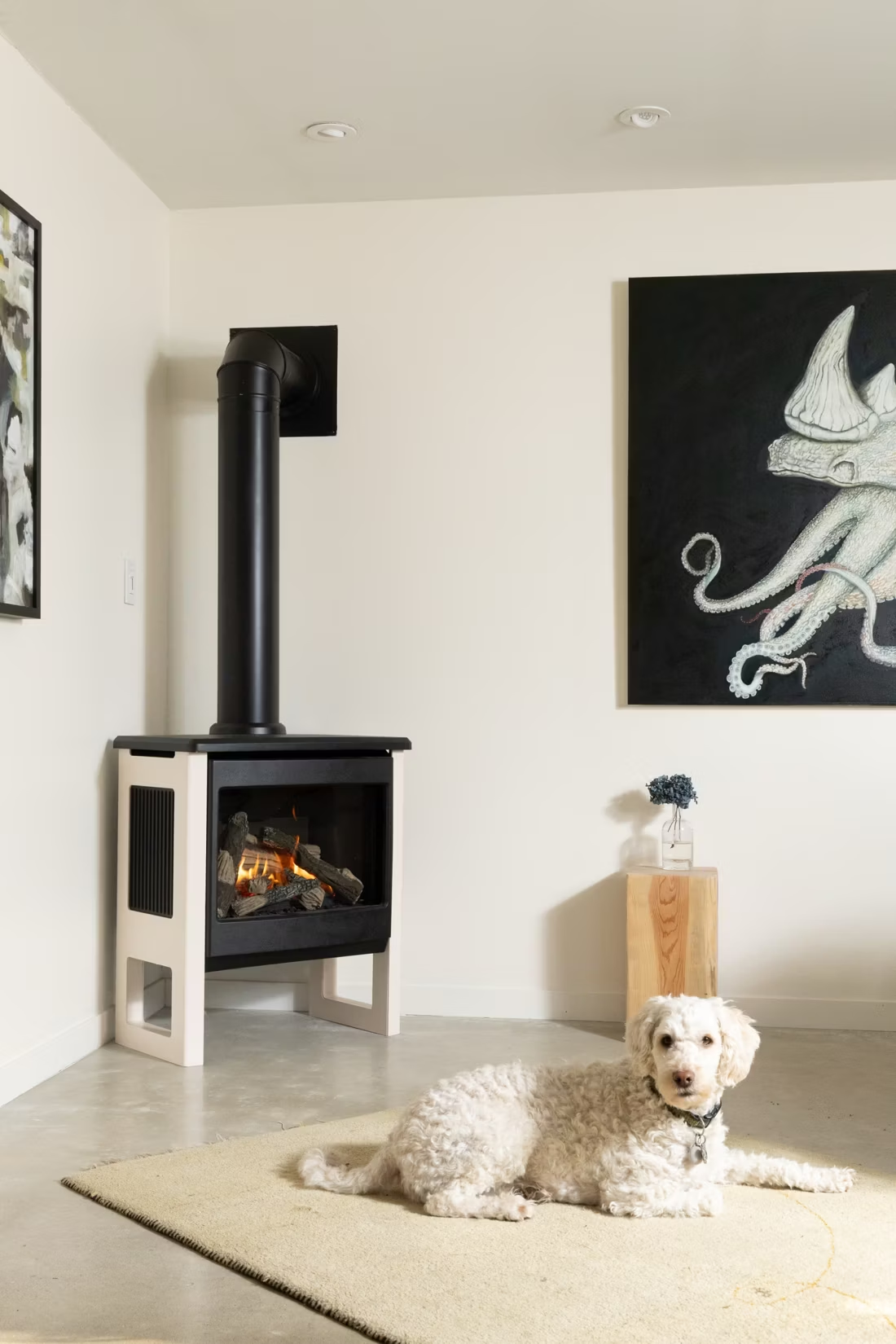
A gas fireplace is a fully built-in unit framed into a wall—the right call for new construction or a remodel without an existing firebox. A gas insert drops into an existing masonry fireplace and uses the current chimney as its vent path, which is the common route for Dumas's older homes with a fireplace already in place. A gas stove is a freestanding cabinet unit, often chosen for a garage, sunroom, or a room without any existing chimney or hearth. Most Dumas homeowners upgrading an existing fireplace go with an insert; new builds more often go with a built-in unit.
Do I need a permit to install a gas fireplace in Dumas?
Yes. The City of Dumas Building Department requires a permit for gas appliance installations, and the gas line portion of the work has to be done by a licensed gas-fitter regardless of who installs the fireplace itself. Most established hearth dealers coordinate the permit, the gas line, and the venting as one package, which is worth asking about up front—it saves you from juggling separate trades and separate inspections.
Should I get a vented or vent-free gas fireplace?
Both are legal and available in Dumas, and Moore County has no air quality restrictions that would push you toward one or the other. Vented (direct-vent) units draw combustion air from outside and exhaust it back outside through sealed venting—they're the more universally recommended option and deliver the most heat with the fewest compromises on indoor air. Vent-free units burn directly into the room and can be a reasonable choice for supplemental heat in a smaller, well-ventilated space, but they come with room-sizing rules and oxygen depletion sensors that a local dealer will walk you through. For a primary living area, direct-vent is almost always the better fit.
How often does a gas fireplace need to be serviced?
Plan on an annual inspection, ideally before the first cold snap in late fall. A technician checks the burner, pilot assembly, venting, and gas connections, and cleans the glass and interior—a much quicker job than chimney sweeping on a wood unit, but still important for safe operation. Local service providers typically charge $125 to $200 for a standard annual visit.
Why don't more people in Dumas use wood or pellet stoves?
There's simply no local wood-heat tradition here—the high plains around Dumas were never forested, so firewood species like oak, pecan, and mesquite are hauled in from river bottoms or purchased, mostly for grilling and smoking rather than home heating. Pellet stoves face the same headwind: without a driving air-quality restriction or a native fuel supply, there's little local demand, and pellet fuel has to be trucked in from suppliers like Forest Energy or Lignetics rather than sourced nearby. Gas, on the other hand, is quite literally coming up out of the ground under Moore County—it's cheap, already piped to most homes, and doesn't require sourcing or hauling anything. That's the real reason gas dominates here, not just convenience.
Why is a fireplace insert so efficient?
An insert does two things: it seals the chimney completely, so you stop losing air you already paid to heat, and it radiates warmth into the room through the firebox and glass. Most add a heat-exchange fan that pulls cool room air underneath, wraps it around the hot firebox, and pushes it back out warm. Your home is more efficient before you've even lit the first fire.
What do I measure to size a fireplace insert?
Four numbers tell you what fits: the front width, the front height, the back width, and the overall depth of your existing fireplace opening. Grab a tape measure, jot those down, and snap a photo of the wall—those two things do more to move your project forward than anything else you can do today.
Can a fireplace actually lower my heating bill?
Yes—by creating a comfort zone. A furnace heats every square foot of the house just to warm the one room you're in; a gas fireplace on low burns roughly a sixth of the gas a typical furnace does. Set the furnace around 55–60 degrees as a baseline, then heat the rooms your family actually uses. Families who heat this way commonly save $20–$60 a month.
Does a fireplace add value to my home?
On average, a fireplace adds back to the home about the same amount you spent installing it. Add the monthly savings from heating the rooms you actually use instead of the whole house—often hundreds of dollars a year—and the value case is strong before you even count what a fire does for how your family uses the room.
Nearby Dealers
Hearth shops serving Dumas and the surrounding area. Every listing shows whether it is a WhyFire partner, a dealer we have verified as authorized for the brands we recommend, or a local business carrying hearth products. No manufacturer pays for placement. How we verify dealers →
Panhandle Outdoor Living & Fireplaces
Reid's Appliance Services
West Texas Brick
Boyd's Equipment
Find your gas fireplace in Dumas.
Tell us a bit about your home and we'll put together a free Project Guide & Parts List for your Dumas gas fireplace project—the right unit, the vent kit it needs, and a trusted local dealer who can install it.
Find Your Fireplace →