
Reliable heat for DeWitt County's occasional cold fronts.
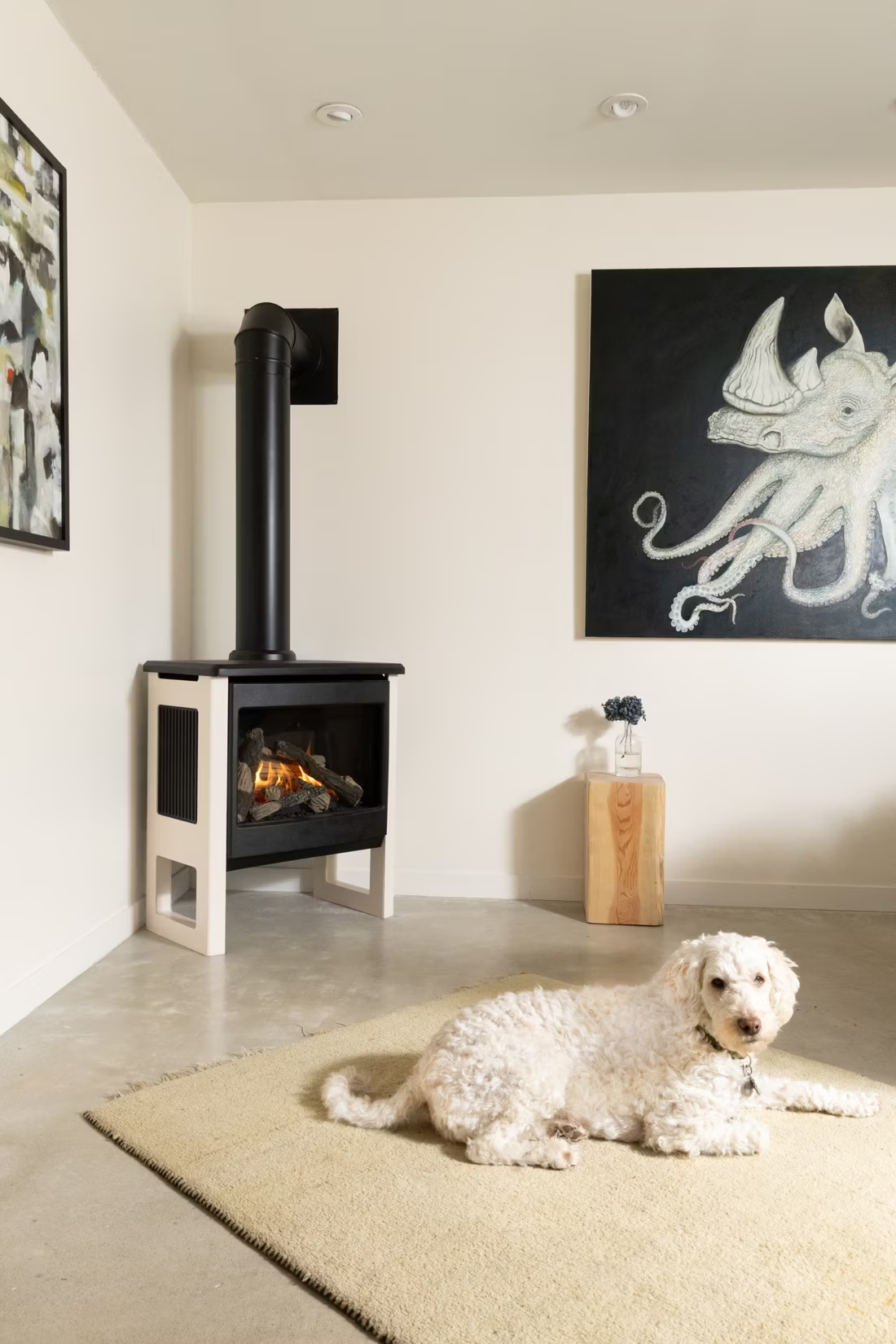
Most winters in DeWitt County stay mild, but when a Blue Norther drops temperatures fast, a gas fireplace gives Cuero and Yoakum homes instant, no-hassle heat. Find the right unit and get matched with a trusted local dealer.
Every Project Starts From One of These Five Situations
Convenient heat for a county that doesn't need much of it.
DeWitt County sits in Climate Zone 2A along the Gulf Coast plain, with an average winter low around 42 degrees and a very light winter heating load overall—a fraction of what a place like Bismarck, ND sees. Most homes here don't need a heating system running around the clock. What DeWitt County does get is sudden cold fronts: a Blue Norther can drop temperatures 30 degrees in an afternoon, and that's exactly the kind of situation where a gas fireplace earns its keep—instant heat with no warm-up lag, no wood to split, no ash to haul.
There's a quiet irony to gas heat in DeWitt County: the ground beneath Cuero and Yoakum sits on the Eagle Ford Shale, one of the most productive natural gas plays in the country, yet residential natural gas utility lines are limited to portions of the incorporated towns. Most rural DeWitt County homes run on propane, delivered by tank from regional suppliers, while in-town homes near Cuero and Yoakum may have access to piped natural gas. Either fuel works fine in a modern direct-vent fireplace—the choice mostly comes down to what's already running to your house.
Three steps. No salesperson until you're ready.
Tell us about your project
Your zip code, your situation, and the fuel you're leaning toward—or let the answers point you to one.
See what's actually available
The brands dealers within 100 miles genuinely carry—real options, never a catalog mirage.
Get your dealer & Project Guide
A trusted local dealer, plus the free Project Guide & Parts List that names every component of the job.
Frequently Asked Questions
How much does a gas fireplace installation cost in DeWitt County?
A typical gas fireplace or insert installation in DeWitt County runs roughly $3,500 to $9,000, depending on the unit, whether you're on propane or natural gas, and whether new gas line work is needed. Propane installations in rural parts of the county—Westhoff, Yorktown, the areas outside Cuero and Yoakum—sometimes run slightly higher if a new tank or longer line run is required. A straightforward direct-vent insert into an existing fireplace with gas already available at the house sits toward the lower end. Local dealers will give you a firm number after seeing your home.
Can I convert my existing wood fireplace to gas?
Yes, and it's a common upgrade for older DeWitt County homes built around a traditional masonry fireplace. A gas insert typically slides into the existing firebox, using a stainless liner run through your current chimney for venting. Given how mild winters are here—DeWitt County only has a light winter heating load overall—most homeowners aren't chasing serious heat output so much as convenience: flip a switch instead of stacking oak or mesquite. Cost runs similar to a new install, generally $3,500 to $8,000, with propane vs. natural gas access being the main cost driver.
Do I need natural gas, or can I run a fireplace on propane?
Either works, and in DeWitt County propane is actually the more common choice outside Cuero and Yoakum city limits. Piped natural gas service reaches parts of the incorporated towns, but rural DeWitt County—including most of the ranch land and outlying communities—relies on propane delivered by tank from regional suppliers. Nearly every gas fireplace on the market can be configured for propane or natural gas; your installer sets the correct orifice and regulator for whichever fuel serves your address.
Will my gas fireplace work if the power goes out?
Most will, which matters in a county that occasionally sees ice on the roads and downed lines after a hard cold front. Units with intermittent pilot ignition (IPI) run on a small battery backup that kicks in automatically when power drops, so the fireplace lights on demand just like normal. Valor fireplaces go a step further—their pilot assembly generates its own electricity through the thermocouple, so there's no battery to remember at all. After the February 2021 freeze showed how fast Texas grid power can go down, that kind of self-sufficiency is worth asking about when you're comparing units with a local dealer.
What's the difference between a gas fireplace, gas insert, and gas stove?
A gas fireplace is a fully built-in unit framed into a wall—the right call for new construction or a remodel. A gas insert drops into an existing masonry fireplace and uses your current chimney as the vent path, which is the most common upgrade for older Cuero and Yoakum homes. A gas stove is a freestanding cabinet-style unit that sits on the floor and vents through a wall or roof, often used in additions or homes without an existing fireplace opening. For most DeWitt County homeowners with a fireplace already in place, an insert is the simplest and most cost-effective path.
Do I need a permit to install a gas fireplace in DeWitt County?
It depends on where you are. Inside Cuero or Yoakum city limits, a building permit and gas line permit are typically required through the city building department, and the gas connection itself must be run or inspected by a licensed gas-fitter. In unincorporated DeWitt County, permitting requirements are lighter, but the gas line work still needs to be done by a licensed professional regardless of jurisdiction—that part isn't optional. Most local dealers coordinate the permit and gas-fitter scheduling as part of the installation so you're not chasing down separate trades.
What's the difference between vented and vent-free gas fireplaces?
Vented (direct-vent) fireplaces pull combustion air from outside and exhaust it back outside through a sealed pipe—they're the cleaner, more universally code-compliant option. Vent-free units burn fuel directly into the room without outside venting; they're legal in Texas but come with strict room-sizing rules and require an oxygen depletion sensor. Given how mild DeWitt County winters run, some homeowners lean toward vent-free for supplemental ambiance in a den or bonus room where running a vent isn't practical—but for a primary living space, direct-vent is still the safer, more recommended choice. Ask a local dealer which fits your specific room.
How often should a gas fireplace be serviced?
Once a year is standard, even in a low-heating-demand county like this one where the unit might only run a handful of weeks each winter. A technician checks the burner, pilot assembly, venting, and gas connections, and cleans the glass and interior. Infrequent use doesn't eliminate the need for a checkup—pilot components can corrode or get dusty sitting idle for months between cold fronts. Expect to pay somewhere in the $150-$250 range for an annual inspection from a qualified gas appliance technician.
Gas vs. wood—which makes more sense in DeWitt County?
Wood has deep roots here—oak, pecan, and mesquite are all common locally and mesquite in particular burns hot and long, which some ranch families still rely on for outdoor cooking and occasional indoor heat. But with such a light winter heating load overall and winter lows averaging in the low 40s, DeWitt County simply doesn't demand much heating fuel of any kind. Gas wins for most homeowners here because it's about convenience and instant ambiance during a cold front, not sustained BTU output over a long winter. If you already burn wood for cooking or tradition, there's no reason to give it up—many DeWitt County homes keep a wood option outdoors and add gas indoors for easy, on-demand warmth.
What's the difference between an insert and a zero-clearance fireplace?
An insert is a fireplace that slides into a pre-existing wood-burning fireplace—if you don't have one, there's nothing to insert it into. A zero-clearance fireplace is built into a framed wall, which makes it the answer for remodels and new construction. Simple test: existing masonry fireplace means insert; blank or framed wall means zero-clearance.
Can I put a TV above my fireplace?
Yes—with an asterisk. Fireplaces are hot and TVs don't like heat. Either put a mantel between them to deflect rising warmth, or choose a fireplace with heat-management technology that creates a cool zone on the wall above—the wall stays around 125 degrees, barely warm, while the room still gets full heat. If you like clean lines and don't want a mantel, heat management is the answer.
How much should I budget for a fireplace?
For an average home—covering the fireplace, the vent pipe, and basic installation—a budget between $3,900 and $5,500 gives you a lot of options across wood, gas, and pellet. By the time you add finish work, gas line, and electrical, the average complete installation lands between $5,000 and $12,000 all-in. In a remodel or new build, a good rule is to put about 2.5% of the total project cost toward the fireplace.
Can I install a fireplace myself?
If you're putting a fire in your house on purpose, it's best to work with an expert. Unless you're genuinely experienced in framing, gas line, vent pipe, and the national code on clearances to combustibles, have a professional do it—and ideally the same company that sells you the fireplace, so warranty, service, and liability all live under one roof.
Stove and Fireplace Dealers in DeWitt County
Listings include WhyFire partner dealers, dealers we have verified as authorized for the brands we recommend, and established local businesses that carry hearth products. Every listing shows which one it is. The ones marked Preferred run on WhyFire's software, so they can show you real pricing and book your appointment right here. No manufacturer pays for placement. How we verify dealers →
The Design Haus Of Victoria
Kitchen & Bath Showplace
Victoria Builder Supply Co Inc.
Find your gas fireplace in DeWitt County.
Tell us a bit about your home and propane or natural gas access, and we'll match you with a trusted local dealer along with a free Project Guide & Parts List for your gas fireplace project.
Find Your Fireplace →