
Every fuel type, every town in DeWitt County.
Wood, gas, pellet, and electric fireplace resources for the whole county—from Cuero and Yoakum out to Yorktown, Westhoff, and Nordheim. Pick a fuel and get matched with a local dealer who actually installs it in South Texas heat and humidity.
Every Project Starts From One of These Five Situations
Mild Gulf Coast winters, 1,275 heating degree days, and wood heat that's mostly about comfort, not survival.
DeWitt County sits in the South Texas Coastal Plain along the Guadalupe River, with ranch and farm land studded with oak, pecan, and mesquite. Winter lows average around 42°F and the county logs just 1,275 heating degree days a year—a fraction of what a place like Fargo, North Dakota racks up each winter. That means a fireplace here is doing a very different job than it would further north: most households burn wood for ambiance, weekend fires, and the handful of genuine cold snaps each January and February rather than as their primary heat source.
With no non-attainment issues or winter inversion concerns in DeWitt County, there's no seasonal burn curtailment to plan around—an EPA-certified wood stove or insert can run whenever a homeowner wants it to. Oak and pecan are the go-to firewood here for a clean, long-burning fire, while mesquite is popular but burns hot and fast, better suited to shorter evening fires than overnight coals. Pellet stoves are less common in a climate this mild, but Forest Energy and Lignetics pellets are both available regionally for the households that want the convenience. This hub rolls up hearth retailers, service techs, and fuel suppliers across the county, from Cuero and Yoakum to the smaller communities like Westhoff, Meyersville, and Nordheim. Pick your fuel below for local dealers, install costs, and recommendations sized to a South Texas winter.
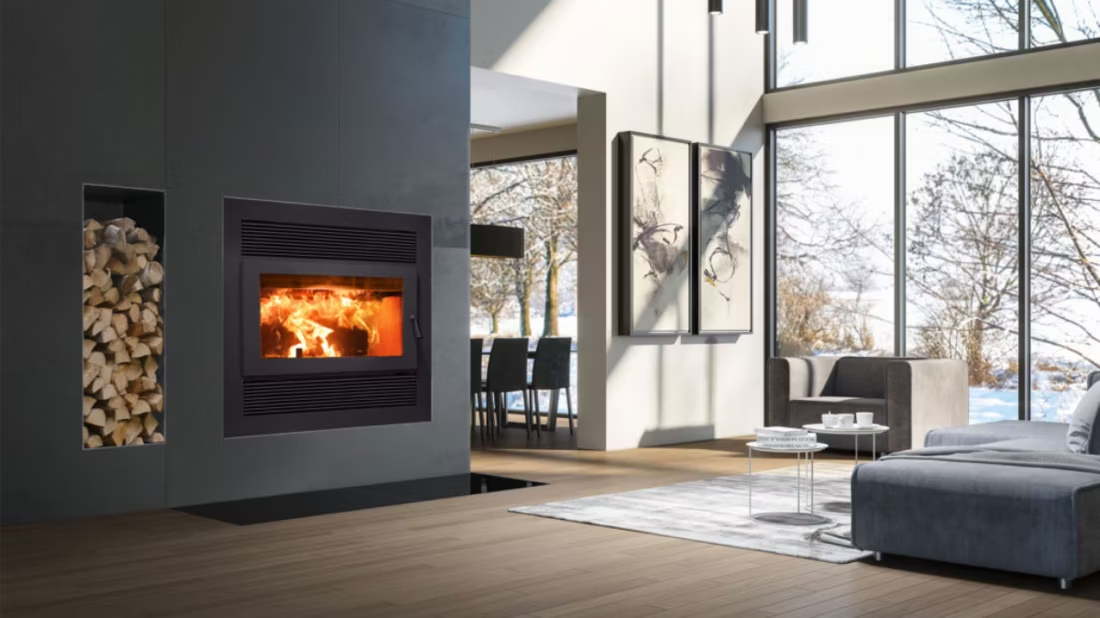
Four fuels. One honest answer for DeWitt County.
Three steps. No salesperson until you're ready.
Tell us about your project
Your zip code, your situation, and the fuel you're leaning toward—or let the answers point you to one.
See what's actually available
The brands dealers within 100 miles genuinely carry—real options, never a catalog mirage.
Get your dealer & Project Guide
A trusted local dealer, plus the free Project Guide & Parts List that names every component of the job.
Frequently Asked Questions
Which fireplace fuel makes the most sense in DeWitt County?
With only 1,275 heating degree days a year and winter lows averaging around 42°F, no fuel here is doing heavy lifting as a primary heat source the way it would in a colder state—this is largely a comfort and ambiance decision. Wood remains popular because oak and pecan are locally available and burn clean, and a wood-burning fireplace or insert gets real use during the county's occasional hard freezes. Gas is the low-maintenance choice for homeowners who want instant flame without hauling firewood, with propane filling in for rural properties outside natural gas service. Pellet stoves have a smaller following given the mild climate, though Forest Energy and Lignetics pellets are both distributed regionally for the households that want them. Electric fireplaces do well here specifically because they don't need to double as a serious heat source—they're an easy fit for a den, bedroom, or a mantel upgrade in an already-comfortable home.
Do I need a permit to install a fireplace or wood stove in DeWitt County?
Generally yes for anything involving new venting, a gas line, or structural chimney work—but DeWitt County doesn't carry the extra air-quality permitting layer you'd see in a non-attainment area, since there are no winter inversion or smoke-curtailment concerns here. If you're inside Cuero, Yoakum, or Yorktown city limits, check with your city's building department; outside city limits, the county building office handles permitting. Gas installs need a licensed gas fitter for the line connection regardless of location. Electric fireplace installs typically skip the permit process unless you're adding a dedicated circuit for a built-in unit. Most local hearth retailers handle this paperwork as part of the install.
Are there burn bans or seasonal restrictions on wood stoves in DeWitt County?
No—DeWitt County has no non-attainment designation and no winter inversion pattern that would trigger curtailment days, unlike some Western basin counties where cold air traps smoke against the ground. That means an EPA-certified wood stove or insert here can burn whenever the homeowner wants, cold front or not. The one restriction worth knowing about is local outdoor burning rules for yard debris, which are separate from indoor wood stove use and typically handled through the county fire marshal's office.
What firewood works best for a fireplace in DeWitt County?
Oak and pecan are the standard choices—both are widely available locally, split well, and burn long and clean, which matters if you're building a fire that needs to hold through a cold front overnight. Mesquite is abundant in DeWitt County too and burns hot with a distinctive aroma, but it burns fast and throws more sparks, so it's better suited to a shorter evening fire in an open hearth than an overnight burn in a closed stove. Whichever species you burn, DeWitt County's mild, humid climate means firewood needs a full season of covered, off-ground seasoning to avoid a smoky, inefficient fire—buying green wood in October and burning it in November is a common mistake.
What does a fireplace installation typically cost in DeWitt County?
Costs run similar to national averages but on the lower end, since most homes here aren't retrofitting a full heating-capacity system. Wood stove or insert installs typically run $3,500–$7,500 depending on chimney condition. Gas fireplaces, inserts, and stoves run roughly $4,000–$9,000, with the range depending on whether propane tank setup or a gas-line extension is needed. Pellet stove installs generally land at $4,000–$6,500. Electric fireplaces are the most affordable option—$200–$2,500 for the unit itself, plus modest labor unless you're hardwiring a built-in. The county + fuel pages above break these numbers down further with local retailer pricing.
How do I size a fireplace for a DeWitt County home without over-buying?
This is the most common mistake I see in mild climates like DeWitt County: buying a stove or insert sized for a Midwest winter when your home only needs supplemental heat for a few cold fronts a year. A unit rated well above your square footage will run too hot, cycle constantly, or force you to keep the damper mostly closed just to keep the room comfortable. A local retailer who's installed units across Cuero, Yoakum, and the surrounding towns can size a unit to your actual square footage and insulation rather than defaulting to a big unit—it's a big part of what a trusted local dealer gets right that a big-box sizing chart won't.
Wood, gas, pellet, or electric—how do I choose?
Match the fuel to your life, not the other way around. Wood: lowest fuel cost and total power-outage independence, but you're hauling and stacking. Gas: press a button, set a thermostat, no maintenance to speak of. Pellet: wood economics with automatic feeding, in exchange for weekly cleaning and a need for electricity. Electric: plugs in anywhere with honest supplemental heat. Nobody regrets the fuel that fits how they actually live.
How much should I budget for a fireplace?
For an average home—covering the fireplace, the vent pipe, and basic installation—a budget between $3,900 and $5,500 gives you a lot of options across wood, gas, and pellet. By the time you add finish work, gas line, and electrical, the average complete installation lands between $5,000 and $12,000 all-in. In a remodel or new build, a good rule is to put about 2.5% of the total project cost toward the fireplace.
Can I install a fireplace myself?
If you're putting a fire in your house on purpose, it's best to work with an expert. Unless you're genuinely experienced in framing, gas line, vent pipe, and the national code on clearances to combustibles, have a professional do it—and ideally the same company that sells you the fireplace, so warranty, service, and liability all live under one roof.
I know I want a fireplace—where do I actually start?
Do two things today: snap a photo of the wall or fireplace you want to transform, and take a tape measure to the space—width, height, depth. Those two artifacts answer most of a hearth professional's first questions. Then settle fuel (wood, gas, pellet, or electric) and set a realistic budget: $3,900–$5,500 covers fireplace, vent, and basic install for most homes.
Stove and Fireplace Dealers in DeWitt County
Listings include WhyFire partner dealers, dealers we have verified as authorized for the brands we recommend, and established local businesses that carry hearth products. Every listing shows which one it is. The ones marked Preferred run on WhyFire's software, so they can show you real pricing and book your appointment right here. No manufacturer pays for placement. How we verify dealers →
The Design Haus Of Victoria
Kitchen & Bath Showplace
Victoria Builder Supply Co Inc.
Get matched with a local DeWitt County dealer.
Pick your fuel below and we'll put together a free Project Guide & Parts List—the right unit, the vent kit it needs, and the local dealer we recommend for your project.
Find Your Fireplace →