
Find the right electric fireplace for your DeWitt County home.
Mild Gulf Coast Plains winters mean DeWitt County homes rarely need serious heat output—electric fireplaces deliver ambiance and supplemental warmth without a chimney, gas line, or wood pile. Find the right unit and connect with a trusted local dealer.
Every Project Starts From One of These Five Situations
Ambiance first, heat second—and that's fine here.
DeWitt County sits in USDA climate zone 2A with an average winter low near 42°F and just 1,275 heating degree days a year—a fraction of what a place like Bismarck, ND or Duluth, MN racks up in a single January. Real heating load in Cuero, Yorktown, and Westhoff homes is minor, and it's concentrated in short cold snaps rather than a long, punishing season. That makes electric fireplaces a genuinely practical fit rather than a compromise: no chimney, no gas line, no cutting or hauling oak, pecan, or mesquite, and no seasonal air quality concerns (DeWitt County has none of the winter inversion or non-attainment issues that push some Texas Hill Country counties toward stricter burn rules).
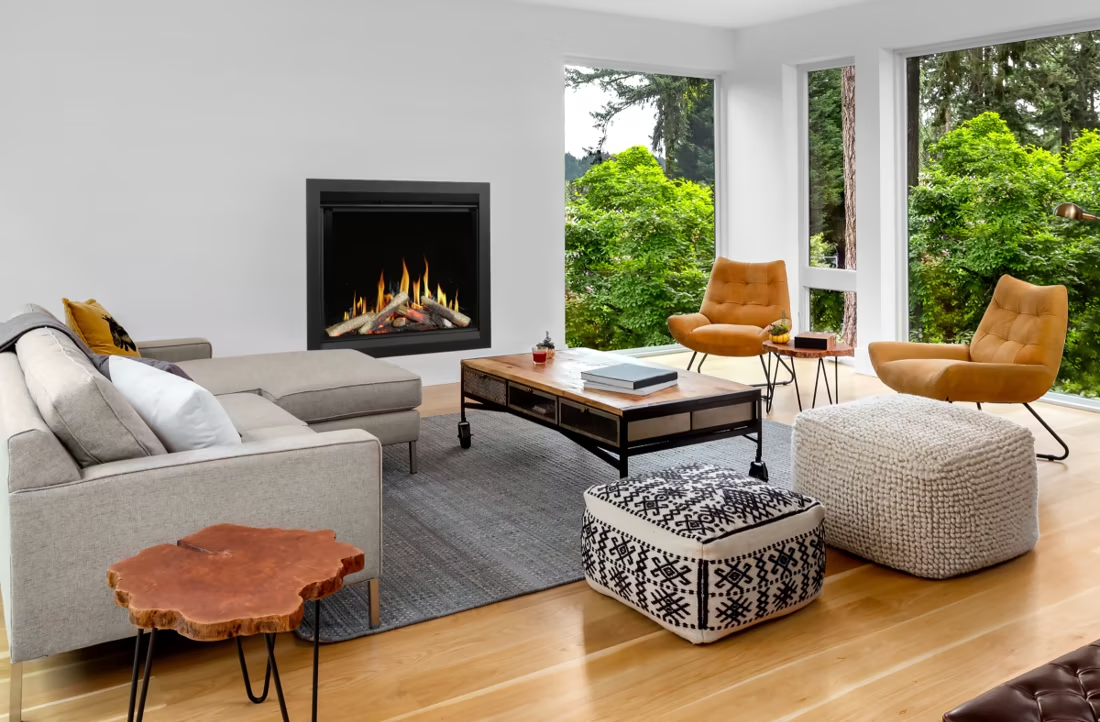
For most DeWitt County homeowners, an electric fireplace or insert is about the look and feel of a fire—flickering flame effects, a focal point in a living room or bedroom—with the option of 1,500-watt supplemental heat for the handful of nights each winter when the temperature actually dips. Because there's no venting requirement, installation is far simpler than wood or gas: many units plug into a standard 120V outlet, and even a built-in insert typically just needs a dedicated circuit run by an electrician rather than a chimney or flue. That simplicity is exactly why electric has become the default choice for secondary rooms, additions, and older homes without existing masonry fireplaces throughout the county.
Three steps. No salesperson until you're ready.
Tell us about your project
Your zip code, your situation, and the fuel you're leaning toward—or let the answers point you to one.
See what's actually available
The brands dealers within 100 miles genuinely carry—real options, never a catalog mirage.
Get your dealer & Project Guide
A trusted local dealer, plus the free Project Guide & Parts List that names every component of the job.
Frequently Asked Questions
How much does an electric fireplace installation cost in DeWitt County?
Plug-in electric fireplaces and freestanding units in DeWitt County typically run $400 to $1,200 installed, and that's often just the cost of the unit plus mounting—no electrician required if it uses a standard outlet. Built-in electric inserts or wall units that need a dedicated 120V or 240V circuit run toward the higher end of that range once a licensed electrician is involved. Compare that to a wood stove ($4,500-$9,000 range in most Texas counties once chimney work is factored in) and it's clear why electric is the low-friction choice for homeowners in Cuero or Yorktown who want fireplace ambiance without a construction project.
Is an electric fireplace really enough heat for a DeWitt County home?
For most of the county, yes—DeWitt County averages only about 1,275 heating degree days a year, meaning the actual heating season is short and mild by any national standard. A typical 1,500-watt electric insert or stove puts out roughly 5,000 BTU, which comfortably takes the chill off a single room during the occasional 30s-and-40s overnight low. What it won't do is replace central heat during a rare hard freeze or ice event. Most DeWitt County homeowners use electric fireplaces as supplemental or ambiance heat alongside existing central HVAC, not as the primary heat source—which lines up well with how mild this climate actually runs.
Do I need a permit to install an electric fireplace in DeWitt County?
Plug-in units generally don't require a permit since there's no venting, gas line, or structural work involved. If you're installing a built-in electric insert that requires new electrical wiring or a dedicated circuit, that electrical work typically does need a permit and should be pulled by a licensed electrician—check with your specific municipality (Cuero, Yorktown, or Westhoff) or DeWitt County directly if you're in an unincorporated area. This is one of the simplest fireplace projects from a permitting standpoint, which is part of why local dealers can often turn around installs quickly compared to wood or gas projects that require building department sign-off.
What's the difference between an electric fireplace, insert, and stove?
An electric fireplace is typically a built-in or wall-mounted unit designed as the visual centerpiece of a room. An electric insert is sized to slide into an existing masonry fireplace opening—a common retrofit for older DeWitt County homes that have a fireplace but no interest in burning wood or running a gas line. An electric stove is a freestanding unit styled like a traditional wood stove, often used in a room without an existing fireplace at all. All three run on standard household power and use the same basic flame-effect and heater technology; the choice mostly comes down to what opening (if any) you're working with and the look you want.
Are electric fireplaces a good fit for a hot, humid climate like DeWitt County's?
Yes, arguably a better fit than in colder regions. In a Gulf Coast Plains climate with mild winters and long, humid summers, homeowners want fireplace ambiance for maybe a dozen nights a year, not a heating appliance running around the clock. Electric units produce zero combustion byproducts, add no moisture to the air the way some gas units can, and don't require any chimney maintenance that could become a humidity or pest entry point during the long Texas summer. It's a low-maintenance option that matches how little actual heat DeWitt County homes need.
Can I put an electric fireplace anywhere in my house?
Close to it—that's the main advantage over wood or gas. Because there's no venting requirement, electric fireplaces can go in interior rooms, bedrooms, apartments, and additions where a chimney or gas line would be impossible or prohibitively expensive. The main constraint is electrical: a plug-in unit needs a nearby outlet on a circuit that can handle the heater load, and a built-in insert needs an electrician to run a dedicated line if the existing wiring isn't sufficient. A local dealer can walk your space and tell you within a few minutes whether your existing outlets will work or whether you'll need an electrician involved.
How do electric fireplace running costs compare to wood or propane in DeWitt County?
Electric fireplaces are inexpensive to run precisely because DeWitt County's heating season is so short—a 1,500-watt unit run a few hours a night on cold snaps adds a modest amount to a monthly electric bill, often less than $10-$20 in a typical winter month of occasional use. Wood requires either cutting your own oak, pecan, or mesquite or buying cordwood, plus chimney maintenance. Propane (the common alternative to natural gas in much of rural DeWitt County) has upfront tank costs and fuel delivery. For a climate with only about 1,275 heating degree days, the low capital cost and near-zero maintenance of electric often wins out for homeowners who just want occasional supplemental warmth.
Do electric fireplaces work during a power outage?
No—this is the one real tradeoff. Electric fireplaces require power to run both the heater and the flame-effect display, so during an outage they go dark like everything else. In DeWitt County, outages are typically short and tied to summer storms rather than prolonged winter events, so this is less of a concern here than in areas with severe ice storms. If backup heat during outages is a priority for your household, a wood stove is the fuel type that keeps working when the grid doesn't—something worth discussing with a local dealer if you're weighing options beyond ambiance.
Electric vs. gas—which is right for my DeWitt County home?
Gas fireplaces offer more real heat output and the option to run during a power outage with a battery-backup ignition system, but they require either natural gas service or a propane tank, plus venting and gas line work—a bigger project and bigger cost. Electric fireplaces skip all of that: no gas line, no venting, plug in and go (or a simple dedicated circuit for a built-in). Given DeWitt County's mild 1,275-HDD climate, most homeowners here are choosing fireplace ambiance over serious supplemental heat, which tips the decision toward electric for simplicity and lower upfront cost. Homes that want a stronger heat option or a fireplace that keeps working in a power outage should have a local dealer walk through gas alternatives too.
Can I put a TV above my fireplace?
Yes—with an asterisk. Fireplaces are hot and TVs don't like heat. Either put a mantel between them to deflect rising warmth, or choose a fireplace with heat-management technology that creates a cool zone on the wall above—the wall stays around 125 degrees, barely warm, while the room still gets full heat. If you like clean lines and don't want a mantel, heat management is the answer.
Do electric fireplaces actually produce heat?
Yes—most put out around 4,800–5,000 BTUs from a standard outlet, which comfortably warms a bedroom, office, or den as a comfort-zone heater. What they won't do is carry a whole house the way wood, gas, or pellet can. Think of electric as ambiance-first with honest supplemental heat: flames on with no heat in July, flames plus warmth in January.
Should the dealer who sells my fireplace also install it?
Ideally, yes. A fireplace project involves vent pipe, gas line, electrical, and often tile or stone. Hire three or four separate trades and you own the liability and the game of telephone between them. One company selling and installing means one accountable party, start to finish—ask about factory training, on-time completion records, and what happens if an inspection fails.
What is an in-home preview and do I need one?
It's a visit where a hearth professional measures your space, confirms the model you picked actually works in your home, and walks the specs—framing, gas line, venting, finish work—before anything is ordered. Some details you just can't know until you see the house. Never make a down payment without one; it's the single most-skipped step that burns buyers.
Stove and Fireplace Dealers in DeWitt County
Listings include WhyFire partner dealers, dealers we have verified as authorized for the brands we recommend, and established local businesses that carry hearth products. Every listing shows which one it is. The ones marked Preferred run on WhyFire's software, so they can show you real pricing and book your appointment right here. No manufacturer pays for placement. How we verify dealers →
The Design Haus Of Victoria
Kitchen & Bath Showplace
Victoria Builder Supply Co Inc.
Get your DeWitt County electric fireplace Project Guide.
Tell us a bit about your home and we'll match you with a trusted local dealer and send you a free Project Guide & Parts List for your electric fireplace project—sized right for DeWitt County's mild winters.
Find Your Fireplace →