
Keep Your Family Warm and Safe—No Matter What
With winter lows averaging 44°F, most Del Rio homes don't need wood heat to get through the season. But for ranch properties, ambiance, and the occasional hard freeze, a wood fireplace still has a place here—done right.
Every Project Starts From One of These Five Situations
Del Rio's climate rarely calls for wood heat.
Del Rio sits along the Rio Grande in Val Verde County at just 983 feet elevation, in climate zone 2B—hot and semi-arid, with winter lows averaging a mild 44°F. The city logs roughly 970 heating degree days a year. For comparison, Duluth, Minnesota racks up closer to 10,000. That gap is the whole story: most Del Rio winters simply don't produce enough cold, sustained days to make wood the go-to heat source the way it is farther north.
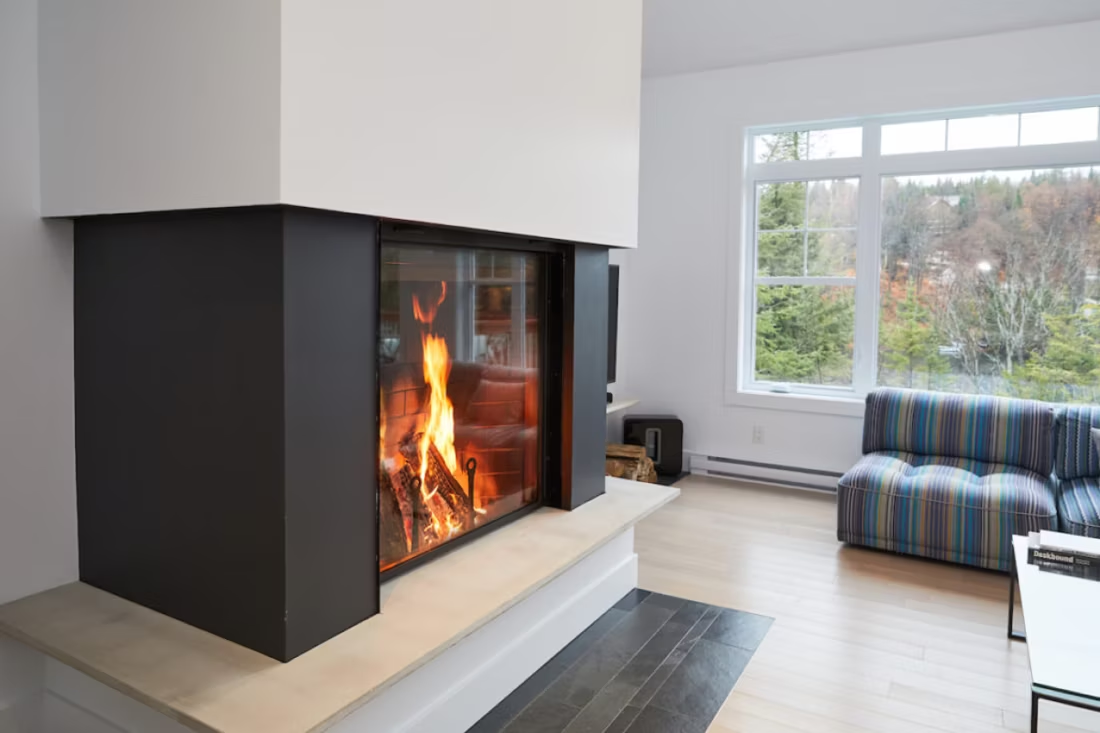
That said, wood isn't off the table. Del Rio and the surrounding ranch country have plenty of oak, pecan, and mesquite on hand, and some homeowners still want a real wood fire—for the look of a historic ranch house, for backup heat during rare hard freezes like February 2021, or simply because they prefer flame over gas. Air quality here isn't a constraint (Val Verde County has no non-attainment designation and no winter inversion issues), so if you do want a wood-burning fireplace or stove, it's a matter of realistic expectations and finding a dealer who won't oversell you on a use case Del Rio's climate doesn't really demand.
Three steps. No salesperson until you're ready.
Tell us about your project
Your zip code, your situation, and the fuel you're leaning toward—or let the answers point you to one.
See what's actually available
The brands dealers within 100 miles genuinely carry—real options, never a catalog mirage.
Get your dealer & Project Guide
A trusted local dealer, plus the free Project Guide & Parts List that names every component of the job.
Frequently Asked Questions
Does a wood-burning fireplace actually make sense in Del Rio?
For most Del Rio homes, no—not as a primary heat source. With winter lows averaging 44°F and only about 970 heating degree days a year, the furnace or heat pump most homes already run does the job on the handful of genuinely cold nights. Where wood still makes sense: ranch properties outside city limits that want backup heat for hard freezes, older homes with an existing masonry fireplace someone wants to actually use, or homeowners who simply want the ambiance of a real fire on the occasional cool December evening. A local dealer can tell you honestly whether your situation is one of those, or whether a gas or electric unit will serve you better.
How much does a wood stove or fireplace installation cost in Del Rio?
Because wood-burning installs are uncommon in this part of Texas, there isn't a deep local pricing history the way there is in colder markets—but a freestanding wood stove with Class A chimney venting typically runs $2,500-$6,000 installed nationally, and a masonry fireplace retrofit or insert can run higher depending on chimney condition. Expect a Del Rio installer to want an in-home look before quoting, partly because so few of these go in each year that every job gets treated as custom. If cost matters more than the wood-fire experience specifically, ask the same dealer for a gas or electric comparison quote—both are far more common installs here.
What firewood works best if I want a wood-burning fireplace here?
Oak and pecan are the better choices for a fireplace or stove—they burn steady, produce good heat, and don't throw sparks the way mesquite can. Mesquite is everywhere in Val Verde County ranch country and burns hot, but it pops and spits embers more than oak or pecan, which matters if you're running an open masonry fireplace rather than a closed stove with a glass door. Plenty of local ranchers already have mesquite on hand from land clearing, so it's often the cheapest option even if it's not the first choice for indoor burning.
Where do I get firewood in Del Rio?
There's no national forest cutting-permit system near Del Rio the way there is in mountain West markets—Val Verde County is almost entirely private ranchland. Most firewood here comes from local tree services doing storm cleanup or land clearing, ranch owners thinning mesquite and oak, or informal sellers along the highway selling by the truckload rather than the cord. If you're on a rural property, cutting your own from mesquite thinning is common and often free with landowner permission. In-town, expect to buy split, seasoned oak or pecan by the truckload rather than a strict cord measurement.
Do I need a permit to install a wood stove or fireplace in Del Rio?
Yes—new wood-burning installations, whether a freestanding stove or an insert into an existing masonry fireplace, need a building permit through the City of Del Rio (or Val Verde County if you're outside city limits). Because Del Rio has no non-attainment designation, you won't run into the EPA curtailment or emissions-zone rules that some Western cities impose—the permit here is mainly about safe clearances, proper venting, and code-compliant chimney work rather than air-quality restrictions. Most installers fold the permit into the job.
Are there burn bans or restrictions on wood burning in Del Rio?
There's no ongoing air-quality restriction on indoor wood-burning appliances in Del Rio—Val Verde County has no winter inversion problem and no non-attainment status. That said, this part of Texas is drought-prone, and the county does periodically issue outdoor burn bans during dry stretches that restrict brush burning and open fires. Those bans typically don't apply to a properly vented indoor wood stove or fireplace, but it's worth checking current Val Verde County burn ban status if you're also planning to burn brush or debris outdoors while sourcing firewood.
Wood vs. electric fireplace—which fits a Del Rio home better?
For most Del Rio homes, an electric fireplace is the more practical match to the climate. With heating needs this modest, homeowners often want the look and glow of a fire without adding a second heating system or a chimney—and electric units install in a fraction of the time and cost of a wood setup. Running one costs pennies per hour at local rates (AEP Texas Central customers pay around 18.5 cents per kWh; Rio Grande Electric Cooperative territory runs closer to 13.5 cents). Wood still wins if you specifically want a real fire, self-sufficient backup heat for a rural property, or you already have a fireplace you want to bring back into use.
I have a ranch property outside Del Rio—does wood heat make more sense there?
Often, yes. Rural Val Verde County properties served by Rio Grande Electric Cooperative or Southwest Texas Electric Cooperative can see longer outage recovery times during severe weather than in-town customers—the February 2021 freeze made that clear across this part of Texas. A wood stove gives a ranch house heat that doesn't depend on the grid, and mesquite or oak for fuel is often already on the property. If that's your situation, it's a genuinely different calculation than a standard in-town home, and worth discussing directly with a local installer who works rural properties.
How often does a wood fireplace need inspection if I'll only use it occasionally?
Even light, occasional use warrants an annual check before burning season—actually more important here, not less, since a fireplace or chimney that sits unused for most of the year in Del Rio's heat is a likely spot for wasp nests, bird nests, or debris to build up. A CSIA-style inspection before the first cool snap of the season catches blockages and checks the flue and seals. Given how infrequently these get used locally, don't skip the pre-season check just because you didn't burn much the winter before.
Why won't my new wood stove get going like my old one?
New wood stoves are 70%+ efficient, so far less heat goes up the flue—which also means less draft to get a fire established. The rule: build a genuinely hot fire for about 45 minutes before you choke it down. Skip that and you get smoke in the room, creosote in the chimney, and a fire that never takes off. Most performance complaints trace straight back to this.
Why is a fireplace insert so efficient?
An insert does two things: it seals the chimney completely, so you stop losing air you already paid to heat, and it radiates warmth into the room through the firebox and glass. Most add a heat-exchange fan that pulls cool room air underneath, wraps it around the hot firebox, and pushes it back out warm. Your home is more efficient before you've even lit the first fire.
Does a fireplace add value to my home?
On average, a fireplace adds back to the home about the same amount you spent installing it. Add the monthly savings from heating the rooms you actually use instead of the whole house—often hundreds of dollars a year—and the value case is strong before you even count what a fire does for how your family uses the room.
Can a fireplace actually lower my heating bill?
Yes—by creating a comfort zone. A furnace heats every square foot of the house just to warm the one room you're in; a gas fireplace on low burns roughly a sixth of the gas a typical furnace does. Set the furnace around 55–60 degrees as a baseline, then heat the rooms your family actually uses. Families who heat this way commonly save $20–$60 a month.
See what's realistic for a wood fireplace in Del Rio.
Tell us about your home or ranch property and we'll give you an honest read on whether wood makes sense—plus match you with a trusted local dealer and a free Project Guide & Parts List covering the exact parts, venting, and installation plan for your project.
Find Your Fireplace →