
Pellet stoves are rare in Corpus Christi, but not impossible.
With only 763 heating degree days a year and winter lows averaging 48°F, most Corpus Christi homes never need a pellet stove for warmth. A few homeowners still want one—for ambiance, for a cool snap, or for a weekend place up the coast. We'll tell you honestly whether it fits, then match you with a local dealer who can source one.
Every Project Starts From One of These Five Situations
Corpus Christi rarely needs a pellet stove.
Corpus Christi sits at 25 feet of elevation on the Gulf Coast in climate zone 2A, where the average winter low is 48°F and the city logs roughly 763 heating degree days a year. For comparison, a place like International Falls, Minnesota racks up more than 10,000—the difference isn't a matter of degree, it's a different category of climate entirely. Local oak, pecan, and mesquite are prized around here, but almost exclusively for the smoker, not the hearth. There's simply no sustained heating season to justify a pellet appliance as anyone's primary heat source.
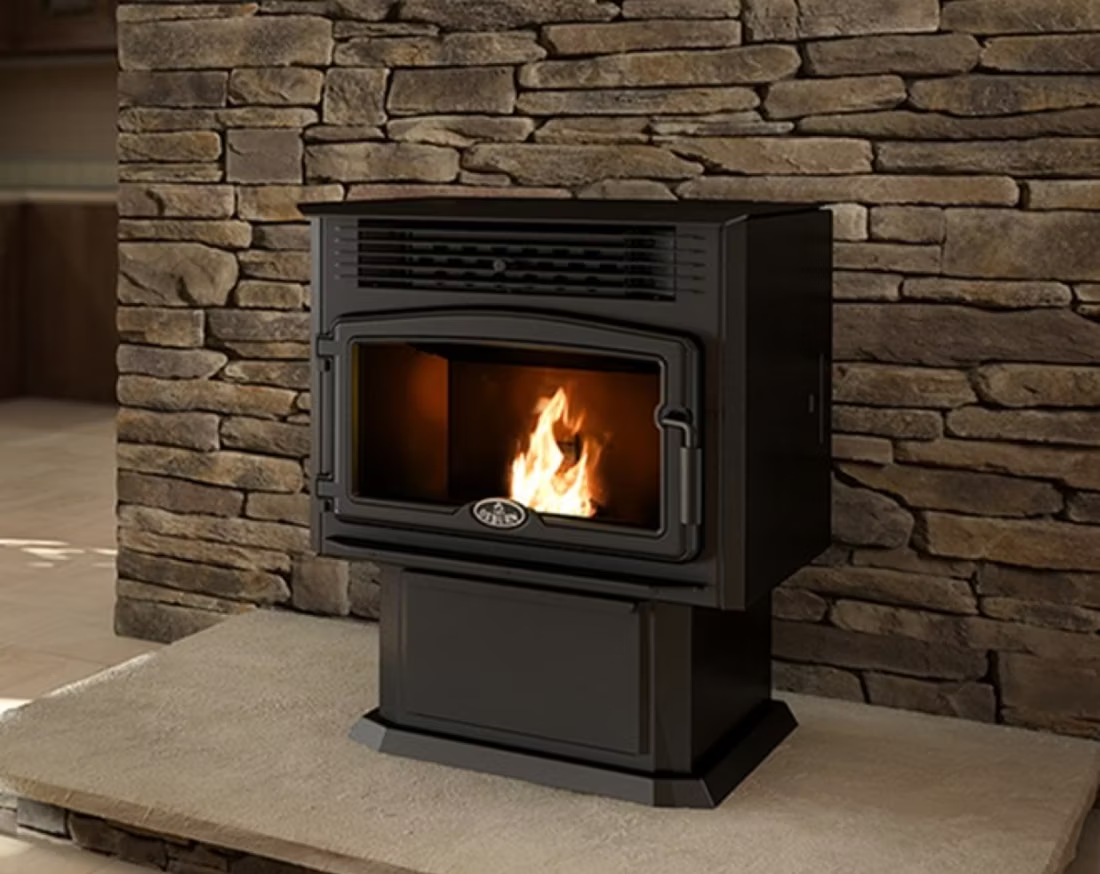
That said, the February 2021 freeze reminded a lot of Gulf Coast homeowners that the grid isn't always reliable and that a few nights a year can get genuinely cold. A handful of Corpus Christi homeowners install a small pellet stove for those occasions, or for the visual warmth of a real flame in a den or sunroom. If that's you, know going in that pellet appliances need a continuous electrical supply to run the auger and combustion blower—during a hurricane-driven outage, a pellet stove goes dark right along with everything else. Gas and electric units, which are standard in this market, are usually the more practical fit; a pellet stove here is a deliberate, minority choice rather than the default.
Three steps. No salesperson until you're ready.
Tell us about your project
Your zip code, your situation, and the fuel you're leaning toward—or let the answers point you to one.
See what's actually available
The brands dealers within 100 miles genuinely carry—real options, never a catalog mirage.
Get your dealer & Project Guide
A trusted local dealer, plus the free Project Guide & Parts List that names every component of the job.
Frequently Asked Questions
How much does a pellet stove installation cost in Corpus Christi?
Nationally, a pellet stove and installation typically runs $3,000 to $6,000 depending on the unit and venting path, but Corpus Christi doesn't have the installer density that colder markets do—most hearth dealers here focus their floor space on gas and electric units and special-order pellet stoves when a customer asks. Expect to get one or two quotes rather than five, and budget on the higher end if the installer needs to bring in a technician from outside Nueces County for the setup and first-burn commissioning.
Is a pellet stove even worth it in a climate like Corpus Christi's?
For most homes, no—with only 763 heating degree days a year, you'd be running a pellet hopper and auger system for maybe a handful of nights each winter. That math doesn't pencil out the way it does in a place with a real heating season. Where it can make sense is a sunroom, a converted garage, or a coastal weekend property where you want supplemental warmth and don't mind the equipment sitting idle most of the year. If your goal is year-round ambiance rather than heat, an electric or gas unit will usually serve you better and cost less to run.
Where can I buy pellets in Corpus Christi?
Regional pellet brands like Forest Energy and Lignetics are distributed through Texas hearth and hardware retailers, but because demand along the Gulf Coast is thin, don't expect a Corpus Christi big-box store to stock pallets of bags year-round the way a store in a cold-winter state would. Most local owners either special-order a pallet through their installer once a year or pick up bags during the occasional cold-weather rush. Pellets are also sensitive to Gulf humidity—buy bagged product, not loose, and store it off the garage floor in a sealed container to keep pellets from swelling and clogging the auger.
Will a pellet stove work during a hurricane power outage?
No—this is the biggest tradeoff for Corpus Christi buyers. A pellet stove's auger, igniter, and combustion blower all run on household electricity, so when the power goes out in a tropical storm or hurricane, the stove stops working exactly when you might want it most. If backup heat during outages is a real priority for your household, a vented gas unit with battery-backed ignition is a better match for this coastline than a pellet appliance.
Do I need a permit to install a pellet stove in Corpus Christi?
Yes—a solid-fuel appliance installation typically requires a mechanical or building permit through the City of Corpus Christi's permitting process (or Nueces County if you're outside city limits), covering venting, clearances to combustibles, and hearth pad requirements. Most installers who handle pellet units in this market will pull the permit as part of the job, since it's an uncommon enough project that self-permitting can trip up a homeowner who isn't familiar with the local code cycle.
What size pellet stove do I actually need?
Smaller than you'd think. Because almost no Corpus Christi home is heating an entire house with a pellet stove, most local installs are compact units sized for a single room—a den, a sunroom, or an open living area of 500 to 1,200 square feet. There's little reason to size up to a whole-home unit here the way you would in a colder climate; a modest stove that can take the edge off during a January cold snap and look good doing it is the more sensible choice for this market.
Does homeowners insurance treat a pellet stove differently on the Gulf Coast?
Some insurers ask about any solid-fuel appliance at renewal, and a few want proof of a code-compliant install and permit sign-off before covering it. On top of that, Gulf Coast policies often carry wind and hail riders that matter for any roof penetration—including a pellet stove's vent termination. Have your installer document the vent cap and roof flashing method, and keep the permit and inspection paperwork on file in case your carrier asks.
Pellet stove or electric fireplace—which makes more sense here?
For most Corpus Christi homes, electric wins. An electric fireplace needs no venting, no permit in most jurisdictions, no fuel storage, and costs a fraction to install—reasonable given how little actual heating this climate demands. A pellet stove offers a real flame and genuine radiant heat, which some homeowners want regardless of the math, but it comes with hopper loading, ash cleanup, and an ongoing fuel supply chain that's thinner here than in colder states. If you want warmth for the rare cold night and ambiance the rest of the year, electric covers both with far less upkeep.
How much maintenance does a pellet stove need in a humid coastal climate?
More than you'd expect from the appliance alone—the bigger issue is pellet storage. Gulf Coast humidity causes bagged pellets to absorb moisture and swell, which leads to auger jams and poor combustion if they're not kept sealed and dry. Beyond that, plan on weekly ash removal during any period of use, an annual professional cleaning of the burn pot, exhaust fan, and venting, and a check of door gaskets before each cold-weather season, since a unit that sits idle most of the year in salt air can develop gasket wear faster than one running daily in a colder climate.
Why is my open fireplace making my house colder?
Open fireplaces suck—literally. As the fire burns, it consumes air your furnace already paid to heat and pulls it out through the chimney, so the house is actually colder after the fire goes out than before you lit it. An insert fixes this: it seals the chimney, puts fixed glass across the front, and turns that hole in your house into a real heat source.
Why is a fireplace insert so efficient?
An insert does two things: it seals the chimney completely, so you stop losing air you already paid to heat, and it radiates warmth into the room through the firebox and glass. Most add a heat-exchange fan that pulls cool room air underneath, wraps it around the hot firebox, and pushes it back out warm. Your home is more efficient before you've even lit the first fire.
Can I install a fireplace myself?
If you're putting a fire in your house on purpose, it's best to work with an expert. Unless you're genuinely experienced in framing, gas line, vent pipe, and the national code on clearances to combustibles, have a professional do it—and ideally the same company that sells you the fireplace, so warranty, service, and liability all live under one roof.
Can a fireplace actually lower my heating bill?
Yes—by creating a comfort zone. A furnace heats every square foot of the house just to warm the one room you're in; a gas fireplace on low burns roughly a sixth of the gas a typical furnace does. Set the furnace around 55–60 degrees as a baseline, then heat the rooms your family actually uses. Families who heat this way commonly save $20–$60 a month.
Nearby Dealers
Hearth shops serving Corpus Christi and the surrounding area. Every listing shows whether it is a WhyFire partner, a dealer we have verified as authorized for the brands we recommend, or a local business carrying hearth products. No manufacturer pays for placement. How we verify dealers →
C.c. Chimney
Martini Brick
Kitchen & Bath Showplace
The Design Haus Of Victoria
Victoria Builder Supply Co Inc.
Pellet Brands Stocked Around Corpus Christi
Manufacturers will point you to the nearest stocking dealer.
See what's possible for pellet heat in Corpus Christi.
Tell us about your home and how you'd actually use a pellet stove, and we'll put together a free Project Guide & Parts List—the right unit, the vent kit it needs, and a local dealer who can source and install it, even in a market where pellet appliances aren't the norm.
Find Your Fireplace →