
Add a Gas Fireplace That Works Even When the Grid Doesn't.
Corpus Christi doesn't need much heat, but it needs reliable heat when the Gulf Coast grid goes down. Find the right gas fireplace and connect with a trusted local dealer.
Every Project Starts From One of These Five Situations
Built for ambiance, ready for the next outage.
Corpus Christi sits at just 25 feet above sea level on the Gulf Coast, in climate zone 2A, where the average winter low hovers around 48 degrees and the city logs only about 763 heating degree days a year. Compare that to a place like Duluth, Minnesota, which racks up over 9,000—and it's clear that nobody in Corpus Christi is heating a home through a hard winter. Wood stoves and pellet stoves are essentially non-factors here; there's no meaningful cutting season, no cordwood culture, and no real heating need to justify either. Gas is a different story, because it delivers something Corpus Christi genuinely wants: instant ambiance in a mild-winter home, plus dependable heat during the rare cold snap or grid outage.
Natural gas service reaches most of incorporated Corpus Christi through Texas Gas Service, covering neighborhoods from downtown (78401, 78404) out through the Southside (78412, 78413). Outside the service footprint—including parts of Padre Island (78418) and unincorporated Nueces County—propane is the standard fallback, supplied by regional propane companies. Electric service comes from AEP Texas Central Company, Nueces Electric Cooperative, or San Patricio Electric Coop depending on your address, with residential rates running roughly 10.7 to 14 cents per kWh. After Hurricane Harvey's 2017 landfall near Rockport and the grid failures of the February 2021 freeze, a lot of local homeowners started thinking about a gas fireplace less as a luxury and more as a hedge against the next multi-day outage.
Three steps. No salesperson until you're ready.
Tell us about your project
Your zip code, your situation, and the fuel you're leaning toward—or let the answers point you to one.
See what's actually available
The brands dealers within 100 miles genuinely carry—real options, never a catalog mirage.
Get your dealer & Project Guide
A trusted local dealer, plus the free Project Guide & Parts List that names every component of the job.
Frequently Asked Questions
How much does a gas fireplace installation cost in Corpus Christi?
A typical gas fireplace or insert installation in Corpus Christi runs $3,500 to $9,000, depending on the unit, whether you're converting an existing masonry fireplace or building new, and whether a gas line extension is needed. Homes already on Texas Gas Service with an existing line nearby tend to land on the lower end. Homes outside the natural gas footprint that need a new propane tank set, or coastal homes with more complex venting through hurricane-rated exterior walls, run toward the higher end. A local retailer can give you a firm number after seeing your specific setup.
Do I really need a gas fireplace if Corpus Christi barely gets cold?
Most Corpus Christi winters stay mild—average lows sit around 48 degrees, and the city only logs about 763 heating degree days a year, among the lowest totals in the country. So a gas fireplace here isn't primary heat; it's ambiance on the handful of genuinely chilly evenings, plus a real safety net during unusual cold events like the February 2021 freeze that knocked out power and heat across South Texas for days. Homeowners who install one usually care more about the look and the backup-heat option than about daily warmth.
Will my gas fireplace still work if a hurricane knocks out power?
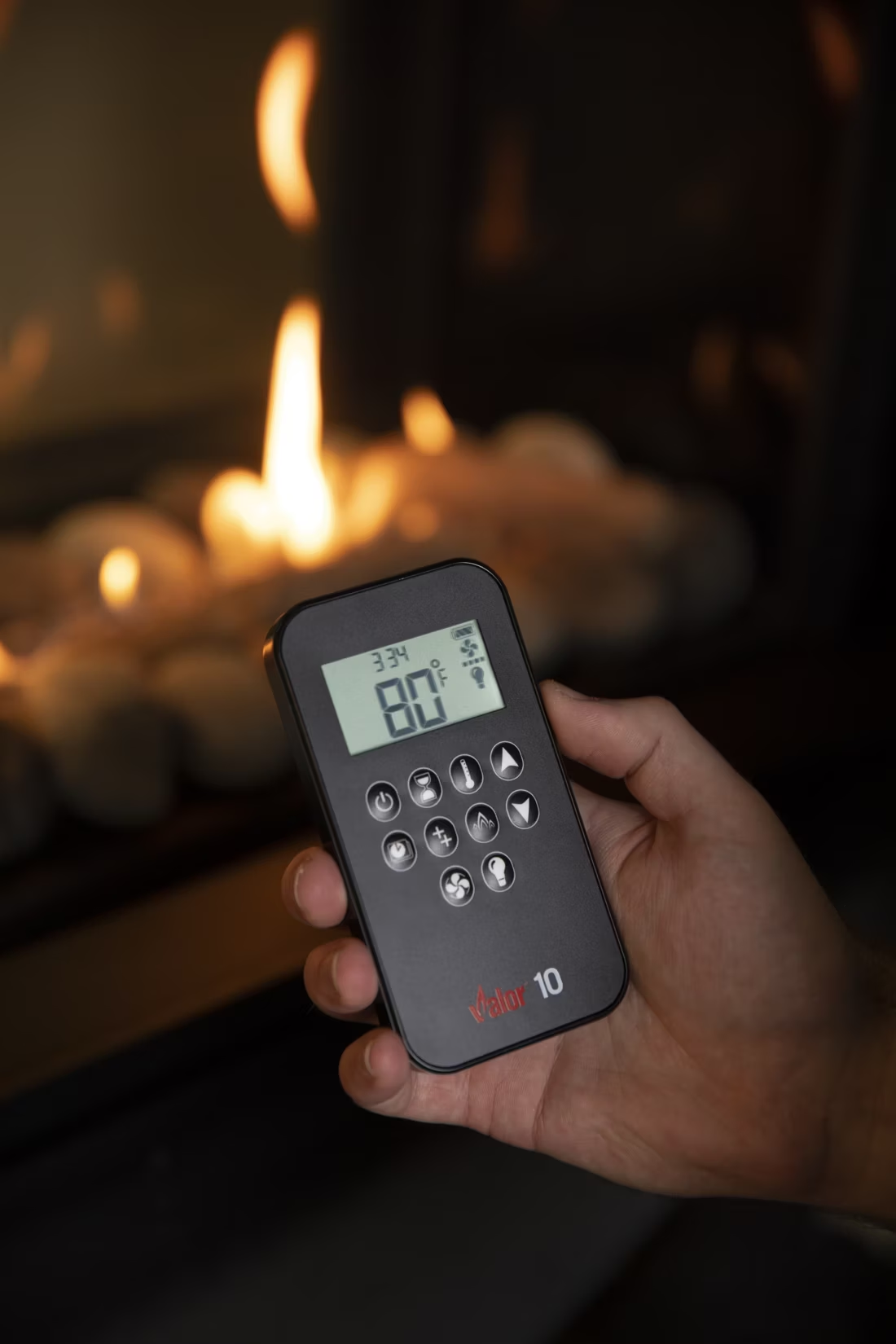
Yes, in most cases. Gas fireplaces with IPI (intermittent pilot ignition) run on battery backup—typically AA batteries built into the control module—so they'll still light and operate when AEP Texas Central, Nueces Electric Cooperative, or San Patricio Electric Coop lines go down. Valor units take it a step further: they generate their own electricity through the pilot's thermocouple, so there's no battery to remember or replace. For a Gulf Coast city where hurricane season means multi-day outages are a real possibility, that self-powered ignition is worth asking your local dealer about specifically.
Should I install a natural gas or propane fireplace in Corpus Christi?
It depends on your address. Most of incorporated Corpus Christi, including downtown and the Southside zip codes, has natural gas service through Texas Gas Service, so if your home already has gas appliances, adding a fireplace is straightforward. Homes on Padre Island, in unincorporated Nueces County, or in outlying San Patricio County areas often fall outside the gas utility footprint and rely on propane instead, supplied by a regional propane company with either an existing tank or a new tank installation. Most gas fireplace models can be configured for either fuel—your installer sets the correct orifice and regulator for whichever you have.
Do I need a permit to install a gas fireplace in Corpus Christi?
Yes—the City of Corpus Christi Development Services Department requires both a building permit and a mechanical/gas permit for new gas fireplace installations, and any new gas line work has to be run by a licensed gas-fitter. Most established local hearth dealers handle this paperwork as part of the install, coordinating the gas line, venting, and inspection so you're not managing separate trades yourself. If you're outside city limits, Nueces County has its own permitting process worth confirming before work starts.
Are vent-free gas fireplaces a good fit for Corpus Christi's humid climate?
Vent-free (ventless) gas units are legal in Texas but come with tradeoffs worth weighing in a Gulf Coast climate. They release water vapor directly into the room, and Corpus Christi's already-humid air means that added moisture load can be a real consideration for indoor air quality and mold-prone building materials near the coast. Direct-vent gas fireplaces, which draw combustion air from outside and exhaust it back outside through a sealed system, avoid that issue entirely and are the more common choice among local installers. If you're set on a vent-free unit, make sure it's sized correctly for the room and has an oxygen depletion sensor—your dealer can walk you through the tradeoffs.
How often should a gas fireplace be serviced near the coast?
Plan on an annual inspection, same as anywhere—but coastal salt air adds a wrinkle for Corpus Christi homeowners. Salt-laden humidity can accelerate corrosion on burner components, venting caps, and exterior terminations faster than it would inland, so an annual check by a certified gas technician matters even more here. Expect to pay roughly $125 to $200 for a standard inspection, with technicians checking the burner, pilot or IPI system, gas connections, and venting termination for salt corrosion or blockage from coastal debris.
Why don't more Corpus Christi homes have wood-burning fireplaces?
Wood heat just doesn't make sense in this climate—with only 763 heating degree days a year and winter lows averaging 48 degrees, there's no real heating demand to justify a wood stove, and there's no cutting-permit culture or cordwood supply chain like you'd find further north. A small number of homeowners still burn oak, pecan, or mesquite in outdoor fire pits or the occasional decorative fireplace, but as an indoor heating appliance, wood is essentially a non-factor here. Gas fills the role wood plays in colder climates: ambiance plus backup heat, without needing a fuel supply chain that doesn't really exist locally.
What size gas fireplace do I need for a Corpus Christi home?
Because you're not heating against sustained cold, sizing here is driven more by room aesthetics and open floor plans than by BTU load. Many Corpus Christi homes—especially newer coastal construction with large impact-rated windows—do well with a mid-size direct-vent unit in the 20,000 to 30,000 BTU range, which provides plenty of visual impact and enough heat for a chilly evening without overheating a room that rarely needs it. A local dealer can size the unit to your actual room dimensions and ceiling height during an in-home visit, which matters more here than raw heating capacity.
Why is my open fireplace making my house colder?
Open fireplaces suck—literally. As the fire burns, it consumes air your furnace already paid to heat and pulls it out through the chimney, so the house is actually colder after the fire goes out than before you lit it. An insert fixes this: it seals the chimney, puts fixed glass across the front, and turns that hole in your house into a real heat source.
Can I put a TV above my fireplace?
Yes—with an asterisk. Fireplaces are hot and TVs don't like heat. Either put a mantel between them to deflect rising warmth, or choose a fireplace with heat-management technology that creates a cool zone on the wall above—the wall stays around 125 degrees, barely warm, while the room still gets full heat. If you like clean lines and don't want a mantel, heat management is the answer.
Does a fireplace add value to my home?
On average, a fireplace adds back to the home about the same amount you spent installing it. Add the monthly savings from heating the rooms you actually use instead of the whole house—often hundreds of dollars a year—and the value case is strong before you even count what a fire does for how your family uses the room.
What is an in-home preview and do I need one?
It's a visit where a hearth professional measures your space, confirms the model you picked actually works in your home, and walks the specs—framing, gas line, venting, finish work—before anything is ordered. Some details you just can't know until you see the house. Never make a down payment without one; it's the single most-skipped step that burns buyers.
Nearby Dealers
Hearth shops serving Corpus Christi and the surrounding area. Every listing shows whether it is a WhyFire partner, a dealer we have verified as authorized for the brands we recommend, or a local business carrying hearth products. No manufacturer pays for placement. How we verify dealers →
C.c. Chimney
Martini Brick
Kitchen & Bath Showplace
The Design Haus Of Victoria
Victoria Builder Supply Co Inc.
Find your gas fireplace in Corpus Christi.
Tell us a bit about your home and we'll put together a free Project Guide & Parts List—the right gas fireplace or insert, the exact venting parts, and a trusted local Corpus Christi dealer to install it.
Find Your Fireplace →