
Warmth on your terms, even on the Coastal Bend's mildest nights.
Instant, clean heat and hurricane-ready backup for Coastal Bend homes—natural gas through Texas Gas Service in Corpus Christi and Robstown, propane out toward Agua Dulce, Bishop, and Port Aransas. Find the right unit and connect with a trusted local dealer.
Every Project Starts From One of These Five Situations
A fireplace for ambiance, and a hedge against the occasional freeze.
Nueces County sits on the Texas Gulf Coast, wrapped around Corpus Christi Bay, at elevations just a few feet above sea level. Climate zone 2A puts it among the mildest heating climates in the country—the county logs roughly 763 heating degree days a year, a fraction of what a cold-climate city like Duluth, Minnesota racks up in a single month. Winter lows average 48°F, and true cold snaps are the exception, not the rule. That climate reality is exactly why wood stoves and pellet stoves barely register here—there's rarely enough sustained cold to justify the fuel storage, venting, and upkeep a wood-burning system demands. Gas fits the Coastal Bend far better: it lights instantly, needs no stockpiled fuel, and looks just as good switched off in July as it does running on a January cold front.
Natural gas service throughout Corpus Christi, Robstown, and most incorporated parts of the county runs through Texas Gas Service, which makes adding a direct-vent gas fireplace to an existing home a matter of tapping an existing line rather than starting from scratch. Out in the unincorporated stretches—Agua Dulce, Bishop, the ranch country west of Highway 44, and barrier-island communities like Port Aransas where gas mains don't run—propane fills the gap, delivered and stored in a tank on the property. Either way, more homeowners are asking for gas fireplaces as a hurricane-season hedge: after storms like Harvey in 2017 and the February 2021 freeze knocked out power across the Coastal Bend for days, a gas fireplace with battery-backup ignition became one of the few heat sources that kept working when the grid didn't.
Three steps. No salesperson until you're ready.
Tell us about your project
Your zip code, your situation, and the fuel you're leaning toward—or let the answers point you to one.
See what's actually available
The brands dealers within 100 miles genuinely carry—real options, never a catalog mirage.
Get your dealer & Project Guide
A trusted local dealer, plus the free Project Guide & Parts List that names every component of the job.
Frequently Asked Questions
How much does a gas fireplace installation cost in Nueces County?
Costs vary more by project scope here than by fuel type. A direct-vent gas insert dropped into an existing masonry fireplace with a nearby gas line is the least involved and least expensive route. A new built-in gas fireplace added during a remodel—with framing, a fresh gas line run from the meter, and venting through an exterior wall—costs more. Homes in unincorporated parts of the county that need a propane tank set and line run instead of a natural gas tap add another layer of cost. Because Nueces County spans dense Corpus Christi neighborhoods and spread-out ranch and coastal properties, a local dealer's in-home visit is the most reliable way to price a specific project—travel distance and existing gas infrastructure both move the number.
Can I convert my existing wood-burning fireplace to gas?
Yes, and it's a common request in Corpus Christi's older neighborhoods—areas like Ocean Drive, Six Points, and the historic homes near downtown were often built with a decorative masonry fireplace that saw light use even in its wood-burning days, given how few nights in a Coastal Bend winter actually call for a fire. A gas insert uses that existing chimney as its vent path, typically with a stainless liner, and swaps the firebox for a sealed gas unit, turning an occasional-use fireplace into one you'll actually reach for on the handful of genuinely cold nights each year. If natural gas already reaches the house through Texas Gas Service, the conversion is usually straightforward; homes relying on propane need a tank in place first.
Do I need natural gas, or can I use propane?
Either works, and which one you use mostly comes down to where in Nueces County you live. Corpus Christi and most of Robstown are served by Texas Gas Service, so if the house already has gas appliances, adding a fireplace to that line is usually the simpler and cheaper path. Homes in unincorporated areas—Agua Dulce, Bishop, the county's rural west side, and island communities like Port Aransas where mains don't reach—run on propane instead, stored in an above-ground or buried tank. Nearly every gas fireplace on the market can be configured for either fuel; your installer just sets the correct orifice and regulator for the gas type you have.
Will my gas fireplace still work if a hurricane knocks out power?
Most will, provided you choose a unit with intermittent pilot ignition (IPI) and keep fresh batteries in it. IPI units run on a small battery backup that kicks in the moment the power drops, so the fireplace lights and heats on demand with no grid electricity at all. Some models, notably from Valor, go a step further and generate their own power through the pilot's thermocouple, so there's no battery to remember at all. That distinction matters on the Coastal Bend, where hurricane season runs June through November and outages after storms like Harvey have stretched for days at a time. Ask any local dealer to point out the ignition system on units you're considering if storm-outage performance matters to you.
What's the difference between a gas fireplace, insert, and stove?
A gas fireplace is a fully built-in unit framed into a wall—the standard choice for new construction or a remodel that doesn't already have a fireplace opening. A gas insert drops into an existing masonry firebox, which is common in Corpus Christi's older housing stock where a decorative wood-era fireplace already exists. A gas stove is a freestanding, floor-standing unit, less common here than in colder markets but occasionally chosen for a sunroom or converted garage space. For most Nueces County homeowners upgrading an existing fireplace, an insert is the natural fit; new builds usually go with a built-in unit.
Do I need a permit to install a gas fireplace in Nueces County?
Yes. Inside Corpus Christi city limits, the installation needs a building permit and a gas permit through the city; in unincorporated parts of the county, permits route through the Nueces County building department instead. The gas line portion has to be done by a licensed gas-fitter regardless of jurisdiction, which is one reason it's worth using an established local hearth dealer—they coordinate the gas work, the venting, and the inspection instead of leaving you to manage separate trades.
Should I get a vented or vent-free gas fireplace?
Vented (direct-vent) units draw combustion air from outside and exhaust it back outside through a sealed pipe, so nothing but heat enters the room. Vent-free units burn without any outside venting, releasing water vapor and small amounts of combustion byproducts directly into the house. Texas allows vent-free units, but they're a harder sell on the Coastal Bend specifically: Corpus Christi already runs high humidity for most of the year, and a vent-free fireplace adds even more moisture to indoor air, which isn't what most homeowners here are after. Direct-vent units are the more common and more broadly recommended choice for Nueces County homes for that reason.
How often should a gas fireplace be serviced?
Once a year, ideally before the handful of cold fronts that roll through the Coastal Bend each winter. A technician checks the burner, pilot assembly, gas connections, and venting, and cleans the glass and interior. Coastal properties—anything near the bay, the island, or open water—should be a little more diligent about it, since salt air accelerates corrosion on exterior vent caps and termination fittings faster than it would inland. The gas appliance service companies serving the county typically handle this in a single visit.
Should I even consider a wood-burning fireplace instead of gas?
For most Nueces County homes, no—and that's simply a function of climate. With only about 763 heating degree days a year and winter lows averaging 48°F, there's rarely enough sustained cold to make a wood-burning stove worth the fuel storage and upkeep. Local oak, pecan, and mesquite are plentiful, but they're used far more often for backyard smokers than for home heating. A small number of rural property owners still keep a wood-burning fireplace for ambiance or for genuinely cold nights during a hard winter freeze, but for anyone weighing the two, gas is the far more practical choice for how the Coastal Bend actually lives through winter.
Is my gas fireplace wasting gas?
If it was installed more than 15 years ago, probably. Older gas fireplaces keep a standing pilot light burning all the time, and that little flame can cost a couple hundred dollars a year. Newer models use pilot-on-demand ignition—the pilot lights only when you use the fireplace and goes out when you turn it off.
Can I put a TV above my fireplace?
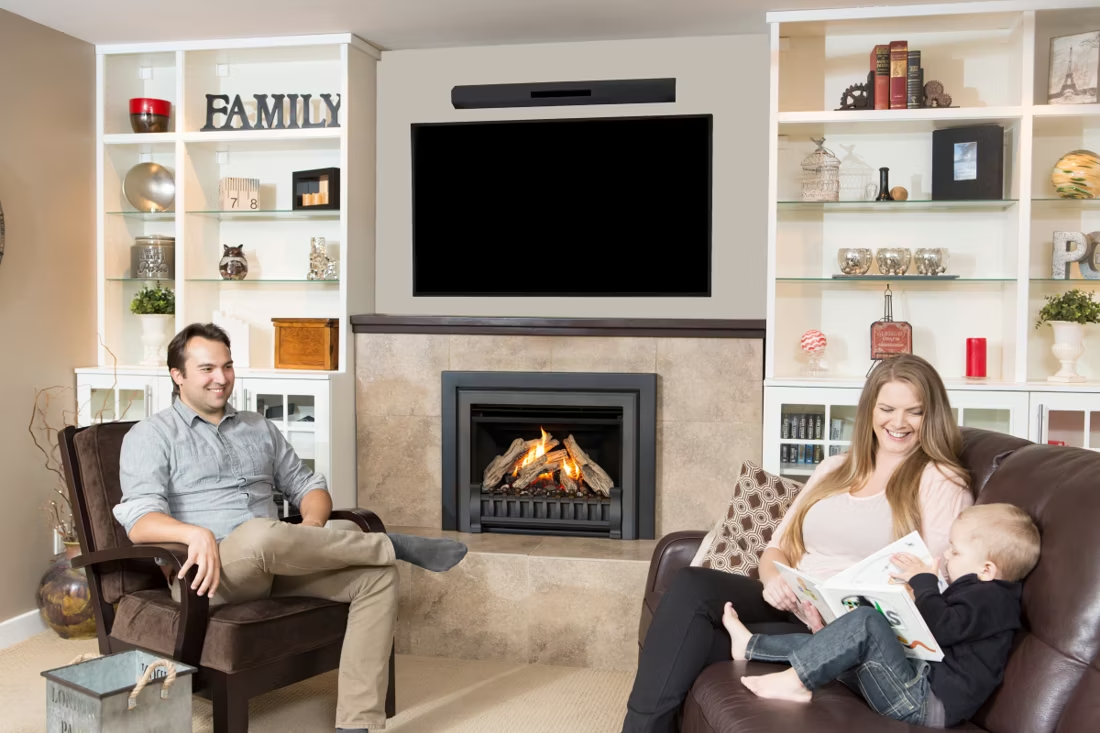
Yes—with an asterisk. Fireplaces are hot and TVs don't like heat. Either put a mantel between them to deflect rising warmth, or choose a fireplace with heat-management technology that creates a cool zone on the wall above—the wall stays around 125 degrees, barely warm, while the room still gets full heat. If you like clean lines and don't want a mantel, heat management is the answer.
Can I install a fireplace myself?
If you're putting a fire in your house on purpose, it's best to work with an expert. Unless you're genuinely experienced in framing, gas line, vent pipe, and the national code on clearances to combustibles, have a professional do it—and ideally the same company that sells you the fireplace, so warranty, service, and liability all live under one roof.
Does a fireplace add value to my home?
On average, a fireplace adds back to the home about the same amount you spent installing it. Add the monthly savings from heating the rooms you actually use instead of the whole house—often hundreds of dollars a year—and the value case is strong before you even count what a fire does for how your family uses the room.
Stove and Fireplace Dealers in Nueces County
Listings include WhyFire partner dealers, dealers we have verified as authorized for the brands we recommend, and established local businesses that carry hearth products. Every listing shows which one it is. The ones marked Preferred run on WhyFire's software, so they can show you real pricing and book your appointment right here. No manufacturer pays for placement. How we verify dealers →
Martini Brick
C.c. Chimney
Kitchen & Bath Showplace
The Design Haus Of Victoria
Victoria Builder Supply Co Inc.
Find your gas fireplace in Nueces County.
Tell us about your home and where in the county you are, and we'll match you with a trusted local dealer and send over a free Project Guide & Parts List—the exact parts, including the vent kit, needed for your gas fireplace project in Nueces County.
Find Your Fireplace →