
A niche heat source for Converse's short, mild winters.
With only 1,366 heating degree days a year and winter lows averaging 41°F, Converse doesn't have the sustained cold that pellet stoves are built for. A few homeowners still want one—I'll walk you through whether it makes sense and match you with a dealer who can special-order the equipment correctly.
Every Project Starts From One of These Five Situations
Converse winters rarely ask for a hopper full of pellets.
Converse sits in climate zone 2A on the eastern edge of Bexar County, part of the San Antonio metro's hot, humid belt. At 678 feet elevation with an average winter low of 41°F and just 1,366 heating degree days per year, this is a fraction of what a place like Duluth or Fargo racks up in a single hard month. Most Converse homes heat with central gas furnaces or electric heat pumps sized for occasional cold snaps, not a six-month burn season, and that's exactly the kind of climate where a pellet stove—designed to run for hours a day, day after day, feeding a hopper automatically—struggles to justify itself.
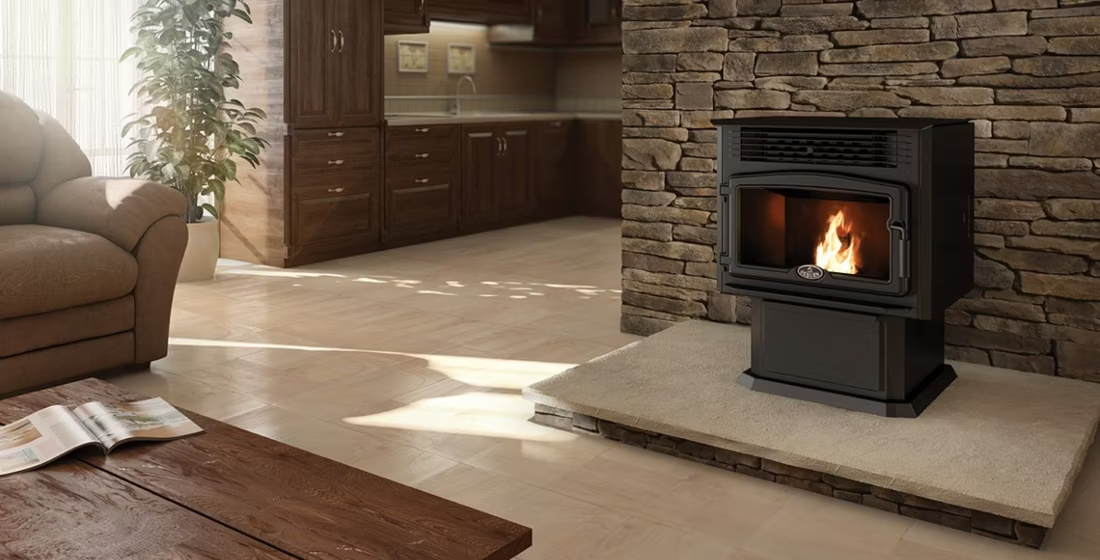
The homeowners in Converse who do install a pellet stove are usually after something specific: supplemental heat for the handful of nights each winter that dip into the 20s, backup warmth for events like the 2021 grid failures during Winter Storm Uri, or simply the look and feel of a real flame without the work of splitting oak, pecan, or mesquite—the species most local wood-burners actually use for smoking meat rather than heating a house. Regional brands like Forest Energy and Lignetics are available through hearth dealers who serve the San Antonio area, but pellets aren't a stocked commodity here the way they are in colder states, so expect to special-order fuel rather than pick it up at a local feed store.
Three steps. No salesperson until you're ready.
Tell us about your project
Your zip code, your situation, and the fuel you're leaning toward—or let the answers point you to one.
See what's actually available
The brands dealers within 100 miles genuinely carry—real options, never a catalog mirage.
Get your dealer & Project Guide
A trusted local dealer, plus the free Project Guide & Parts List that names every component of the job.
Frequently Asked Questions
How much does a pellet stove installation cost in Converse?
Because pellet stoves are a low-volume request in this market, there isn't a standard local price sheet the way there is for gas fireplaces or heat pumps—most Converse dealers who handle one will price it as a custom job, factoring in the unit, an exterior wall penetration for the vent, and a dedicated outlet for the auger and blower. Expect the quote to come in noticeably lower than a full gas line install since there's no gas work involved, but get a firm number from a local dealer before assuming a figure, since so few installs happen here that pricing isn't standardized.
Are pellet stoves even a good fit for a Converse home?
Honestly, for most Converse homeowners, no—not as a primary heat source. With winter lows averaging 41°F and a heating season that's mostly mild, a pellet stove sized to run efficiently in a cold climate will often be oversized and underused here. Where it can make sense is as a secondary unit: a converted garage, a workshop, or a home that lost heat during a hard freeze like the February 2021 grid event and wants a backup that doesn't depend entirely on the electric grid staying at full capacity. A local dealer can help you decide if that use case fits your situation before you buy.
What size pellet stove works for a Converse home?
If you do move forward, you'll likely want one of the smaller units on the market rather than a large-capacity model built for northern climates. A stove rated for a few hundred to around 1,000 square feet covers most Converse living rooms or bonus rooms adequately, since you're heating through short cold snaps rather than a sustained freeze. Oversizing is the more common mistake here—a big stove meant to hold a 20-hour burn in a place like Bismarck will just cycle on and off constantly in Converse's mild climate, which is harder on the auger motor and igniter over time.
Do I need a permit to install a pellet stove in Converse?
Yes—any new hearth appliance, including a pellet stove, typically needs a permit through your local building department, and if you're inside Converse city limits that means the City of Converse; unincorporated addresses go through Bexar County. Because pellet installs are uncommon here, it's worth confirming with your installer that they've pulled a fireplace or hearth appliance permit locally before, since inspectors in a low-cold-climate area may see fewer of these applications than they would in the Panhandle.
Pellet vs. wood—does either make sense in Converse?
Both are genuinely uncommon here for the same reason: Converse's mild winters, at just 1,366 heating degree days a year, don't create much demand for a dedicated wood-burning appliance. Local oak, pecan, and mesquite are prized for smoking brisket, not for heating a house through winter. If you want the ambiance of a real flame with less hassle than wood, a pellet stove is the lower-maintenance option since it doesn't require splitting or seasoning fuel—but if you're weighing this purely for heat, gas is the more practical local choice given how limited the cold season actually is.
Would a gas or electric fireplace make more sense than pellet in Converse?
For most homeowners here, yes. Natural gas fireplaces are common and well-supported by local dealers, and electric fireplaces or heat pumps pair naturally with the co-op rates in the area—Karnes Electric Cooperative, Guadalupe Valley Electric Cooperative, and Bandera Electric Cooperative all serve parts of the Converse area, with residential rates roughly $0.099 to $0.1249 per kWh, competitive enough that electric heat is a reasonable everyday option. Pellet still has a place if you specifically want a self-contained backup that isn't tied to a gas line, but for daily convenience in this climate, gas or electric is what most local dealers will point you toward first.
Where do I actually buy pellet fuel near Converse?
This is one of the real practical hurdles: pellet fuel isn't stocked at the volume here that it is in cold-climate states, so you likely won't find pallets of Forest Energy or Lignetics bags sitting at a local hardware store the way you would in Wisconsin or Montana. Big-box retailers in the San Antonio area sometimes carry limited seasonal stock, but most Converse pellet-stove owners end up ordering by the pallet from a hearth dealer or having it shipped in ahead of winter. Humidity is also a factor in this 2A climate—pellets need to be stored somewhere dry, since Gulf-influenced moisture can degrade bagged fuel faster than it would in an arid climate.
Will a pellet stove keep working if the power goes out?
No, and this is worth knowing given what Converse residents experienced during Winter Storm Uri in February 2021: pellet stoves rely on an electric auger to feed fuel and a blower to circulate heat, so a grid outage shuts them down just like a gas furnace with electronic ignition would. If backup heat during an ERCOT-strained cold snap is your main goal, a battery-backed system or a generator to run the stove's electronics matters more here than the stove itself. This is one of the bigger tradeoffs against wood heat, which keeps working with zero electricity.
Are there rebates or incentives for installing a pellet stove in Converse?
Texas doesn't run state-level incentive programs for pellet stoves the way some colder states do for wood-heat upgrades, and given how few installs happen in the Converse area, don't expect a utility rebate from Karnes Electric, Guadalupe Valley Electric, or Bandera Electric aimed at this category. The better financial lens here is comparing operating cost: with residential electric rates in the $0.099-$0.1249 per kWh range, an electric heat pump or space heater will often be cheaper to run through Converse's short heating season than sourcing and storing pellet fuel that has to be special-ordered.
Why is a fireplace insert so efficient?
An insert does two things: it seals the chimney completely, so you stop losing air you already paid to heat, and it radiates warmth into the room through the firebox and glass. Most add a heat-exchange fan that pulls cool room air underneath, wraps it around the hot firebox, and pushes it back out warm. Your home is more efficient before you've even lit the first fire.
How often does a pellet stove need cleaning?
A clean pellet stove is a happy pellet stove. Plan on cleaning the burn pot about once a week when you're burning regularly—ash and clinkers gum up the air holes just like a pellet barbecue. Most pellet stove problems trace back to skipped cleaning that nobody explained up front. Some designs make it easy with a trapdoor burn pot: pull a lever and the gunk drops into the ash pan.
Does a fireplace add value to my home?
On average, a fireplace adds back to the home about the same amount you spent installing it. Add the monthly savings from heating the rooms you actually use instead of the whole house—often hundreds of dollars a year—and the value case is strong before you even count what a fire does for how your family uses the room.
How much should I budget for a fireplace?
For an average home—covering the fireplace, the vent pipe, and basic installation—a budget between $3,900 and $5,500 gives you a lot of options across wood, gas, and pellet. By the time you add finish work, gas line, and electrical, the average complete installation lands between $5,000 and $12,000 all-in. In a remodel or new build, a good rule is to put about 2.5% of the total project cost toward the fireplace.
Nearby Dealers
Hearth shops serving Converse and the surrounding area.
Pellet Brands Stocked Around Converse
Manufacturers will point you to the nearest stocking dealer.
Get your free Project Guide for a pellet setup in Converse.
Tell me about your home and what you're trying to solve—backup heat, ambiance, or something else—and I'll match you with a trusted local dealer who can special-order the right unit and send a free Project Guide & Parts List with the exact vent kit and parts your project needs.
Find Your Fireplace →