
Keep Your Family Warm and Safe—No Matter What
Celina's mild winters mean wood isn't a survival fuel here—but for homeowners who want a real fire, a workshop stove, or a hearth built around Collin County oak and pecan, it's still an option worth doing right.
Every Project Starts From One of These Five Situations
A mild climate makes wood heat optional, not essential.
Celina sits at 673 feet in North Texas, where the average winter low hovers around 33°F and the area logs roughly 2,577 heating degree days a year—a fraction of what a place like Fargo, ND or Duluth, MN sees in a single winter. Most homes here run on central heat pumps or gas furnaces, and the handful of genuinely cold nights each year rarely justify a wood-burning system as a primary heat source. That's why wood stoves and fireplaces are the exception in Celina rather than the norm.
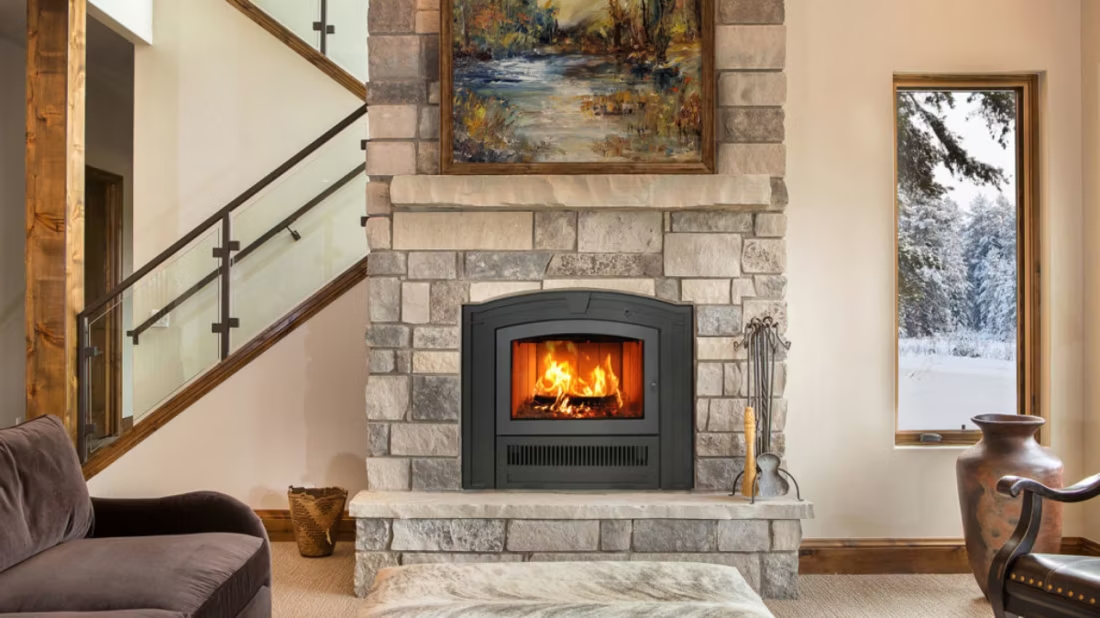
Still, some homeowners in Celina and the surrounding Collin County ranchland install a wood-burning fireplace for its look and feel, or a small stove in a barn, shop, or weekend cabin where they already have easy access to oak, pecan, or mesquite. Because there's no air-quality nonattainment designation here and no seasonal burn curtailment periods like homeowners deal with in wood-dependent parts of the country, the process is simpler—it's mostly a matter of finding a dealer who still stocks and installs wood units in a market dominated by gas.
Three steps. No salesperson until you're ready.
Tell us about your project
Your zip code, your situation, and the fuel you're leaning toward—or let the answers point you to one.
See what's actually available
The brands dealers within 100 miles genuinely carry—real options, never a catalog mirage.
Get your dealer & Project Guide
A trusted local dealer, plus the free Project Guide & Parts List that names every component of the job.
Frequently Asked Questions
Are wood-burning fireplaces or stoves common in Celina, TX?
Not especially—Celina's winters are short and mild enough that most homes rely entirely on central gas or heat pump systems, and wood heat isn't something the local climate demands. That said, it isn't rare in the sense of being illegal or unavailable—a segment of homeowners on larger Collin County lots, or those who want the look and ritual of a real fire, still install masonry fireplaces or freestanding stoves. Expect fewer local specialists than you'd find in colder parts of the country, but the option is real.
How much does a wood stove or fireplace installation cost in Celina?
Because wood installs are less common here than gas, pricing varies more by project than in wood-heavy markets. A straightforward freestanding wood stove with a factory-built chimney typically lands in the $3,500 to $7,000 range; a masonry wood-burning fireplace built during new construction or a remodel runs higher, often $8,000 to $15,000 once brick or stone work is included. Get a firm quote from a local dealer after an in-home look—with fewer installers in the Celina area doing wood work regularly, quotes can swing more than they would for a gas insert.
Do I need a permit to install a wood-burning fireplace in Celina?
Yes—new wood-burning appliances typically require a building permit through the City of Celina (or Collin County if you're outside city limits), covering structural framing, clearances to combustibles, and chimney or flue work. Most installers handle the permit paperwork as part of the job. Because Celina doesn't sit in an EPA nonattainment area, you won't run into the seasonal burn curtailment rules that wood-heavy cities in the Pacific Northwest or Mountain West deal with.
What size wood stove do I need for a Celina home?
Given how mild the climate is here, almost nobody in Celina needs a large stove sized for whole-home heating. Most local wood installs are small to mid-size units—sized for a single great room, a workshop, or supplemental warmth on the handful of nights each winter when a cold front pushes temperatures into the 20s. An oversized stove in a climate this mild will smolder and build creosote fast, so this is a case where local sizing advice really matters—don't buy for the coldest night Texas has ever seen.
What kind of firewood is available locally in Celina?
Oak, pecan, and mesquite are the three species you'll most commonly find for sale or on Collin County properties. Oak burns long and hot and is the standard choice for anyone using a stove regularly. Pecan and mesquite are widely available locally too—both are popular for grilling and smoking as much as home heating, so sourcing seasoned firewood is generally easy even though full-time wood heat isn't the local norm.
Wood vs. gas fireplace—which makes more sense in Celina?
For most Celina homeowners, gas wins. Natural gas and propane service are well established locally, gas fireplaces need no wood storage or ash cleanup, and they deliver instant heat on the relatively few nights a year you'd actually want it. Wood makes sense mainly for the aesthetic—the sound and smell of a real fire—or for a detached workshop or barn where you want independent heat that doesn't rely on the grid. If backup heat during a rare winter storm (like the 2021 freeze) is your concern, a battery-backed gas unit or a wood stove both work; talk to a local dealer about which fits your situation.
Are there air quality restrictions on wood burning in Celina?
No—Celina and Collin County don't carry an EPA nonattainment designation or winter inversion issues, so there are no seasonal burn bans or curtailment periods to plan around, unlike wood-dependent regions in the Pacific Northwest or Mountain West. New stoves still need to meet current EPA emissions standards, but day-to-day burning isn't restricted by local air quality rules.
How often should a wood-burning fireplace be inspected in Celina?
Once a year, even with light use. The CSIA recommends an annual inspection for any wood-burning appliance, and because most Celina installs get occasional rather than daily use, homeowners sometimes assume they can skip years—but creosote can still build up even from a handful of fires each winter, especially with resinous mesquite. Schedule the sweep in early fall before the season's first cold front comes through.
Where can I find a wood stove or fireplace installer near Celina?
Because gas dominates the Celina market, dedicated wood specialists are thinner on the ground than they'd be in, say, Bozeman, MT or Helena, MT. Some hearth dealers serving the greater Dallas-Fort Worth area still carry and install wood-burning stoves and fireplaces alongside their gas lineup, and a few will travel to Collin County properties for the right project. Rather than guessing which nearby retailer still does wood work, tell us about your project and we'll match you with a trusted dealer who actually installs wood units in this area.
Why is my open fireplace making my house colder?
Open fireplaces suck—literally. As the fire burns, it consumes air your furnace already paid to heat and pulls it out through the chimney, so the house is actually colder after the fire goes out than before you lit it. An insert fixes this: it seals the chimney, puts fixed glass across the front, and turns that hole in your house into a real heat source.
What's the difference between an insert and a zero-clearance fireplace?
An insert is a fireplace that slides into a pre-existing wood-burning fireplace—if you don't have one, there's nothing to insert it into. A zero-clearance fireplace is built into a framed wall, which makes it the answer for remodels and new construction. Simple test: existing masonry fireplace means insert; blank or framed wall means zero-clearance.
Can a fireplace actually lower my heating bill?
Yes—by creating a comfort zone. A furnace heats every square foot of the house just to warm the one room you're in; a gas fireplace on low burns roughly a sixth of the gas a typical furnace does. Set the furnace around 55–60 degrees as a baseline, then heat the rooms your family actually uses. Families who heat this way commonly save $20–$60 a month.
Can I install a fireplace myself?
If you're putting a fire in your house on purpose, it's best to work with an expert. Unless you're genuinely experienced in framing, gas line, vent pipe, and the national code on clearances to combustibles, have a professional do it—and ideally the same company that sells you the fireplace, so warranty, service, and liability all live under one roof.
Nearby Dealers
Hearth shops serving Celina and the surrounding area. Every listing shows whether it is a WhyFire partner, a dealer we have verified as authorized for the brands we recommend, or a local business carrying hearth products. No manufacturer pays for placement. How we verify dealers →
Sweeps N Ladders
Flames Fireplaces & Gas Grills
Yard Art Patio & Fireplace - Allen
Elegant Fireside & Patio, LLC
Distrinctive Outdoor Environments, LLC
Golden Blount
Pittman Supply Company
Heffley's Hearth & Home
Find your wood fireplace in Celina.
Tell us about your home and your project, and we'll match you with a trusted local dealer and send over a free Project Guide & Parts List—the exact parts, including the vent kit, and the installer we recommend for wood projects in the Celina area.
Find Your Fireplace →