
Instant heat, even when the Texas grid isn't.
Celina winters are mild most years, but when an Arctic front rolls through North Texas, a gas fireplace keeps the living room warm—even during an ERCOT outage. Find the right unit and connect with a trusted local dealer.
Every Project Starts From One of These Five Situations
Built for Texas winters—and Texas outages.
At 673 feet in Collin County, Celina averages a fairly light winter heating season and a winter low around 33°F—nothing like the sub-zero stretches of Bismarck, ND or Duluth, MN. Most winters here call for a jacket, not a furnace running around the clock. But North Texas has also learned, especially since Winter Storm Uri in February 2021, that mild-climate infrastructure can fail hard during a sudden Arctic blast, and rolling ERCOT outages can leave homes without heat for days at a time.
That combination—light heating demand most of the year, real risk during rare cold snaps—is exactly where gas fireplaces earn their keep. Celina's newer subdivisions are largely built with natural gas service already run to the home, while some of the county's more rural, recently-annexed parcels still rely on propane tanks from local suppliers. Either way, a properly installed gas fireplace or insert gives Celina homeowners instant, thermostat-free heat for cool evenings, backup warmth when the power drops, and the ambiance of a real flame without hauling or storing firewood in a climate that rarely demands it.
Three steps. No salesperson until you're ready.
Tell us about your project
Your zip code, your situation, and the fuel you're leaning toward—or let the answers point you to one.
See what's actually available
The brands dealers within 100 miles genuinely carry—real options, never a catalog mirage.
Get your dealer & Project Guide
A trusted local dealer, plus the free Project Guide & Parts List that names every component of the job.
Frequently Asked Questions
How much does a gas fireplace installation cost in Celina?
Most Celina installations run $3,500 to $9,500 depending on the unit and how much gas line and venting work is involved. A direct-vent gas insert dropped into an existing masonry fireplace with a gas line already stubbed in sits at the lower end. A new built-in gas fireplace for a remodel or a room addition—with framing, direct-vent piping through an exterior wall, and a new gas line run from the meter—lands in the middle to upper range. Homes on propane that need a new tank set will run higher. A local dealer will size the job and give you a firm number after walking the space.
Can I convert an older wood-burning fireplace to gas?
Yes, and it's a common project in Celina's older homes near downtown and in the established neighborhoods off Preston Road, many of which were originally built with a traditional wood-burning firebox. A gas log set or a sealed gas insert can go into that existing masonry opening, usually reusing the chimney as the vent path with a liner. Conversions typically run $2,500 to $7,000 depending on whether it's a vented log set or a full high-efficiency insert, and whether new gas piping needs to be run to the fireplace location.
Do I need natural gas, or is propane the only option in parts of Celina?
It depends on where you are. Celina has grown quickly over the past decade, and most of the newer master-planned developments inside city limits are built with natural gas lines already in place. If you're further out in unincorporated Collin County or on a larger acreage lot that hasn't been annexed, propane from a local supplier is the standard alternative, using either a buried or above-ground tank. Nearly every gas fireplace model on the market can be configured for either fuel—your installer sets the correct orifice and regulator for whichever you have.
Will my gas fireplace still work if the power goes out?
Most will, which matters here more than the mild average winter would suggest—Celina sits in Oncor Electric Delivery territory, and North Texas saw multi-day rolling outages during Winter Storm Uri in 2021. Gas fireplaces with IPI (intermittent pilot ignition) include a battery backup, typically AA batteries built into the unit, that keeps the igniter working when the power drops. Valor's lineup takes it a step further: the pilot's thermocouple generates its own electricity, so there's no battery to remember or replace. For a home that might lose power during the next Arctic outbreak, that distinction is worth asking about when you talk to a local dealer.
What's the difference between a gas fireplace, gas insert, and gas stove?
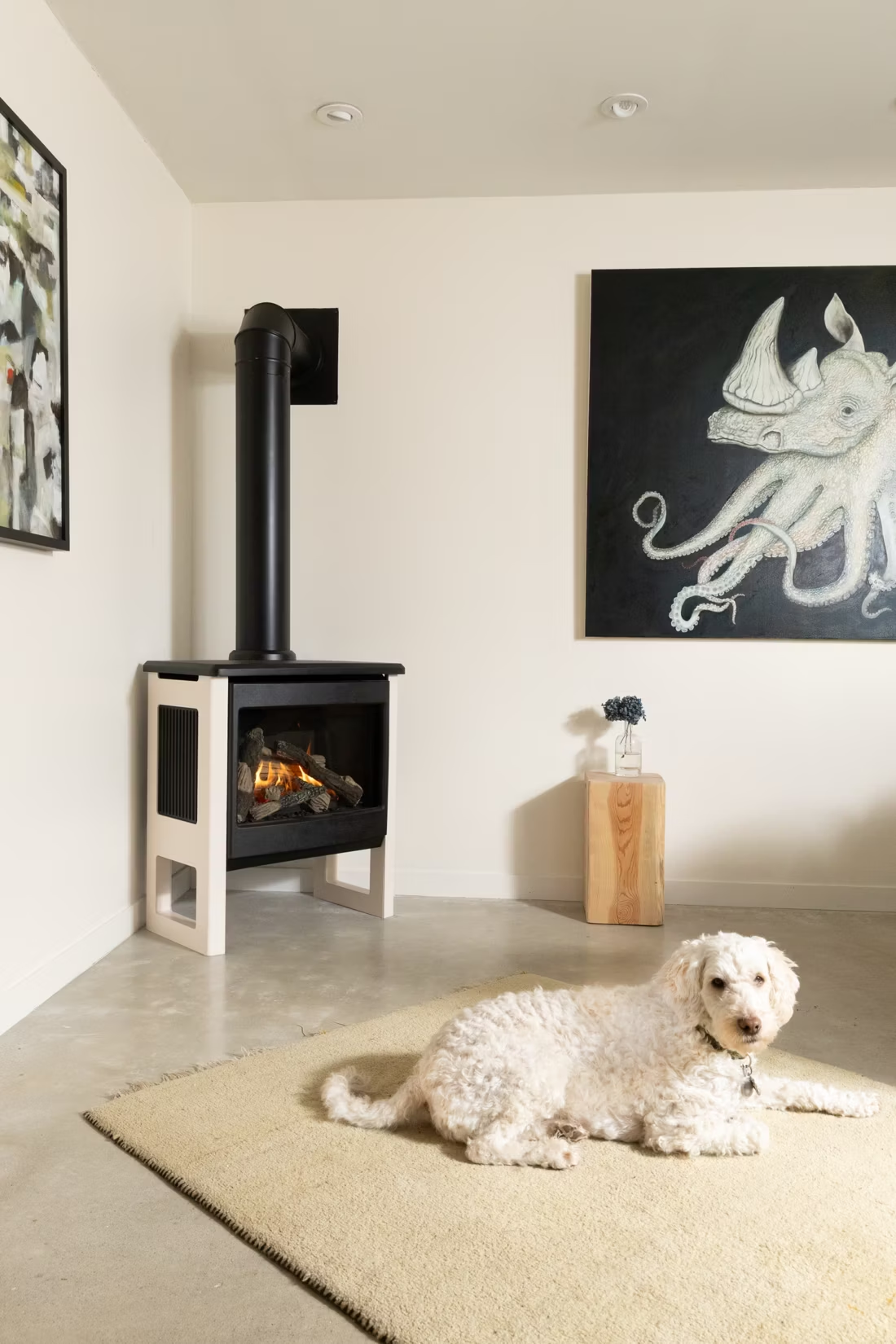
A gas fireplace is a fully built-in unit framed into a wall—the standard choice in Celina's newer construction and additions. A gas insert is built to slide into an existing masonry firebox, sealing it up and using the chimney as a vent path, which is the right call for older homes with a wood-burning fireplace already in place. A gas stove is a freestanding cast-iron or steel unit that sits on the floor on its own hearth pad, useful in a room without any existing fireplace opening. Most Celina homeowners with an existing masonry fireplace go with an insert; new-build owners typically go with a built-in unit.
Do I need a permit to install a gas fireplace in Celina?
Yes—new gas fireplace installations require a building permit through the City of Celina, plus a mechanical or gas permit for the line work, and unincorporated county parcels go through Collin County instead. The gas piping itself has to be run or modified by a licensed gas-fitter. Reputable local hearth dealers handle the permitting and inspection scheduling as part of the installation, which is one of the real advantages of going through a dealer instead of a handyman install.
Are vent-free gas fireplaces allowed in Texas?
Yes—Texas permits vent-free (unvented) gas fireplaces, and they show up fairly often in Celina as secondary units in bedrooms or bonus rooms where running a vent isn't practical. They burn fuel directly into the room without exhausting outside, so sizing to the room's square footage and having an oxygen depletion sensor are non-negotiable for safety. Direct-vent units, which draw combustion air from outside and exhaust it back outside through a sealed pipe, remain the more common and more universally recommended choice for a primary living space, since they don't add any moisture or combustion byproducts to the indoor air. A local dealer can walk through both options for your specific room.
How often does a gas fireplace need to be serviced?
Plan on an annual inspection, typically before the first cool front hits in October or November. A technician checks the burner, pilot assembly, venting, and gas connections, and cleans the glass and interior—a much lighter lift than chimney sweeping for a wood-burning unit, but still important, since a dirty burner or degraded gasket is the most common cause of a fireplace that won't light reliably on the first cold night of the year. Local gas appliance technicians in the Celina and McKinney area typically charge $150 to $250 for the visit.
Should I get a gas fireplace or an electric one for my Celina home?
Given how mild Celina's winters run—a 33°F average low and a fairly light winter heating season overall—either can make sense, and the right call often comes down to what you want the fireplace to do. Gas delivers real, room-warming BTU output and can double as backup heat during a grid outage, which matters in Oncor and TNMP territory after events like Winter Storm Uri. Electric fireplaces, which run off the same residential rate structure (around 13.8 cents per kWh through Oncor or Denton County Electric Cooperative depending on your address), install in an afternoon with no venting or gas line at all, and work well for supplemental ambiance in a bedroom, office, or apartment where a gas line isn't practical. For a primary living space where you want genuine heat on the rare hard freeze, gas is usually the better long-term investment.
Why is a fireplace insert so efficient?
An insert does two things: it seals the chimney completely, so you stop losing air you already paid to heat, and it radiates warmth into the room through the firebox and glass. Most add a heat-exchange fan that pulls cool room air underneath, wraps it around the hot firebox, and pushes it back out warm. Your home is more efficient before you've even lit the first fire.
What does it take to replace an existing fireplace?
Fireplaces are like icebergs—bigger behind the wall than in front of it. Replacement means removing the surrounding tile or stone (the finish material laps onto the fireplace face), pulling the old unit, setting the new one in the same enclosure, and re-finishing the wall. A hearth professional can determine what's behind your wall without demolition during an in-home preview.
Can I install a fireplace myself?
If you're putting a fire in your house on purpose, it's best to work with an expert. Unless you're genuinely experienced in framing, gas line, vent pipe, and the national code on clearances to combustibles, have a professional do it—and ideally the same company that sells you the fireplace, so warranty, service, and liability all live under one roof.
Does a fireplace add value to my home?
On average, a fireplace adds back to the home about the same amount you spent installing it. Add the monthly savings from heating the rooms you actually use instead of the whole house—often hundreds of dollars a year—and the value case is strong before you even count what a fire does for how your family uses the room.
Nearby Dealers
Hearth shops serving Celina and the surrounding area. Every listing shows whether it is a WhyFire partner, a dealer we have verified as authorized for the brands we recommend, or a local business carrying hearth products. No manufacturer pays for placement. How we verify dealers →
Sweeps N Ladders
Flames Fireplaces & Gas Grills
Yard Art Patio & Fireplace - Allen
Elegant Fireside & Patio, LLC
Distrinctive Outdoor Environments, LLC
Golden Blount
Pittman Supply Company
Heffley's Hearth & Home
Find your gas fireplace in Celina.
Tell us a bit about your home and we'll match you with the right gas fireplace, insert, or stove—plus a free Project Guide & Parts List and a trusted local Celina-area dealer to install it.
Find Your Fireplace →