
Pellet heat is rare in Castle Hills—here's when it still makes sense.
With only about 1,438 heating degree days a year, most Castle Hills homes don't need dedicated pellet heat. But for backup warmth during hard freezes or added ambiance, a small number of homeowners still install one.
Every Project Starts From One of These Five Situations
Castle Hills winters rarely call for a pellet stove.
Castle Hills sits at 835 feet elevation inside Bexar County, part of the San Antonio metro, in climate zone 2A—hot and humid, with average winter lows around 41°F and roughly 1,438 heating degree days per year. Compare that to a place like Duluth, MN, which racks up nearly 10,000 heating degree days, and it's clear why dedicated wood-pellet heating appliances haven't caught on locally. Most homes here run central HVAC heat pumps or gas furnaces, and the local hearth dealer market reflects that—gas fireplaces and electric units are the standard stock-in-trade, not pellet stoves.
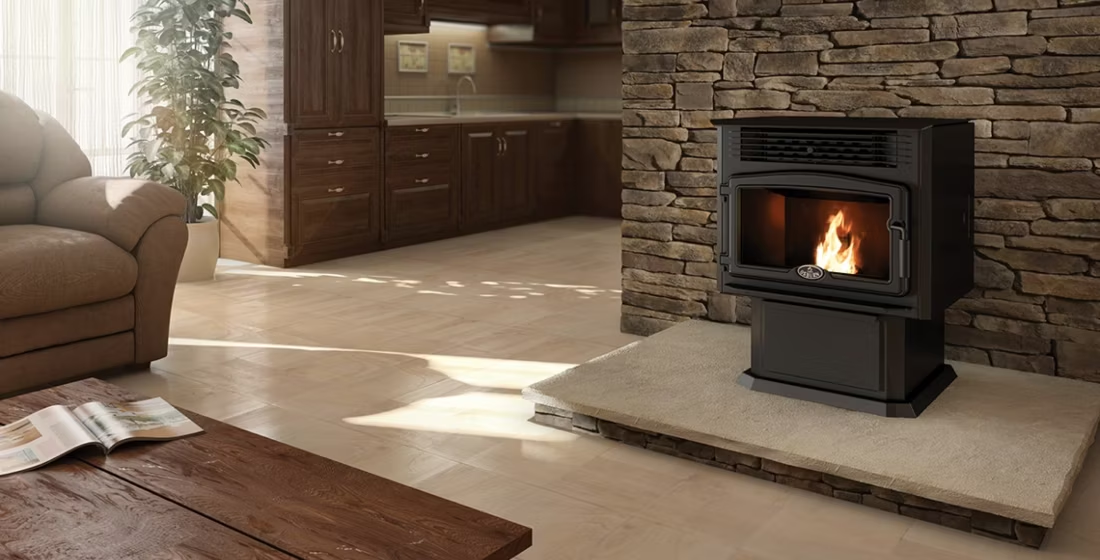
Still, a pellet stove isn't a strange choice for every Castle Hills home. Some owners install one for the ambiance of a real flame with less mess than cordwood, or as a hedge against grid failures during rare hard freezes like the February 2021 winter storm that knocked out power across Bexar County for days. Regional pellet brands like Forest Energy and Lignetics are available through hearth specialty retailers in the broader San Antonio area, though supply and selection here run thinner than in colder parts of the country—expect to plan ahead rather than pick up bags on a whim at the local hardware store.
Three steps. No salesperson until you're ready.
Tell us about your project
Your zip code, your situation, and the fuel you're leaning toward—or let the answers point you to one.
See what's actually available
The brands dealers within 100 miles genuinely carry—real options, never a catalog mirage.
Get your dealer & Project Guide
A trusted local dealer, plus the free Project Guide & Parts List that names every component of the job.
Frequently Asked Questions
Are pellet stoves actually used in Castle Hills homes?
Not commonly. With an average winter low around 41°F and only about 1,438 heating degree days a year, Castle Hills simply doesn't have the sustained cold that makes dedicated pellet heat worthwhile for most households. The homeowners who do install one are usually after the look and feel of a real flame, or want a secondary heat source for the occasional hard freeze—situations that come up maybe a handful of times a winter here, not months at a stretch like they would in Duluth, MN or Bismarck, ND.
How much does a pellet stove installation cost in Castle Hills?
Because pellet installs are infrequent locally, there isn't a well-established Castle Hills-specific price range the way there is for gas fireplace work. Nationally, a freestanding pellet stove with venting typically runs $3,000 to $6,500 installed, depending on the unit and whether you need a new wall-through vent kit. Given how few installers around San Antonio handle pellet regularly, get a firm, in-person quote from a hearth dealer before assuming a number—pricing can vary more here than in markets where pellet is a routine product line.
Will a pellet stove keep working if the power goes out, like during Winter Storm Uri?
No—this is the single biggest thing to understand before choosing pellet heat in Castle Hills. Pellet stoves rely on an electric auger to feed fuel and a blower to distribute heat, so when the grid goes down, so does the stove, unless it's paired with a battery backup or generator. During the February 2021 freeze that cut power to much of Bexar County for days, a pellet stove would have been just as useless as a furnace. If backup heat during a grid failure is your actual goal, a wood-burning appliance or a battery-free millivolt gas unit is a more reliable fit for this climate's risk profile.
Where can I buy wood pellets near Castle Hills?
Regional brands like Forest Energy and Lignetics are the names most likely to show up at hearth specialty retailers in the San Antonio area, but because local demand is low, don't expect big-box shelf stock the way you would in a cold-climate state. Many Castle Hills owners who run a pellet stove order by the pallet (typically 50 forty-pound bags) once or twice a season and store them dry rather than restocking bag by bag through winter.
Do I need a permit to install a pellet stove in Castle Hills?
Yes. Even though pellet installs are uncommon here, the City of Castle Hills Building Department still requires a permit for any new fuel-burning appliance and its venting, and the unit needs to be UL-listed with proper wall clearances. Because so few local contractors install pellet units regularly, it's worth confirming with the building department directly and working with a dealer who's pulled pellet permits before—not every general contractor has.
Does pellet heat make sense for my Castle Hills home?
It depends on what you're solving for. If you want the character of a real fire without cordwood storage and mess, and you're comfortable that the stove won't run without electricity, a pellet stove can work well as a secondary or ambiance appliance. If your priority is genuine backup heat during a grid outage or a hard freeze, a wood-burning stove or a non-electric gas fireplace will serve you better in this climate. For most Castle Hills homes, a gas insert or fireplace remains the more common and practical choice—gas service is standard here and doesn't carry pellet's electrical dependency.
What's the difference between a pellet stove and a pellet insert?
A pellet stove is a freestanding, self-contained unit that vents through an exterior wall—it can go almost anywhere with the right clearances, which is why it's the more common choice in Castle Hills where a home may not already have a masonry fireplace suited to solid fuel. A pellet insert fits into an existing wood-burning fireplace and uses that opening for its vent kit. Given how many homes in this part of Bexar County were built without wood fireplaces in the first place, the freestanding stove is usually the simpler retrofit here.
Pellet vs. gas—which is the better fit in Castle Hills?
Gas is the more practical choice for most homes here, and the local market reflects it—gas fireplace and insert relevance is standard in Castle Hills, while pellet is genuinely uncommon. Gas offers instant on-demand heat, no fuel storage, and—with a millivolt pilot system—some models keep working through a power outage, unlike a pellet stove's auger and blower. Pellet still wins if you specifically want the ambiance of a real, visible flame fed by a renewable fuel and you're not relying on it for outage backup. Most Castle Hills homeowners who ask about pellet are weighing it against gas for exactly these reasons.
Where can I get a pellet stove serviced near Castle Hills?
Because pellet installs are rare locally, plan on working with a hearth specialty dealer in the broader San Antonio market rather than a Castle Hills-based service company—most local chimney and hearth businesses here are set up for gas and electric work, not pellet-specific auger and burn-pot maintenance. An annual cleaning of the burn pot, auger, and venting is standard for any pellet appliance regardless of how often it's used; ask whichever San Antonio-area dealer sells you the unit whether they also handle the service calls, since that's not guaranteed with less common appliance types.
Why is a fireplace insert so efficient?
An insert does two things: it seals the chimney completely, so you stop losing air you already paid to heat, and it radiates warmth into the room through the firebox and glass. Most add a heat-exchange fan that pulls cool room air underneath, wraps it around the hot firebox, and pushes it back out warm. Your home is more efficient before you've even lit the first fire.
What's the difference between an insert and a zero-clearance fireplace?
An insert is a fireplace that slides into a pre-existing wood-burning fireplace—if you don't have one, there's nothing to insert it into. A zero-clearance fireplace is built into a framed wall, which makes it the answer for remodels and new construction. Simple test: existing masonry fireplace means insert; blank or framed wall means zero-clearance.
Can I install a fireplace myself?
If you're putting a fire in your house on purpose, it's best to work with an expert. Unless you're genuinely experienced in framing, gas line, vent pipe, and the national code on clearances to combustibles, have a professional do it—and ideally the same company that sells you the fireplace, so warranty, service, and liability all live under one roof.
Does a fireplace add value to my home?
On average, a fireplace adds back to the home about the same amount you spent installing it. Add the monthly savings from heating the rooms you actually use instead of the whole house—often hundreds of dollars a year—and the value case is strong before you even count what a fire does for how your family uses the room.
Nearby Dealers
Hearth shops serving Castle Hills and the surrounding area. Every listing shows whether it is a WhyFire partner, a dealer we have verified as authorized for the brands we recommend, or a local business carrying hearth products. No manufacturer pays for placement. How we verify dealers →
Home & Patio
Bbq Outfitters
Area – San Antonio, Tx
Orange County Bldg Materl
Installed Building Products, LLC
Parrish & Company Inc - San Antonio
Pico Propane Operating
Pellet Brands Stocked Around Castle Hills
Manufacturers will point you to the nearest stocking dealer.
Find your pellet stove option in Castle Hills.
Tell us a bit about your home and your reason for considering pellet heat, and we'll match you with a trusted local dealer and a free Project Guide & Parts List—including the exact vent kit and parts your Castle Hills installation needs.
Find Your Fireplace →