
Find the right gas fireplace for Brazoria County's mild winters.
With just over 1,000 heating degree days a year, Brazoria County doesn't need a furnace-grade fire—it needs a clean, low-maintenance gas fireplace that looks good year-round and warms the room on the handful of nights that dip into the 30s. I'll match you with a trusted local dealer who knows Gulf Coast installs.
Every Project Starts From One of These Five Situations
Ambiance most of the year, real heat on the few nights that need it.
Brazoria County sits in climate zone 2A along the upper Texas Gulf Coast, with an average winter low around 46°F and roughly 1,074 heating degree days a year—a fraction of what a place like Duluth, MN sees in a single month. That means heating isn't the daily necessity it is up north; it's a seasonal want. From Pearland and Alvin down to Angleton, Lake Jackson, and Freeport, most homeowners here are looking for a fireplace that adds a focal point to the living room and handles the occasional cold front, not a primary heat source.
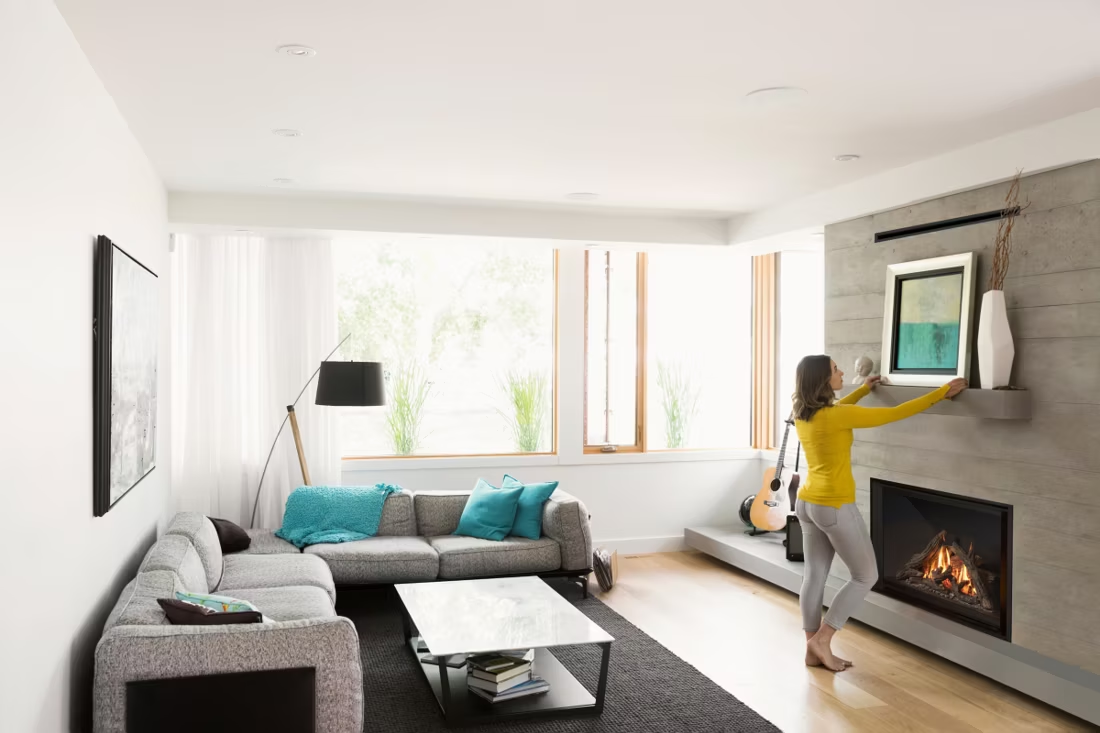
Gas fits that role well. A direct-vent gas fireplace or insert lights instantly with a remote, doesn't require fuel storage or ash cleanup, and holds up better than wood-burning units in the county's humid, coastal air—no chimney creosote to manage, no moisture-swollen firewood to dry out. Natural gas service is common in the more developed parts of the county, and propane fills in for homes further out, so either fuel path is workable depending on where you live.
Three steps. No salesperson until you're ready.
Tell us about your project
Your zip code, your situation, and the fuel you're leaning toward—or let the answers point you to one.
See what's actually available
The brands dealers within 100 miles genuinely carry—real options, never a catalog mirage.
Get your dealer & Project Guide
A trusted local dealer, plus the free Project Guide & Parts List that names every component of the job.
Frequently Asked Questions
How much does a gas fireplace installation cost in Brazoria County?
Installations typically run in the $4,500 to $11,000 range depending on the unit and the scope of work. A direct-vent gas insert placed into an existing masonry fireplace with a gas line already run tends to land on the lower end. A new built-in gas fireplace for a room addition or remodel—with framing, venting through an exterior wall, and a fresh gas line—sits toward the middle or higher end. Coastal humidity here doesn't add cost directly, but it's part of why local installers favor sealed direct-vent units over anything that vents into the attic space.
Is a gas fireplace even worth it if Brazoria County barely gets cold?
For most homeowners, yes—but it's worth being honest about the role it plays. At roughly 1,074 heating degree days a year, this isn't a climate where a fireplace is doing the heavy lifting of home heating the way it would in a place like Bismarck, ND. What a gas fireplace does well here is give you instant ambiance and supplemental warmth during the county's occasional January cold fronts, without the upkeep of a wood-burning setup. If you want a design centerpiece that also earns its keep a dozen nights a year, gas delivers. If you're chasing serious heat output, a gas fireplace was never really the tool for that in this climate.
Can I convert an existing wood-burning fireplace to gas?
Yes, and it's a common project for older homes in Angleton, Alvin, and Lake Jackson that were built with a traditional masonry fireplace. A gas insert goes into the existing firebox and vents through the current chimney with a liner, or through a new direct-vent path if the chimney isn't in good shape. Costs generally run $4,500 to $9,500 depending on whether new gas line work is needed. Given how little wood-burning actually gets used in this climate—oak, pecan, and mesquite are the locally available species, but few households burn enough to justify chimney upkeep—converting to gas is often the more practical long-term move.
Natural gas or propane—which do I need in Brazoria County?
It depends on where you live. Natural gas service reaches much of the more built-up parts of the county, including Pearland and portions of Alvin and Angleton. Homes further out—toward Freeport, Damon, or the more rural stretches of the county—are more likely to rely on propane, either from an existing tank or a new tank set up by a local propane supplier. Most gas fireplace models can be configured for either fuel with the correct orifice and regulator, so your choice usually comes down to what's already running to your house rather than the fireplace itself.
Will a gas fireplace still work if the power goes out?
Most will, which matters here given how often Gulf Coast tropical weather knocks out power. Units with intermittent pilot ignition (IPI) run on a battery backup that kicks in automatically, so the fireplace lights on demand even without utility power. Valor fireplaces take a slightly different approach—the pilot's thermocouple generates its own electricity, so there's no battery to remember or replace at all. For a county that deals with hurricane season every year, that kind of self-powered ignition is worth asking your local dealer about specifically.
What's the difference between a gas fireplace, insert, and gas log set?
A built-in gas fireplace is a self-contained unit installed during new construction or a remodel, framed into a wall. A gas insert drops into an existing masonry firebox and uses the chimney as its vent path, converting an old wood fireplace into a sealed, efficient gas unit. A gas log set is the simplest option—it sits inside an existing open masonry fireplace without sealing it, mostly for looks and light supplemental heat, and it's a popular lower-cost choice for homeowners in Brazoria County who mainly want the visual of a fire rather than heating performance.
Do I need a permit to install a gas fireplace in Brazoria County?
Generally yes—new gas fireplace installations require a building permit and gas line permit, whether you're inside a city like Pearland or Lake Jackson (through that city's building department) or in an unincorporated part of the county (through Brazoria County Permits). The gas line portion has to be handled by a licensed gas-fitter, which is one of the practical reasons to go through a trusted hearth dealer rather than a general handyman—they coordinate the gas work, venting, and inspection as one job instead of leaving you to manage separate trades.
Vented vs. vent-free gas fireplaces—what should I know for a coastal Texas home?
Vented (direct-vent) units draw combustion air from outside and exhaust it back outside through a sealed pipe—they're the standard, code-friendly choice almost everywhere, including Brazoria County. Vent-free units burn without any outside venting at all, releasing some combustion byproducts and moisture into the room. That last part matters more here than in a dry climate: Gulf Coast humidity already puts pressure on indoor air quality and moisture control, so most local dealers steer homeowners toward direct-vent units rather than adding more moisture into the house. Vent-free is legal in Texas, but it's not the default recommendation for this area.
Should I get a wood-burning fireplace instead, since oak and mesquite are so common locally?
Probably not as your primary choice, and it's worth being straightforward about why. Wood-burning fireplaces are honestly a poor fit for Brazoria County's climate—with only about 1,074 heating degree days a year and winter lows rarely dropping much past the 30s, there's rarely a cold enough stretch to justify the ash cleanup, chimney maintenance, and creosote management wood heat requires, even with plentiful local oak, pecan, and mesquite. A small number of homeowners still install a wood-burning unit for the authentic fire experience or for a hunting camp or rural property elsewhere, but for a primary residence in this county, gas gives you the same visual payoff with none of the upkeep headaches in a humid coastal climate.
Why is my open fireplace making my house colder?
Open fireplaces suck—literally. As the fire burns, it consumes air your furnace already paid to heat and pulls it out through the chimney, so the house is actually colder after the fire goes out than before you lit it. An insert fixes this: it seals the chimney, puts fixed glass across the front, and turns that hole in your house into a real heat source.
Can I put a TV above my fireplace?
Yes—with an asterisk. Fireplaces are hot and TVs don't like heat. Either put a mantel between them to deflect rising warmth, or choose a fireplace with heat-management technology that creates a cool zone on the wall above—the wall stays around 125 degrees, barely warm, while the room still gets full heat. If you like clean lines and don't want a mantel, heat management is the answer.
Can I install a fireplace myself?
If you're putting a fire in your house on purpose, it's best to work with an expert. Unless you're genuinely experienced in framing, gas line, vent pipe, and the national code on clearances to combustibles, have a professional do it—and ideally the same company that sells you the fireplace, so warranty, service, and liability all live under one roof.
How much should I budget for a fireplace?
For an average home—covering the fireplace, the vent pipe, and basic installation—a budget between $3,900 and $5,500 gives you a lot of options across wood, gas, and pellet. By the time you add finish work, gas line, and electrical, the average complete installation lands between $5,000 and $12,000 all-in. In a remodel or new build, a good rule is to put about 2.5% of the total project cost toward the fireplace.
Stove and Fireplace Dealers in Brazoria County
Listings include WhyFire partner dealers, dealers we have verified as authorized for the brands we recommend, and established local businesses that carry hearth products. Every listing shows which one it is. The ones marked Preferred run on WhyFire's software, so they can show you real pricing and book your appointment right here. No manufacturer pays for placement. How we verify dealers →
Fireplaces By Roye
Patio 1
USA Supreme Services, LLC
Get your Brazoria County gas fireplace project planned right.
Tell me a bit about your home and I'll match you with a trusted local dealer and send over a free Project Guide & Parts List—the exact parts, vent kit included, for your specific gas fireplace install in Brazoria County.
Find Your Fireplace →