
Find a gas fireplace built for Alvin's short, mild winters.
Gulf Coast winters rarely dip below freezing, but a gas fireplace still earns its keep—for cool snaps, ambiance, and heat during hurricane-season outages. Find the right unit and connect with a trusted local dealer.
Every Project Starts From One of These Five Situations
Ambiance and backup heat, not a furnace replacement.
Alvin sits at just 33 feet above sea level in Brazoria County, southeast of Houston, in climate zone 2A—one of the mildest, most humid heating zones in the country. With only about 1,273 heating degree days a year and winter lows averaging 44°F, Alvin homes rarely need aggressive heat; a furnace or heat pump easily covers the handful of nights each winter that flirt with freezing. So the case for a gas fireplace here looks different than it does in a place like Duluth or Bozeman—it's less about survival heat and more about ambiance, resale value, and reliable warmth on the rare hard freeze.
There's also a practical Gulf Coast reason Alvin homeowners add gas fireplaces: hurricane season. Storms like Harvey and, more recently, Beryl have knocked out power across the CenterPoint Energy service territory for days at a stretch, sometimes during the only genuinely cold weather of the year. A direct-vent gas fireplace with the right ignition system will still light and heat a room with no grid power at all. Natural gas service reaches much of the older parts of Alvin, while newer growth toward 77583 and unincorporated Brazoria County often relies on propane tanks instead—either fuel works fine once your dealer sets up the unit correctly.
Three steps. No salesperson until you're ready.
Tell us about your project
Your zip code, your situation, and the fuel you're leaning toward—or let the answers point you to one.
See what's actually available
The brands dealers within 100 miles genuinely carry—real options, never a catalog mirage.
Get your dealer & Project Guide
A trusted local dealer, plus the free Project Guide & Parts List that names every component of the job.
Frequently Asked Questions
How much does a gas fireplace installation cost in Alvin?
A typical gas fireplace or insert installation in Alvin runs between $3,500 and $8,500, depending on whether you're installing a direct-vent unit into an existing masonry fireplace, running new gas line to a room that doesn't already have one, or building out a fresh unit for new construction. Homes already on natural gas service with an existing chimney chase sit toward the lower end; homes needing a propane tank set, a longer gas line run from the meter, or new framing and venting land closer to the top. A trusted local dealer will give you a firm number after walking the space.
Can I convert an existing wood-burning fireplace to gas in Alvin?
Yes, though it's less common here than in colder parts of the country—wood heat never really took hold in Brazoria County the way it has in a place like Duluth, given how mild the winters are. Still, some of Alvin's older homes have an existing masonry fireplace that rarely gets used. A local dealer can install a direct-vent or B-vent gas insert into that firebox, typically for $3,500 to $7,000, using the existing chimney chase to run the venting liner. It's a popular way to get real, on-demand flame without storing firewood in a climate where humidity makes wood storage more of a hassle than a tradition.
Do I need natural gas, or is propane more common in Alvin?
It depends on where in Alvin you're located. Closer to the older core around 77511, natural gas mains are more likely to reach the house. Out toward 77583 and the newer subdivisions pushing toward Manvel and unincorporated Brazoria County, propane tanks are common since gas infrastructure hasn't kept pace with growth. Either fuel works in nearly any gas fireplace model—the installer just sets the orifice and regulator for whichever you have. If you're unsure which you have, check your water heater or range; if it runs on gas, you already know the answer for your house.
Will a gas fireplace still work if the power goes out during hurricane season?
This is one of the more practical reasons Alvin homeowners choose a gas fireplace despite the mild winters. Brazoria County sits squarely in the path of Gulf hurricanes, and outages from storms like Harvey and Beryl have left parts of the CenterPoint Energy territory without power for days—sometimes during the only real cold snap of the season. A gas fireplace with a standing pilot, or one built with battery-backup ignition, will light and heat a room with no electricity at all. If storm-season backup heat is part of why you're considering a fireplace, mention it to your local dealer—it narrows the model list to units that don't depend on line power to ignite.
Fireplace, insert, or stove—what's right for an Alvin home?
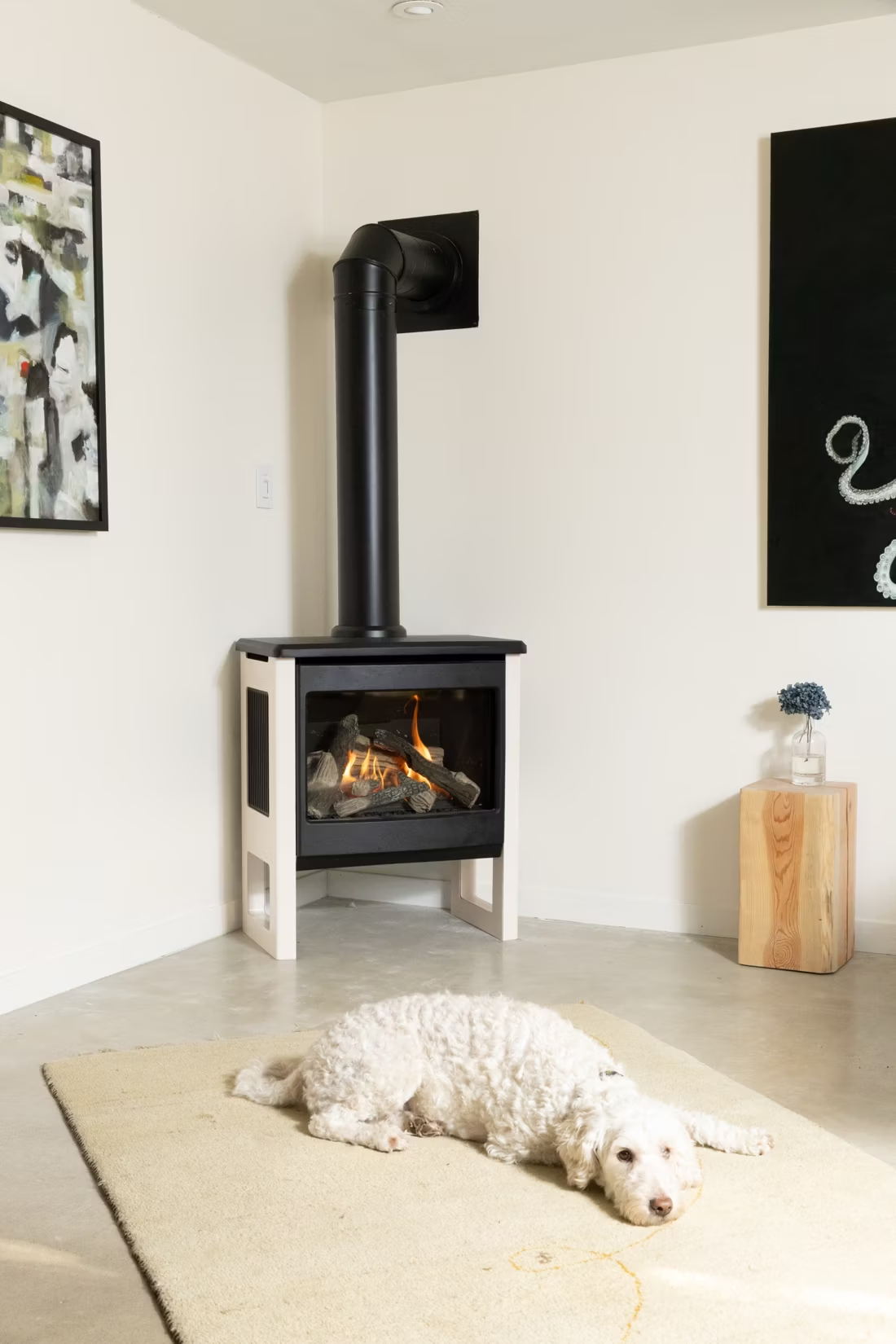
A gas insert fits into an existing masonry firebox and is the most common upgrade for Alvin's older homes with a fireplace that's rarely used. A built-in gas fireplace is framed into a wall and is the standard choice for new construction or a remodel without an existing hearth. A freestanding gas stove sits on the floor and vents through a wall or chimney chase—less common here, but sometimes chosen for a sunroom or converted garage. Most Alvin projects land on either an insert or a built-in unit, depending on whether a fireplace already exists in the home.
Do I need a permit to install a gas fireplace in Alvin?
Yes. Inside city limits, the City of Alvin Building Department requires a permit for both the gas line work and the fireplace installation itself. If your home falls in an unincorporated part of Brazoria County—common in the 77583 zip code—permitting runs through the county instead. Either way, the gas line connection has to be done by a licensed gas-fitter, which is why it's worth using a hearth dealer who coordinates the gas work, venting, and inspection as one job rather than juggling separate contractors yourself.
Should I choose a vented or vent-free gas fireplace in Alvin's climate?
Vent-free units are legal in Texas, but I'd think twice before choosing one for a Gulf Coast home. Alvin's humidity already runs high most of the year, and vent-free fireplaces release water vapor directly into the room—adding to moisture concerns in a climate that doesn't need the help. A direct-vent fireplace exhausts combustion byproducts outside through a sealed pipe, keeping indoor humidity and air quality unaffected. For most Alvin homes, direct-vent is the better call, and it's what the majority of local dealers install by default.
How often does a gas fireplace need to be serviced in Alvin?
Once a year is the standard recommendation, even in a climate like Alvin's where the fireplace might only run a few dozen hours a season. A technician checks the burner, pilot assembly, gas connections, and venting, and cleans the glass and interior—usually $150 to $250 for the visit. Because Alvin units see lighter use than they would in a colder state, the annual check is often more about catching a slow gas leak or a spider nest built inside unused venting than wear from heavy burning—an unglamorous but genuinely common issue in fireplaces that sit idle most of the year.
Gas vs. electric fireplace—which makes more sense for Alvin's climate?
Given how mild Alvin's winters are—average lows around 44°F, with plenty of days that need no heat at all—this is a fair question. Electric fireplaces cost far less to install (often $400 to $1,200), plug into a standard outlet, and provide ambiance with modest supplemental warmth, which suits a climate that doesn't demand much. Gas fireplaces cost more upfront but produce real heat output and, with the right ignition system, keep working without grid power—a meaningful advantage during hurricane-season outages across CenterPoint Energy or Texas-New Mexico Power territory. At roughly 13.4 cents per kWh locally, running electric heat isn't expensive here either. If you mainly want a focal point with occasional warmth, electric is the simpler route. If you want something that can genuinely heat a room and keep working in a storm, gas is the better investment.
Why is my open fireplace making my house colder?
Open fireplaces suck—literally. As the fire burns, it consumes air your furnace already paid to heat and pulls it out through the chimney, so the house is actually colder after the fire goes out than before you lit it. An insert fixes this: it seals the chimney, puts fixed glass across the front, and turns that hole in your house into a real heat source.
Is my gas fireplace wasting gas?
If it was installed more than 15 years ago, probably. Older gas fireplaces keep a standing pilot light burning all the time, and that little flame can cost a couple hundred dollars a year. Newer models use pilot-on-demand ignition—the pilot lights only when you use the fireplace and goes out when you turn it off.
Can I install a fireplace myself?
If you're putting a fire in your house on purpose, it's best to work with an expert. Unless you're genuinely experienced in framing, gas line, vent pipe, and the national code on clearances to combustibles, have a professional do it—and ideally the same company that sells you the fireplace, so warranty, service, and liability all live under one roof.
How much should I budget for a fireplace?
For an average home—covering the fireplace, the vent pipe, and basic installation—a budget between $3,900 and $5,500 gives you a lot of options across wood, gas, and pellet. By the time you add finish work, gas line, and electrical, the average complete installation lands between $5,000 and $12,000 all-in. In a remodel or new build, a good rule is to put about 2.5% of the total project cost toward the fireplace.
Nearby Dealers
Hearth shops serving Alvin and the surrounding area.
Find your gas fireplace in Alvin.
Tell us a bit about your Alvin home and we'll match you with a trusted local dealer and send over a free Project Guide & Parts List—the exact parts, including the vent kit, for your gas fireplace project, with permits and venting sized correctly from the start.
Find Your Fireplace →