
Keep Your Family Warm and Safe—No Matter What
Benbrook doesn't need wood heat to survive winter—but plenty of homeowners still want a real fire. Find a local dealer who installs them right.
Every Project Starts From One of These Five Situations
A mild climate, not a wood-heat climate.
Benbrook sits at 712 feet in Tarrant County with an average winter low around 33°F and a mild winter heating load—a fraction of what a place like Fargo, ND or Duluth, MN racks up in a single cold snap. Central heat handles the vast majority of Benbrook's winter, and wood-burning stoves as a primary heat source are effectively nonexistent here. Air quality isn't a limiting factor the way it is in some Western cities with winter inversions—there simply isn't enough cold weather to make wood a heating necessity.
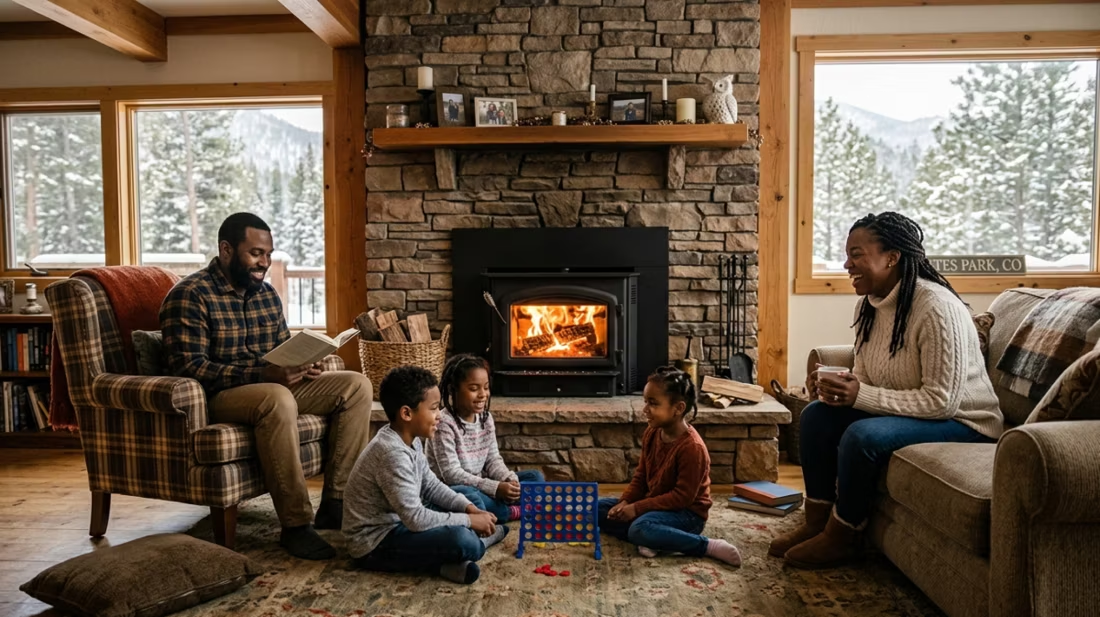
That said, wood-burning fireplaces haven't disappeared from Benbrook. Homeowners in older neighborhoods near the lake and in newer builds off Winscott Road still request them for the ambiance of a real fire, for holiday gatherings, and as a hedge against grid trouble—Winter Storm Uri in February 2021 knocked out power across Tarrant County for days, and it left a lasting impression on plenty of local homeowners about having a non-electric heat source on hand. Local hardwoods like post oak, pecan, and mesquite are easy to source here (mesquite especially, given its role in Texas barbecue culture), which makes an occasional wood fire a genuinely practical option even if it's never the main heating plan.
Three steps. No salesperson until you're ready.
Tell us about your project
Your zip code, your situation, and the fuel you're leaning toward—or let the answers point you to one.
See what's actually available
The brands dealers within 100 miles genuinely carry—real options, never a catalog mirage.
Get your dealer & Project Guide
A trusted local dealer, plus the free Project Guide & Parts List that names every component of the job.
Frequently Asked Questions
How much does a wood-burning fireplace cost to install in Benbrook?
Because wood-burning installs are a smaller slice of the Benbrook hearth market, pricing varies more than it would in a wood-heat region. A factory-built, zero-clearance wood-burning fireplace with framed chase and Class A chimney typically runs $4,000 to $8,000 installed. Retrofitting a wood-burning insert into an existing masonry fireplace is usually less—often $3,000 to $5,500—since the chimney structure is already in place. Full custom masonry fireplaces, less common in new North Texas construction, can run well beyond that. A local dealer can give you a firm number once they've seen your home's framing and existing chimney, if any.
Does a wood-burning fireplace even make sense in Benbrook's climate?
For heating a home day to day, no—Benbrook's mild winters and 33°F average low don't create the kind of sustained cold that makes wood heat a practical primary system. But that's not the only reason people install one. Plenty of Benbrook homeowners want a real wood fire for ambiance during the handful of genuinely cold weeks each winter, for entertaining, or as backup heat in case of an extended power outage like the one Tarrant County saw during Winter Storm Uri. If your goal is efficient, sustained heat for a cold-climate home, gas or electric will serve you better here. If you want the experience of a real fire and some backup capability, wood still has a place.
Do I need a permit to install a wood-burning fireplace in Benbrook?
Yes—new wood-burning fireplace or insert installations typically require a building permit through the City of Benbrook's building inspections office, covering the chimney chase, framing, and clearances to combustibles. If you're just outside city limits in unincorporated Tarrant County, permitting runs through the county instead. Most reputable local hearth dealers handle the permit application and schedule the inspection as part of the installation, so you generally don't have to navigate it yourself—but it's worth confirming with your installer up front, especially for a retrofit into an older masonry fireplace that may not meet current clearance codes.
What wood burns best in a Benbrook fireplace?
Post oak and pecan are the two most common choices for indoor wood-burning fireplaces around Benbrook and the greater Fort Worth area—both are dense hardwoods that burn long and clean with manageable spark. Mesquite is everywhere locally thanks to Texas barbecue culture, and it makes a fine fire, but it pops and throws sparks more than oak or pecan, so it's better suited to an enclosed firebox with a secure screen or glass doors than an open hearth. Whatever species you choose, make sure it's seasoned at least 6-12 months—green mesquite and oak both burn dirty and build creosote fast.
Can a wood fireplace act as backup heat if the power goes out?
Yes, and it's one of the more practical reasons Benbrook homeowners still install one. Unlike gas fireplaces with electronic ignition or electric units, a standard wood-burning fireplace or stove needs no electricity at all to produce heat—a real advantage after events like February 2021's Winter Storm Uri, when Oncor customers across Tarrant County went days without power in freezing temperatures. A wood-burning unit sized for one or two rooms won't replace your whole-house HVAC, but it can keep a living area livable during a multi-day outage, which is exactly the scenario that pushes some Benbrook homeowners toward wood over gas or electric for at least one room in the house.
Wood vs. gas fireplace—which fits a Benbrook home better?
For most Benbrook homeowners, gas is the more practical everyday choice—it's the standard fuel in this area, lights instantly, needs no wood storage or ash cleanup, and pairs well with the region's mild, mostly moderate winters. Wood's advantage is narrower but real: it works without electricity, gives you a genuine fire experience, and lets you use inexpensive or free local hardwood like oak and pecan. If you want one fireplace that does everything with the least hassle, gas wins. If you specifically want a non-electric backup heat source or you love tending a real wood fire on the occasional cold night, wood still earns its place—some homeowners here install gas in the main living space and a smaller wood-burning unit or outdoor fireplace as the secondary option.
How often does a rarely-used wood fireplace need chimney maintenance?
Even with light use, the CSIA still recommends an annual inspection before burning season, typically in the fall. Benbrook's mild winters mean most wood-burning fireplaces here get used far less than one in a cold-climate home—often a handful of nights a year rather than daily burns all winter—so creosote buildup is slower and a full sweep every year or two is usually sufficient rather than mid-season cleanings. The bigger risk with infrequent use is actually neglect: a chimney that sits unused for a year or more should still be checked for animal nests, debris, or moisture damage before the next fire.
Where can I find a dealer who actually installs wood-burning fireplaces near Benbrook?
This is the real challenge in a market like Benbrook's—because wood heat isn't in high demand here, not every hearth retailer in the Fort Worth area stocks or installs wood-burning units, and some general contractors will steer you toward gas by default simply because that's what they install most. The dealers worth working with are the ones who still carry EPA-certified wood-burning stoves, inserts, and factory-built fireplaces and can size and vent them correctly for a masonry retrofit or new chase. That's exactly the matching problem Find My Fireplace solves—we connect you with a trusted local dealer who genuinely handles wood-burning installs, not just whoever shows up first in a search.
Can I add a wood-burning fireplace to new construction, or only retrofit an existing one?
Both are possible. A factory-built, zero-clearance wood-burning fireplace can be framed into new construction with a Class A chimney run through the roof—this is more common in custom or semi-custom Benbrook builds than in production track homes, where builders default to gas or electric to keep costs down. If you already have an older masonry fireplace, either from an original 1970s-80s Benbrook build or a later custom home, a wood-burning insert is usually the more cost-effective path since it reuses the existing chimney structure. A local dealer can tell you quickly which route fits your home once they've seen the existing chimney or framing plan.
Why is a fireplace insert so efficient?
An insert does two things: it seals the chimney completely, so you stop losing air you already paid to heat, and it radiates warmth into the room through the firebox and glass. Most add a heat-exchange fan that pulls cool room air underneath, wraps it around the hot firebox, and pushes it back out warm. Your home is more efficient before you've even lit the first fire.
Why is my open fireplace making my house colder?
Open fireplaces suck—literally. As the fire burns, it consumes air your furnace already paid to heat and pulls it out through the chimney, so the house is actually colder after the fire goes out than before you lit it. An insert fixes this: it seals the chimney, puts fixed glass across the front, and turns that hole in your house into a real heat source.
Can I install a fireplace myself?
If you're putting a fire in your house on purpose, it's best to work with an expert. Unless you're genuinely experienced in framing, gas line, vent pipe, and the national code on clearances to combustibles, have a professional do it—and ideally the same company that sells you the fireplace, so warranty, service, and liability all live under one roof.
Can a fireplace actually lower my heating bill?
Yes—by creating a comfort zone. A furnace heats every square foot of the house just to warm the one room you're in; a gas fireplace on low burns roughly a sixth of the gas a typical furnace does. Set the furnace around 55–60 degrees as a baseline, then heat the rooms your family actually uses. Families who heat this way commonly save $20–$60 a month.
Nearby Dealers
Hearth shops serving Benbrook and the surrounding area.
Find your wood-burning fireplace in Benbrook.
Tell us about your home and whether you want ambiance, backup heat, or both—we'll match you with a local dealer who genuinely installs wood-burning units and send you a free Project Guide & Parts List for your project.
Find Your Fireplace →