
Warmth and ambiance, built for Austin County's mild winters.
From Bellville to Sealy, San Felipe to New Ulm, Austin County rarely sees a hard freeze—which is exactly why electric fireplaces fit so well here. Find the right unit and connect with a trusted local dealer.
Every Project Starts From One of These Five Situations
Built for warmth on demand, not brutal winters.
Austin County sits in Texas's hot-humid Zone 2A climate belt, tucked between the Brazos and Colorado rivers roughly an hour west of Houston. Winters here are short and mild—the average nighttime low hovers around 42°F, and the county has a very light winter heating need overall, a fraction of what a place like Duluth, Minnesota logs in a single cold month. For most of the year, families in Bellville, Sealy, San Felipe, Wallis, and New Ulm don't need heat at all. A fireplace here is about ambiance, resale appeal, and taking the edge off an occasional January cold snap—not keeping a house alive through a hard freeze.
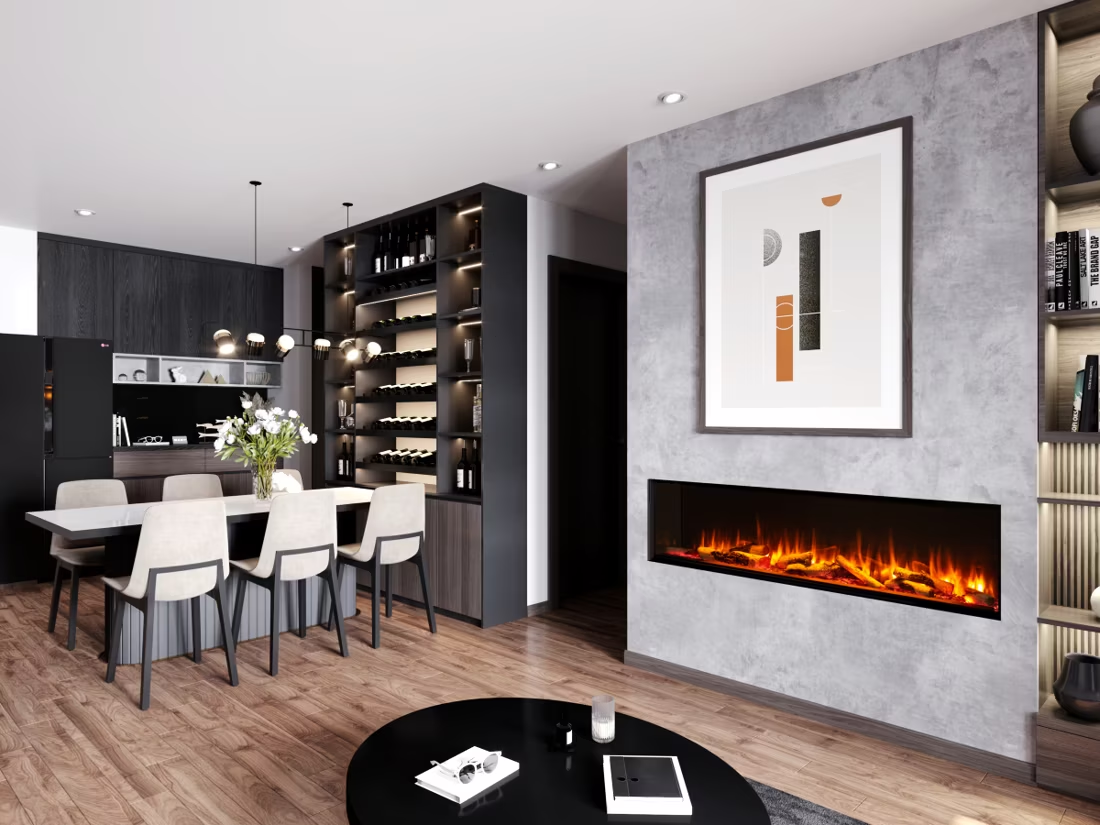
Oak, pecan, and mesquite grow throughout the county, but in this climate they're more likely to end up in a smoker than a firebox—wood-burning heat just isn't something most Austin County homes need, and it shows in how rarely you'll find a working wood stove outside a historic farmhouse. Gas is a solid option for homeowners who want real flame with instant heat, especially where propane service already reaches the property. But electric is the simplest answer for most people here: no chimney, no gas line, no venting, and no burn permit to track down. A wall-mounted or insert-style electric unit drops into a den in Sealy or a remodeled fireplace surround outside Bellville with minimal disruption, and it looks the part year-round even on the many nights it's never turned on for heat at all.
Three steps. No salesperson until you're ready.
Tell us about your project
Your zip code, your situation, and the fuel you're leaning toward—or let the answers point you to one.
See what's actually available
The brands dealers within 100 miles genuinely carry—real options, never a catalog mirage.
Get your dealer & Project Guide
A trusted local dealer, plus the free Project Guide & Parts List that names every component of the job.
Frequently Asked Questions
How much does an electric fireplace installation cost in Austin County?
A plug-in freestanding or wall-mounted electric fireplace typically runs $300 to $2,500 for the unit itself, with no real installation cost beyond mounting hardware since it plugs into a standard outlet. A built-in electric insert or a linear wall unit that requires a dedicated 120V or 240V circuit run by a licensed electrician usually lands between $1,500 and $4,000 once wiring and finish work are included. Costs trend toward the higher end for custom surrounds or when new framing is needed in an older Austin County farmhouse. Local dealers will give you a firm number after seeing the space.
Do I need a permit to install an electric fireplace in Austin County?
In most cases, no. A plug-in electric fireplace that runs off an existing outlet doesn't trigger a building or electrical permit anywhere in the county, whether you're in Bellville, Sealy, or unincorporated county land. If your installation requires a new dedicated circuit—common with larger built-in units—the electrical work itself may need to be pulled by your electrician through the county's electrical permitting process. It's a much lighter lift than a gas line or chimney permit, which is part of why electric is such a popular no-hassle option here.
What size electric fireplace do I need for my home?
Because Austin County has such a light winter heating need overall, most homeowners are buying an electric fireplace for supplemental warmth and ambiance rather than whole-room heating. Most units on the market put out 5,000 to 10,000 BTUs and are rated to take the chill off a 400 to 1,000 square foot space—plenty for a den, living room, or primary bedroom on a cold January night. You rarely need to size up the way a homeowner in a colder climate would, since the unit isn't carrying real heating load through a winter season.
What's the difference between an electric insert, a wall-mounted unit, and a mantel package?
An electric insert is built to drop into an existing fireplace opening—a natural fit for older masonry fireplaces found in Bellville and San Felipe homes that no longer get used for wood. A wall-mounted or linear unit hangs flat against the wall like a large television and works well in newer construction or a remodel where there's no existing firebox. A mantel package pairs a smaller electric insert with a surrounding mantel and hearth for a more traditional living-room look. All three plug into standard household power in most cases, so the choice comes down to the space you have and the look you want, not heating performance.
Will my electric fireplace work during a power outage?
No—electric fireplaces require power to run, which is worth thinking through given Texas's grid history, including the February 2021 freeze that left parts of the state without power for days. Wood and some gas units can provide backup heat during an outage; electric cannot. For most Austin County homeowners this isn't a dealbreaker, since the county's mild winters mean an outage rarely coincides with dangerous cold. But if backup heat during a storm is a priority for your household, it's worth discussing a secondary gas or propane option with a local dealer alongside your electric fireplace.
How much does it cost to run an electric fireplace per month?
Electric fireplaces are inexpensive to operate—most units draw around 1,500 watts on the heat setting, which costs roughly 15 to 25 cents per hour depending on your electric rate. Given Austin County's mild climate, most households only run the heat function occasionally through the winter, so realistic monthly cost is often just a few dollars even with regular evening use. Running the flame effect alone, without the heater engaged, costs pennies since it draws only a small amount of power for the LED lighting.
Can I install an electric insert into my existing wood-burning fireplace?
Yes, and it's a common project for older homes around Bellville, San Felipe, and Sealy that have a masonry fireplace that's gone unused for years. An electric insert slides into the existing firebox opening, plugs into a nearby outlet or a new dedicated circuit, and instantly turns a cold, sooty fireplace into a clean, functional focal point without any chimney work. It's usually the fastest and least expensive way to bring an old fireplace back into daily use.
Does Austin County's humidity affect electric fireplace performance?
Zone 2A's hot, humid climate is easier on an electric fireplace than it is on wood-burning equipment, since there's no chimney, no creosote, and no moisture-related corrosion concerns the way there can be with metal flue components. The main thing to watch for is installing units with sealed electronics in spaces prone to higher humidity, like a converted porch or a home without central air running constantly through the summer. A local dealer can point you toward models built to hold up in Gulf Coast humidity without electronic issues over time.
Electric vs. gas—which is right for my Austin County home?
Gas fireplaces deliver real flame and genuine heat output, which matters if you want a fireplace that can actually contribute to heating a room on a cold front, and propane service reaches much of rural Austin County for homeowners who want that option. Electric fireplaces skip the gas line and venting entirely, cost far less to install, and work in nearly any room since they only need power—but they're built for ambiance and light supplemental warmth rather than serious heat output. For most Austin County homes, where winters are short and heating demand is low, electric covers the need at a fraction of the cost and complexity. Homeowners who want a stronger flame presentation or backup heat during outages tend to lean gas.
Can I put a TV above my fireplace?
Yes—with an asterisk. Fireplaces are hot and TVs don't like heat. Either put a mantel between them to deflect rising warmth, or choose a fireplace with heat-management technology that creates a cool zone on the wall above—the wall stays around 125 degrees, barely warm, while the room still gets full heat. If you like clean lines and don't want a mantel, heat management is the answer.
Do electric fireplaces actually produce heat?
Yes—most put out around 4,800–5,000 BTUs from a standard outlet, which comfortably warms a bedroom, office, or den as a comfort-zone heater. What they won't do is carry a whole house the way wood, gas, or pellet can. Think of electric as ambiance-first with honest supplemental heat: flames on with no heat in July, flames plus warmth in January.
Can a fireplace actually lower my heating bill?
Yes—by creating a comfort zone. A furnace heats every square foot of the house just to warm the one room you're in; a gas fireplace on low burns roughly a sixth of the gas a typical furnace does. Set the furnace around 55–60 degrees as a baseline, then heat the rooms your family actually uses. Families who heat this way commonly save $20–$60 a month.
What is an in-home preview and do I need one?
It's a visit where a hearth professional measures your space, confirms the model you picked actually works in your home, and walks the specs—framing, gas line, venting, finish work—before anything is ordered. Some details you just can't know until you see the house. Never make a down payment without one; it's the single most-skipped step that burns buyers.
Stove and Fireplace Dealers in Austin County
Listings include WhyFire partner dealers, dealers we have verified as authorized for the brands we recommend, and established local businesses that carry hearth products. Every listing shows which one it is. The ones marked Preferred run on WhyFire's software, so they can show you real pricing and book your appointment right here. No manufacturer pays for placement. How we verify dealers →
Patio 1
All Thingz U Need Inc
Find your electric fireplace in Austin County.
Tell us a bit about your home and we'll put together a free Project Guide & Parts List—the right electric fireplace or insert for your space, matched with a trusted local dealer in Austin County.
Find Your Fireplace →