
Find your fireplace in Austin County.
From Bellville to Sealy, Wallis, and San Felipe, this hub rolls up hearth retailers, service techs, and fuel suppliers across the whole county. Tell us your project and we'll match you with a local dealer who installs it right here.
Every Project Starts From One of These Five Situations
Mild Gulf Coast winters, 1,379 heating degree days, and a county where gas and electric do the heavy lifting.
Austin County sits in the Texas Gulf Coastal Plain between Houston and San Antonio, its economy still rooted in cotton, cattle, and pecan orchards along the Brazos and San Bernard rivers. County seat Bellville anchors a cluster of small towns—Sealy, Wallis, San Felipe, Industry, New Ulm, Cat Spring—none more than a short drive apart. Winters here average 42°F for a low and rack up just 1,379 heating degree days a year, a fraction of what a place like Duluth, Minnesota sees each winter (over 9,000 HDD). Climate zone 2A means the real mechanical burden all year is cooling, not heating, and the hearth market here reflects that.
That climate reality shapes which fuels actually get installed. Gas fireplaces and inserts are the standard choice for supplemental warmth on the county's occasional hard freezes, and electric fireplaces have real traction too—easy to add to a bonus room or bedroom without any venting work. Wood-burning fireplaces exist mostly as ambiance rather than primary heat; local oak, pecan, and mesquite are all abundant and burn well, but with lows rarely holding below freezing for long, few Austin County households size a stove to actually heat the house on it. Pellet stoves are essentially absent for the same reason—brands like Forest Energy and Lignetics distribute regionally, but the overnight-burn value proposition that sells pellet stoves in colder counties doesn't apply when the heating season is this short. There are no air-quality nonattainment concerns or burn-day restrictions here, so whatever fuel you choose, that's one less variable to manage.
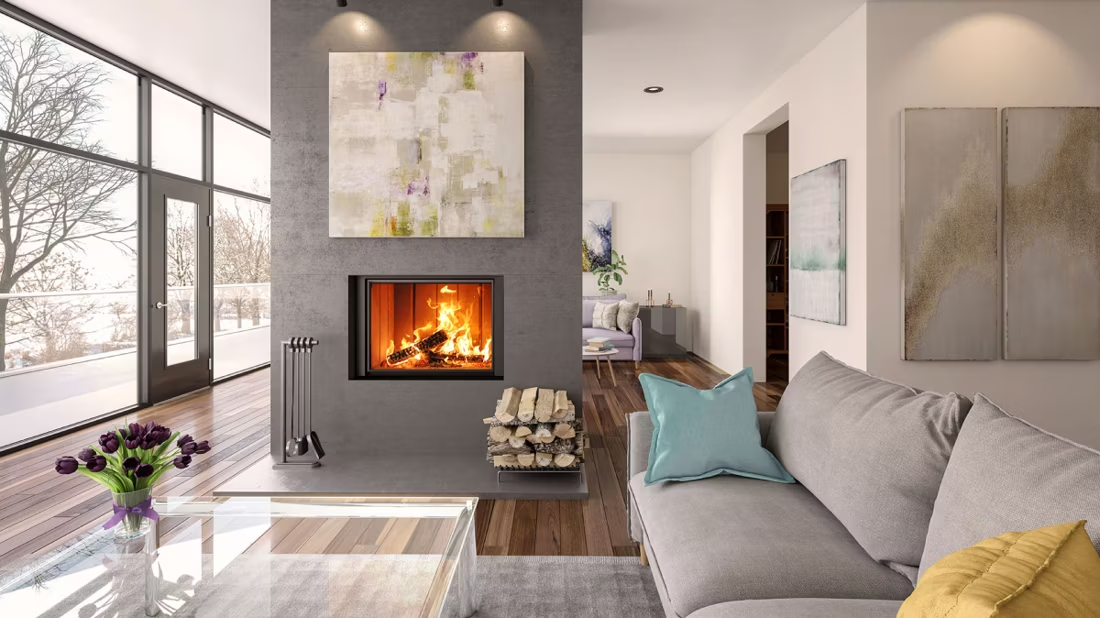
Four fuels. One honest answer for Austin County.
Three steps. No salesperson until you're ready.
Tell us about your project
Your zip code, your situation, and the fuel you're leaning toward—or let the answers point you to one.
See what's actually available
The brands dealers within 100 miles genuinely carry—real options, never a catalog mirage.
Get your dealer & Project Guide
A trusted local dealer, plus the free Project Guide & Parts List that names every component of the job.
Frequently Asked Questions
With such mild winters, does a fireplace even make sense in Austin County?
It does, just not as a primary heat source the way it would in a colder region. With winter lows averaging 42°F and only 1,379 heating degree days a year, most Austin County homeowners are choosing a fireplace for comfort and supplemental warmth during the county's occasional hard freezes, not for carrying the whole heating load. Gas fireplaces and inserts are the most practical fit—instant heat on a cold snap with none of the daily tending a wood stove needs. Electric fireplaces are close behind, especially for rooms without existing gas service, since they install without venting. Both fuels line up with how this county actually uses a hearth: occasional and comfort-driven, not constant.
Do people still install wood-burning fireplaces in Austin County?
Some do, but it's worth being honest about the fit. Oak, pecan, and mesquite are all locally abundant and burn well, and a traditional masonry fireplace or a wood-burning insert still shows up in new construction and remodels here, usually for atmosphere on the handful of genuinely cold nights each winter. What you won't find much of is wood heat used as a primary system, the way it is in colder climates, because the heating season here is too short and too mild to justify the daily wood-tending. If ambiance is the goal rather than heat output, a wood-burning unit is a reasonable choice; if you want efficient winter warmth, gas or electric will serve you better.
What about pellet stoves—are they available in Austin County?
They're rare here, and it's worth saying so plainly rather than pretending otherwise. Regional pellet brands like Forest Energy and Lignetics do distribute into Texas, so fuel itself isn't the obstacle, but pellet stoves are built around the idea of a long, steady overnight burn through a stretch of real cold—exactly the scenario Austin County's 1,379-HDD winters rarely produce. Local dealers carry gas and electric units far more commonly, and if you're set on a pellet stove you should expect a narrower selection and possibly a longer lead time than you'd find in a colder market.
Do I need a permit for a gas or electric fireplace install in Austin County?
Gas fireplace installs typically require a permit and inspection through your city's building department if you're inside Bellville, Sealy, or another incorporated town, or through the county for unincorporated areas—and any new gas line needs a licensed gas fitter regardless of jurisdiction. Electric fireplaces usually skip the permit process for plug-in units, but a hardwired built-in that needs a new circuit does require an electrical permit and inspection. Most local dealers we match homeowners with handle this paperwork as part of the install, so it's rarely something you're navigating alone.
What does a fireplace installation typically cost in Austin County?
Gas fireplaces, inserts, and stoves generally run $4,500–$11,000 installed, with the range driven mainly by whether the home already has gas service nearby or needs a new line run—a bigger factor in rural parts of the county still on propane than in the Sealy-Bellville gas corridor. Electric fireplaces are far less variable: $200–$3,000 for the unit itself, plus $400–$1,200 in labor if it's a built-in requiring a dedicated circuit rather than a plug-and-play placement. Decorative wood-burning installs vary widely depending on whether it's a factory-built unit or full masonry work. The county + fuel pages above break these numbers down further with local retailer pricing.
When's the best time to install a fireplace in Austin County?
Late summer through early fall is the smart window, before the county's first cold snap sends everyone calling installers at once. Because heating demand here is so seasonal and short, gas and electric technicians tend to book up quickly once temperatures actually drop, and a gas line permit or inspection can take longer to schedule in December than in September. Getting your unit installed and inspected ahead of the season also means it's ready to go the first time a real freeze rolls through, rather than sitting as a mid-winter emergency project.
What is an in-home preview and do I need one?
It's a visit where a hearth professional measures your space, confirms the model you picked actually works in your home, and walks the specs—framing, gas line, venting, finish work—before anything is ordered. Some details you just can't know until you see the house. Never make a down payment without one; it's the single most-skipped step that burns buyers.
Can a fireplace actually lower my heating bill?
Yes—by creating a comfort zone. A furnace heats every square foot of the house just to warm the one room you're in; a gas fireplace on low burns roughly a sixth of the gas a typical furnace does. Set the furnace around 55–60 degrees as a baseline, then heat the rooms your family actually uses. Families who heat this way commonly save $20–$60 a month.
Can I install a fireplace myself?
If you're putting a fire in your house on purpose, it's best to work with an expert. Unless you're genuinely experienced in framing, gas line, vent pipe, and the national code on clearances to combustibles, have a professional do it—and ideally the same company that sells you the fireplace, so warranty, service, and liability all live under one roof.
What are the biggest mistakes people make buying a fireplace?
Five come up constantly: budgeting for the unit but not the full job (vent, gas line, electrical, finish work); drowning in options instead of starting from style and fuel; buying without an in-home preview; handing installation to a handyman instead of a pro; and giving up out of sheer indecision. Every one is avoidable with a clear plan—step one, step two, step three.
Stove and Fireplace Dealers in Austin County
Listings include WhyFire partner dealers, dealers we have verified as authorized for the brands we recommend, and established local businesses that carry hearth products. Every listing shows which one it is. The ones marked Preferred run on WhyFire's software, so they can show you real pricing and book your appointment right here. No manufacturer pays for placement. How we verify dealers →
Patio 1
All Thingz U Need Inc
Get matched with a local Austin County dealer.
Tell us about your project and we'll put together a free Project Guide & Parts List—the right unit for your home, the parts it needs, and the local Austin County dealer we recommend for the install.
Find Your Fireplace →