
Add clean, efficient heat to your Archer County home.
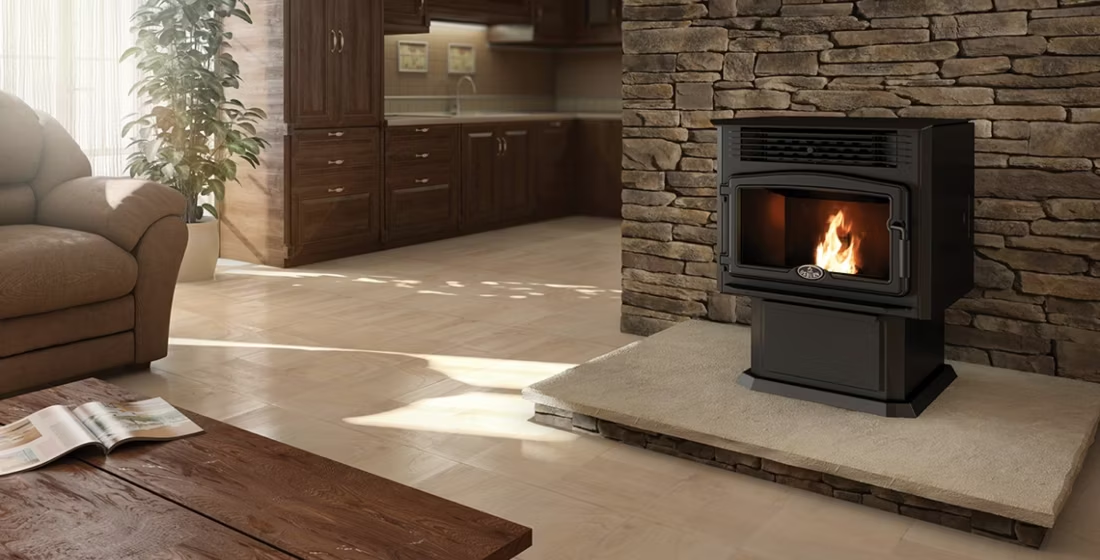
North Texas winters here run mild on average, but the blue northers that sweep down across Archer County can drop temperatures 30-40 degrees in an afternoon. A pellet stove or insert gives you clean, low-maintenance zone heat for those swings—matched with a trusted local dealer.
Every Project Starts From One of These Five Situations
Reliable heat for a climate that swings without warning.
Archer County sits in climate zone 3A, with roughly 2,726 heating degree days a year and a winter low average around 30°F—a fraction of what a place like Duluth, MN or Fargo, ND deals with. Most winters here are short and mild, running from the county seat of Archer City out to Holliday and Windthorst. But North Texas is also arctic-front country: a blue norther can push overnight lows well below freezing for a day or two even after a run of 60-degree afternoons, and that kind of on-off demand is exactly where a pellet stove earns its keep as supplemental zone heat rather than a full-time furnace replacement.
There are no air quality restrictions on solid-fuel burning in Archer County, so pellet stoves are a straightforward, code-friendly option here—no burn bans or non-attainment paperwork to navigate. Bagged pellets from regional suppliers like Forest Energy and Lignetics are the norm at farm-and-ranch and hearth retailers serving the area, and most homeowners run a pellet insert or freestanding stove in a main living space for consistent, low-mess heat that beats hauling and stacking cordwood—even though oak, pecan, and mesquite are all abundant and commonly burned locally for those who prefer wood.
Three steps. No salesperson until you're ready.
Tell us about your project
Your zip code, your situation, and the fuel you're leaning toward—or let the answers point you to one.
See what's actually available
The brands dealers within 100 miles genuinely carry—real options, never a catalog mirage.
Get your dealer & Project Guide
A trusted local dealer, plus the free Project Guide & Parts List that names every component of the job.
Frequently Asked Questions
How much does a pellet stove installation cost in Archer County?
A freestanding pellet stove installation typically runs $3,000 to $6,000 in Archer County, depending on the unit and venting distance—pellet stoves vent through a simple 3- or 4-inch PL pipe run through a wall or roof, which is far less involved than a masonry chimney for wood. Converting an existing wood-burning fireplace to a pellet insert usually costs a bit more once a stainless liner is run down the existing flue. Because most of the county is unincorporated ranchland, travel time can factor into quotes for properties well outside Archer City or Holliday.
What size pellet stove do I need for my Archer County home?
With only about 2,726 heating degree days a year, most Archer County homes don't need the largest pellet stoves on the market—a mid-size unit in the 40,000 to 50,000 BTU range is usually plenty to heat a main living area or a well-insulated ranch home, especially since the stove is typically running as supplemental heat rather than fighting sustained sub-zero cold the way a stove in Bismarck, ND or Helena, MT would. A local retailer can size the unit to your square footage and layout during an in-home visit.
Where can I buy pellets locally in Archer County?
Forest Energy and Lignetics are the two regional pellet brands most commonly stocked at farm-and-ranch supply and hearth retailers serving North Texas, including outlets around Wichita Falls that many Archer County residents already shop at for feed and ranch supplies. Because pellet demand spikes fast when a cold front is forecast, it's worth buying a season's worth early rather than waiting for the week a blue norther is due—rural stores here can sell out of bagged pellets within a day or two during a hard freeze.
What's the difference between a pellet stove and a pellet insert?
A pellet stove is a freestanding unit that sits on its own hearth pad and vents out through a wall or roof—it can go almost anywhere with the right clearances, which makes it a good fit for a shop, guest house, or a room without an existing fireplace. A pellet insert slides into an existing masonry fireplace opening and uses the existing chimney (with a liner) as its vent path. For Archer County homes with an older wood-burning fireplace that doesn't get much use, an insert is usually the simpler upgrade; for new construction or rooms without a chimney, a freestanding stove is the practical choice.
Do I need a permit to install a pellet stove in Archer County?
Much of Archer County is unincorporated, and unincorporated areas of the county generally don't enforce a residential building permit for a pellet stove installation the way a city would. If your property falls within Archer City limits, check with the city before installing. Regardless of jurisdiction, any installer worth hiring will still follow the manufacturer's clearance specs and test draft on the vent run—that's a safety standard, not a paperwork exercise, and it matters just as much on a ranch outside city limits as it does in town.
What's the best pellet stove for Archer County's climate?
Because winters here are mostly mild with occasional sharp cold fronts rather than sustained deep-freeze conditions, look for a pellet stove with a wide modulating range—one that can idle low on a 55-degree afternoon and ramp up when a blue norther rolls through overnight. A mid-size unit with a quiet auger and blower is usually a better fit for zone heating a living room or den than the largest, highest-output models built for places that see cold straight through from November to March. A local dealer can match a model to how you actually plan to use it.
How much maintenance does a pellet stove need?
Plan on emptying the ash pan every few days to weekly depending on how much you run it, wiping the glass as needed, and vacuuming the burn pot and hopper area every few weeks during heavy use. A full professional service—checking the auger, exhaust blower, gaskets, and vent run—is recommended once a year, typically before the first cold front of the season hits Archer County in late fall. This is lighter maintenance than a wood stove's annual chimney sweep, which is part of why pellet appeals to homeowners who want heat without the upkeep.
Will my pellet stove work if the power goes out?
No—this is worth being direct about. Pellet stoves rely on an electric auger to feed fuel and a blower to move heat and combustion air, so they shut down when the power does. North Texas households remember Winter Storm Uri in February 2021, when ERCOT grid failures left homes without power during the coldest stretch of the year—exactly when heat matters most. If backup heat during an outage is a priority, pair your pellet stove with a small battery backup or generator, or consider keeping a wood-burning stove or fireplace as a true off-grid option; oak, pecan, and mesquite are all locally available if you go that route.
Pellet stove vs. wood stove—which is right for my Archer County home?
Wood stoves work without electricity, burn the oak, pecan, and mesquite that are plentiful on Texas rangeland, and offer true off-grid backup heat during outages—a real consideration after Winter Storm Uri. Pellet stoves are more convenient day to day: no splitting or hauling cordwood, less ash, steadier heat output, and a thermostat-driven auger that's easy to set and forget. For a primary residence where daily convenience matters most, pellet is often the easier fit; for a hunting cabin, shop, or as backup to a home's main heat source, wood still has an edge. Plenty of Archer County properties end up with both.
What's the difference between an insert and a zero-clearance fireplace?
An insert is a fireplace that slides into a pre-existing wood-burning fireplace—if you don't have one, there's nothing to insert it into. A zero-clearance fireplace is built into a framed wall, which makes it the answer for remodels and new construction. Simple test: existing masonry fireplace means insert; blank or framed wall means zero-clearance.
How often does a pellet stove need cleaning?
A clean pellet stove is a happy pellet stove. Plan on cleaning the burn pot about once a week when you're burning regularly—ash and clinkers gum up the air holes just like a pellet barbecue. Most pellet stove problems trace back to skipped cleaning that nobody explained up front. Some designs make it easy with a trapdoor burn pot: pull a lever and the gunk drops into the ash pan.
How much should I budget for a fireplace?
For an average home—covering the fireplace, the vent pipe, and basic installation—a budget between $3,900 and $5,500 gives you a lot of options across wood, gas, and pellet. By the time you add finish work, gas line, and electrical, the average complete installation lands between $5,000 and $12,000 all-in. In a remodel or new build, a good rule is to put about 2.5% of the total project cost toward the fireplace.
Does a fireplace add value to my home?
On average, a fireplace adds back to the home about the same amount you spent installing it. Add the monthly savings from heating the rooms you actually use instead of the whole house—often hundreds of dollars a year—and the value case is strong before you even count what a fire does for how your family uses the room.
Stove and Fireplace Dealers in Archer County
Listings include WhyFire partner dealers, dealers we have verified as authorized for the brands we recommend, and established local businesses that carry hearth products. Every listing shows which one it is. The ones marked Preferred run on WhyFire's software, so they can show you real pricing and book your appointment right here. No manufacturer pays for placement. How we verify dealers →
The Ember Shop, Inc.
Home Escapes & More
David's Stove Shop Inc
Pellet Brands Stocked Around Archer County
Manufacturers will point you to the nearest stocking dealer.
Find your pellet stove in Archer County.
Tell us a bit about your home and how you plan to use it, and we'll put together a free Project Guide & Parts List—the right pellet stove or insert, the vent kit it needs, and a trusted local dealer to install it.
Find Your Fireplace →