
Clean, instant heat for Archer County's mild winters.
With winter lows averaging around 30°F and only a short, mild winter season, most Archer County homes need supplemental warmth, not a full furnace replacement. Find the right electric fireplace or insert and connect with a trusted local dealer.
Every Project Starts From One of These Five Situations
The mild-winter case for electric heat.
Archer County sits in north-central Texas—ranch and farm country around Archer City, Holliday, Windthorst, and Scotland—in climate zone 3A, where winters are short and generally mild. With a winter heating load only a small fraction of that of a place like Bismarck, ND, the county sees most nights that never get close to the single-digit lows that drive whole-home wood or gas heating decisions further north. Oak, pecan, and mesquite are all abundant locally and plenty of ranch families still burn wood for ambiance or backup heat, but for day-to-day zone heating in a bedroom, sunroom, or den, an electric fireplace covers the handful of genuinely cold nights without the chimney, the woodpile, or the gas line.
Natural gas infrastructure is limited across much of rural Archer County, and propane requires a tank and delivery contract most homeowners would rather avoid for a room that only needs supplemental heat a few weeks a year. Electric fireplaces solve that: they run off the existing panel or a simple dedicated circuit through the county's rural electric cooperative, install in an afternoon, and don't touch the roofline or exterior wall. The tradeoff worth knowing up front—and one plenty of Texans learned the hard way during the February 2021 grid event—is that an electric unit goes dark when the power does, so a good number of local households pair one with a wood stove or fireplace insert as backup for ice storms.
Three steps. No salesperson until you're ready.
Tell us about your project
Your zip code, your situation, and the fuel you're leaning toward—or let the answers point you to one.
See what's actually available
The brands dealers within 100 miles genuinely carry—real options, never a catalog mirage.
Get your dealer & Project Guide
A trusted local dealer, plus the free Project Guide & Parts List that names every component of the job.
Frequently Asked Questions
How much does an electric fireplace installation cost in Archer County?
Most electric fireplace projects in Archer County run $400 to $2,000 depending on the unit. A basic plug-in insert or wall-mount unit sits at the low end and needs nothing more than a standard outlet. A built-in electric fireplace with custom framing, a mantel surround, or a dedicated 20-amp circuit run by an electrician pushes toward the higher end. Because there's no venting, gas line, or chimney work involved, electric is consistently the least expensive fireplace fuel to install in the county—a local dealer can walk through your specific unit and wall situation to confirm which end of that range applies.
What size electric fireplace do I need for my Archer County home?
Given the county's mild winters, most homes only need an electric fireplace sized for supplemental, single-room heat rather than whole-house output. A unit in the 4,600 to 9,000 BTU range comfortably heats a bedroom, den, or sunroom in the 300 to 500 square foot range—plenty for the handful of nights each winter that dip near freezing. Homeowners in older, less-insulated ranch houses around Archer City or Windthorst sometimes size up slightly, but few Archer County homes need the largest electric units on the market, which are built more for northern climates than for zone 3A.
Do I need a permit to install an electric fireplace in Archer County?
In most cases, no—a plug-in electric fireplace that uses an existing standard outlet typically doesn't trigger a building permit. If your installation requires a new dedicated circuit or panel work, an electrical permit is usually required and your electrician or dealer will pull it as part of the job. Unlike wood or gas installations, there's no venting, no chimney inspection, and no gas-line sign-off to coordinate, which is a big part of why electric projects in Archer County tend to move faster than other fuel types from quote to finished install.
Electric vs. wood—which makes more sense in Archer County?
Wood is still deeply rooted in Archer County—oak, pecan, and mesquite are all cut locally on ranches, and a wood stove or fireplace works with no dependence on the grid, which matters during ice storms and the kind of extended outages the region saw in February 2021. Electric, on the other hand, is cleaner, requires zero fuel handling or ash cleanup, and installs almost anywhere in the house without touching the chimney. For a primary living space where convenience matters most, electric is usually the easier call. For homeowners who want backup heat that works when the power doesn't, a wood-burning unit elsewhere in the house is worth keeping alongside it—plenty of local families run both.
Can I convert an existing wood fireplace to electric in Archer County?
Yes, and it's a common project for older Archer County homes with a masonry fireplace that's rarely used. An electric insert slides into the existing firebox opening, plugs into a nearby outlet or new dedicated circuit, and gives you flame-effect ambiance and supplemental heat without maintaining a chimney. It's typically the least expensive fireplace conversion available, since there's no liner, venting, or gas line to install—just fitting the insert to your firebox dimensions, which a local dealer will measure for during a home visit.
What's the best electric fireplace for a mild climate like Archer County's?
Since most Archer County homes are using electric fireplaces for ambiance and light supplemental heat rather than serious cold-weather output, look for models with a strong flame-effect display and a heater that can be run independently of the flame—brands like Dimplex and Napoleon both offer this, so you can enjoy the fire visually in mild weather without running the heating element at all. That flexibility matters here: on a 55-degree evening you may want the look of a fire with no heat output, and on the rare 20-degree night you'll want the heater running at full capacity.
How much does it cost to run an electric fireplace in Archer County?
Most electric fireplace heaters draw around 1,500 watts on the highest setting, which works out to roughly 15 to 20 cents per hour of heater use at typical rural electric cooperative rates in this part of Texas—flame-only mode with the heater off costs only a few cents an hour. Given Archer County's short, mild winter season, a household running the heater on cold evenings for a few hours at a time, rather than continuously, will see a modest addition to the monthly bill compared to homes in colder climates that lean on electric heat all winter long.
How much maintenance does an electric fireplace need?
Very little—that's one of the main draws for Archer County homeowners who don't want to deal with chimney sweeps or gas line inspections. Dust the unit periodically, wipe down the glass front, and check the LED flame bulbs occasionally, since most last for years before needing replacement. There's no annual inspection requirement and no combustion byproducts to worry about, since electric units don't burn any fuel at all—they simply run a heating element and a light display.
Electric vs. propane—which is better for a home without natural gas access?
Much of rural Archer County lacks natural gas service, which leaves propane as the traditional gas-fireplace alternative—but propane means installing or renting a tank and setting up delivery service, plus ongoing fuel costs that fluctuate with propane market prices. Electric skips all of that: no tank, no delivery truck, no fuel storage on the property, and no combustion to vent. For homeowners who want fireplace ambiance and zone heat without adding a fuel contract to the household budget, electric is usually the simpler, lower-commitment choice—propane still makes sense if you want higher heat output or already have a tank on-site for other appliances.
Can I put a TV above my fireplace?
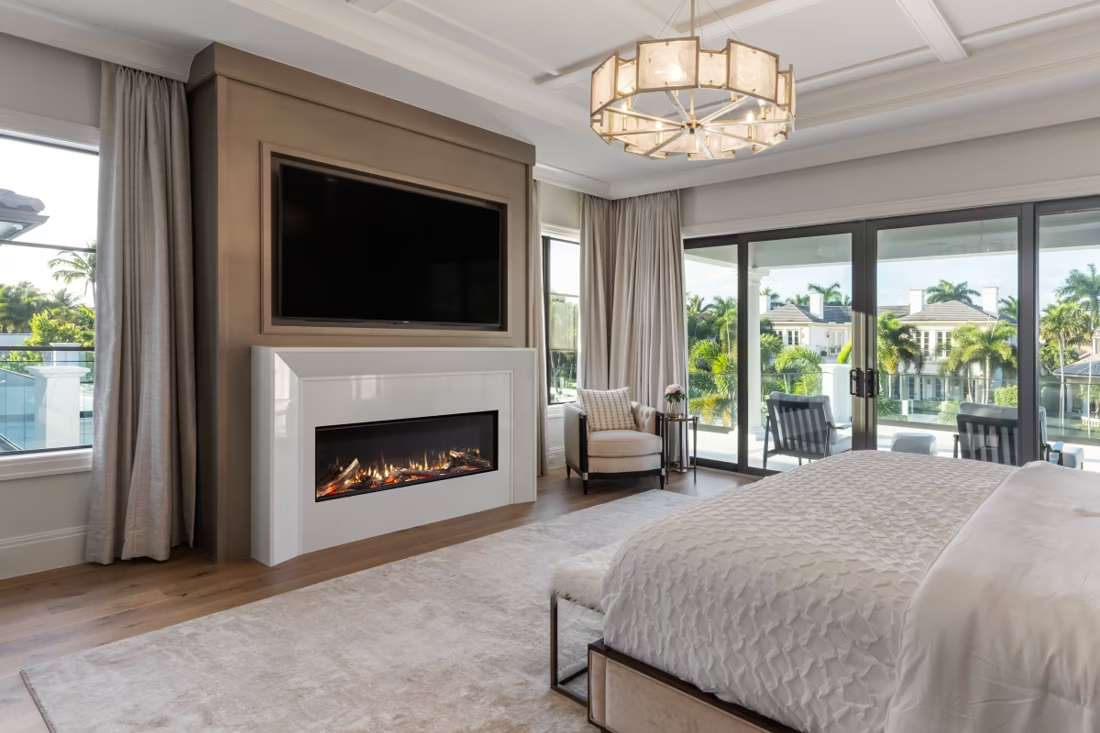
Yes—with an asterisk. Fireplaces are hot and TVs don't like heat. Either put a mantel between them to deflect rising warmth, or choose a fireplace with heat-management technology that creates a cool zone on the wall above—the wall stays around 125 degrees, barely warm, while the room still gets full heat. If you like clean lines and don't want a mantel, heat management is the answer.
Do electric fireplaces actually produce heat?
Yes—most put out around 4,800–5,000 BTUs from a standard outlet, which comfortably warms a bedroom, office, or den as a comfort-zone heater. What they won't do is carry a whole house the way wood, gas, or pellet can. Think of electric as ambiance-first with honest supplemental heat: flames on with no heat in July, flames plus warmth in January.
Does a fireplace add value to my home?
On average, a fireplace adds back to the home about the same amount you spent installing it. Add the monthly savings from heating the rooms you actually use instead of the whole house—often hundreds of dollars a year—and the value case is strong before you even count what a fire does for how your family uses the room.
Can a fireplace actually lower my heating bill?
Yes—by creating a comfort zone. A furnace heats every square foot of the house just to warm the one room you're in; a gas fireplace on low burns roughly a sixth of the gas a typical furnace does. Set the furnace around 55–60 degrees as a baseline, then heat the rooms your family actually uses. Families who heat this way commonly save $20–$60 a month.
Stove and Fireplace Dealers in Archer County
Listings include WhyFire partner dealers, dealers we have verified as authorized for the brands we recommend, and established local businesses that carry hearth products. Every listing shows which one it is. The ones marked Preferred run on WhyFire's software, so they can show you real pricing and book your appointment right here. No manufacturer pays for placement. How we verify dealers →
The Ember Shop, Inc.
Home Escapes & More
David's Stove Shop Inc
Find your electric fireplace in Archer County.
Tell us a bit about your home and we'll match you with the right electric fireplace or insert, plus a free Project Guide & Parts List and a trusted local dealer to install it.
Find Your Fireplace →