
Reliable heat, without the wood pile.
McNairy County winters are mild by national standards, but a hopper-fed pellet stove still delivers steady, thermostat-controlled warmth from Selmer to Adamsville to Michie—without the splitting, stacking, and seasoning that wood heat demands. Find the right unit and connect with a trusted local dealer.
Every Project Starts From One of These Five Situations
Steady, hands-off heat for McNairy County's mild winters.
McNairy County sits in climate zone 3A—mixed-humid West Tennessee, with an average winter low around 30°F and a moderate winter heating season overall. That's a fraction of what a true cold-climate city like Duluth, MN sees, but it's still enough sustained chill from December through February that a lot of county homes want a real secondary or primary heat source beyond a heat pump straining on the coldest mornings. There's no air quality non-attainment issue here and no winter inversion problem, so burning isn't restricted the way it is in some parts of the country—it's simply a question of picking the right appliance for a county of small towns, farmsteads, and older housing stock spread across Selmer, Adamsville, Bethel Springs, Guys, Finger, Michie, Ramer, and Stantonville.
McNairy County also happens to be home to Hamer Pellet Fuel, headquartered right in Selmer—which means pellet fuel here doesn't have to travel far to reach local stove shops and farm supply stores. Lignetics and Greenway Renewable Energy round out the regional supply, so availability isn't the concern it can be in parts of the country without a pellet mill nearby. For county residents surrounded by oak, hickory, maple, and pine woodlots, wood heat is a familiar and practical option—but pellet stoves offer something different: load a hopper, set a thermostat, and get consistent heat without cutting, splitting, or stacking a cord of hardwood every fall.
Three steps. No salesperson until you're ready.
Tell us about your project
Your zip code, your situation, and the fuel you're leaning toward—or let the answers point you to one.
See what's actually available
The brands dealers within 100 miles genuinely carry—real options, never a catalog mirage.
Get your dealer & Project Guide
A trusted local dealer, plus the free Project Guide & Parts List that names every component of the job.
Frequently Asked Questions
How much does a pellet stove installation cost in McNairy County?
A typical pellet stove installation runs roughly $3,000 to $6,000, depending on whether you're installing a freestanding stove or a pellet insert into an existing fireplace, how far the wall-vent run needs to go, and whether a dedicated electrical outlet needs to be added for the hopper's auger and blower motor. Pellet stoves vent through a small-diameter pipe straight through an exterior wall rather than requiring a full masonry chimney, which is one reason installs in McNairy County tend to run less than a comparable wood stove project. A local dealer can give you a firm number after seeing the room and the wall you're venting through.
What size pellet stove do I need for my McNairy County home?
With an average winter low around 30°F and a moderate winter heating season overall, most McNairy County homes don't need the largest units on the market. A small to mid-size pellet stove (rated for 1,000–1,800 square feet) is plenty for supplemental heat in most single-family homes and manufactured homes common throughout the county's rural areas. If you're aiming to make the pellet stove your primary heat source in an older, less-insulated farmhouse, sizing up and talking through insulation levels with a local dealer is worth the extra conversation—an undersized unit will run constantly on the coldest nights without keeping up.
Where can I find a pellet stove dealer near McNairy County?
McNairy County itself is small—just over 10,000 residents spread across Selmer and the surrounding towns—so dedicated hearth retailers are limited locally. Most homeowners end up working with dealers based in Jackson, TN or occasionally across the state line toward Corinth, MS, who service the county on installation days. The dealers worth using are the ones who install pellet stoves regularly and know the local venting and electrical requirements, not a general contractor doing it as a one-off. A trusted local match saves you from guessing which of the regional options actually covers your address.
Pellet stove vs. wood stove—which makes more sense in McNairy County?
With oak, hickory, maple, and pine woodlots throughout the county, wood heat has always made practical sense here, and plenty of households still cut and split their own firewood. A pellet stove trades that self-sufficiency for convenience: no cutting or stacking, more consistent heat output, and easier operation for anyone who doesn't want to manage a fire by hand. The tradeoff is that pellet stoves need electricity to run the auger and blower, so they're not a heat source during a power outage the way a wood stove is. For households near Hamer Pellet Fuel's Selmer supply and other regional brands like Lignetics, fuel access isn't a barrier—it's really a question of whether you want hands-on wood heat or hands-off pellet convenience.
Do I need a permit to install a pellet stove in McNairy County?
Most pellet stove installations require a building permit through McNairy County's building codes office, particularly when a new wall penetration for venting is involved. Requirements can differ slightly for homes inside Selmer city limits versus unincorporated parts of the county, so it's worth confirming with your installer before work begins. In practice, most established local dealers handle the permitting as part of the installation, so it's rarely something homeowners have to navigate on their own.
Where can I buy pellets in and around McNairy County?
McNairy County has an advantage most areas don't: Hamer Pellet Fuel is manufactured right in Selmer, which keeps pellets available locally without long trucking distances. Lignetics and Greenway Renewable Energy are the other two regional brands most commonly stocked at farm supply stores and hearth retailers serving the county. Pellet pricing shifts seasonally with demand, so buying early in the fall before the coldest stretch typically means better selection and pricing than waiting until January.
Will my pellet stove work during a power outage?
No—pellet stoves rely on electricity to run the auger that feeds pellets into the burn pot and the blower that pushes heat into the room, so a standard unit stops working the moment power drops. Rural parts of McNairy County can see extended outages during ice storms and severe weather, so if backup heat during an outage matters to you, ask your local dealer about small battery backup systems or plan to pair a pellet stove with a wood-burning option elsewhere in the house. It's a real tradeoff worth thinking through before you buy, not after the power goes out.
Pellet stove vs. pellet insert—what's the difference?
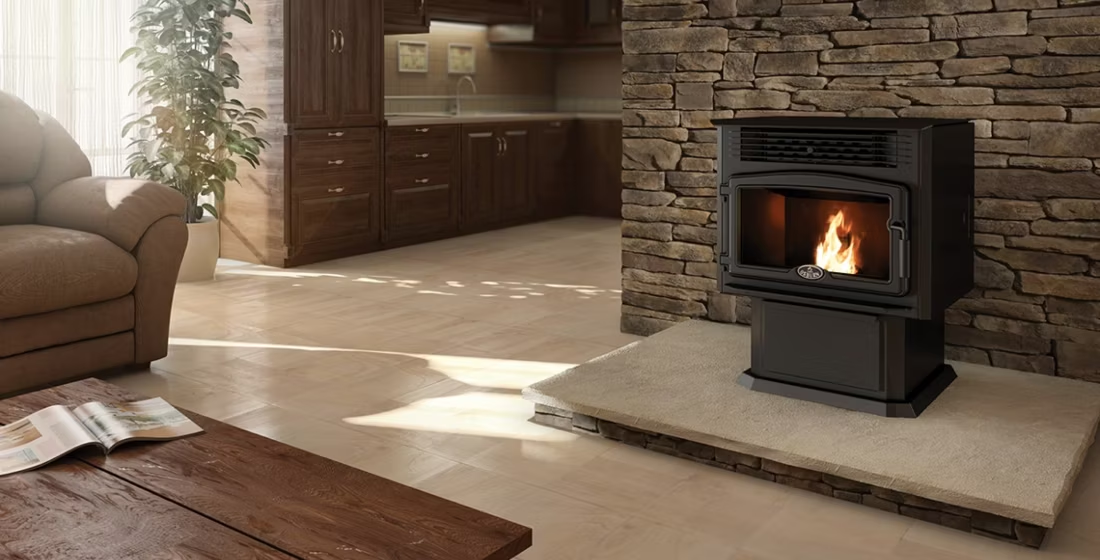
A pellet stove is a freestanding unit that sits on the floor and vents through a nearby wall, which makes it flexible for placement almost anywhere in the house—a common choice for McNairy County homes without an existing fireplace. A pellet insert is built to slide into an existing masonry fireplace opening, converting an old wood-burning fireplace into a sealed, hopper-fed heat source while reusing the chimney as part of the vent path. If your home already has a fireplace you rarely use, an insert is usually the more efficient upgrade; if you're starting from a bare wall, a freestanding stove is the simpler install.
How much maintenance does a pellet stove need?
Pellet stoves need regular ash removal from the burn pot—typically every few days to weekly depending on how much you're running it—plus a full annual cleaning of the venting, hopper, and auger system before each heating season starts. It's far less involved than sweeping a wood-burning chimney, but skipping the annual service is the most common reason pellet stoves start jamming or losing efficiency partway through a McNairy County winter. Most local dealers who sell pellet stoves also offer this service, or can point you to someone who does.
What's the difference between an insert and a zero-clearance fireplace?
An insert is a fireplace that slides into a pre-existing wood-burning fireplace—if you don't have one, there's nothing to insert it into. A zero-clearance fireplace is built into a framed wall, which makes it the answer for remodels and new construction. Simple test: existing masonry fireplace means insert; blank or framed wall means zero-clearance.
Why is my open fireplace making my house colder?
Open fireplaces suck—literally. As the fire burns, it consumes air your furnace already paid to heat and pulls it out through the chimney, so the house is actually colder after the fire goes out than before you lit it. An insert fixes this: it seals the chimney, puts fixed glass across the front, and turns that hole in your house into a real heat source.
Does a fireplace add value to my home?
On average, a fireplace adds back to the home about the same amount you spent installing it. Add the monthly savings from heating the rooms you actually use instead of the whole house—often hundreds of dollars a year—and the value case is strong before you even count what a fire does for how your family uses the room.
How much should I budget for a fireplace?
For an average home—covering the fireplace, the vent pipe, and basic installation—a budget between $3,900 and $5,500 gives you a lot of options across wood, gas, and pellet. By the time you add finish work, gas line, and electrical, the average complete installation lands between $5,000 and $12,000 all-in. In a remodel or new build, a good rule is to put about 2.5% of the total project cost toward the fireplace.
Stove and Fireplace Dealers in McNairy County
Listings include WhyFire partner dealers, dealers we have verified as authorized for the brands we recommend, and established local businesses that carry hearth products. Every listing shows which one it is. The ones marked Preferred run on WhyFire's software, so they can show you real pricing and book your appointment right here. No manufacturer pays for placement. How we verify dealers →
Bell Gas
Pittman Propane
Rogers Lp Gas LLC
Walt Mestan Dba The Fireplace Center
Acme Brick Company
Pellet Brands Stocked Around McNairy County
Manufacturers will point you to the nearest stocking dealer.
Find your pellet stove in McNairy County.
Tell us a bit about your home and we'll match you with the right pellet stove or insert, plus a free Project Guide & Parts List—the exact parts your project needs, including the vent kit, and the local McNairy County dealer we recommend for the install.
Find Your Fireplace →